Bible Verses about the Antichrist

#1) The Antichrist will come in his own name and be accepted –

John 5:43 I have come in My Father’s name, and you do not receive Me; if another comes in his own name, him you will receive.

In this verse Jesus told the Pharisees, the religious leaders of his day, that although they rejected him, someone else would come in his OWN name and be accepted.

The Antichrist will not only arrive on the scene having already achieved worldwide fame, thus coming in his own name, but he will be widely beloved throughout Israel.

And in a dual fulfillment of this verse, many Christian religious leaders will also accept the Antichrist as being chosen by God and even tout him as savior.

_______________________________________________

#2) The Antichrist has the mouth of a lion –

Revelation 13:2 Now the beast which I saw was like a leopard, his feet were like the feet of a bear, and his mouth like the mouth of a lion. The dragon gave him his power, his throne, and great authority.

This verse is reinforced by Daniel 7:4, The first was like a lion, and had eagle’s wings. I watched till its wings were plucked off; and it was lifted up from the earth and made to stand on two feet like a man, and a man’s heart was given to it, and the meaning is that the Antichrist will roar like a lion, letting everyone know that HE is the king of the beasts. The mouth of the Antichrist is one of his definitive qualities, and just like a lion, it is used to assert his dominance and defend his territory.

In an ironic twist to this prophecy being fulfilled, 1 Peter 5:8 describes Satan as a lion walking about seeking someone to devour.

_______________________________________________

#3) The Antichrist is arrogant, and magnifies himself above others –

Daniel 8:25 “Through his cunning
He shall cause deceit to prosper under his [m]rule;
And he shall exalt himself in his heart.
He shall destroy many in their prosperity.
He shall even rise against the Prince of princes;
But he shall be broken without human [n]means.

This verse is reinforced by Daniel 11:36, “Then the king shall do according to his own will: he shall exalt and magnify himself above every god, shall speak blasphemies against the God of gods, and shall prosper till the wrath has been accomplished; for what has been determined shall be done,

and both of these verses talk about the Antichrist as being extremely arrogant; someone who is filled with excessive pride about himself, and utter contempt for others.

His arrogance will be on full display whenever he speaks. He will denigrate others in order to elevate himself, and he will view himself as superior to those around him.

_______________________________________________

#4) The Antichrist is extremely boastful –

Daniel 7:8 I was considering the horns, and there was another horn, a little one, coming up among them, before whom three of the first horns were plucked out by the roots. And there, in this horn, were eyes like the eyes of a man, and a mouth speaking [c]pompous words.

Revelation 13:5 And he was given a mouth speaking great things and blasphemies, and he was given authority to [c]continue for forty-two months. 

_______________________________________________

#5) The Antichrist will throw truth to the ground –

Daniel 8:12 Because of transgression, an army was given over to the horn to oppose the daily sacrifices; and he cast truth down to the ground. He did all this and prospered.

The meaning of Daniel 8:12 isn’t just that the Antichrist will be a liar, but that truth itself holds no value to him. He casts it to the ground as if it was worthless or irrelevant.

_______________________________________________

#6) The Antichrist will deny the Father and the Son –

1 John 2:22 Who is a liar but he who denies that Jesus is the Christ? He is antichrist who denies the Father and the Son.

By asking who is a liar but he who denies that Jesus is the Christ, this verse is not only telling us that the Antichrist will deny the Father and the Son, but that he will do so not out of ignorance, but because he rejects the truth. He is a liar. He will KNOW that Jesus is our savior, but will deny him anyway.

_______________________________________________

#7) The Antichrist will be a vile person –

Daniel 11:21 And in his place shall arise a vile person, to whom they will not give the honor of royalty; but he shall come in peaceably, and seize the kingdom by intrigue.

Contrary to the popular belief that the Antichrist will be well-liked and charismatic, the bible says he is actually to be a vile person. Vile is defined as lacking class or decency. He’s simply repulsive – a sordid, crass, vulgar and despicable person.

_______________________________________________

#8) The Antichrist will honor the god of forces –

Daniel 11:38 But in their place he shall honor a god of fortresses; and a god which his fathers did not know he shall honor with gold and silver, with precious stones and pleasant things. 

Revelation 9:11 And they had as king over them the angel of the bottomless pit, whose name in Hebrew is [c]Abaddon, but in Greek he has the name [d]Apollyon.

This verse is telling us that the Antichrist, in his estate, shall honor the god of forces with gold, silver, precious stones and pleasant things. God of forces is translated as god of fortresses in versions other than the King James. So who is this god of forces? It’s a name we all know well.

During the 5th century BC, Apollo became known as the sun god, the symbol of which was often used in ancient battles to represent the god of forces. Apollo is also a derivative of the name Apollyon, who we see referenced in Revelation 9:11.

_______________________________________________

#9) The Antichrist is connected to gold –

Revelation 13:18 Here is wisdom. Let him who has understanding calculate the number of the beast, for it is the number of a man: His number is 666.

This famous verse about the number 666 is actually pointing us to another figure in the bible, and that figure is King Solomon. The reason it does so is because when Solomon was older he became a type of antichrist as his heart turned away from the Lord and toward pagan gods.

King Solomon was obsessed with gold, having hundreds of shields made out of hammered gold, all of his drinking vessels made out of gold, and to directly connect the number 666 in Revelation to Solomon, we read that he received 666 talents of gold in one year.

All of the pagan gods that Solomon worshiped in his later years are themselves variations of and subservient to the one pagan god that nearly every culture in history has placed above the others: the sun god. And over and over again the sun god is symbolized by one specific thing: gold.

_______________________________________________

#10) The Antichrist is called the Little Horn –

Daniel 7:8 I was considering the horns, and there was another horn, a little one, coming up among them, before whom three of the first horns were plucked out by the roots. And there, in this horn, were eyes like the eyes of a man, and a mouth speaking [c]pompous words.

One of the more descriptive names given to the Antichrist is the “Little Horn”, which we read about in the book of Daniel. This is a reference to a shofar, which is literally a little horn, being made from the horn of a small animal, usually a ram. The shofar was an early version of our modern trumpet.

_______________________________________________

#11) The Antichrist has a covenant with many –

Daniel 9:27 Then he shall confirm a [k]covenant with many for one week;
But in the middle of the week
He shall bring an end to sacrifice and offering.
And on the wing of abominations shall be one who makes desolate,
Even until the consummation, which is determined,
Is poured out on the [l]desolate.”

One of the more well-known prophecies involving the Antichrist is that he will put together a 7 year agreement between Israel and her neighbors, referred to as the covenant with many (perhaps even worldwide – peace treaty). Halfway through those 7 years the Antichrist will break the agreement, and enter the 3rd temple.

Incidentally, some teach that Daniel 9:27 is a reference to Jesus, but that is impossible because its covenant lasts for only one week, whereas the New Covenant is everlasting. So the fact that the covenant with many lasts only one week is telling us that it’s the false covenant from the Antichrist.

_______________________________________________

#12) The Antichrist will disguise himself as an angel of light –

2 Corinthians 11:15 Therefore it is no great thing if his ministers also transform themselves into ministers of righteousness, whose end will be according to their works.

For those who believe the Antichrist will be Islamic or an atheist or clearly anti-Christian, the bible says to expect just the opposite. As one of Satan’s ministers, he will in fact be transformed into or disguised as an angel of light.

Thus, rather than being clearly anti-Christian – the bible is teaching us that we should expect the final Antichrist to come on the scene as a strong supporter of Christianity and of Israel. He will masquerade himself as a force for good, and as a defender of Christian values.

_______________________________________________

#13) The Antichrist will love money as it’s the root of all kinds of evil –

1 Timothy 6:10 For the love of money is a root of all kinds of evil, for which some have strayed from the faith in their greediness, and pierced themselves through with many sorrows.

It’s noteworthy that the Bible doesn’t make such a proclamation about any other sin as being at the root of all kinds of evil. Not murder, not lying, not stealing, not lust, nor anything else. It’s specifically the love of MONEY that’s referred to as the root of all kinds of evil.

This love of money can best be defined as greed – an overwhelming desire to possess more than what we need, especially with respect to material wealth. This greed for money is the root cause of so much sin, and there’s a specific reason why.

You see, the love of money, and all that money brings, is at its heart, a desire for the things of this world. And because of that, the love of money is describing the predominant character trait of the Antichrist. He is all about loving money and possessing the things of this world.

_______________________________________________

#14) The Antichrist is revealed by the falling away –

2 Thessalonians 2:3 Let no one deceive you by any means; for that Day will not come unless the falling away comes first, and the man of [b]sin is revealed, the son of perdition,

A remarkable and yet often overlooked meaning behind this verse is that the “falling away” – or those that leave the faith – will be tied in with the revealing of the man of sin. In other words, these two events are related, as those who fall away from the faith will fall TOWARDS the man of sin.

Thus, it is the falling away that reveals the Antichrist, as we simply need to look at those who have fallen away from the faith and see WHO they are gravitating towards. It’s not simply a falling away for the sake of leaving the faith, but a falling away FROM Jesus Christ and TOWARDS the Antichrist.

_______________________________________________

#15) The Antichrist has the ultimate ego to call himself God –

2 Thessalonians 2:4 who opposes and exalts himself above all that is called God or that is worshiped, so that he sits [c]as God in the temple of God, showing himself that he is God.

In this remarkable verse, we are told that the Antichrist will be so full of himself, will magnify himself in his heart to such a degree, and will possess such an out of control ego, that he will actually proclaim himself to be God.

Perhaps this proclamation will come in the form of announcing that he is the savior of the world, since after all, the Antichrist is not only anti-Jesus Christ, but he also looks to replace Jesus Christ.

_______________________________________________

 #16) The Antichrist is named the Man of Sin –

2 Thessalonians 2:3 Let no one deceive you by any means; for that Day will not come unless the falling away comes first, and the man of [b]sin is revealed, the son of perdition,

In this verse we find the Antichrist referred to as the Man of Sin, or to put it another way, sin incarnate. The sins that the Bible refer to over and over again are those are related to vanity, to dishonesty, to lust, to greed, to envy, and to wrath.

The Antichrist will not only live an extremely sinful life by the Bible’s standard, but he will actually brag about his lust, his greed, his desire for vengeance.

The Antichrist will not only be an extraordinarily sinful man, he will even take pride in his sinning. He will seemingly view his character flaws as badges of honor, as if each sin of the Bible were on his personal bucket list waiting to be checked off.

_______________________________________________

#17) The Antichrist is named the Lawless One –

2 Thessalonians 2:8 And then the lawless one will be revealed, whom the Lord will consume with the breath of His mouth and destroy with the brightness of His coming. 

In this verse the Antichrist is described as not being constrained by ANY law, whether the laws of man or the laws of God. It’s not that he’s simply a lawbreaker – but that he considers himself to be above the law, or a law unto himself.

_______________________________________________

#18) The Antichrist does as he pleases –

Daniel 11:36 “Then the king shall do according to his own will: he shall exalt and magnify himself above every god, shall speak blasphemies against the God of gods, and shall prosper till the wrath has been accomplished; for what has been determined shall be done. 

In this verse the Antichrist is described as doing whatever he wishes, and it expands upon him being the Lawless One. He will not feel restrained by law.

_______________________________________________

#19) The Antichrist works deceitfully –

Daniel 11:23 And after the league is made with him he shall act deceitfully, for he shall come up and become strong with a small number of people.

This verse is reinforced by Daniel 8:25, and these two verses together tell us that the Antichrist’s modus operandi – or habits of working – are filled with deceit. Deceptiveness is simply part and parcel of how he operates.

_______________________________________________

#20) The Antichrist understands dark sentences –

Daniel 8:23 “And in the latter time of their kingdom,
When the transgressors have reached their fullness,
A king shall arise,
Having fierce [k]features,
Who understands sinister schemes.

This verse gives us one key insight into the intelligence of the Antichrist: he understands “dark sentences.” Other translations render this verse as “understanding sinister schemes”, and it’s a window into the innate intelligence of the Antichrist.

He is a master of intrigue. Intrigue is defined as machination, which is a scheming or crafty action intended to accomplish some usually evil end.

_______________________________________________

#21) The Antichrist attains the kingdom by flatteries –

Daniel 11: 21 And in his place shall arise a vile person, to whom they will not give the honor of royalty; but he shall come in peaceably, and seize the kingdom by intrigue.

Some translations render this verse as intrigue, reinforcing Daniel 8:23’s reference to “dark sentences”, but the context of this verse goes in a bit of a different direction.

Looking at Strong’s Concordance, we see that the word used for “flatteries” in Daniel 11:21 more closely means smoothness, slipperiness, or fine promises, which tells us that the Antichrist will attain the kingdom because of his scheming with a small group of people, as Daniel 11:23 references.

_______________________________________________

#22) The bible speaks of nationalism –

Matthew 24:7 For nation will rise against nation, and kingdom against kingdom. And there will be famines, 

One of the more famous bible verses about the end times speaks of nation rising against nation and kingdom and kingdom. Nation versus nation is the inevitable result of nationalism, which has swept the world in recent years.

_______________________________________________

#23) The Antichrist will amaze the world –

Revelation 13:3 And I saw one of his heads as if it had been mortally wounded, and his deadly wound was healed. And all the world marveled and followed the beast. 

This verse tells us that that the Antichrist will be such a unique person, that the entire world will be amazed by him. They will wonder after him, asking who is like he is?

_______________________________________________

#24) The Antichrist will succeed in all that he does –

Daniel 8:24 His power shall be mighty, but not by his own power;
He shall destroy [l]fearfully,
And shall prosper and thrive;
He shall destroy the mighty, and also the holy people.

This verse gives us background on John 5:43, which says that the Antichrist will come in his own name. In short, it tells us that the Antichrist will arrive on the scene having already been a worldwide success.

_______________________________________________

#25) The Antichrist has a stout look –

Daniel 7:20 and the ten horns that were on its head, and the other horn which came up, before which three fell, namely, that horn which had eyes and a mouth which spoke [i]pompous words, whose appearance was greater than his fellows.

This verse gives us an intriguing description of the physical appearance of the Antichrist, saying that he looks more stout than his fellows. Stout is defined as haughty, full of oneself, and even heavyset.

Haughty, of course, is an absolutely perfect description for the Antichrist – as it describes someone who is scornfully and condescendingly proud, and also arrogant and overbearing. He is full of himself to an extreme, as Daniel 8:25 also stated.

_______________________________________________

#26) The Antichrist sows discord –

Proverbs 6:14 Perversity is in his heart,
He devises evil continually,
He sows discord.

Proverbs 6:12-15 A worthless person, a wicked man,
Walks with a perverse mouth;
13He winks with his eyes,
He [g]shuffles his feet,
He points with his fingers;
14Perversity is in his heart,
He devises evil continually,
He sows discord.
15Therefore his calamity shall come suddenly;
Suddenly he shall be broken without remedy.

Commonly referred to as “The Wicked Man”, Bible scholars generally consider the descriptions in these verses as a reference to the Antichrist.

Verse 14 tells us that one notable trait of the Antichrist is that he will sow discord. The inference being that he is intentionally dividing one person or one group against another for his own benefit. He isn’t simply divisive, but he purposely sows divisiveness to reap the rewards.

_______________________________________________

#27) The Antichrist is a unique, unstoppable force that can’t be fought against –

Revelation 13:4 So they worshiped the dragon who gave authority to the beast; and they worshiped the beast, saying, “Who is like the beast? Who is able to make war with him?”

This verse tells us not only of how incredibly singular the Antichrist is, “who is like unto the beast”, but it also tells us that he is a literal force of nature: no one is able to fight against him.

The Bottom Line

There’s a reason that the bible has given us this many descriptions of the Antichrist, and that reason is so that we are NOT deluded by him, and we don’t end up following him down the road to perdition.

If we simply pay attention to what the bible says, we may learn that there might be someone on the world scene right now who matches those descriptions.

The Deadliest Form of Fake News, and How to Identify Reliable Information

12.5.2023

No one likes to learn that there may be errors or falsehoods in their religions, traditions, churches, or personal beliefs. We should find ways to determine the accuracy of our research, use those that we trust, and seek to understand what religions teach or believe to accurately discuss or write concerning those subjects.

An article How to Identify Reliable Information, addresses this topic: 

https://www.stevenson.edu/online/about-us/news/how-to-identify-reliable-information/

 “Whether you are a journalist, researcher writer or someone in the professional fields, it is important to know how to identify real information and use it accurately. That is our real challenge in the 21st century – Lee E Krahenbuhl, Communication Studies Program Coordinator

With the infinite amount of information online, it can be difficult to decipher what is true and accurate and what is not. Once you know the trick to identifying reliable information, you can quickly determine if what you are reading is accurate or not.

What is reliable information?

Reliable information must come from dependable sources. According to UGA Libraries, a reliable source will provide a “thorough, well-reasoned theory, argument, based on strong evidence.”

 Widely credible sources include:

  • Scholarly, peer-reviewed articles and books
  • Trade or professional articles or books, magazine articles, books, and newspaper articles from well-established companies
  • Other sources like websites and blog posts can be dependable but require further evaluation.

You may be asking yourself, “what source is best for me?” Depending on the type of information you need, your sources may vary. Look at journal articles and research-based reports. This is because those types of sources typically include more information on the topic at hand.

How to identify reliable sources

What makes the source reliable?

To determine whether a source is reliable or not, you must look at certain criteria. That criteria are as follows:

Authority:

  • Who is the author?
  • What are their credentials?
  • Do they have knowledgeable experience in the field
  • What is their reputation?

Accuracy: Compare the author’s information to that which you already know is dependable.

  • Are there proper citations?
  • Is the information biased?
  • If so, does it affect research conclusions?

Coverage: Is the information relevant to your topic and does it meet your needs? Consider what you need such as statistics, charts, and graphs.

Currency: Is your topic constantly evolving? Topics in the news require sources that are up to date.

The importance of reliable information

The Internet is scattered with biased, misleading, and altogether incorrect information and that is why it is important to follow the above criteria. The importance of using reliable sources truly boils down to effective communication. If your knowledge is based on unreliable information, you will not be a trustworthy asset.

Credible communication is key in discussing a subject. That is why you should not just grab any information off the Internet. Using unreliable sources results in negative consequences.

Credibility is especially important because using unreliable data can cause questions that may undermine your reliability and may cause others to rely solely on their own opinions rather than factual data.

Using credible sources for information will increase your reputation and trustworthiness. An article by the Ivy Business Journal supports this idea by expressing that trust is a key factor in building loyalty, increasing credibility, and supporting effective communication. It is important to develop your skills in identifying reliable resources, because it will help you become an effective communicator, reader, and/or writer.

War & Peace

This song broke my heart.

We don’t want these scenes to happen in reality. Prayer is needed for all those who are in these horrible situations.

And LOVE!

Click on the CC button and choose English subtitles if you want to see the words in English.

sharinHislove's avatarProphecy Unfolding

If you want to see the English subtitles, click on CC and choose English.

This song broke my heart.

We don’t want these scenes to happen in reality. Prayer is needed for all those who are in these horrible situations.

And LOVE!

View original post

We are the World! Happy New Year!

Praying for blessings to all of you around the world. May we all come together to find what is best in each of us. Love surely is better than hate. Working together, standing together, loving together will make the difference. If you are upset about something, find your voice. Go on Twitter, Facebook, start a Website, care and share positive ideas and progressive thinking instead of crying in a corner. We can all light the place where we stand and that light will shine enough to change things.

Be blessed with much love, joy, and happiness!

Sharon & Erick

We are the world!

There comes a time when we heed a certain call
When the world must come together as one
There are people dying
And its time to lend a hand to life
The greatest gift of all

We can’t go on pretending day by day
That someone, somehow will soon make a change
We are all a part of Gods great big family
And the truth, you know,
Love is all we need

We are the world, we are the children
We are the ones who make a brighter day
So lets start giving

Worried Enough to Pray?

by Max Lucado
Last week’s blog struck a nerve. I wrote a piece entitled “Decency for President.” The premise was a simple one. Shouldn’t a presidential candidate who claims to be Christian talk like one? When a candidate waves a Bible in one speech and calls a reporter “bimbo” in the next, isn’t something awry? Specifically, when Donald Trump insists that he is a Christian (“a good Christian” to use his descriptor) and then blasts, belittles, and denigrates everyone from Barbara Bush to John McCain to Megyn Kelly, shouldn’t we speak up?

If the candidate is not a Christian, then I have no right to speak. But if the candidate does what Trump has done, wave a Bible and attempt to quote from it, then we, his fellow Christians need to call him to at least a modicum of Christian behavior, right?

Again, I struck a nerve. More than three million of you read the article in the first 36 hours! Thousands of you weighed in with your comments. They were fascinating to read. (Not all of them pleasant to read, mind you. The dozens of you who told me to stick to the pulpit and stop meddling in politics– I get it. By the way, I’d like to invite you to attend our services. My upcoming message is “Kindness”.) Detractors notwithstanding, your comments were heartfelt and passionate.

I detected a few themes.

You have a deep sense of love for our country. Patriotism oozed through your words. You cherish the uniqueness and wonder of the USA. You have varying opinions regarding leadership style, role of government, and political strategy. But when it comes to loving the country, you are unanimously off the charts.

You have an allergy to “convenient” Christians. You resist people who don the Christian title at convenient opportunities (i.e., presidential campaigns). You would prefer the candidate make no mention of faith rather than leave the appearance of a borrowed faith that will be returned to the lender after the election.

You are concerned, profoundly concerned, about the future of our country. The debt. Immorality. National security. The role of the Supreme Court. Immigration. Religious liberty. The list is as long as the worries are deep.

So where does this leave us? When a person treasures the country, but has trepidation about its future, what is the best course of action?

Elijah can weigh in on this question.

He lived during one of the darkest days in the history of Israel. The Northern Kingdom had 19 kings, each one of whom was evil. Hope had boarded the last train and optimism the final flight. The leaders were corrupt and the hearts of the people were cold. But comets are most visible against the black sky. And in the midst of the darkness, a fiery comet by the name of Elijah appeared.

The name Elijah means, “My God is Jehovah.” And he lived up to his name. He appeared in the throne room of evil King Ahab with a weather report. “‘As the LORD, the God of Israel, lives, whom I serve, there will be neither dew nor rain in the next few years except at my word’” (1 Kings 17:1).

Elijah’s attack was calibrated. Baal was the fertility god of the pagans, the god to whom they looked for rain and fertile fields. Elijah called for a showdown: the true God of Israel against the false god of the pagans. How could Elijah be so confident of the impending drought? Because he had prayed.

Eight centuries later the prayers of Elijah were used as a model.

“The prayer of a righteous person is powerful and effective. Elijah was a human being, even as we are. He prayed earnestly that it would not rain, and it did not rain on the land for three and a half years. Again he prayed, and the heavens gave rain, and the earth produced its crops” (James 5:16-18).

James was impressed that a prayer of such power came from a person so common. Elijah was “a human being” but his prayers were heard because he prayed earnestly. This was no casual prayer, comfortable prayer, but a radical prayer. “Do whatever it takes, Lord,” Elijah begged, “even if that means no water.”

What happened next is one of the greatest stories in the Bible. Elijah told the 450 prophets of Baal: You get a bull, I’ll get a bull. You build an altar, I’ll build an altar. You ask your god to send fire; I’ll ask my God to send fire. The God who answers by fire is the true God.

The prophets of Baal agreed and went first.

“At noon Elijah began to taunt them. ‘Shout louder!’ he said. ‘Surely he is a god! Perhaps he is deep in thought, or busy, or traveling. Maybe he is sleeping and must be awakened.’

“So they shouted louder and slashed themselves with swords and spears, as was their custom, until their blood flowed. Midday passed, and they continued their frantic prophesying until the time for the evening sacrifice. But there was no response, no one answered, no one paid attention” (1 Kings 18:27-29).

(Elijah would have flunked a course in diplomacy.) Though the prophets cut themselves and raved all afternoon, nothing happened. Finally Elijah asked for his turn.

“Then Elijah said to all the people, ‘Come here to me.’ They came to him, and he repaired the altar of the LORD, which had been torn down. Elijah took twelve stones, one for each of the tribes descended from Jacob, to whom the word of the LORD had come, saying, ‘Your name shall be Israel’” (1 Kings 18:30-31).

Elijah poured four jugs of water (remember, this was a time of drought) over the altar three times. Then Elijah prayed.

“LORD, the God of Abraham, Isaac and Israel, let it be known today that you are God in Israel and that I am your servant and have done all these things at your command.   Answer me, LORD, answer me, so these people will know that you, LORD, are God, and that you are turning their hearts back again” (1 Kings 18:36-37).

Note how quickly and dramatically God answered.

“Then the fire of the LORD fell and burned up the sacrifice, the wood, the stones and the soil, and also licked up the water in the trench. When all the people saw this, they fell prostrate and cried, ‘The LORD—he is God! The LORD—he is God!’” (1 Kings 18:38-39).

“Pow!” the altar was ablaze. God delighted in and answered Elijah’s prayer. God delights in and answers our prayers as well.

Let’s start a fire, shall we?

If your responses to my blog are any indication, you are anxious. You love this country, yet you are troubled about the future. You wonder what the future holds and what we can do. Elijah’s story provides the answer. We can pray. We can offer earnest, passionate prayers.

It’s time to turn our concerns into a unified prayer. Let’s join our hearts and invite God to do again what he did then; demonstrate His power. Super Tuesday, March 1, is the perfect day for us to step into the presence of God.

Dear Lord,

You outrank any leader. You hold sway over every office. Greater is the occupant of Heaven’s throne than the occupant of the White House.

You have been good to this country. You have blessed us in spite of our sin and guarded us in spite of our rebellion.

We unite our hearts in one prayer. Let your kingdom come. Let your will be done. Please, speak through the electoral process to reveal your leader.

This we pray in the name of Jesus,

Amen

© Max Lucado
February 29, 2016

Gamla Mountain – Israel

From the Vulture Trail you will also get a sight of the spectacular Mount Gamla. You can cross to it from the bird watching site – following signs to the “ancient path”, a hiking trail which takes about 90 minutes to cross (it is only about 1 hour to 1 and a half hours return but is windy and steep.) For those who do venture across, ancient Mount Gamla is a site of historic importance with a similar tale to tell as Masada, aside the Dead Sea. A battle against the Romans and many people committed mass suicide to avoid falling into the hands of the enemy.

Gamla Waterfall – Israel

From the entrance of Gamla, a 90 minute trail (45 minutes each way) leads to the Gamla Waterfall, passing ancient dolmans – stone structures which are shaped like tables, but nobody is sure of why. Once you reach the waterfall, you’ll be struck with what is the tallest flowing waterfall in Israel – at 170 feet.

Remembering the Holocaust: Never Again!

By Joel C. Rosenberg

Today in Israel, and around the world, we stop to remember the evil that was perpetrated during the Holocaust, pray for the survivors and their families, and recommit ourselves to the principle: Never Again.

“A two-minute siren sounded across the country at 10 am Thursday in memory of the six million Jews who perished in the Holocaust,” reports Ynet News. Israeli Prime Minister Benjamin Netanyahu delivered a moving address honoring Holocaust Remembrance Day, and applied its lessons to the current showdown with Iran. Israeli President Shimon Peres also discussed Iran today in light of the Holocaust. I commend these to your attention.

Last November, I had the opportunity to travel to Poland with two pastors and their wives to visit the Auschwitz-Birkenau death camps for the first time. My son, Caleb, and I produced a short video of that trip which might help you and your family and friends get a brief glimpse inside the tragedy and what it means.

Most of all, please pray for these survivors, that the Lord would draw them close to His heart and heal their memories and show them His amazing grace and mercy. As the Hebrew prophet Isaiah wrote, “How lovely on the mountains are the feet of him who brings good news, who announces peace and brings good news of happiness, who announces salvation, and says to Zion, ‘Your God reigns!’” (Isaiah 52:7)

Caesarea

Caesarea is a magnificent site, a national park where amazing amazing ancient harbor ruins, beautiful beaches, and impressive modern residences sit side by side. Caesarea is originally an ancient Herodian port city located on Israel’s Mediterranean Coast about half way between Tel Aviv and Haifa. The site recently been restored to create one of Israel’s most attractive and fascinating archaeological sites. The restored Caesarea amphitheater hosts modern-day concerts during the summer months, whilst the Old City has a range of boutiques and restaurants. The new town of Caesarea is a luxurious neighborhood of villas, whose beach, the Caesarea Aquaduct Beach is one of the best beaches in Israel.

Citadel at Caesarea by Adam Reeder, on FlickrCitadel at Caesarea by Adam Reeder, on Flickr

Caesarea National Park is one of, if not Israel’s, most impressive archaeological site. The beautifully restored harbor here was built by King Herod and is a work of engineering marvel. The site is a fascinating place to explore and the museum includes a great multimedia explanation of the history of the port.

Within the park is the Caesarea Amphitheater, also restored, which  during the summer regularly hosts concerts of both local, and international acts. The Harbor Beach is located within the Park although you can enter seperately, and is totally unique in its setting, with superb facilities.

The Park is also home to a unique museum, the world’s only underwater museum where you are able to dive through the underwater ruins of this ancient city. Wow! For more call the Caesarea Dive Club (04-6265898).

Caesarea Aqueduct by luzer, on FlickrCaesarea Aqueduct by luzer, on Flickr

Outside the national park, in the modern day neighborhood of Caesarea is the Aquaduct Beach one of the most breathtaking beaches imaginable. With an ancient aquaduct marking the edge of the beach the breathtaking approach is even more stunning up close. There is no life guard here so bathing is not strictly allowed although it does get busy on summer weekends, but the is worlds away from the beaches further south with a more rural surrounding and breathtaking archaeological feature

Caesarea Amphitheater where concerts are held in the summer by Flickr user heatkernel

Caesarea Amphitheater where concerts are held in the summer by Flickr user heatkernel

Caesarea also hosts the Ralli Museum, one of four museums around the world funded by philanthropist Harry Recanti. The two galleries at Caesarea focus on Latin American and Sephardic Jewish artwork. The museum is free to enter and has some fantastic pieces so if you’re in the area, and cant resist the urge to see some art, this is the place to go. Nearby is Caesarea Golf Club which is Israel’s only full size golf course. Recently reconstructed by renowned designer Pete Dye, this course plays host, every four years to the Maccabi Games, the Jewish Olympics.

All this is exploring is likely to get your appetite going, and there are some brilliant restaurants in Caesarea at the Harbor. They vary in price although most are pretty good and serve seafood with an awesome location overlooking the Mediterranean.

Visiting Caesarea

Caesarea National Park is a half-day attraction which is great all-year round. It is easily accesisble by road, although getting to Caesarea by public transport can be tricky. Many tourists therefore decide to visit the site on a tour of Caesarea, many of which incorporate other sites along the coast and can start from either Tel Aviv or Jerusalem.

Caesarea is a great place to enjoy a sunset and meal so go late afternoon in the summer and enjoy the sunset in one of the many restaurants in Caeasarea harbor. The museum is open in summer months (April-September) from 8am to 6pm and winter months until 4pm, with the site itself and restaurants remaining open later into the evening.

Enquiries: 04-626-7080

Fees: Adult: NIS 38; child: NIS 23Israeli senior citizen: 50% discount. Group (over 30 people): Adult: NIS 34: child NIS 21

Caesarea is located just off of Road 2, the main coastal highway about mid-way between Haifa and Tel Aviv. It is about a 1 hour drive from downtown Tel Aviv.

Public transport to Caesarea is slightly difficult. There is a train link between Tel Aviv and Haifa, and Kesarya, however from the station you will need to take a taxi to the site about a five minute ride away (it is too far to walk). There are no inter-city buses to the town although local buses do come from Hadera irregularly during the day.
Prayer changes things!

A banner on the wall in my home church when I was growing up

kept us reminded of that wonderful personal relationship

we can have with our Lord by just talking to Him.

Prayer Changes Things!

He knows what’s going on.

He just wants us to talk to Him about it.

He wants to talk to us, too.

He wants to know we care enough to stop what we’re doing

and offer up our concern to Him.

YSIC,

Sharon

Likelihood of Israel-Iran War Growing

Some analysts say spring, others see Sept-Oct as “sweet spot”

Posted: February 18, 2012 in Uncategorized

The debate seems increasingly to be over “when,” not “if” Israel will launch preemptive strikes against Iran. A story in a major British newspaper today reports the Obama administration realizes that economic sanctions aren’t working well enough to stop Iran from vigorously pursuing nuclear weapons, and thus makes an Israeli war with Iran all the more likely. According to the story, some experts believe that the Israelis won’t strike in the April to June window suggested by Defense Secretary Leon Panetta, but might wait until the fall during the height of the U.S. presidential elections. “Earlier this month, the US defence secretary, Leon Panetta, told the Washington Post that he thought the window for an Israeli attack on Iran is between April and June,” the story noted. “But other official analysts working on Iran have identified what one described as a ‘sweet spot,’ where the mix of diplomacy, political timetables and practical issues come together to suggest that if Israel launches a unilateral assault it is more likely in September or October, although they describe that as a ‘best guess.’” Expect more speculation — and even disinformation — to keep the “experts” guessing. Should Israel strike, it will be hard, fast and without notice.

Time is running out, according to Bible prophecy

THE EVIL ASSAD REGIME MUST BE BROUGHT DOWN AND BROUGHT TO JUSTICE, OR FACE JUDGMENT: Time is running out according to Bible prophecy

By Joel Rosenberg

Posted: February 18, 2012 in Uncategorized

The butchery of the Assad regime is horrifying to behold. More than 6,000 Syrians have been brutally murdered by the thugs in Damascus. The evil Assad government must be brought down and brought to justice, or face judgment.

Bible prophecy tells us in Isaiah 17:1-3 and Jeremiah 49:23-27 that Damascus will be destroyed as a city in the last days. Scripture doesn’t tell us exactly when or how this will happen, but I believe that day is steadily approaching. Indeed, it may not be far off. I’m currently writing a political thriller called The Damascus Countdown about how this could play out.

In the meantime, followers of Jesus Christ around the world must be praying and working for the spiritual and political liberation of the Syrian people. We need to be praying and working to strengthen the persecuted Church in Syria, and to help believers there spread of the Gospel to every person in that precious country. Make no mistake: God loves the people of Syria. The Apostle Paul came to faith in Jesus Christ on the road to Damascus. Believers were first called “Christians” in Antioch, Syria. And our God and Father wants every Syrian to receive Jesus as Savior and Lord. We need to act now and share the good news with Syria before judgment comes. For God is not going to allow this current evil to go unchecked much longer. In Genesis 12:1-3, the Lord told us that those who bless the children of Israel will be blessed, and those who cursed them will be cursed. The Syrian government faces judgment for killing its own citizens, but also for killing so many Jews and Israelis over the years, and cursing the State of Israel on a daily basis.

Meanwhile, since we don’t know when the judgment of Syria’s government will happen, the U.S. government — and our allies — can and must take decisive steps to stand with and for the people of Syria against the Assad regime. This past week, 58 foreign policy experts urged President Obama to take strong, specific action. Among their recommendations:

  • Immediately establish safe zones within Syrian territory, as well as no-go zones for the Assad regime’s military and security forces, around Homs, Idlib, and other threatened areas, in order to protect Syrian civilians.  To the extent possible, the United States should work with like-minded countries like Turkey and members of the Arab League in these efforts.
  • Establish contacts with the Free Syrian Army (FSA) and, in conjunction with allies in the Middle East and Europe, provide a full range of direct assistance, including self-defense aid to the FSA.
  • Improve U.S. coordination with political opposition groups and provide them with secure communications technologies and other assistance that will help to improve their ability to prepare for a post-Assad Syria.
  • Work with Congress to impose crippling U.S. and multilateral sanctions on the Syrian government, especially on Syria’s energy, banking, and shipping sectors.

The experts noted: “For eleven months now, the Syrian people have been dying on a daily basis at the hands of their government as they seek to topple the brutal regime of Bashar al-Assad.  As the recent events in the city of Homs—in which hundreds of Syrians have been killed in a matter of days—have shown, Assad will stop at nothing to maintain his grip on power. Given the United Nations Security Council’s recent failure to act, we believe that the United States cannot continue to defer its strategic and moral responsibilities in Syria to regional actors such as the Arab League, or to wait for consent from the Assad regime’s protectors, Russia and China.  We therefore urge you to take immediate steps to decisively halt the Assad regime’s atrocities against Syrian civilians, and to hasten the emergence of a post-Assad government in Syria. Syria’s future is not purely a humanitarian concern.  The Assad regime poses a grave threat to national security interests of the United States.  The Syrian government, which has been on the State Department’s State Sponsors of Terrorism list since 1979, maintains a strategic partnership with the terror-sponsoring government of Iran, as well as with Hamas and Hezbollah.  For years, it facilitated the entry of foreign fighters into Iraq who killed American troops.  For years, it secretly pursued a nuclear program with North Korea’s assistance.  And for decades, it has closely cooperated with Iran and other agents of violence and instability to menace America’s allies and partners throughout the Middle East….The Syrian people are asking for international assistance.  It is apparent that American leadership is required to ensure the quickest end to the Assad regime’s brutal reign, and to clearly show the Syrian people that, as you said on February 4, 2012, the people of the free world stand with them as they seek to realize their aspirations.”

I agree. Time is running out, according to Bible prophecy. Now is the time for the free world to speak out, and act decisively. Now is also the time for followers of Jesus Christ to do our part.

Boulders on the beach by Hagai Nativ – Israel

“Behold I am laying a stone for a foundation in Zion; a sturdy stone, a precious cornerstone, a secure foundation.”

ISAIAH (28:16)

הִנְנִי יִסַּד בְּצִיּוֹן אָבֶן אֶבֶן בֹּחַן פִּנַּת יִקְרַת מוּסָד מוּסָּד הַמַּאֲמִין לֹא יָחִישׁ

ישעיהו כ’’ח:ט’ז

Hebrew Lesson

hee-ne-NEE yee-SAD be-tzee-OHN eh-VEN eh-VEN boh-KHAN pee-NOT yeek-RAT moo-SOHD moo-SOHD ha-ma-ah-MEEN loh ya-KHEESH

From United with Hebrew, “The word for ‘stone’ in HEBREW is אבן/EH-VEN. It is a very interesting word, as it is made up of the word אב/av, meaning ‘father’ and בן/ben, meaning ‘son.’ Perhaps this is because the bond between a father and son is as solid as a boulder and as precious as a fine stone.” Are you United with Hebrew?

About Today’s Photograph

Photograph of boulders on the beach by Hagai Nativ. On the peak of Mount Moriah in the Old City of Jerusalem lies the foundation stone, אבן שתיה / eh-VEN she-tee-AH. According to “Legends of Jerusalem” by Zev Vilnay, “The sages of Israel commented: ‘And it was called the Foundation Stone, because the world was founded on it. For Isaiah the prophet said: ‘Thus said the Lord, Behold I am laying a stone for a foundation in Zion.’”

Old Jaffa

English: Simon Tanner House, Jaffa, Religion i...
Image via Wikipedia

port of jaffa, Israel
Image via Wikipedia

English: House of Simon the Tanner, Jaffa, Israel.
Image via Wikipedia

Jaffa
Jaffa (Photo credit: Seetheholyland.net)


The Old City of Jaffa, located on the southern edge of Tel Aviv on the Mediterranean coast, was known in ancient times as the gateway to the Land of Israel. With its 3,000 years of history, Old Jaffa is the world’s most ancient port. It is said that the city, called Yafo in Hebrew and Joppa in the New Testament, derives its name from either Japheth, one of Noah’s three sons, or from the Hebrew word “yaffa” meaning beautiful.

At the Visitors Center, located on the main square, visitors can obtain brochures, maps and general tourist information. The recently reopened Center has numerous artifacts from the Hellenistic and Roman eras on display, and screens two informative movies on the history of the city.

Jaffa is famous as the place from which Jonah sailed as he tried to flee the Lord’s calling to go preach repentance to the inhabitants of Niniveh (Jonah 1:3).  As the story tells us, Jonah’s ship was caught in a storm, and he was thrown overboard. He was swallowed by a giant fish and remainedin its belly for three days.

Jaffa is where St. Peter raised Tabitha from the dead (Acts 9:36-43). He then stayed at the home of Simon the Tanner, just a short walk from the Visitors Center. It was on the rooftop of this house that Peter was praying one day when he had a vision of a sheet coming down from heaven, full of unclean animals, and he heard a voice commanding him: “Rise, Peter; kill and eat” (Act 10:13). The command to eat unclean animals was a sign for Peter to baptize Cornelius, a Roman centurion and Gentile considered unclean by pious Jews. This meant that Gentiles, for the first time, could receive the Holy Spirit and join the Church.

The most distinctive building in Old Jaffa is St. Peter’s Church, which towers over the main square and is visible all the way up the beach of Tel Aviv. The church belongs today to the Franciscan Custody of the Holy Land. Fr. Peter, the Franciscan friar on duty, tells us that it was originally built as a guest house to welcome pilgrims sailing from around the world to Jerusalem. The principal painting in front of the church depicts St. Peter’s vision on the roof of Simon the Tanner’s house. Other panels show the major episodes in Peter’s life: the miraculous catch of fishes, the giving of the keys, the Transfiguration of Christ and the washing of the feet at the Last Supper. The pulpit, carved in the shape of a tree, is also unique. St. Peter’s Church continues to welcome pilgrims today, offering Mass in several languages for both local Christian communities and visitors from around the world.

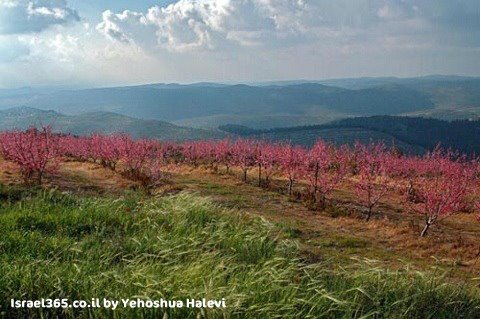
Almond Trees in Israel


I will cause a sprout of righteousness to sprout forth for David, and he will administer justice and righteousness in the Land.  
JEREMIAH (33:15)

אַצְמִיחַ לְדָוִד צֶמַח צְדָקָה וְעָשָׂה מִשְׁפָּט וּצְדָקָה בָּאָרֶץ
ירמיהו ל’’ג:ט’’ו

ahts-mee-OKH le-da-VEED tze-MOKH tze-da-KAH ve-ah-SAH meesh-POT oo-tze-da-KAH ba-ah-RETS

A Taste of Torah for Shabbat
This Shabbat, Jews around the world read Parshat Yitro/Jethro, the Biblical portion (Exodus 18-20) describing the greatest event of human history, when God revealed Himself to man through His giving of the Ten Commandments. Rabbinic commentators point out that Jethro is singled out and rewarded by having this special reading eternally connected with his name because he was a righteous gentile who recognized the great miracles the One True God performed for the Jewish people. Jews have always shown admiration and appreciation for the righteous gentiles throughout our history who have stood by the People of Israel.

About Today’s Photograph
Almond trees, known in Hebrew as שקדיה/she-kay-dee-YA are amongst the first to blossom throughout Israel and are a welcome reminder that spring is just around the corner. The pink and white flowers turn into leaves and finally give way to almonds in just a few months. Almond trees have grown in Israel since Biblical times and were amongst the gifts sent by Jacob to Joseph in Egypt according to Genesis (43:11). Today’s photograph is by Galit Trager.  Happy Birthday Galit  –  יום הולדת שמח גלית

Judah will exist forever

Judah will exist forever, and Jerusalem from generation to generation.
JOEL (4:20)
וִיהוּדָה לְעוֹלָם תֵּשֵׁב וִירוּשָׁלִַם לְדוֹר וָדוֹר
יואל ד:כ

ve-ye-hoo-DAH le-oh-LOHM tay-SHEV vee-roo-sha-la-YEEM le-DOR va-DOR

Today’s Bible Lesson: Guest Post
by Sondra Baras, Director of CFOIC

Judah was Jacob’s fourth son and when the land was divided amongst the Tribes of Israel, Judah received the vast area of land south of Jerusalem extending from the Dead Sea in the east to the Mediterranean in the west. For centuries, this area was known as the Region of Judah, or Judea. Today, many people seek to sever the Jewish people from Judea, the Biblical Heartland of the Jewish People.  But God promised through His prophet Joel, that Judah would exist forever.  “Many are the plans in the mind of a man, but it is the purpose of the Lord that will stand” (Proverbs 19:21).

About Today’s Photograph
Photograph of a father and son walking through the streets of Jerusalem’s Old City by Vladi Alon. Today’s verse and much of Jewish literature connect Jerusalem with eternity.  “While pondering the creation of the world, the sages asked: ‘From where did He create it? And the answer is ‘From Zion.’ And when the Holy One, blessed is He, shall renew the world, He shall renew it out of Zion.” From “Legends of Jerusalem” by Zev Vilnay.
Does Russia Have A Cogent Middle East Strategy?

 February 9, 2012

Russia’s support for Syrian President Bashar Assad has put it at odds with other countries in the Arab world.

Russia drew a lot of flack from Arab countries and the West when it vetoed a U.N. Security Council resolution aimed at pressuring Assad to stop his crackdown on protesters. That has some analysts in Russia doubting whether the Kremlin really has a cogent strategy for the Middle East.

The dilemma for Russia policy in the Arab world can be illustrated by two very different events that took place this week.

On Tuesday, crowds of Assad supporters in Damascus greeted Russian Foreign Minister Sergei Lavrov and the country’s foreign intelligence chief, Mikhail Fradkov.

Lavrov said Russia was willing to serve as a mediator in the conflict, although Assad’s forces continued their assault on the opposition. Meanwhile, a very different scenario was playing out in New York.

Russia’s U.N. ambassador, Vitaly Churkin, appeared at a hastily called news conference to deny rumors that he had threatened the prime minister of Qatar. The rumors, which were widely circulated in the Arab media, said Churkin had warned the Qatari leader that Russia would “wipe Qatar off the map.”

“There was nothing, not even any hints of any threats, intimidation, rudeness from me or from the prime minister of Qatar, for that matter,” Churkin said.

Russia’s relations with Qatar have been strained since December, when customs officials in Doha allegedly manhandled Russia’s ambassador to that country.

Although Churkin denied using any bullying tactics, he added something that sounded vaguely like a warning.

“Apparently somebody is trying very hard in order to drive a wedge between Russia and the Arab world. If it’s somebody who is really coming from the Arab world, I think there is a very good Russian saying, which they, I think, should keep in mind: ‘Don’t spit into a well. You may well need it for a drink of water,’ ” he said.

At this point, it’s unclear who needs whom.

Analyst Yevgeny Satanovsky, president of the Moscow Institute for Middle Eastern Studies, says Russia doesn’t really need Syria as a trading partner. He says Russia’s support for Syria is part of a pragmatic effort to contain Islamic extremism by balancing opposing factions.

“Russians understand there are no nondictatorship regimes in the Middle East. There is no chance for democracy of the Western style in the Middle East. And we try to make balance,” Satanovsky says.

But other analysts say Russia needs to be careful of its image in the Arab world.

Dmitri Trenin, director of the Carnegie Moscow Center, points out that Russia’s stand on Syria puts it at odds with important members of the Arab League, such as Saudi Arabia.

“Saudi Arabia has enormous leverage on the global oil market. Saudi Arabia has resources that could be used to minimize Russia’s control of parts of its own country,” Trenin says. He means the North Caucasus, the region that includes volatile areas such as Chechnya.

Trenin says that what Lavrov, the Russian foreign minister, tried to do in Damascus this week should have been done months ago, when the Arab Spring protests first erupted.

“If Russia wanted to uphold its prestige as an important player, it needed to engage more fully in looking for a peaceful resolution to the Syrian conflict,” he says.

Both analysts say one of Russia’s main concerns is keeping a lid on Islamic radicalism, the kind that is spreading in the Muslim parts of Russia’s own territory.

Satanovsky says Russian policy seeks to play off the Islamic fundamentalist regimes of the Arab world against Iran.

In putting such strong and public support behind the Syrian regime, though, Russia has put itself at a pivot point in the major struggles of the Arab World.

It’s not clear whether it has a strategy to affect the balance there.

Related Articles:

https://sharinhislove.wordpress.com/2011/06/28/20-major-prophetic-events-yet-to-be-fulfilled-compiled-by-dr-tim-lahaye/

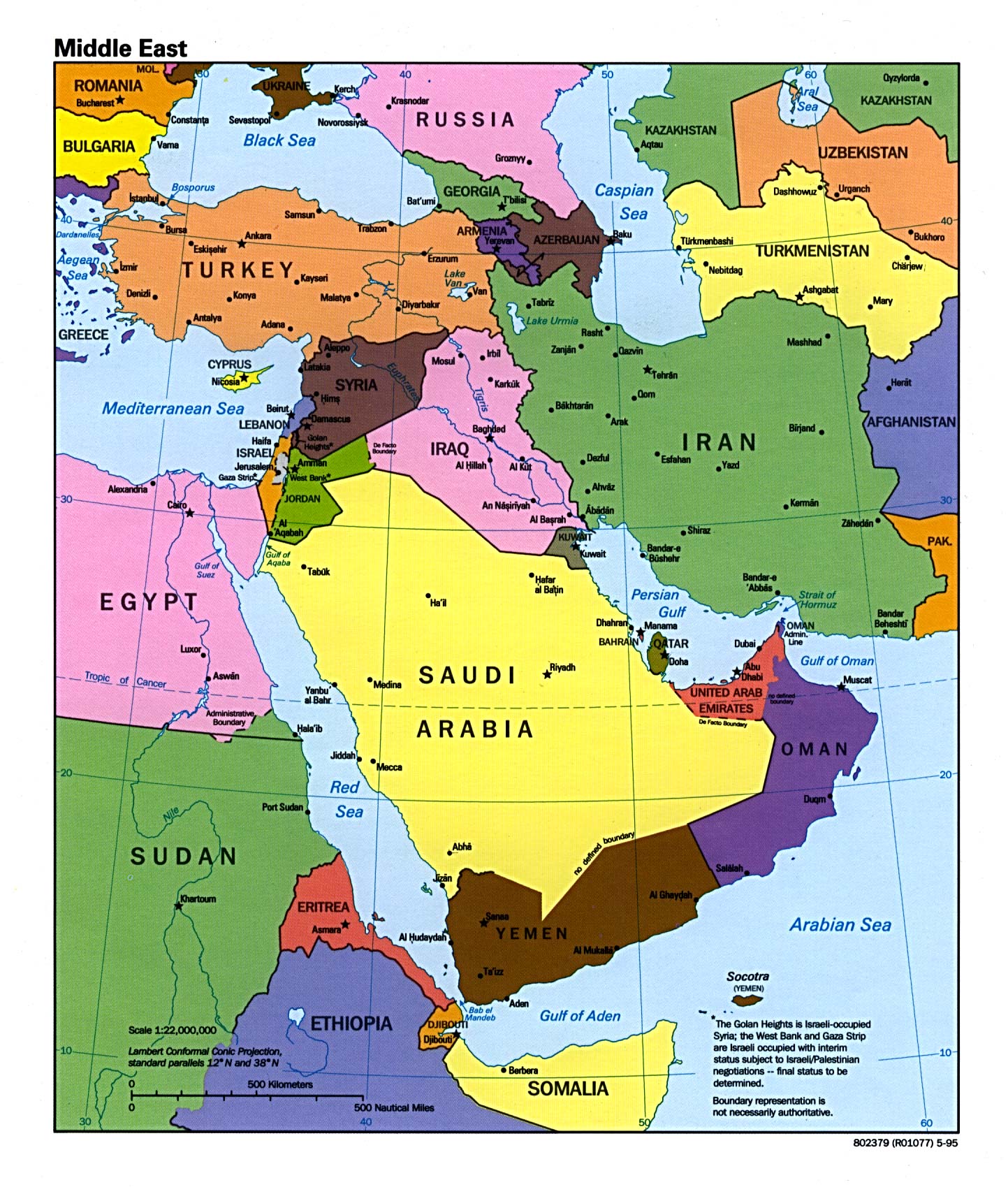
Map of Middle East Countries involved in War of Gog and Magog

Syria Revolution: Why Is Russia Supporting Syria? (ibtimes.com)

What is the War of Gog and Magog?


Vineyards – Israel

“You will yet plant vineyards in the mountains of Samaria;

the planters will plant and redeem.”
JEREMIAH (31:5)

Enjoy this photo of stunning vineyards!

Today marks the 15th day of the Hebrew month of Shvat,

and throughout Israel, children and adults alike will plant trees and vines throughout Samaria

and will celebrate Jeremiah’s prophecy coming to life!

Jerusalem in Depth

A fascinating millennia-old subterranean world of tunnels, caves, aqueducts, plazas, and even a church are exciting evidence from an iota of the city of eternity’s history
Shahar Shilo, allaboutJerusalem.com

You won’t believe what’s hidden under Jerusalem. A fascinating millennia-old subterranean world of tunnels, caves, aqueducts, plazas, and even a church are exciting evidence from an iota of the city of eternity’s history. Come on a tour through the depths of the earth, under 21st century Jerusalem

Many cities in the world boast mysterious and interesting subterranean complexes that attract adventure seekers and history buffs. Jerusalem, being an ancient city, has also been blessed with an abundance of subterranean sites, some better known than others.
The Entrance to the Warren Shaft System

Photo By: Ron Peled

Jerusalem’s subterranean world is comprised of two types of sites: those that were quarried or intentionally built underground, and others that used to be at ground level but are now deep under the modern city due to the repeated ruin and destruction throughout history that the city endured. This article offers an in-depth tour, pun intended, of worlds hidden deep under the surface of modern-day Jerusalem.

The ancient water system in the City of David: This is a hidden and sheltered subterranean water system under the holy city of Jerusalem, within the City of David National Park. This monumental system, excavated about 3,800 years ago by the Canaanites-Jebusites residing in Jerusalem, was used to connect the fortressed city with the Gihon Spring, which was the only source of water available around Jerusalem.

One thousand years later, at the height of the Kingdom of Judah’s Israelite Period, King Hezekiah’s laborers dug a 582-yard long tunnel that channeled the Gihon Spring waters to the Pool of Siloam, which was built within the walls in the ancient city’s central ravine. You can now visit the entire water system and enjoy a unique experience – walking through flowing water, in Hezekiah’s Tunnel, by flashlight.

Following in the steps of the Second Temple Period pilgrims: After the Israelite Period, in the time of the Second Temple, Jerusalem grew a great deal, and according to historical sources, it became one of the most resplendent cities in the ancient world.

Thousands of pilgrims flocked to Jerusalem on holy days, the Second Temple as their destination. An exciting subterranean path connecting the Pool of Siloam with the Western Wall, at the foot of the Temple Mount, was recently exposed in Jerusalem. You can now walk through the Jerusalem of the Second Temple era on a 765-yard long underground path – from the Pool of Siloam in the southern City of David to the Davidson Center Archeological Park and to the Western Wall plaza. See up close the city’s prestige and grandeur during King Herod’s reign in the Roman period, about 2,000 years ago.
Facing the Holy of Holies in the Western Wall Tunnel

Photo By: Ron Peled

The Western Wall Tunnels: A remarkable and awe-inspiring subterranean world that also belongs to the Second Temple era has recently been revealed to visitors, in the northern corner of the Western Wall plaza, under the houses of the Moslem Quarter. Years of destruction and construction next to the Temple Mount buried the city deep beneath the present. Subterranean guided tours will take you along the length of the Western Wall, but including the underneathunderground part of it. The several hundred yard long path exits onto the Via Dolorosa, and will introduce visitors to an ancient and magnificent world of palatial construction, coupled with engaging explanations about the customs of ancient Jerusalem residents and the city’s character during the days of the Second Temple.

Hasmonean Aqueduct Tunnel on the ridge of Armon Hanatziv (Government Governor House): An unforgettable subterranean adventure. During Jerusalem’s heyday, it required a lot of water, which could not be found in the city. To meet this vital need, aqueducts were built to channel water to Jerusalem from large natural springs south of the city, around Bethlehem.

The lower aqueduct, which led water to the Temple Mount, crossed the highest ridge of Armon Hanatziv through an excavated 437-yard long tunnel. You can tour the entire length of the excavated tunnel by flashlight and be dazzled by the superb construction quality and the original plaster that has survived here for more than 2,000 years.
The Hasmonean Aqueduct in Armon Hanatziv

Photo By: Ron Peled

Zedekiah’s Cave (also known as Solomon’s Quarries): A small and unassuming opening can be found at the northern part of the Old City, next to Nablus Gate, and whoever enters it is surprised to find themselves in an enormous cave, more than 2.2 acres large.

Some of the most important Jerusalem researchers searched for this mysterious and picturesque place, until it was accidentally discovered in 1854 by Dr. James Turner Barclay, who went looking for his lost dog. The gigantic cave sparked the imagination of researchers, and it was quickly named Zedekiah’s Cave, since it is associated with the tragic story of King Zedekiah, the last king of Judah.

Music at the Tzidkiyau cave during Hamshushalaim Festival

Photo By: Ron Peled

Accoridng to tradition, the king tried to escape the Babylonian conquerors through the tunnel, but they caught him as he emerged from the cave, blinded him, and led him to Babylon, where he was imprisoned for life. But the truth is that the cave is actually a huge quarry for Jerusalem building stones, which masons used throughout most of the city’s historical periods. Captain Charles Warren, Jerusalem’s famous archeologist, conducted the founding gathering of the Freemasons movement in the Holy Land in this cave, in 1868. Additional areas and galleries totaling an area of almost 1.2 acres were recently discovered inside the cave.

The End of the Western Wall Tunnel – Lithostrotos and the Strouthion Pool

Photo By: Ron Peled

: 0n the northern end of the Via Dolorosa, near the first station, lies the Ecce Homo Convent of the Sisters of Zion. The modest opening, visible from the side of the street, does not allude to the rich subterranean world that lies beneath.

Through the small convent, you enter an ancient Roman Jerusalem site from the second century C.E. The path crosses the large Roman floor tiles (a style called Lithostrotos, meaning “pavement”) and along ancient water pools, one of which is the Strouthion Pool, found in the northern area of the Western Wall Tunnels, right next to the street exit. To wrap up a fascinating tour of life during the Roman Period in Aelia Capitolina (Jerusalem’s Roman name) don’t miss the impressive Roman Square under Nablus Gate.

The Church of the Ascension of Mary

Photo By: Ron Peled

Mary’s Tomb at the Church of the Assumption: Located in the Kidron Valley, next to Gethsemane, lies one of the oldest, most beautiful and impeccable churches in Jerusalem. This Crusader church, which according to Christian tradition is where St. Mary, Mother of Jesus, is buried.

The church is resplendently built from Jerusalem stone and lies in its full glory in the ancient level of the Kidron Stream, found deep under modern-day street level. To reach the church’s outdoor plaza, you need to go down a large stairwell, from which a dim and mysterious stairwell descends into the belly of the earth – to Mary’s Tomb and to the dark galleries infused with the fragrance of frankincense.

This does not conclude Jerusalem’s subterranean wonders. Other great destinations include Nicanor Cave, an ancient cave in the botanical garden at Mount Scopus, the Well of Souls, a natural cave located under the Foundation Stone inside the Dome of the Rock at the top of the Temple Mount, the Burnt House and Herodian Quarter under the Jewish Quarter, and more. See these sites during an extended and leisurely visit to Jerusalem.

The Old City of Jerusalem

The Old City of Jerusalem is one of the most intense places on Earth! At the heart of the Jewish, Islamic, and Christian religions, this walled one kilometer area in the center of Jerusalem is beyond words and cannot be missed.

The Old City of Jerusalem as seen from David's TowerThe Old City of Jerusalem as seen from Tower of David Museum by Brian Negin, on Flickr

The Old City is home to the Western Wall (aka Wailing Wall and in Hebrew Kotel). This is the last remaining wall of what was the Jewish Temple, and is today the holiest site in the world for Jews.

Above the Western Wall lies the Dome of the Rock important for Muslims as the site where the prophet Muhammad is said to have risen to heaven.

Dome Of The RockDome Of The Rock by mockstar, on Flickr

And, just a few minutes walk away, lies the Church of the Sepulcher, where some believe  Jesus was crucified and buried.

The Old City of Jerusalem is divided into four quarters; The Jewish Quarter, The Armenian Quarter, The Christian Quarter, and The Muslim Quarter. The walled city is entered by one of seven entry gates, although the busiest for tourists is the Jaffa Gate next to which is the Tower of David Museum, providing the history of Jerusalem within the Old City Walls. Each quarter has its own unique atmosphere and observations, sites and smells, and experiences.

Going to prayJewish men going to pray in the Old City of Jerusalem by chany14, on Flickr

In the Jewish Quarter, for instance, the narrow alleyways are lined by the homes of Ultra-Orthodox (Haredi) Jewish families, and Yeshivas (schools for Torah study). Walking and observing the residents of the Jewish quarter rush about on their daily life, whether teenage students in the Yeshivas who are often here from around the world for extended periods of time, children as they walk with school between lessons, or the men, as they rush around between places of worship, and the Western Wall. The houses of the Old City, and the Jewish quarter in particular, are for good reason, hotly contested real estate, and command spectacular prices when they rarely trade hands.

The Jewish Quarter’s narrow alleyways open up as you reach the Western Wall Plaza and the wall itself. At times of Jewish festival the wall can be crowded, and observing the tourists brushing alongside daily prayers here is an interesting site. Anybody can go up to the wall, although men and women have separate areas, and men should cover their heads (there are paper kuppels available), and women wear modest clothing. It is customary to place a small prayer on a piece of paper within a crack on the wall. Amazingly the vast Western Wall represents just a tiny percentage of this elevation of the Temple, and the Western Wall Tunnels accessed via the plaza, allow visitors to see even more of the wall underground. Also interestingly, within the Muslim Quarter is whats known as the Little Western Wall where the wall is once again exposed and visible. This is argued to be holier than the iconic section of wall because it is closer to the ‘Holy of Holies’ – the holiest part of the Temple.

Old City of JerusalemOld City ‘Shuk’ by RonAlmog, on Flickr

The Muslim Quarter is a huge contrast to the Jewish Quarter its streets are busier, more crowded, with vendors, especially within the famous Shuk selling all varieties of products. In contrast to the other quarters where shops are generally selling religious or tourist-appealing products, here the Shuk is literally an ancient shopping mall in the 21st century where one can practicing their bartering skills and buy almost anything imaginable. As in the Jewish Quarter, and the rest of the Old City, tourists wondering the streets of the Muslim Quarter find it hard to imagine how the locals go about their everyday business so normally in what is such an intense and looked upon place. Kids play in the street, and men sit out in cafes smoking nargila (hookah or shisha).

Old City of JerusalemOld City of Jerusalem by RonAlmog, on Flickr

The Dome of the Rock sits above the Western Wall Plaza and whilst non-Muslims are not allowed to enter the building itself, tourists are able to tour the compound and nearby Al-Aqsa Mosque.

Moving into the Christian Quarter of the Old City of Jerusalem, there is yet another change. Home to about 40 holy sites to Christians, in the streets here you will see priests and pilgrims from around the world. This quarter was constructed around the Church of the Holy Sepulchre where Jesus is said to have been crucified and buried. Within this hot patch of real estate, even the Church is divided, with different parts controlled by different Christian sects, meaning that there are often disputes over maintenance and some parts are in poor condition.

Behind the doorBehind a door in the Armenian Quarter by chany14, on Flickr

The smallest quarter of the Old City is the Armenian Quarter. This area is home to some 2,500 Armenians, an ancient community who have resided here for over 2,000 years.

Arabian Oryx – Yotvata

Yotvata

From Wikipedia, the free encyclopedia
“Yotvata” is also the Hebrew name for Tiran Island.
Yotvata
Yotvata and Edom Mountains.jpg
Yotvata (Edom Mountains in the background).
Hebrew יָטְבָתָה
Founded 1957
Region Aravah
District South
Affiliation Kibbutz Movement
Coordinates 29°53′44.16″N 35°3′36.35″ECoordinates: 29°53′44.16″N 35°3′36.35″E
Population 640[1] (2009)
Yotvata is located in Israel

{{{alt}}}
Yotvata
Website www.yotvata.org.il

Yotvata (Hebrew: יָטְבָתָה‎‎) is a kibbutz along the Aravah road in the southern Negev in Israel. It has approximately 310 members and a total of 700 residents. The Aravah valley is an arid desert where the average annual rainfall is less than 30 mm and temperatures often exceed 40 °C (104 °F) in summer, and 21 °C (70 °F) in winter.[2]

Contents

[hide]

 Location

Located approximately 40 km north of the Red Sea, Yotvata is the first, biggest, and most prosperous Kibbutz in Hevel Eilot Regional Council. Being relatively far from major urban centers (41 kilometers north of Eilat and 130 kilometers south of Dimona), it is the center of the region, where most regional facilities are based: regional school, regional council offices, community center, sports center, movies and concerts hall and local airfield.

 Economy and Community

Yotvata is a cooperative community, where most adult residents work on the kibbutz in production, services or education. The revenues are equally distributed among the members regardless of their position, along the idea of each one gives as much as he can and gets as much as he needs. Most of daily affairs are conducted communally – education, holidays, dining (three meals a day conducted in the commune dining-room are giving the community more relaxed time to get together) and more.[3]

Yotvata Dairy is a milk products factory which provides the kibbutz with its main source of income and occupies the highest number of members.

Agriculture is second in income but perhaps the first in importance for the community character and pride. Agriculture branches are Irrigated land (onions, potatoes, corn, animal feed, garlic and pumpkins), Plantations (dates and mangos) and a big and modern Dairy Farming.[3]

Yotvata’s road stop

There is also a big road stop shop on the Aravah Road providing refreshments for the travelers.

Other small branches are a picturesque horse stable that lies in the dates plantation east to the kibbutz and few artistic studios.

All members take turns contributing to the kibbutz service branches – kitchen, dining-room, laundry, security, etc.

The kibbutz gets all its drinking and irrigation water from aquifer wells in the Aravah valley.

History

 The Making of the Kibbutz

Ein Radian Nahal Settlment

Yotvata started in 1951 as a Nahal settlement named Ein Radian. In 1957 it was established as the first kibbutz in the southern Aravah region by Ihud HaKvutzot VeHaKibbutzim. The kibbutz is named after an Israelite encampment mentioned in Numbers 33:34 and Deuteronomy 10:7: “…from there they went to Gudgodah, and then to Jotbatha, a land of streaming water.”[4][5][6] Although there are some debates over the exact location of the biblical Yotvata (some say that it is closer to the Red Sea near Taba), the idea of a desert oasis for Israelis was in the founders’ mind; the local oasis was the Ein Radian wellspring.[3]

The founders, a small group of men and women 20 years of age and just out of the military service, decided to pursue a life of pioneering and built their home in the desert. They had massive challenges presented by the desert: the burning sun, the heat, shortage of water, salty land and water, limited transportation and no secure source of income. They started making all kinds of agricultural trials growing grapes, pomegranates and vegetables; they raised cattle and chickens – all with little success. The dates plantation proved more suitable to the arid conditions.

Yotvata – 2003

And then came the initiative to found a dairy that would provide milk to Eilat, which was expected to grow rapidly. Breeding milking cows in the desert was considered an impossible mission. In 1962 the dairy was founded, with four cows, the member who led the vision and the operation was Ori Horazo (1939-1966).[3] The members tried to get funds from the Jewish Agency, but failed. Eventually, they received funding from the Israeli Trade and Industry Minister, Pinhas Sapir. In the first year, the dairy produced 500,000 liters of milk. By 2008, it was producing 62 million liters a year and controlled 63% of the Israeli dairy beverages market (making NIS400 million a year), and 49% of the fortified milk market (making NIS 250 million a year). It employed 130 workers and had 700 cows.[7] The dairies of Kibbutz Yahel, Lotan, and Ketura provide milk for Yotvata.

In 1960 the first children of the community were born, and six years later the school opened with three first graders; today there are 200 kids in the kibbutz, and 600 students from all of the region communities attend Maale Shaharut School (from 1st to 12th grades)[3] in Yotvata.

 Archeology

Judging by the numerous historic forts surrounding the Kibbutz, Yotvata’s location was a strategic one:[8]

  • Southwest of the kibbutz lies a Roman fortress built during the reign of the Emperor Diocletian (dated ±300 AD) as part of a line of border fortresses (the Limes Arabicus) in the Negev, in order to protect the trade route from marauding Arab nomads.[8][9][10]
  • East of the kibbutz lies an ancient Arab resting fortress with towers in its corners, dating from the Nabataeans era (±700 AD) and served as a resting station for the convoys crossing the desert.[8]
  • On a hill west of the kibbutz (50 m), there is an ancient fort dating from the Iron age (~ 11-13 Centuries BC). The fort overlooks the wellspring, and is considered to have served the Egyptians copper miners.[8]
  • East of the kibbutz to the north and to the south there is a wells-chain (known as Fugaras) connected with an underground tunnel that leads the aquifer water to the surface. Fugaras is an ancient but sophisticated irrigation system.[8]
  • North of the kibbutz are found two ancient leopard traps. Leopards are known to have inhabited this area.[8]

 Attractions

Yotvata Hai-Bar Nature Reserve is dedicated to reintroducing extinct species mentioned in the Bible, as well as other endangered desert animals, to the wild. It has three parts: a park for herbivorous animals; the Predators Center that displays reptiles, small desert animals and large predators; and the Desert Night Life Exhibition Hall to observe nocturnal animals during their active hours.[11]

15 km south of Yotvata lies Timna valley, where the sandstone and calcareous rock formations present some breathtaking desert features such as the Solomon’s Pillars, Mushrooms, Arches and more. Timna is also known for its ancient copper mines.

The area provides many great desert walks including canyons, roman routes, sand dunes, fossil hunting, rock-climbing and more.

 References

  1. ^ “Locality File” (XLS). Israel Central Bureau of Statistics. 2009. Retrieved 2011-02-06.
  2. ^ “Israel In Numbers”. Central Bureau of Statistic.
  3. ^ a b c d e “Yotvata website”.
  4. ^ http://www.mfa.gov.il/mfa/history/early%20history%20-%20archaeology/archaeological%20excavations%20in%20israel%202002#yotvata
  5. ^ http://fr.jpost.com/servlet/Satellite?cid=1212041487654&pagename=JPArticle%2FShowFull
  6. ^ Mapa’s concise gazetteer of Israel. Yuval El’azari (ed.). Tel-Aviv: Mapa Publishing. 2005. p. 217. ISBN 9657184347. (Hebrew)
  7. ^ Peretz, Sapir (2008-07-30). “How did Yotvata turn from a small dairy in the middle of the desert to one of the market’s strongest brands?”. Globes. Retrieved 2008-10-01. (Hebrew)
  8. ^ a b c d e f Hevel Eilot Survey. Menachem Marcus. Hevel Eilot Regional Council. 1979. pp. 214–220.
  9. ^ “The Eilat Region”. Jewish Virtual Library. Retrieved 2008-10-01.
  10. ^ “Israel Antiquities Authority”.
  11. ^ “The Yotvata Hai-Bar Nature Reserve”. Haaretz. 2008-04-16. Retrieved 2008-10-01.

External links

Wikimedia Commons has media related to: Yotvata

Ein Gedi – Israel

Ein Gedi is where David hid from King Saul and where he wrote many of the Psalms.

You can visit the breathtaking nature reserve located just west of the Dead Sea less than an hour drive from Jerusalem.

Sinai Ibex

“The Lord, God is my strength, and He makes my legs as swift as hinds’ feet; and He leads me to walk upon my high places. To the conductor, with my songs.”

HABAKKUK 3:19

Do you know what type of beautiful animal this is?

It’s actually called a Sinai Ibex, and its favorite habitat is the desert mountains of Israel!

The Mount of Transfiguration

The Transfiguration Lodovico Carracci 1594
Image via Wikipedia

English: Church of Transfiguration, Mount Tabo...
Image via Wikipedia

Luke 9:28-36
The Transfiguration
…after Jesus said this,… went up onto a mountain to pray. As he was praying, the appearance of his face changed, and his clothes became as bright as a flash of lightning….
Location: Mount of Transfiguration – Israel

— with LX Atsa and Sylvia Murray.

Mount of Transfiguration

From Wikipedia, the free encyclopedia

English: Church of Transfiguration, Mount Tabo...
Image via Wikipedia

One of the unknowns of the New Testament is the identification of the mountain where Jesus underwent his Transfiguration. The Matthew account of the Transfiguration is as follows.

“And after six days Jesus taketh Peter, James, and John his brother, and bringeth them up into an high mountain apart, And was transfigured before them: and his face did shine as the sun, and his raiment was white as the light. And, behold, there appeared unto them Moses and Elijah talking with him. Then answered Peter, and said unto Jesus, Lord, it is good for us to be here: if thou wilt, let us make here three tabernacles; one for thee, and one for Moses, and one for Elijah. While he yet spake, behold, a bright cloud overshadowed them: and behold a voice out of the cloud, which said, This is my beloved Son, in whom I am well pleased; hear ye him. And when the disciples heard it, they fell on their face, and were sore afraid. And Jesus came and touched them, and said, Arise, and be not afraid. And when they had lifted up their eyes, they saw no man, save Jesus only. And as they came down from the mountain, Jesus charged them, saying, Tell the vision to no man, until the Son of man be risen again from the dead.” (Matthew 17:1-9, KJV)

Three candidates for this mountain have been suggested:

  • Mount Hermon, for two reasons: It is the highest in the area (and the Transfiguration took place on “an high mountain” (Matthew 17:1)), and it is located near Caesarea Philippi (Matthew 16:13), where the previous events reportedly took place.

(Note* – However, it is important to note that this location was extremely far from Jerusalem, and Yeshua & his Disciples would have been in Jerusalem for the Feast of Sukkot (Tabernacles), as it is one of three Pilgrimage feasts set forth in Leviticus 23, thereby making Mt. Hermon an unlikely reality for the place of Transfiguration)

Mount Hermon = 9,232 feet High. (33°24′N, 35°51′E; Hebrew: הר חרמון‎, Har Hermon) More Information on Mount Hermon

Mount Tabor = 1,886′ High. (Hebrew: הר תבור‎), For more information on Mount Tabor: Mount Tabor

  • Mount Sinai. This has been suggested by Benjamin Urrutia on the basis of the presence of Moses and Elijah (two prophets traditionally associated with Mount Sinai). This is, however, unlikely since Sinai is rather geographically remote.

Mount Sinai = 7497′ High. (Arabic: طور سيناء , Hebrew: הר סיני), For more information on Mount Sinai: Mount Sinai

Jesus was claimed to stand on the Mountain with Elijah and Moses. These would be the three figures which had the most miracles surrounding them in the Bible. Moses, representing the law and Elijah, the prophets. In Luke Jesus spoke to Moses of Jesus departure( in Greek exodus ).

29And as he was praying, the appearance of his face was altered, and his clothing became dazzling white. 30And behold, two men were talking with him, Moses and Elijah, 31who appeared in glory and spoke of his departure,[a] which he was about to accomplish at Jerusalem. ( Luke 9:29-31 ESV)

Peter who was one of the claimed eyewitnesses with James and John reflects on this in 2 Peter about Peter’s own departure – exodus.

13I think it is right to refresh your memory as long as I live in the tent of this body, 14because I know that I will soon put it aside, as our Lord Jesus Christ has made clear to me. 15And I will make every effort to see that after my departure you will always be able to remember these things. 16We did not follow cleverly invented stories when we told you about the power and coming of our Lord Jesus Christ, but we were eyewitnesses of his majesty. 17For he received honor and glory from God the Father when the voice came to him from the Majestic Glory, saying, “This is my Son, whom I love; with him I am well pleased.” 18We ourselves heard this voice that came from heaven when we were with him on the sacred mountain. (2 Peter 1:13-18 ESV )

This account is one of three in the New Testament where God is heard audibly speaking. All three accounts concern Jesus. They are:

  • Jesus’ baptism ( Mk 1:9-11)
  • The mount of transfiguration ( Mk 9:14-29 )
  • At the temple when Greeks approach Jesus ( Jn 12: 20-26 )

The account of the Transfiguration occurs six (Matthew 17:1, Mark 9:2) or eight (Luke 9:28) days after Peter’s confession that Jesus is the Messiah at Caesarea Phillipi and immediately followed by coming down off the mountain and healing an epileptic boy. Peter’s confession and Jesus’ announcement He would die and rise are both in a sense confirmed with the discussion of Jesus’ “exodus – departure” with Moses. The mountain top experience contrasts with the difficulties of life and healing of the boy ( Mk:14-29).

Rainbow by Eliyahu Alpern, of Safed, Israel


Photograph of rainbow by Eliyahu Alpern, of Safed, Israel.

The rainbow symbolizes God’s first covenant with mankind, promising to remember His promise to Noah.

The next Biblical covenant represents God’s eternal promise of the Land to Abraham and his descendants.

Herd of Camels in the Negev Desert – Israel

Enjoy this cool shot of a herd of camels in the Negev desert (photo by Ilan Rosen). Camels have been an important part of the Holy Land’s landscape from Biblical times as described by Isaiah, “they carry their wealth…and riches upon the camels’ hump” (30:6).

Mount Hermon – Israel


“Tabor and Hermon sing forth Your name” Psalms (89:12).

That’s Mount Hermon in the background! In the extreme northeast of Israel (the “Golan Heights”), Mount Hermon with its 2,814-meter peak is the country’s highest point (and the only mountain with ski slopes…)

It served as the northern boundary of the Israel (Deut. 3:8) and is now called “the eyes of the nation.”

Mt. Hermon is extremely valuable as a strategic early warning system against unpleasant surprises from our northern neighbors. We ‘LIKE’ having this towering, beautiful mountain as part of the Land of Israel!

Beit Shemesh – Israel


This photo is a real beauty- it is a picture of the sunset over the mountains and houses of Beit Shemesh, a city located in the outskirts of Jerusalem. Beit Shemesh is mentioned in the Torah several times, and till today it continues to be home to thousands of people.

Ancient Stone House in Israel

Here’s a photo of an ancient stone house in the Galilee (by Eliyahu Alpern).

“Ein Zeitim”, in the north of Israel by the Safed-Meron highway, was a prosperous village in the Middle Ages.

“Ein” means SPRING and “Zeitim” means OLIVES.

A stream flows in the midst of the numerous olives trees in this area.

Red Poppies – Israel

Take a look at this beautiful field of poppy flowers blooming brightly in Israel!

Today marks the beginning of the Jewish month of Shevat (ראש חודש שבט – rosh kho-DESH she-VAT) marking the midpoint of winter, when the country starts looking towards springtime.

Gush Etzion Region – Israel


“People will again say in the Land of Judah and in its cities when I return their captivity,

‘May God bless you, O Abode of Righteousness, O Holy Mountain!’”
JEREMIAH (31:22)

Today’s photograph is a gorgeous scene of a community in the Gush Etzion region

in the Judean mountains, near Jerusalem.

Is Netanyahu’s Patience with Iran Running Out?

Posted: January 24, 2012 in Uncategorized
by Joel C. Rosenberg

Does Israeli Prime Minister Netanyahu think the West is taking decisive action to stop Iran from getting the Bomb, or does he think the West is fiddling while Tel Aviv runs the rising risk of burning? That’s the Big Question as tensions continue to mount in the epicenter this week. Iran is making new threats to close the Strait of Hormuz to oil shipments, just days after test-firing missiles over the Strait. The U.S., Britain and France are sending additional naval forces  into the Gulf. The European Union is taking new steps to impose an oil embargo on Iran. The U.S. is taking steps to sanction Iran’s third largest bank, though dragging its feet on actually sanctioning Iran’s Central Bank. Adding to the regional tensions, Russia is lashing out at the EU and selling $550 million worth of arms to one of Iran’s key regional allies. Will such Western moves be enough to stop Iran from building an arsenal of nuclear weapons? Personally, I’m not convinced. Such moves would have been good a few years ago. Now they strike me as too little too late, especially after the Obama White House disastrous decision recently to cancel joint military exercises with Israel for fear of being “too provocative” towards Iran. But it doesn’t matter what I think. What matters is what Netanyahu thinks. If he decides the West isn’t doing enough and Iran is going to get the Bomb, then he is going to hit Iran hard, soon, and without warning.

In that context, it’s worth noting a speech Netanyahu gave Tuesday warning his nation that the world has not internalized the lessons of the Holocaust. ”Speaking at the Knesset just days before  International Holocaust Remembrance Day (January 27), Netanyahu reasoned that the Jewish people must not put their fate in the hands of the  international community,” reported the Jerusalem Post. “Posing a rhetorical question, Netanyahu asked, ‘How does the world react to the calls for genocide against the Jews today? Seventy years after the shoa [Holocaust], Iran is calling for us to be wiped off the map, Hezbollah is calling for our extinction, as are many in Hamas….The Jerusalem Mufti [Sheikh Muhammad Hussein] called on Sunday for Jews to be killed wherever they are…echoing his predecessor Haj Amin Al Husseini, who actively helped Hitler and Eichman,’ he said. ‘I do not hear the international community condemning this. I hear them  condemning buildings in the West Bank. But I don’t hear them condemning  this incitement,’ said Netanyahu.”

Could Netanyahu be signaling that his patience — and that of the Israeli government and military – is running out?

Worth noting: “Two Iranian lawmakers on Monday stepped up threats their country would close the strategic Strait of Hormuz, through which a fifth of the world’s crude flows, in retaliation for oil sanctions on Tehran,” reports Haaretz. “The warnings came as EU nations agreed in Brussels on an oil embargo against Iran as part of sanctions over the country’s controversial nuclear program. The measure includes an immediate embargo on new contracts for Iranian crude and petroleum products while existing ones will be allowed to run until July. Iran has repeatedly warned it would choke off the strait if sanctions affect its oil sales, and two lawmakers ratcheted up the rhetoric on Monday….For its part, the United States has enacted, but not yet put into force, sanctions targeting Iran’s central bank and, by extension, the country’s ability to be paid for its oil. Some 80 percent of Iran’s oil revenue comes from exports and any measures or sanctions taken that affect its ability to export oil could hit hard at its economy. With about 4 million barrels per day, Iran is the second largest producer in OPEC.”

Two Mistakes Regarding Iran

by Joel Rosenberg


>> Rating the GOP presidential candidates on the Iran issue

The White House has made two new and serious mistakes on Iran in recent days:

  1. The Obama administration has just canceled joint military exercises with the Israelis.
  2. The Obama administration has both denied killing a top-ranking Iranian nuclear scientist and condemned the scientist’s assassination.

Given that U.S. Defense Secretary Leon Panetta says Iran could have the Bomb by the end of 2012, the U.S. should intensifying pressure on the evil regime in Tehran. This would include dramatically escalating covert ops inside Iran, and making preparations for possible air strikes if there are no other alternatives to neutralizing the Iran threat. Instead, the senior team at the White House just blinked — twice — showing weakness instead of resolve. They have also made it more likely, not less, that Israeli Prime Minister Netanyahu may conclude this year that he has no other choice but to launch a massive first strike against Iran. Thus: The United States has stepped up contingency planning in case Israel launches a military strike on Iran’s nuclear facilities, the Wall Street Journal reported on Saturday. According to the report, U.S. defense officials are becoming increasingly concerned that Israel is preparing to carry out such a strike.” At the moment, Army General Martin Dempsey, the new Chairman of the Joint Chiefs of Staff, is heading to Israel for talks about Iran.

Meanwhile, “Israeli Cabinet Minister Moshe Ya’alon said Sunday he was disappointed that the U.S. has not expanded sanctions to further damage Iran’s central bank and its energy industry. He also suggested that the Obama  administration hasn’t been as forceful as Britain and France in  imposing sanctions. ‘In the United States, the Senate passed a resolution, by a majority of 100-to-1, to impose these sanctions, and in the U.S. administration there is hesitation for fear of  oil prices rising this year, out of election-year considerations,’ Ya’alon told  Israel Radio, according to Haaretz newspaper. ‘In that regard, this is certainly  a disappointment, for now.’”

This is exactly why I’m saying we’d better keep praying for peace, while preparing ourselves for war.


CAR BOMB KILLS IRANIAN NUCLEAR SCIENTIST

Posted: January 11, 2012 in Uncategorized
by Joel Rosenberg

>>  Iranian president arrives in Cuba; U.S. warns of ‘dangerous alliance’

UPDATED: Another headline this morning ripped from the pages of my two recent novels, The Twelfth Imam and The Tehran Initiative. This one from the BBC: Iran car explosion kills nuclear scientist in Tehran. Excerpt: “A university lecturer and nuclear scientist has been killed in a car explosion in north Tehran. Mostafa Ahmadi-Roshan, an academic who also worked at the Natanz uranium enrichment facility, and the driver of the car were killed in the attack. The blast happened after a motorcyclist stuck an apparent bomb to the car. Several Iranian nuclear scientists have been assassinated in recent years, with Iran blaming Israel and the US. Both countries deny the accusations….” FLASHBACK FROM DEC 2011: COVERT WAR HEATS UP IN IRAN AND MIDEAST: Will it be enough to neutralize nuclear threat, or will Israel launch preemptive strikes in 2012?

Studying Biblical Prophecy

The study of prophecy is not to Scare us,

but to Prepare us.

Studying Biblical Prophecy has been a passion of mine since I was a teenager. My first exposure to the subject was from a book entitled “The Bible and Tomorrow’s News”.

Studying prophecy can bring confusion and fear to a lot of people. I think that is because it is hard to understand.

We are attempting to wade into the study of prophecy a little at a time on our blog. We think it will be interesting for our readers to understand the basics as you follow each day’s news and how they are related.

The study can also be a source of encouragement and inspiration.  As we understand the relationship of knowledge of the scriptures and motivate our call to share the gospel, it will strengthen all of us.

I have included direct links below to the categories on our blog that will help us as we study.

We encourage comments and discussion of this wealth of knowledge that God has given us in His word.

Blessings,

Sharon & Erick


Related Articles:

https://sharinhislove.wordpress.com/category/studying-prophecy/

https://sharinhislove.wordpress.com/category/maps-biblical/

https://sharinhislove.wordpress.com/category/current-events-in-light-of-bible-prophecy/

https://sharinhislove.wordpress.com/category/headlines-to-track/

https://sharinhislove.wordpress.com/category/historial-maps/

https://sharinhislove.wordpress.com/category/israel-interesting-information/

https://sharinhislove.wordpress.com/category/maps/

https://sharinhislove.wordpress.com/category/maps-in-light-of-biblical-prophecy/

https://sharinhislove.wordpress.com/category/world-information/


The Works of Flavius Josephus

English: Engraving of Flavius Josephus from book
Image via Wikipedia

The Works
of
Flavius Josephus

Translated by
William Whiston


Antiquities of the Jews

Book 1

From The Creation To The Death Of Isaac (3,833 Years)

Book 2

From The Death Of Isaac To The Exodus Out Of Egypt (220 Years)

Book 3

From The Exodus Out Of Egypt, To The Rejection Of That Generation (2 Years)

Book 4

From The Rejection Of That Generation To The Death Of Moses (38 Years)

Book 5

From The Death Of Moses To The Death Of Eli (476 Years)

Book 6

From The Death Of Eli To The Death Of Saul (32 Years)

Book 7

From The Death Of Saul To The Death Of David (40 Years)

Book 8

From The Death Of David To The Death Of Ahab (163 Years)

Book 9

From The Death Of Ahab To The Captivity Of The Ten Tribes (157 Years)

Book 10

From The Captivity Of The Ten Tribes To The First Year Of Cyrus (182 Years)

Book 11

From The First Of Cyrus To The Death Of Alexander The Great (253 Years)

Book 12

From The Death Of Alexander The Great To The Death Of Judas Maccabeus (170 Years)

Book 13

From The Death Of Judas Maccabeus To The Death Of Queen Alexandra (82 Years)

Book 14

From The Death Of Queen Alexandra To The Death Of Antigonus (32 Years)

Book 15

From The Death Of Antigonus To The Finishing Of The Temple By Herod (18 Years)

Book 16

From The Finishing Of The Temple By Herod To The Death Of Alexander And Aristobulus (12 Years)

Book 17

From The Death Of Alexander And Aristobulus To The Banishment Of Archelaus (14 Years)

Book 18

From The Banishment Of Archelus To The Departure From Babylon (32 Years)

Book 19

From The Departure Out Of Babylon To Fadus, The Roman Procurator (3.5 Years)

Book 20

From Fadus The Procurator To Florus (22 Years)

War of the Jews

Book 1

From The Taking Of Jerusalem By Antiochus Epiphanes, To The Death Of Herod The Great (167 Years)

Book 2

From The Death Of Herod Till Vespasian Was Sent To Subdue The Jews By Nero (69 Years)

Book 3

From Vespasian’s Coming To Subdue The Jews To The Taking Of Gamala (1 Year)

Book 4

From The Siege Of Gamala To The Coming Of Titus To Besiege Jerusalem (1 Year)

Book 5

From The Coming Of Titus To Besiege Jerusalem, To The Great Extremity To Which The Jews Were Reduced (6 Months)

Book 6

From The Great Extremity To Which The Jews Were Reduced To The Taking Of Jerusalem By Titus (1 Month)

Book 7

From The Taking Of Jerusalem By Titus To The Sedition At Cyrene (3 Years)


Flavius Josephus Against Apion

Book 2


Josephus’s Discourse to the Greeks concerning Hades

Chapter 1


http://www.biblestudytools.com/history/flavius-josephus/


Beer Sheva

Beer Sheva is the capital of the Negev region of Israel, a desert city that serves as the gateway to this region. Beer Sheva is generally not on the agendas of many tourists to Israel, and is therefore somewhat of an off the beaten track destination. There are a number of interesting and unique things to do in Beer Sheva, an ancient city dating from Biblical times, including the old Turkish town, which is the only planned Ottoman city in the region, the Turkish railway station, and the Bedouin market, as well as nearby Tel Beer Sheba which is the archaeological remnants of the ancient city and UNESCO World Heritage Site.

Turkish mosque in Beer Sheva by david_shankbone, on FlickrTurkish mosque in Beer Sheva by david_shankbone, on Flickr

The Old Turkish Town of Beer Sheva is the only city built by the Ottomans during their rule over the land, and today contains interesting remnants of this period including the Governor’s House which was the home and office of the first governor of the city, built in 1906 and today home to the Negev Museum of Art. The Old City also houses the city’s first mosque also built in 1906, the Turkish railway station built during the First World War, and many more buildings and streets which set the scene of life in the city and many other cities under Ottoman Rule.

The Bedouin market is a famous attraction in Beer Sheva, a weekly occassion taking place on Thursdays since 1905 in which Bedouins from the neighboring villages come and sell various authentic Bedouin wares such as copper products, glassware, jewelry, weaved crafts such as rugs, and more, as well as modern stalls selling clothing, footwear, and food, as you would find in any other market. The Bedouin market is relatively unique, a vibrant and colorful marketplace which is interesting to visit if you are in the city.

Tel Beer Sheva by Ian W Scott, on FlickrTel Beer Sheva by Ian W Scott, on Flickr

Tel Beer Sheba, is located about 5km east of the modern city and is home to the ruins of the ancient, Biblical city that was here. Now designated a UNESCO World Heritage Site, Tel Beer Sheba contains the ruins of a walled city from the Israelite monarchic period, as well as relics from the Roman Period, when the settlement sprawled to the area of modern Beer Sheva.

Beer Sheva is a city seeing somewhat of a touristic revival, and new initiatives are springing up across the city. These include the B7 Art Experience which provides educational tours and workshops for all kinds of groups wanting to experience the city, from outside the Old Mosque, in the Old Turkish City. Also, the city has, since the establishment and growth of the Ben Gurion University of the Negev seen a cultural revival, and restaurants, bars and nightclubs have sprung up across the city to cater for the large and vibrant student population who call this city home.

Haifa

Haifa is Israel’s third largest city, set on the slopes of Mount Carmel facing the Mediterranean, and known as a myriad for coexistence between Jews and Arabs, who peacefully live here alongside each other.  A traditionally working, industrial city, Haifa is not a tourist destination to rival its big relations Tel Aviv or Jerusalem, although it does have one or two sites which should not be missed. The most famous of these are the Bah’ai Gardens, the part of the international center of this small, yet fascinating religion.

The Bah’ai Gardens form part of the Bah’ai World Center, a UNESCO World Heritage Site. These gardens are a place of pilgrimage for members of the Bah’ai faith and are set across terraces sloping down Mount Carmel towards the beautiful Mediterranean Sea. The gardens were recently redesigned and are remarkable, whether you decide you love them or not. The only way to visit is with a guided tour, and if you can stand being in a group its worth the pain. Tours must be booked, see here for more info.

Israel-Carmel-050508 009View across Haifa from Mount Carmel via RonAlmog on Flickr

At the bottom of the Bah’ai Gardens is Haifa’s German Colony. Recently restored templar-era buildings line the main street which runs directly from the base of the Gardens, and is lined with restaurants and cafes, ranging in cuisine from traditional Arab-style Middle Eastern Foods to more modern and creative forms of Western Cooking.

If science is your thing, worth visiting is the National Museum of Science located in the city. Great for kids, this museum is full of fascinating interactive displays, translated mostly into English, covering a wealth of great interesting topics. The museum can get busy during school holidays, but even then a visit is worthwhile. www.madatech.org.il

Haifa, German Colony, from Bahai GardenHaifa’s German Colony by runneralan2004, on Flickr

General culture in Haifa is overshadowed by Tel Aviv and Jerusalem, although it is possible to attend concerts by the Israel Philharmonic and other musical and dramatic groups when they perform here. Haifa’s biggest cultural event is the International Film Festival, which runs for one week each year at the end of September and transforms the city into a party city with over a hundred films of all genres shown.

Masada

Masada is not only important because it is a UNESCO World Heritage Site or an ancient fortress occupying a breathtaking  strategic location high on a flat plateau above the Dead Sea, but because of its symbolic importance as a symbol of determinance and heroism which continues to this day with many Israeli soldiers sworn in here. Masada is one of the greatest archaeological sites in Israel and, perhaps, across the world. Its dramatic ascent can now be made by cable-car, but the drama and imagery that this site portrays is no less powerful than it ever was.

Approach to Masada by laura padgett, on FlickrApproach to Masada by laura padgett, on Flickr

The fortress of Masada was built in the year 30 BCE by King Herod, whose architectural feats have left their mark throughout the country. At the beginning of the great revolt against Rome in the year 68 BCE, the site was conquered by a group of Jewish zealots, and Masada became their last stronghold. In the year 72 the Romans besieged Masada and succeeded in reaching the steep fortress after constructing a huge earthen ramp on its western side. In the year 73, the 960 Jewish zealots living at the top of Masada chose to commit suicide rather than to fall into the hands of the Romans alive. Their deeds left behind a saga of courage, heroism, and martyrdom.

Amazing panorama of Masada at twilight by A   M, on FlickrAmazing panorama of Masada at twilight by A M, on Flickr

Columns among the ruins at Masada by laura padgett, on FlickrColumns among the ruins at Masada by laura padgett, on Flickr

The remains of the fortress of Masada are well-preserved and have been reconstructed in an effort to pay homage to the site and its heroic inhabitants. The most impressive structure on Masada is King Herod’s northern palace, built on three rock terraces overlooking the gorge below. Near the palace is a large Roman style bath house with a colorful mosaic floor and walls decorated with murals. Many other buildings at the site – such as the luxurious western palace, the mikveh (Jewish ritual bath), storerooms, watchtowers, and synagogue relate the history of Masada, especially when viewed with artifacts such as storage containers, decorated pottery, scrolls, and coins.

The beautiful embossments and murals that were discovered on the walls of buildings on Masada were restored by Italian experts to preserve them for years to come. This is the largest and most complete Roman siege camp that remains today.

Masada is extremely high, and can be ascended on foot by the winding “snake path” or by a cable car that runs from the tourist center at the feet of Masada to the top. The tourist center also features a movie about the story of Masada, a model of the site, and an exhibit of the archeological findings.

As well as the archaeology, the site’s amazing and iconic setting has made it a popular place for concerts and events throughout the year. As well as the thrilling sound and light show, presented against the dramatic backdrop of the western side of Masada, tells the story of the rebels’ last days at the cliff-top fortress, which takes place throughout the summer months, there is an annual opera at Masada and regular concerts and shows throughout the year.

The Dead Sea

The Dead Sea known in Hebrew as Yam Ha-Melah (the Sea of Salt) is the lowest point on earth, surrounded by the stunning landscape of the Negev Desert. The shores of the Dead Sea are the lowest point on the surface of the earth, and the saline water of the lake give lead to the name ‘Dead Sea’ because no fish can survive in the salty waters. The other result of the salty water of the Dead Sea are their renowned health and healing properties and the unique feature that one can float naturally in them.

Really just a lake, the Dead Sea is part of the long border between Israel and Jordan whose towering mountains can be seen from the Israeli side, part of the Judean and Negev deserts. Just a one-hour drive from Jerusalem, the Dead Sea is a place popular with Israeli’s wanting a few days relaxation, people taking advantage of the medical properties of the water, as well as tourists staying for a short time to experience the unique Sea and surroundings.

The salty waters of the Dead Sea by bachmont, on FlickrThe salty waters of the Dead Sea by bachmont, on Flickr

Masada, is, aside from the Dead Sea itself, the great attraction of the area. Atop a mountain to the side of the Sea lies this ancient fortress. With a steep history, and ascent, Masada is a UNESCO World Heritage Site, and is traditionally climbed early in the morning by tourists wishing to see the ruins at the top. Today it is not necessary to climb, as a cable car has been built.

Muddy face - Dead Sea mud by Babi_Santander, on FlickrMuddy face – Dead Sea mud by Babi_Santander, on Flickr

Further North near the Dead Sea is Ein Gedi National Park. Situated in the famous Kibbutz, this park contains a range of cool water hiking trails which allow you to cool off in the heat. The higher you go, the quieter it will be and the more likely you will be able to find your own little oasis. Ein Gedi also has a public beach and spa which is much closer to Jerusalem than the majority of the beaches, if you have less time.

Hotels at the Dead Sea come in all shapes and sizes. In Ein Bokek is the main hotel area at the Dead Sea, and here there are around 15 large resort-style hotels catering to all types of budget. For those in search of a more unique experience, there are also some zimmers and more boutique hotels at the Dead Sea. More information about Dead Sea Hotels.


Jesus and a Palestinian State

Israel Today Magazine

September 25, 2011

The Palestinian statehood bid provided a platform for many views and positions regarding the Middle East, including those of Evangelical Christians who no longer believe in the validity of the promises contained in the Bible.

In the run-up to Palestinian leader Mahmoud Abbas officially requesting UN membership for the “State of Palestine,” Carl Medearis, a recognized expert on Middle East Christians, suggested on CNN’s Belief Blog that Jesus would support the Palestinian statehood motion.

“So how would Jesus vote this week if he had a seat at the UN?” Medearis asked. “Surely love, compassion, justice and peace-making would top his lists of concerns for all involved. Maybe he would give a new parable – the Parable of the Good Palestinian – offending all who would hear.”

Medearis continued by deriding the Christian Zionist movement and its insistence on a literal reading of the Bible:

“In their minds, the modern Israeli state is not only a fulfillment of biblical prophecy. In a bizarre twist that leaves most outsiders dumbfounded, Christian Zionists say the Bible predicts that Jews and Palestinians will forever be at war until Jesus returns.”

Medearis’ remarks were hotly debated in various publications, but it is not his personal view of the situation that is troubling. Medearis was merely the mouthpiece of a post-modern, humanist-infected strand of Christianity that no longer believes the Bible carries any literal meaning beyond the commandments regarding basic gestures of goodwill and proper moral behavior.

In other words, while it is still important to love one’s neighbor and not to steal, passages like Jeremiah 31:36-38 or Ezekiel 36:24-28 that confirm the eternal nature of Israel’s divine right to the land are, in Medearis’ words, “obscure Old Testament promises.”

In order to cement their position as the “sane Christians,” Medearis and others like him will highlight the often-unsympathetic positions of those perceived “lunatics” who do hold fast to the Bible’s every promise.

It is true that in their zealousness a good many Christian Zionists often spout rhetoric that is hateful toward the Palestinian Arabs. It is also true, as Medearis pointed out, that Yeshua told us to love our enemies, even those seeking Israel’s demise. But this point of supporting Israel (uncritically, Medearis wrongly claims) and opposing Palestinian statehood is not what Christian Zionism is really about, not at its core.

Christian Zionism is the recognition that long-awaited biblical promises and prophecies are being fulfilled in our time. It is about getting behind that fulfillment, and opposing efforts to reverse it. And though God may not actually need our help in preventing that attempted reversal, one day we will be held accountable for the stand we took (or didn’t take). Ultimately it is a question of whether or not God keeps His word and has the sovereignty in our lives to do so.

“Christian Zionists believe the scriptures are true, active and alive today. They believe that by acknowledging the truth that God has given the Land of Israel to the Jewish People as an everlasting inheritance we are acknowledging God’s sovereignty,” wrote local Messianic leader Eliyahu Ben-Chaim in his book Setting the Record Straight.

If God can renege on a promise to Israel that He repeatedly labeled as “everlasting,” surely we should all be concerned that other promises can be annulled or rewritten, like that promise of eternal life for the members of an equally sinful Church.

The truth is that God does not go back on or alter His promises. He made abundantly clear that the most important factor is the glory of His name. The biblical record has shown, even up to the present day with the rebirth of Israel, that when God makes a promise, He keeps it, not for our sake, but for the sake of His good name. To suggest otherwise is to attack not only God’s credibility, but, more detrimentally, the glory of His name.

Mount Gilboa

View from Mount Gilboa.
Image via Wikipedia

Mount Gilboa, located in the Lower Galilee region, south of the Sea of Galilee is one of Israel’s most beautiful spots. Whilst spring saturates the mountains in pretty wildflowers, no matter what the season, Gilboa is a stunning, tranquil area to explore, offering a break from the intense summer heat with a cool breeze.

The Gilboa Scenic Road is your access point into this array of hikes, viewpoints, picnic sites, bike paths, and stunning outlooks, and is a great path to follow when exploring the area.

Mount Gilboa by kikasso, on FlickrMount Gilboa by kikasso, on Flickr

The Gilboa Scenic Road is Road 667 which runs Road 90 (the Jordan Valley Highway) to Road 675, which is off Highway 60 (the main road leading from the center of Israel into the Galilee.  The road follows the ridges of Gilboa providing amazing scenic views and stop-offs.

As you enter the Gilboa Scenic Road from Road 60 and Road 675 near the town of Afula, you begin to climb the 18 kilometer long Gilboa Ridge which juts out from the northern side of the Samarian Mountains. The stark landscape of the region is as a result of Gilboa’s proximity to the Syrian African Rift Valley (part of the Great Rift Valley) which has created steep cliffs on Gilboa’s northern and eastern sides, providing even more breathtaking views across the Harod and Beit She’an Valley. At its highest, Gilboa reaches 650meters above sea level, and whilst not high in mountain terms, in a region surrounded largely by valleys and lowlands, provides a strong contrast.

Mount Shaul, Gilboa ridge, Israel by vad_levin, on FlickrMount Shaul, Gilboa ridge, Israel by vad_levin, on Flickr

Each of the peaks along the Gilboa Scenic Road are named after famous Biblical characters and events. Driving the road from the Afula side, the first you will reach is Mount Shaul (Saul) which juts out from the rest of the ridge. Here, drive down the track and you will see, through a break in the pine foliage, you will see a ‘window’ open unto a special view of Gilboa dropping down into the valley, and the valley beyond.

From here, you can see Biblical events such as at Givat Hamoreh (to the north) where the Philistines camped before going into battle with Saul, and the adjacent valley in which the Midianites were housed before they were routed by Gideon. Beyond, to the east, the tip of Mount Tabor, can be seen, famous for Barak and the prophetess Deborah, the Heights of Issachar (who fought with Barak). To the west can be seen Upper Jezreel Valley (known in Christianity as the Valley of the Armageddon where the world will end).

Paragliding from Gilboa, by yxejamir, on FlickrParagliding from Gilboa, by yxejamir, on Flickr

Mount Shaul is especially popular for outdoor pursuits, and in particular paragliders, who take take advantage of the steep cliffs and flock to the area at weekends and holidays.

Beyond Mount Shaul lies Kefef Shaul (Saul’s Shoulder) which is the main recreation area in Mount Gilboa. This is a great place to stop off, with picnic tables, playgrounds, and a nice accessible trail leading to a great lookout.

Continuing along the Gilboa Scenic Road, you come to the Vinya Overlook – turn off the road and drive along the track and two balconies among the lush grove will emerge. From here, more great views, including Ein Harod a kibbutz which is split into two. On a sunny days, the kibbutz’s sparkling fishponds and colorful fields are sure to make any visitor wonder why they do not inhabit this breathtaking place.

Back on the trail, you will come to a great hiking spot, suitable for only advanced hikers (red marked trail) leading to a spring called Ein Hasamal. The trail becomes very steep and difficult to maneuver close to the bottom. There is, however, a treat in store for those who do hike it, with a Hidden Valley near to the bottom. If you have two cars, park the second car below Gilboa at Old Tel Yosef.

A curve in the road to the Gilboa by yxejamir, on FlickrA curve in the road to the Gilboa by yxejamir, on Flickr

If you decide the advanced trail is not for you, you still have great surprises in store as there is an easier hiking trail ahead. From the JNF Tower at Mount Barkan you can take a one hour circular path which boasts breathtaking views across the West Bank, including Nablus and the Jenin Valley.

Moving along the Scenic Road, you will come to the Gilboa Iris Nature Reserve. In the cooler months when the reserve has water, take sight of these incredible flowers which appear in shades of purple. Although it is dry in the summer, you can still take a great path through the reserve to the watchtower at Mount Barkan.

The final stop along the scenic road is just a few meters along, where, on the left is a great lookout called Paltiel Sela which offers a great final stop. Park near the sign and walk 400m into the shady forest until you reach some picnic tables. Gleam across the landscape and take note that this is another beautiful spot of Israel that you have been privileged enough to visit.


Middle East Map


(Note: This map is significant as we study  the “War of Gog and Magog”, based on the book of Ezekiel,  indicating the countries of present day Russia, Persia (present day Iran), Cush (present day Sudan), Gomer (present day Turkey), Beth Togarmah (present day countries where turkish-speaking people  spread out from Turkey and settled in  Causasus and the areas of Central Asia, and Put (present day Libya and Algeria –those countries are on a different map in the Maps in Light of Biblical Prophecy category).

Places in Israel

Despite being a tiny country the size of New Jersey Israel is a country of incredible diversity, with a desert in the south and ski slopes in the north. Among these places, are Jerusalem, Israel’s capital and the capital of world religion, the Dead Sea, the lowest place on earth, Tel Aviv, Israel’s modern day capital – a thriving metropolis on the Mediterranean, and the Galilee with its Tuscan-style hills of Biblical fame.

The Caesarea Aquaduct Novecentino

Israel is located in South Western Asia, at the Eastern edge of the Mediterranean Sea. A tiny country, similar in size to New Jersey, it is incredibly diverse and is divided into four or five regions.

The long Mediterranean Coastal Plain stretches 190 km and houses 70% of the country’s population in some of Israel’s largest cities including Tel Aviv and Haifa as well as agricultural and more rural settlements. Beaches stretch almost the entire stretch of the beautiful plain, which boasts magnificent ancient ruins including Caesarea as well as magnificent new settlements and resorts such as Herzliya.

The Negev Highlands by josef.steufer on Flickr

The Central Hills lie to the east of the Coastal Plain, stretching from the northern border to the far south and the city of Eilat. The hills encompass the Galilee, Mount Carmel, the Negev highlands, as well as the Jerusalem Hills, and offer staggering scenery, desert in the south, and Tuscan in the north.

Mount Hermon in the Golan by Flickr user miss pupikMount Hermon in the Golan by Flickr user miss pupik

The Jordan Rift Valley also extends from the north of Israel to the far south, and is part of the Great African Rift Valley, a tectonic plate boundary. The River Jordan flows through the valley into two unique lakes, the Sea of Galilee and the Dead Sea. In the north, the Golan Heights are a range of hills to the east of the valley which include Israel’s highest peak, Mount Hermon which is a winter ski resort.

In the south of Israel lies the Negev desert. The Negev incorporates about half of Israel’s land area, and host a geographical phenomenon, Makhteshim. These crater like landforms are unique to the Negev and Sinai deserts, with three large craters including the Ramon Crater, found in the Negev.

Places in Israel

The Jesus Trail

The Jesus Trail is a special hiking trail in Israel’s Galilee region, the land in which Jesus is said to have lived in the Bible. Opened in 2009 ahead of the The Pope’s visit to Nazareth, the Jesus Trail is a 40 mile long walking trail in the Galilee which follows the footsteps of Jesus. From Nazareth, Jesus’ home town, the trail winds its way through pretty towns and villages mentioned in the New Testament, to Capernaum on the shores of the Sea of Galilee.

greengal_1

The trail was planned by Tour Guide Moaz Inon with the aim of enabling visitors to the region to “meet and interact with the multicultural nature of the people that are living in the Galilee today”. As such, the trail, which, if hiked in full is designed to take four days, passes through modern communities inhabited by Jews, Christians and Muslims, a nice and subtle modern day story complementing the Biblical stories of the land.

Leaving Nazareth, the Jesus Trail passes through varied settlements including Zippori which, in the time of Jesus was the center of the local Roman government, and the place where Jesus was thought to have worked as a carpenter. Today, Zippori is a small rural community, but also hosts a large National Park which includes the archaeological remains of the ‘Mona Lisa of the Galilee’ – a mosaic resembling the Mona Lisa.

Cana is of Biblical fame as the location of Jesus’ first miracle in which he is said to have turned water into wine. Winding its way through the streets of modern Kfar Kana, the trail sets hikers in a situation which truly brings the Bible to life. Further along is the topographical landmark of the Horns of Hittin famous as the spot where Salahaddin defeated the Crusaders, signalling a bloody end to the Second Crusade, and topographically important as a high spot from where breathtaking views to the Sea of Galilee can be enjoyed.

As the trial winds its way down to the shores of the Sea of Galilee, more and more familiar places will pop up on the map and on the roadsigns including the Mount of Beatitudes  where Jesus delivered the famous Sermon on the Mount, and below, Tabgha, where the gospels of Mark and Matthew tell the parable of the loaves and the fish, and the feeding of the 500. The trail ends at Capernaum on the shore of the Sea of Galilee.

Regardless of religious belief, the Jesus Trail is a great hiking trail whether you decide to take the four days to complete the whole route, or simply take short stops. The great thing about this trail is that it is planned with places to stay and eat along the way with great signage and incredible resources available on the Jesus Trail website.

http://www.touristisrael.com/the-jesus-trail/796/


Sea of Galilee

Israel, Sea of Galilee (Lake of Tiberias)
Image via Wikipedia

The Sea of Galilee (the Kinneret) is a magnificent geographical marvel surrounded by pretty rural agricultural settlements. Famous because of its prominence among New Testament writings (as is the whole of the Galilee as the place Jesus lived), the Sea of Galilee is one of the earliest settled areas in the Land of Israel and boasts archaeological ruins sitting alongside some of the first pioneering settlements in Israel, as well as religious sites, modern cities, and endless outdoor pursuits.

Fisherman still fish in the Sea of Galilee by Flickr user hoyasmegFishermen still fish in the Sea of Galilee by Flickr user hoyasmeg

Whilst Tiberias, the largest city around the Sea of Galilee, and a holy city in Judaism, is nothing special in itself, it is here that you can visit the Tiberias Hot Springs, ancient pools filled with water from 17 natural springs, for some pampering. The springs also have massage and mud treatments and Turkish Baths. From Tiberias, and elsewhere on the lake, it is possible to rent a bike and cycle around the Sea of Galilee. The region also has loads of hiking trails, including the Jesus Trail which runs from Nazareth to the Sea of Galilee.

The coolest place we know around the Sea of Galilee is Rob Roy’s Canoes. Near Kibbutz Kinneret, and on the banks of the Jordan River south of the lake, this oasis is a relaxing spot. Canoes can be hired for the lake, or you can just sit on a bedouin rug, with Bob Marley music playing in the background, under the shade of a tent, and watch the water flow through a river which is so steeped in and important in the history of the world.

Jesus Boat on the Sea of Galilee by Flickr user StormyDog

For an extreme view of the Sea of Galilee, above the Eastern shores of the lake, Switzerland is a forest and driving trail. Suitable for all cars, this tarmacked road affords fantastic views of the lake. And for a more unique way of exploring the lake itself, take a Jesus Boat, which is a wooden boat in the style of the time of Jesus for a ride on the lake and get a unique perspective of the geography and scenery, in surroundings which are out of the Bible.

Sunset over the Sea of Galilee by Flickr user Beny ShlevichSunset over the Sea of Galilee by Flickr user Beny Shlevich

About 5 miles east of the lake is Hamat Gader – Hot Springs one of Israel’s most popular attractions. With mineral springs of up to 50 degrees, there have been ancient baths here for almost 2000 years. There is also an alligator and exotic bird reserve!

There are lots of open access points to the beaches surrounding the Sea of Galilee, although these are unserviced. If you dont require facilities, the best beach is Tsemach Beach on the eastern shore, where you can also rent basic facilities for a small fee.

Sea of Galilee

Mount Carmel

Mount Carmel towers over 15 miles of Israel’s Mediterranean Coastline between Hadera and HaifaThe Carmel mountain range has always been a symbol of beauty, and whilst it is not especially high, with a peak of just 550m above sea level, the change in scenery from the flat Coastal Plain makes it a striking landform. Ranging views across the flat coastal plain and onto the Mediterranean to the West, and the Alona and later Jezreel Valleys in the Galilee to the East are breathtaking.

Stunning views by Flickr user hoyasmegStunning views by Flickr user hoyasmeg

Mount Carmel’s higher altitude means it receives greater levels of rainfall than the land below, giving birth to abundant pine forests, including the Carmel National Park. In Spring, over 650 species of plant blossom and perhaps this water, combined with its strategic location, can explain the settlement which has taken place here for millenia. Today, many pretty towns and villages adjourn the slopes of the Carmel including Zichron Yaakov, whilst the slopes of the far north are home to the city of Haifa.

Haifa by Flickr user exothermicView across Haifa from Mount Carmel by Flickr user exothermic

HaifaIsrael’s third city sits on the northern slopes of Mount Carmel, giving breathtaking views out across the Bay of Haifa. On the lower slopes in the city are the Bahai Gardens, which open up into the city’s recently restored German Colony.

View from Zichron Ya’akov across the Coastal Plain

Zichron Yaakov was one of the first modern settlements established in the Land of Israel, Zichron Yaakov developed as a result of wine, with the rich fertile soils of the Carmel making it a feasible place to grow vines. Today, the town has a pretty center through which you can walk, as well as wineries to visit, in Zichron itself, and neighboring Binyamina.

About 10 minutes drive inland from Zichron Yaakov is the little settlement of Bat Shlomo. A traditional agricultural settlement which hasnt developed or commercialised, the village has some small art galleries, and old synagogue, and a great farm where they make cheese and have a small cafe.

Ein Hodis located between Zichron Yaakov and Haifa. A famous artists colony on the slopes of the Carmel overlooking the Mediterranean, Ein Hod’s little streets are home to a large number of artists and artisans, many of whom open their homes to the public, or exhibit their works in the public communal gallery in the center of the village.

View across the Carmel by Flickr user vad_levinThe Carmel by flickr user vad_levin

Over 80 dunams of the Carmel Mountain Nature Reserve with paths and trails offering scenic routes for hiking and biking as well as breathtaking lookouts with views spreading as far as the Upper Galilee. Elsewhere in the reserve is “Hai-Bar” – a wildlife reserve where animals and birds which have previously become extinct from the area have been reintroduced into the area.

The Druze are a minority group who live peacefully in Israel and are renowned for their hospitality. Their villages in the Carmel and Golan regions, offer not only an insight into their interesting religion, but great food. Visiting and experiencing this is known as Druze Hospitality


Mount Carmel


Nazareth

Nazareth is described by some as ‘the Forgotten Son’ of Israeli tourism. Nazareth, located in Israel’s Galilee region not only has over a dozen important Christian sites, but as Israel’s largest Arab city, has some fascinating cultural sites and experiences to savor. The Pope came to Israel in early 2009, and Nazareth was one of the areas given big government grants to improve its tourism infrastructure for this. As a result, Nazareth has been given a push back onto Israel’s tourism map – and with its importance as the childhood home of Jesus, as the largest Arab city in Israel, and its stunning location right in the middle of the Lower Galilee (about 15 miles west of the Sea of Galilee), it’s a fascinating place.

Street Scene with 18th-Century Greek Orthodox Church in Nazareth by Adam Jones, Ph.D., on FlickrStreet Scene with 18th-Century Greek Orthodox Church in Nazareth by Adam Jones, Ph.D., on Flickr

Nazareth’s Old City is most famous for its traditional shuk (Arabic for market) which attracts Israelis from across the country looking for traditional Arabic produce. This in itself is an experience, and a great contrast to the air-conditioned malls dotted around the country. For those interested in Christianity, the Old City and surrounds are filled with important Christian sites, including the Church of the Annunciation.

Facade of a typical Nazareth building by Adam Jones, Ph.D., on FlickrFacade of a typical Nazareth building by Adam Jones, Ph.D., on Flickr

Off the beaten track in the Old City are two sites which are worth a visit if you are feeling in a historic and cultural mood… The Nazareth Nuns’ Convent, located not far from the Church of Annunciation, is a totally unexpected, but very impressive archaeology site. The nuns, who arrived in Nazareth from France in 1855, purchased several stores in the market and started establishing the convent. During the building process, many archeological findings were uncovered, including a large hall with a big arch above it, catacombs, water cisterns, mosaics, an ancient church’s altar and a Jewish burial site believed to be from before the Second Temple period. The sisters also have a small museum exhibiting old coins and pottery. Tours of the subterranean site are by appointment only for groups, though.

The Synagogue Church, is according to Christian tradition, where Jesus studied and prayed. In addition, this is where he gave his famous sermon on Shabbat (Matthew 13, Mark 6, Luke 4) when he declared himself as the Messiah to his Jewish village members. This sermon infuriated the congregants and they allegedly dragged him to Mount Precipice planning to push him downhill, but he jumped and disappeared. Today, the Synagogue Church belongs to the Greek-Catholic community. According to historians, attributing this synagogue to the one where Jesus was praying is a late tradition that started after the Byzantine period: All early Jewish holy sites were destroyed by the Romans at the end of the Second Temple period, and most ancient Galilee synagogues are from the third to sixth century.

Doors and Vaultings of the Shuk by Adam Jones, Ph.D., on FlickrDoors and Vaultings of the Shuk by Adam Jones, Ph.D., on Flickr

Nazareth also has some impressive architecture with an abundance of Ottoman era homes which have stunning frescoes – painted plaster walls and ceilings. Although not in the same condition as they were when they were constructed for wealthy merchants, many of these homes still have these impressive features which, if you want to, you can see by arranging a tour through the Nazareth Tourist Association. One of these such properties is the Fauzi Azar Inn, one of the most popular places to stay in Nazareth, a 200 year old Arab-mansion converted into a guest house.

Pear Trees in Bloom in Nazareth by Adam Jones, Ph.D., on FlickrPear Trees in Bloom in Nazareth by Adam Jones, Ph.D., on Flickr

Exploring the wider area, there are loads of places to visit in the Lower Galilee and Sea of Galilee regions. Of particular interest, however, might be the Jesus Trail which is a recently opened walking route which traces the footsteps of Jesus from Nazareth to Capernaum on the shores of the Sea of Galilee. It is designed to take a few days to hike, although you could just do short stages. The beautiful marked trail is perfect whether or not you are interested in it for its religious meaning, as it offers fantastic scenery and newly made footpaths.

Galilee

The Lower Galilee region of Israel is just a one hour drive from the main cities including Tel Aviv, yet is worlds away. The least hilly region of the Galilee, the Lower Galilee stretches from the Jezreel Valley (Valley of the Armageddon in Christianity) on the eastern slopes of Mount Carmel across to the Sea of Galilee. It includes Mount Tavor, Megiddo, Zippori and Mount Gilboa, the town of Nazareth, and amazing numbers of outdoor and leisure pursuits.

View across the Lower Galilee by Flickr user Yo-YosView across the Lower Galilee by Flickr user Yo-Yos

Zippori is home to amazing archaeological excavations, including the mosaics of an ancient Jewish city, which notably include the Mona Lisa of the Galilee.  The city was described by the first century Jewish historian, Josephus Flavius, as “the ornament of all Galilee” and is a beautiful spot with beautiful things to see.

Lower Galilee by Flickr user heatkernelLower Galilee by Flickr user heatkernel

Gan Ha’shlosha was chosen by TIME magazine as their favorite destination in Israel. The National Park offers a warm river where you can swim in a landscaped surround. As well as this is a small selection of archaeological sites and a heritage museum. The main draw, however, is the natural jacuzzi under a waterfall. Although busy in the summer, this is a great place to visit.

Gilboa by Flickr user yxejamirGilboa by Flickr user yxejamir

Nearby, another breathtaking experience can be found at Mount Gilboa. The Mount Gilboa Scenic Road winds across the peaks with places to stop off and hike, as well as an iris reserve. This is a great way to see the beautiful landscape of the Lower Galilee and Jezreel Valley.

The view from Mount Tavor by Flickr user Yo-YosThe view from Mount Tavor by Flickr user Yo-Yos

Nazareth, is Israel’s largest Arab city, and also of obvious importance in Christianity. It has recently seen something of a tourism renaissance with large investments improving the facade of this city and its sites.

Lower Galilee


Jaffa

Jaffa (also known as Yafo) is the ancient port city out of which Tel Aviv has now grown. Jaffa has, in recent years, like much of South Tel Aviv, been regenerated with the old narrow streets and courtyards becoming a another highly desirable part of Tel Aviv’s urban tapestry. Jaffa flea market is a well known attraction of the area, with vendors selling a diverse range of interesting and unique products. Meanwhile the narrow passageways and ancient buildings in the Old City of Jaffa are worlds away from modern Tel Aviv.

Jaffa's beautiful harbor by Flickr user bachmontJaffa’s beautiful harbor; bachmont, on Flickr

The history of Jaffa is a long one. As of the world’s oldest ports, Jaffa is thought to have been the port from which Jonah left in the story of the Whale! The port continued to be important through history, and served as the main entry point to the land of Israel through until the late 19th century when Jews from around the world began to return to Israel. It was through Jaffa that they entered the country and in Jaffa that many initially settled. The huge population increase led to overcrowding, and tense relations developed between the Jewish and Arab residents of the city. The result was that Jews began building outside of Jaffa, firstly neighborhoods such as Neve Tzedek, and later the city of Tel Aviv.

As Tel Aviv developed, Jaffa decayed. By the 1940′s Tel Aviv was so much larger than Jaffa, then dominantly Arab as most Jews had moved out, that it was made into a neighborhood of Tel Aviv to create the offical title of the city of Tel Aviv-Yafo. The decay continued until the municipality created a Development Organization to oversee the restoration of Jaffa, which continues today.

Jaffa is full of interesting faces and places by Flickr user bachmontJaffa is full of interesting faces and places bachmont, on Flickr

Israel Old Jaffa (Yafo) 220708 061Old Jaffa; RonAlmog, on Flickr

There are lots of great things to see in Jaffa. Since its restoration, it has become a popular tourist attraction, with people visiting it as a part of Tel Aviv, and as a city of interest on its own. Jaffa is a real melting pot with Jewish and Arab populations living and breathing the same closely-packed air. It always feels like Jaffa is in a constant state of flux as people rush about on their daily business. The Flea Market is a key site, and the sites, sounds, and smells of the small alleyways and streets which make up this city are lined with artists galleries and studios, as well as boutique and craft shops. Jaffa also has some unique and interesting restaurants.

The Jaffa Harbor is currently being excavated, and is absolutely stunning. The views from here across to modern Tel Aviv, especially at sunset are incredible. Meanwhile, the gardens next to the sea are picturesque.

Old Jaffa (Yafo), IsraelTel Aviv, as seen from Jaffa; RonAlmog on, Flickr

Shops in Jaffa are unique. The small, narrow streets are home to small unique boutiques, design shops and other fascinating shops which you could even think are not shops.

Restaurants and cafes in Jaffa offer the full range of food that Tel Aviv has become known for although there is a wide range of more oriental and Middle Eastern styles of food. For instance, one local institution Dr Shakshuka serves this unique tomato and egg based dish originating from Libya to crowds of natives and tourists alike.

What’s near to JaffaHaTachana, Tel Aviv’s Old Railway station is a short stroll up the the Mediterranean Coast. Meanwhile the neighbohood of Florentin offers one the chance to see the ‘old’ South Tel Aviv – still to be regenerated with a fascinating array of shops selling all varieties of products.


Jaffa (Yafo)

Daily Promise – September 6 – He will carry us in His arms

Deuteronomy 1:31
31 And in the wilderness, where thou hast seen how that the LORD thy God bare thee,
as a man doth bear his son, in all the way that ye went, until ye came into this place.

Promise #249: I will carry you in My arms just like a father carries his child.

The NIV Bible says this verse this way… “There you saw how the LORD your God carried you, as a father carries his son, all the way you went until you reached this place.” This is one of those very clear pictures in the Old Testament of God’s Fatherheart for the nation of Israel. I find it interesting that from God’s perspective, He saw Himself as actually carrying each Israelite just like an earthly father would carry his son.

I wonder what that would have looked like in the eyes of God? Would God have been cradling Israel in His big strong arms? Would He have been lifting up Israel over His head so that the nation could sit on top of His shoulders? Perhaps there would be many ways for God to carry Israel, depending on their situation. When they were grieving… When they were taking new territory… When they were afraid… God was always there to hold them and carry them through each season, whether they were even aware that He was holding them or not.

The truth is that no matter how difficult life gets, it is God who is carrying us through every adversity. We might not be aware of how close He is always to us, but that does not change the reality that He is holding us very close all the days of our lives. May each one of us feel the warmth of His embrace today.

~ Barry Adams

IS A PALESTINIAN STATE INEVITABLE?

Posted: July 22, 2011 by joelcrosenberg in Uncategorized

(Jerusalem, Israel) — While traveling through Israel this month, I’ve been asked by many people if a Palestinian state inevitable, and will it happen this fall? It’s a controversial topic, to be sure, and an increasingly relevant one given the upcoming vote in the U.N. General Assembly this fall. Here’s what I’ve been sharing with people here:

  1. The Bible doesn’t speak specifically to the issue of whether a sovereign Palestinian state will be created or not.
  2. That said, I tend to believe the geopolitical and prophetic evidence suggests there will probably be a Palestinian state in the not-too-distant future.
  3. International pressure on Israel to cut a deal, divide the Land, and create a Palestinian state is overwhelming, relentless, and intensifying.
  4. Currently, the Palestinian leadership refuses to negotiate directly with Israel. Rather, they hope to unilaterally declare a state by getting the vast majority of countries at the U.N. to vote for the creation of state at the General Assembly session in New York in September.
  5. The Palestinians have more than enough votes to pass such a U.N. resolution in the General Assembly (though the U.S. has suggested it would veto a unilateral declaration if it came to the Security Council).
  6. The most intense international pressure for a Palestinian state is coming from Western Europe, which has grown anti-Israel and increasingly anti-Semitic.
  7. A majority of Israelis have become exhausted with the Arab-Israeli conflict and now would support a Palestinian state under certain conditions.
  8. Even Prime Minister Benjamin Netanyahu — the leader of the center-right Likud Party (which has historically opposed creating a Palestinian state) — has offered to divide the Land and help create one, so long as it is demilitarized and doesn’t divide Jerusalem.
  9. However, the Bible strongly warns the nations not to divide the Land of Israel and states that all nations who do so will face God’s judgment. The Lord said to the Hebrew Prophet Joel, “And I will gather all the nations and bring them down to the valley of Jehoshaphat. Then I will enter into judgment with them there on behalf of My people and My inheritance, Israel, whom they have scattered among the nations; and they have divided up My land.” (Joel 3:2) 
  10. Despite this warning, the nations have repeatedly divided the Land of Israel over the centuries.
  11. Bible prophecy suggests the Land will be divided again in the last days. The Hebrew prophet wrote in Daniel 9:26-27 that in the last days “the prince who is to come” (the Antichrist) “will make a firm covenant” (a peace treaty) “with the many” (neighbors of Israel) for seven years, but will then break that treaty after  three and a half years. This strongly — though not definitively — suggests a state will be created or reaffirmed through this treaty.
  12. Eventually, after breaking the peace treaty, the Antichrist will invade and conquer Israel and rule the world with great evil and tyranny from the “Beautiful Land.” The Prophet Daniel wrote, “He will also enter the Beautiful Land, and many countries will fall….and he will go forth with great wrath to destroy and annihilate many. He will pitch the tents of his royal pavilion between the seas and the beautiful Holy Mountain [Jerusalem]” before being destroyed and judged by the Lord Himself. (Daniel 11:41, 44, 45)
  13. On the basis of these and other Scriptures, I suspect a sovereign Palestinian state will be created, though it would likely be temporary in duration. The outlines of a geopolitical deal are already done. Israeli and Palestinian officials have been negotiating on and off for decades. 
  14. So we should expect European pressure to continue to build and eventually a European leader to take the lead and get a deal done — to many, it will look like a wonderful peace deal, at first, but the Bible makes clear it will turn disastrous for Israel, and the Palestinians, and the world.
  15. I do not support the creation of a sovereign Palestinian state because I believe this would violate the Biblical admonition not to divide to the Land. I do support Palestinian autonomy, the right of Palestinians to run their daily lives and their local governments. I believe Israel should always work on doing a better job of treating Arabs with love, compassion and justice. What’s more, I believe the Church should do a much better job loving and caring for Israeli Arabs and Palestinian Arabs, and sharing with them the glorious gospel of Jesus Christ that they might find forgiveness for their sins, peace in their hearts, hope for their future, and salvation for their souls (John 3:16)
  16. The Scriptures are crystal clear: the Lord loves the Palestinian people as much as He loves the Jewish people, and He told Moses to tell the children of Israel to care for non-Jews in the Land and bless them and treat them honestly and fairly and with justice and compassion. (See Deuteronomy 14:29, 23:7, 24:14-15, 24:19-22, 26:12-13)
  17. Jesus modeled love for the Jewish people (Matthew 15:32, Mark 6:34, Mark 8:1-3, Luke 10:3-9, Luke 23:34), and their neighbors (Matthew 19:19, Luke 10:27-37), and their enemies (Matthew 5:43-44) and told His followers to do the same.
  18. Let us continue to pray for the Prince of Peace — Jesus the Messiah — to draw more and more people in the epicenter to Himself. This is the only true and lasting hope for peace.

The Ten Commandments

 The Ten Commandments were given to Abraham on Mount Sinai
 
New King James Version (NKJV)

Exodus 20

The Ten Commandments

 1 And God spoke all these words, saying:
       2 “I am the LORD your God, who brought you out of the land of Egypt, out of the house of bondage.
       3 “You shall have no other gods before Me.
       4 “You shall not make for yourself a carved image—any likeness of anything that is in heaven above, or that is in the earth beneath, or that is in the water under the earth; 5 you shall not bow down to them nor serve them. For I, the LORD your God, am a jealous God, visiting the iniquity of the fathers upon the children to the third and fourth generations of those who hate Me, 6 but showing mercy to thousands, to those who love Me and keep My commandments.
       7 “You shall not take the name of the LORD your God in vain, for the LORD will not hold him guiltless who takes His name in vain.
       8 “ Remember the Sabbath day, to keep it holy. 9 Six days you shall labor and do all your work, 10 but the seventh day is the Sabbath of the LORD your God. In it you shall do no work: you, nor your son, nor your daughter, nor your male servant, nor your female servant, nor your cattle, nor your stranger who is within your gates. 11 For in six days the LORD made the heavens and the earth, the sea, and all that is in them, and rested the seventh day. Therefore the LORD blessed the Sabbath day and hallowed it.
       12 “ Honor your father and your mother, that your days may be long upon the land which the LORD your God is giving you.
       13 “You shall not murder.
       14 “You shall not commit adultery.
       15 “You shall not steal.
       16 “You shall not bear false witness against your neighbor.
       17 “You shall not covet your neighbor’s house; you shall not covet your neighbor’s wife, nor his male servant, nor his female servant, nor his ox, nor his donkey, nor anything that is your neighbor’s.”

The People Afraid of God’s Presence

18 Now all the people witnessed the thunderings, the lightning flashes, the sound of the trumpet, and the mountain smoking; and when the people saw it, they trembled and stood afar off. 19 Then they said to Moses, “You speak with us, and we will hear; but let not God speak with us, lest we die.”
20 And Moses said to the people, “Do not fear; for God has come to test you, and that His fear may be before you, so that you may not sin.” 21 So the people stood afar off, but Moses drew near the thick darkness where God was.

Whose land is it? Article regarding Palestine & Israel

Whose Land Is It?

There has never been a civilization or a nation referred to as “Palestine” and the very notion of a “Palestinian Arab nation” having ancient attachments to the Holy Land going back to time immemorial is one of the biggest hoaxes ever perpetrated upon the world. There is not, nor has there ever been, a distinct “Palestinian” culture or language. Further, there has never been a Palestinian state governed by Arab Palestinians in history, nor was there ever a serious Arab-Palestinian national movement until 1964… three years BEFORE the Arabs of “Palestine” lost the West Bank [Judea and Samaria] and Gaza as a result of the 1967 Six-Day War (which the Arabs started). Even the so-called leader of the “Palestinian” people, Yasser Arafat, was EGYPTIAN. In short, the so-called Arab “Palestinians” are a manufactured people…a people with no history and no authenticity… whose sole purpose for existence is to destroy the Jewish State.

Israel first became a nation in 1312 B.C.E., two thousand years before the rise of Islam. Seven hundred and twenty-six years later in 586 B.C.E. these first ancient Jews in the Land of Israel [Judea] were overrun and Israel’s First Jewish Temple (on Jerusalem’s Old City Temple Mount) was destroyed by Nebuchadnezzar, king of ancient Babylon. Many of the Jews were killed or expelled; however many were allowed to remain. These Jews along with their progeny and other Jews who would resettle over the next 500 years, rebuilt the Nation of Israel and also a Second Temple in Jerusalem upon the Temple Mount. Thus the claim that Jews suddenly appeared fifty years ago right after the Holocaust and drove out the Arabs is preposterous to say the very least.

The Land Belongs to Israel
No nation, other than the ancient nation of Israel and later again in 1948 with the rebirth of the 2nd Nation of Israel, has ever ruled as a sovereign national entity on this land. A mighty Jewish empire extended over this entire area before the Arabs, and their Islam, were even born. The Jewish People have one of the most legitimate birth certificates of any nations in the world. Every time there is an archaeological dig in Israel, it supports the fact that the Jewish People have had a presence there for well over 3,000 years. The coins, the pottery, the cities, the ancient texts… all support this claim. Yes, other peoples have passed through, but there is no mistaking the fact that Jews have always had a continual presence in that land for over 3,000 years. This predates any claims that other peoples in the regions may have. The ancient Philistines are extinct. Many other ancient peoples are extinct. They do not have the unbroken line to this date that the Jews have. And if you want to talk religion, fine. God gave the Land of Israel to the Jewish People. Period.

In 70 C.E. (nearly 2000 years ago), it was the Roman Empire’s turn to march through ancient Israel and destroy the second Jewish Temple, slaughtering or driving out much of its Jewish population. Many Jews left on their own because conditions for life were made unbearable in many respects… yet thousands upon thousands stayed for centuries in order to once again rebuild a Jewish Nation in this Holy Land.

Over 3250 years, various Peoples, Religions and Empires marched through Jerusalem, Israel’s ancient capital. The region was successively ruled by the Hebrews [Jews], Assyrians, Babylonians, Persians, Greeks, Maccabeans, Romans, Byzantines, Arabs, Egyptians, the Crusaders, Mamelukes, the Turks (who indifferently governed the backward, neglected territory from the 16th century until the British drove them out during World War I) and then once again by the Jews in 1948. None bothered, nor were they in the least bit inclined, to build a Nation of their own… except the Jews.

It must be noted that in 636 C.E., when the Arabs marauders came to the land and uprooted even more of its Jews, they did not form any Arab nation there… and certainly not a “Palestinian” nation. They were simply “Arabs” who, as did others before them, moved into a geo-political area called “Palestine.” It was not the Jews who “usurped”  the land from the Arabs. It was the Arabs in 636 C.E. who overran and stole it from the Jews.

“PALESTINE?”
The term “Palestine” came from the name that the conquering Roman Empire gave the ancient Land of Israel in an attempt to obliterate and de-legitimize the Jewish presence in the Holy Land. The name “Palestine” was invented in the year 135 C.E. Before it was known as Judea, which was the southern kingdom of ancient Israel. The Roman Procurator in charge of the Judean-Israel territories was so angry at the Jews for revolting that he called for his historians and asked them who were the worst enemies of the Jews in their past history. The scribes said, “the Philistines.” Thus, the Procurator declared that Land of Israel would from then forward be called “Philistia” [further changed into “Palaistina”] to dishonor the Jews and obliterate their history. Hence the name “Palestine.”

Very often one hears the revisionists and propagandists finding ancient historical links between the “Philistines” (“Invaders” in Hebrew) and the Arab “Palestinians.” There is no truth to this claim. The Philistines were one of a number of Sea Peoples who reached the eastern Mediterranean region approximately 1250-1100 B.C.E. They were actually an amalgamation of various ethnic groups, primarily of Aegean and south-east European origin [Greece, Crete and Western Turkey] and they died out over 2500 years ago. Those Philistines were not Arab… and neither was Goliath. The Arabs of “Palestine” are just that… Arabs. And these Arabs of “Palestine” have about as much historical roots to the ancient Philistines as Yasser Arafat has to the Eskimos.

The ancient, indigenous inhabitants of Palestine are long perished from the earth. Canaanites, Phoencians, and then Philistines, all were dominated by the Israelites before 1060 B.C.E. Most of these cultural identities dissolved completely by the neo-Babylonian age, or, the 6th century B.C.E. Arabs weren’t even in Palestine until the mid-7th century C.E., over a thousand years later, after Palestine�s 1,300-year Jewish history. Arabs later living in Palestine never developed themselves or the land, but remained nomadic and quasi-primitive

Even the word “Palestine” has no meaning in Arabic – every word in Arabic has some meaning deriving from the Koran, but the word “Palestine” does not. The name “Palestine” was associated with Jews. In the years leading up to the rebirth of Israel in 1948, those who spoke of “Palestinians” were nearly always referring to the region’s Jewish residents. For example, the “Palestine Post” [forerunner of today’s Jerusalem Post] newspaper and the Palestine Symphony Orchestra were all-Jewish. The “Palestine Brigade Regiment” was composed exclusively of Jewish volunteers in the British World War II Army. In fact, Arab leaders rejected the notion of a unique “Palestinian Arab” identity, insisting that Palestine was merely a part of “Greater Syria.”

In Conclusion:
There was no “Arab Palestinian” history before the Arabs manufactured one shortly after 1948, and then especially after the June 1967 Arab-Israeli War. In an interview with the Dutch newspaper “Trau” (March 31, 1977), PLO executive committee member Zahir Muhsein said, “The Palestinian people does not exist. The creation of a Palestinian state is only a means for continuing our struggle against the state of Israel for our Arab unity. In reality today there is no difference between Jordanians, Palestinians, Syrians and Lebanese. Only for political and tactical reasons do we speak today about the existence of a Palestinian people, since Arab national interests demand that we posit the existence of a distinct ‘Palestinian people’ to oppose Zionism. It is also been a “conceptual” war for ownership of the term “Palestinian” which has been transferred over to the Arabs whereas, before 1967, “Palestine” has always been synonymous with Eretz Israel and the Land of Israel.

Archeological sites to this very day continue to yield artifacts with Hebrew writing, not some fictitious “Palestinian” or Arabic text. The so-called “Palestinian” Arabs were simply then, as they are now, Arabs no different culturally, historically or ethnically from other Arabs living in any of the 24 Arab countries from which they emigrated. The suggestion that the “Palestinians” are some sub-group of Arabs with their own unique identity is pure fiction. Great propaganda… but still pure fiction. And had not the Arabs continued to brainwash generation upon generation into believing this historical lie about some ancient “Arab Palestinian” ties to the Holy Land, most could have gotten themselves a real life by now with much less bloodshed and suffering for everyone concerned.

http://www.religionstudy.com/palestinian_refugees/whose_land_is_it.htm

Do you know Jerusalem’s history?

Israel Today  –  Wednesday, June 01, 2011

Across Israel today, Jews from every walk of life are celebrating the 44th anniversary of the reunification of Jerusalem during the Six Day War.

But Jerusalem Day is about more than just reuniting the city after its eastern half was illegally occupied by Jordan in 1948.

Jerusalem Day is the long-awaited fulfillment of the ancient Jewish prayer to one day return to the city where the Almighty communed with the children of Israel, the jewel of the Promised Land.

For nearly two thousand years, Jews living in exile prayed daily for the return of their people to Jerusalem, and the return of Jerusalem to sovereignty of Israel.

Today, we no longer have to say that prayer, for it has become reality. But the world is determined to turn back the clock, to reverse the city’s divine restoration to the Jewish people.

Knowing and understanding the long and complex history of this magnificent city, the “city of the Great King,” is essential to properly defending Israel’s right to it.