
Category: Faith, Hope, Love
Keep Saying the 2 words Jesus Spoke
Discover the Book Academy

Discover the Book Academy is a free resource to study books of the Bible, helping us to understand God’s Word more clearly through courses and lessons. This study is presented by John Barnett, a gifted teacher and minister. His historical studies background surpasses most others who teach. We have found this resource to be invaluable as we share the love of God with all of you.
Don’t be that someone

HE IS ETERNAL!

Do you love?

Maybe it’s time to do a quick checkup on our love? If we hate anyone, we go against Jesus’ command to love with all of our heart, soul, strength and mind.
Someone once told me they couldn’t love a particular kind of person. I told them about Jesus’ command, also saying God didn’t ask us to like or love people’s behavior, but that we should love the person and pray for that person. It’s important to know the difference and act accordingly.
So I repeat the question, do you love? Completely?
Praying

Our Relationship with God

Love

Brandon Robbins talks about false teachings
Youtube has a lot of videos, some good, some not so good. Brandon Robbins is a pastor/teacher who freely shares deep spiritual insights on a myriad of subjects. This video was one that we thought very helpful in learning ways to further study the Bible accurately. Hope you gain something that will encourage you in your study.
Discernment – What to think about
It is of utmost importance to pray for discernment from God to confirm what is true, noble, right, pure, lovely, admirable, excellent, and praiseworthy. Then, we should make the habit of keeping our minds centered, through Jesus, and think about those things. If we think of things that are negative, then our minds are not centered on what God wants us to think about. sharinHislove.com
Philippians 4:8
Finally, brothers and sisters, whatever is true, whatever is noble, whatever is right, whatever is pure, whatever is lovely, whatever is admirable—if anything is excellent or praiseworthy—think about such things.
The Deadliest Form of Fake News, and How to Identify Reliable Information
12.5.2023

No one likes to learn that there may be errors or falsehoods in their religions, traditions, churches, or personal beliefs. We should find ways to determine the accuracy of our research, use those that we trust, and seek to understand what religions teach or believe to accurately discuss or write concerning those subjects.
—
An article How to Identify Reliable Information, addresses this topic:
https://www.stevenson.edu/online/about-us/news/how-to-identify-reliable-information/
“Whether you are a journalist, researcher writer or someone in the professional fields, it is important to know how to identify real information and use it accurately. That is our real challenge in the 21st century – Lee E Krahenbuhl, Communication Studies Program Coordinator
With the infinite amount of information online, it can be difficult to decipher what is true and accurate and what is not. Once you know the trick to identifying reliable information, you can quickly determine if what you are reading is accurate or not.
What is reliable information?
Reliable information must come from dependable sources. According to UGA Libraries, a reliable source will provide a “thorough, well-reasoned theory, argument, based on strong evidence.”
Widely credible sources include:
- Scholarly, peer-reviewed articles and books
- Trade or professional articles or books, magazine articles, books, and newspaper articles from well-established companies
- Other sources like websites and blog posts can be dependable but require further evaluation.
You may be asking yourself, “what source is best for me?” Depending on the type of information you need, your sources may vary. Look at journal articles and research-based reports. This is because those types of sources typically include more information on the topic at hand.
How to identify reliable sources
What makes the source reliable?
To determine whether a source is reliable or not, you must look at certain criteria. That criteria are as follows:
Authority:
- Who is the author?
- What are their credentials?
- Do they have knowledgeable experience in the field
- What is their reputation?
Accuracy: Compare the author’s information to that which you already know is dependable.
- Are there proper citations?
- Is the information biased?
- If so, does it affect research conclusions?
Coverage: Is the information relevant to your topic and does it meet your needs? Consider what you need such as statistics, charts, and graphs.
Currency: Is your topic constantly evolving? Topics in the news require sources that are up to date.
The importance of reliable information
The Internet is scattered with biased, misleading, and altogether incorrect information and that is why it is important to follow the above criteria. The importance of using reliable sources truly boils down to effective communication. If your knowledge is based on unreliable information, you will not be a trustworthy asset.
Credible communication is key in discussing a subject. That is why you should not just grab any information off the Internet. Using unreliable sources results in negative consequences.
Credibility is especially important because using unreliable data can cause questions that may undermine your reliability and may cause others to rely solely on their own opinions rather than factual data.
Using credible sources for information will increase your reputation and trustworthiness. An article by the Ivy Business Journal supports this idea by expressing that trust is a key factor in building loyalty, increasing credibility, and supporting effective communication. It is important to develop your skills in identifying reliable resources, because it will help you become an effective communicator, reader, and/or writer.

Truth
With all that is going on all over the world, listening to others, watching tv, or receiving information from a myriad of sources, it is often difficult to determine what is “truth”.
It is very important to ask God for guidance of our every thought, words, and actions.

Prayer
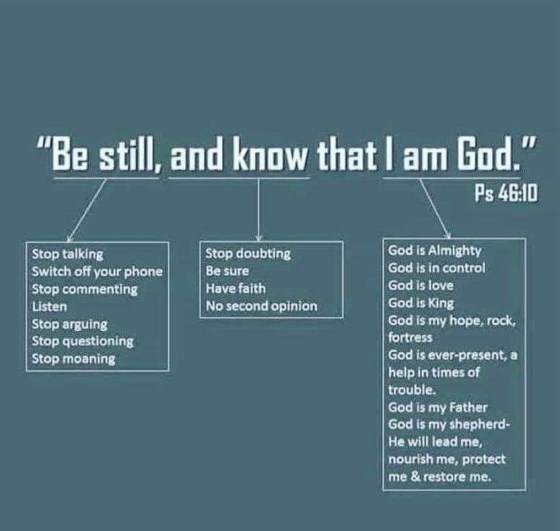
How to be still and know that He is God

There’s a fork in the road.
If we choose the way of personally accepting Jesus (which is the decision to do everything through love, and as a result gives us a new heart-set), then we don’t ever have to go down the road of destruction that the other decision leads to.

Our Mission
God’s Peace


Every day is the Lord’s day

What the Spirit gives

Love expressed
Soul Medicine


What can be said about a person who sows discord (Proverbs 6:14)?
ANSWER:
Today’s social media and internet chat platforms have become tantalizing playgrounds for those who enjoy stirring up arguments. But the Bible has nothing good to say about a person who sows discord: “A worthless person, a wicked man, goes about with crooked speech, winks with his eyes, signals with his feet, points with his finger, with perverted heart devises evil, continually sowing discord; therefore calamity will come upon him suddenly; in a moment he will be broken beyond healing” (Proverbs 6:12–15, ESV).
In Proverbs 6:14, “discord” is translated from the Hebrew (madan), meaning “strife, bitter conflict, heated and often violent dissension.” “Sowing” discord implies spreading conflict or scattering it widely. The passage reveals that an individual who sows discord is corrupted by sin and afflicted with a perverted heart. Solomon repeated the sentiment in Proverbs 16:28: “A perverse person stirs up conflict, and a gossip separates close friends.” In Proverbs 6:16–19, he listed seven things the Lord hates, and “one who sows discord among brothers” (ESV) was one of them.
Solomon pointed to a dangerous heart problem as the root issue for someone who sows discord. Jesus said the same: “But what comes out of the mouth comes from the heart, and this defiles a person. For from the heart come evil thoughts, murders, adulteries, sexual immoralities, thefts, false testimonies, slander. These are the things that defile a person” (Matthew 15:18–20, CSB). According to Proverbs 10:12, hatred, as opposed to love, dwells in the heart of those who stir up conflict. Hateful people delight in breaking up friendships and spoiling peace and harmony between brothers and sisters.
The Bible is clear that sin provokes quarrels and disagreement: “When you follow the desires of your sinful nature, the results are very clear: sexual immorality, impurity, lustful pleasures, idolatry, sorcery, hostility, quarreling, jealousy, outbursts of anger, selfish ambition, dissension, division” (Galatians 5:19–20, NLT; cf. James 4:1). The apostle Paul counseled believers to stay away from “people who cause divisions and upset people’s faith by teaching things contrary to what you have been taught” (Romans 16:17, NLT).
“Anyone who loves to quarrel loves sin,” stated Solomon (Proverbs 17:19, NLT). Believers cannot walk in the light of God’s love and continue spewing hatred and sowing discord: “If anyone claims, ‘I am living in the light,’ but hates a fellow believer, that person is still living in darkness. Anyone who loves a fellow believer is living in the light and does not cause others to stumble. But anyone who hates a fellow believer is still living and walking in darkness. Such a person does not know the way to go, having been blinded by the darkness” (1 John 2:9–11, NLT).
Paul warned believers against involving themselves in arguments and fights, even about spiritual matters: “These things are useless and a waste of time. If people are causing divisions among you, give a first and second warning. After that, have nothing more to do with them. For people like that have turned away from the truth, and their own sins condemn them” (Titus 3:9–11, NLT).
“Any fool can get himself into a quarrel,” stated the wise old teacher, but “honor belongs to the person who ends a dispute” (Proverbs 20:3, CSB). Solomon compared people who sow discord to troublemakers who go around lighting fires: “As charcoal for embers and wood for fire, so is a quarrelsome person for kindling strife” (Proverbs 26:21, CSB). Fires leave death and destruction in their wake. Proverbs 6:15 explains that the consequence of such foolish and evil behavior is sudden “calamity,” which literally refers to “a crushing weight.” A person who continually and actively sows discord is pursuing a life of sin, and such a life is destined for destruction (Romans 6:23; James 1:15).
Jesus said, “God blesses those who work for peace, for they will be called the children of God” (Matthew 5:9, NLT). But wicked mischief-makers who sow discord can expect to experience devastating distress and severe suffering. If they stubbornly refuse to listen to God’s warning and accept correction, they will be broken and ruined beyond all hope of healing (Proverbs 29:1). The Scriptures issue no light word of caution on this matter. Having a heart perverted by evil is a matter of life and death. The aftermath of such wickedness cannot be reversed.

GO TO HIM

The Word…Jesus

Praise
It is hard to be unhappy, or complaining, while we are actively honoring and praising our God!

The Chosen
Excellent depiction of the life of Jesus…

Rejoice Evermore!

The Chosen
This is an amazing series of the life of Jesus…it will change your life.
New season coming in a few days.

Are you lonely?

Pressured by the circumstances

I am a Child of God

As Prayer Warriors
Praying

We are given an awesome opportunity to show God and our fellow persons that we love them, by praying for them just as God has told us to do.

In the lion’s den
The angel that came to Daniel in the pit did not kill the lions he simply closed their mouths and stood with him in the midst of terrible danger.Meshach, Shadrach, and Abednego were not saved from the fire they stood in the midst of it with their savior. Moses and the Israelites did not have the Red Sea removed from in front of them it was simply parted for them to walk through. Silver is refined in the refiner’s fire and it’s only finished once the Refiner’s reflection can be seen in the silver. Grapes are crushed under foot to produce the sweetest wine, and olives are pressed in order to extract the purest oil.What makes you think that we are any different? We will walk through this tribulation, many will fall away because they stand on sand not the Cornerstone, Yeshua and scriptural truth, The WORD.
Larissa C. Clark

Is once saved, always saved biblical?


ANSWER
Once a person is saved are they always saved? Yes, when people come to know Christ as their Savior, they are brought into a relationship with God that guarantees their salvation as eternally secure. To be clear, salvation is more than saying a prayer or “making a decision” for Christ; salvation is a sovereign act of God whereby an unregenerate sinner is washed, renewed, and born again by the Holy Spirit (John 3:3; Titus 3:5). When salvation occurs, God gives the forgiven sinner a new heart and puts a new spirit within him (Ezekiel 36:26). The Spirit will cause the saved person to walk in obedience to God’s Word (Ezekiel 36:26–27; James 2:26). Numerous passages of Scripture declare the fact that, as an act of God, salvation is secure:
(a) Romans 8:30 declares, “And those He predestined, He also called; those He called, He also justified; those He justified, He also glorified.” This verse tells us that from the moment God chooses us, it is as if we are glorified in His presence in heaven. There is nothing that can prevent a believer from one day being glorified because God has already purposed it in heaven. Once a person is justified, his salvation is guaranteed—he is as secure as if he is already glorified in heaven.
(b) Paul asks two crucial questions in Romans 8:33-34 “Who will bring any charge against those whom God has chosen? It is God who justifies. Who is he that condemns? Christ Jesus, who died—more than that, who was raised to life—is at the right hand of God and is also interceding for us.” Who will bring a charge against God’s elect? No one will, because Christ is our advocate. Who will condemn us? No one will, because Christ, the One who died for us, is the one who condemns. We have both the advocate and judge as our Savior.
(c) Believers are born again (regenerated) when they believe (John 3:3; Titus 3:5). For a Christian to lose his salvation, he would have to be un-regenerated. The Bible gives no evidence that the new birth can be taken away.
(d) The Holy Spirit indwells all believers (John 14:17; Romans 8:9) and baptizes all believers into the Body of Christ (1 Corinthians 12:13). For a believer to become unsaved, he would have to be “un-indwelt” and detached from the Body of Christ.
(e) John 3:15 states that whoever believes in Jesus Christ will “have eternal life.” If you believe in Christ today and have eternal life, but lose it tomorrow, then it was never “eternal” at all. Hence, if you lose your salvation, the promises of eternal life in the Bible would be in error.
(f) In a conclusive argument, Scripture says, “For I am convinced that neither death nor life, neither angels nor demons, neither the present nor the future, nor any powers, neither height nor depth, nor anything else in all creation, will be able to separate us from the love of God that is in Christ Jesus our Lord” (Romans 8:38–39). Remember the same God who saved you is the same God who will keep you. Once we are saved, we are always saved. Our salvation is most definitely eternally secure!

Despite the clouds
Written by Blake Rackley)
(Forgive typos…Today has been long. Well, this year has been long.) So much is weighing heavy on the hearts of others. This week I listened to those who grieve the loss of identity, the loss of love, the loss of faith, and the loss of purpose. So many questions that have so few answers or at least answers that satisfy and calm their fears. They feel aimless and stuck. Maybe you feel similar. Maybe it is your job, the future, a relationship. You simply feel stuck by not knowing what decision is the “right” decision so you make no decision at all. Maybe you are nursing scars no one see. Maybe you are bleeding from wounds that do not bleed crimson and bandages do not help. The running theme of many who are experiencing this level of pain is that they do not want to burden another person with their “stuff”. Sadly, they suffer in silence and feel totally alone. Think for a moment. Have you ever seen a lone goose? A solitary, Canadian, turd dropping, Christmas goose flying all by their lonesome? My guess is that you haven’t. If you do, that is one lost goose. They are most always in a flock. They take turns with the burden of leading. They encourage by those obnoxious honks. They rest often. They have a destination, but it is often arrived at in the company of others. They will fly despite the clouds and gloom around them. They will fly at times in the rain, but they seek shelter together. They do not feel the need to do anything singularly. Why then do we believe we have to do anything by ourselves? We are called to bear one another’s burdens. So, I’m calling my brothers and sisters in Christ to help those around them. Sit with them. Eat with them. Shelter with them. Listen to their story. Encourage them with hope. But more than anything, fly with them through their clouds of depression, anxiety, abuse, loss, hopelessness, and failure. We all are more likely to fly on, fly farther, and fly with purpose when we have others behind us despite the dark clouds hanging over us. Quit saying, “If you need me, I’m always here.” They will almost never call you. If we want the world to know we love Jesus, we must intentionally bear the burdens of others by vulnerability and loving one another.

Surround yourself

Recognizing God

Love is patient
Faith
So much going on right now all over the world. It would be easy to be tempted to lose our faith. But that’s not going to be an option, is it?
I found this message on a facebook site and I was having one of those moments, primarily because I’m trying to spread the love of God around a lot of places today, and my computer is acting up…even while trying to post this. So I’m going to put a Ha Ha to Satan, and keep going.

Complaining? or Singing
Great Message! Made me look at my life in a new way!
5 WAYS TO USE YOUR SUFFERING TO LEAD OTHERS TO CHRIST
When was the last time your suffering led others to Christ? Ever since I scribbled these words, they continue to stare me in the eye—expecting a response.
The truth is I don’t know if I’ve ever prompted anyone to step closer to the Lord by how I handled sorrow. Pain tends to compel the crabby in me – enough to blame someone else for my suffering.
I doubt I’m alone. When in pain, it seems only human to default to finger-pointing—including at God.
“Are you heartless, or are you just incapable of healing my chronic pain, God?”
“If the store had posted a warning sign, I wouldn’t have slipped on the wet floor.”
“We got into the accident because you ran the red light!”
Jesus modeled suffering in a radically different way. The Son determined to live and die by glorifying the Father, even while enduring crucifixion and its excruciating pain. Jesus carried Himself with such dignity, it forced a handful of witnesses to face their own day of reckoning.
As a Christian, I aspire to emulate Jesus in every way—including during life’s harrowing moments. Don’t you?
The good news is learning to suffer Jesus’ way is doable. If it wasn’t, the Bible wouldn’t have recorded the following five principles He demonstrated while crucified:
- Non-Defensive
When those around Jesus did nothing but revile Him, He didn’t defend Himself. Neither did He attack them back (1 Peter 2:23). Jesus stayed silent (Isaiah 53:7). By doing so, He fully exhibited trust that God would avenge Him without having to do so Himself (1 Samuel 24:12).
Do you know how hard it is to clamp your mouth when you’re being assailed? I do. As a therapist, I strive to not defend myself if something I say riles up my client. It doesn’t matter how innocent my intentions might have been. If there’s a part of the client who finds my words offensive, my job is to listen and process that experience with the client. Defending ourselves is improper for therapists to do because that’s hardly what any client needs. Ever.
Like Jesus, you and I don’t need to engage in self-defense even if someone decides to harass us in our pain. The Lord is still the most powerful Avenger there is (Psalm 94:1). The One who sees everything will make things right in due time (Ecclesiastes 3:11).
- No Pity Party
Every group of people surrounding Jesus mocked Him mercilessly:
Passersby (Matthew 27:39-40),
Spiritual leaders (Matthew 27: 41-43, Luke 23:35),
Roman soldiers (Luke 23: 36-37),
And the two criminals condemned to death alongside him (Matthew 27: 38, Matthew 27: 44, Mark 15:32).
But even though their derision must have hurt, what might have stung even more was the roaring passivity of Jesus’ own loved ones. A tiny band of followers, including His mother, a few other women, and the apostle John, all witnessed Jesus’ abuse and humiliation—but none of them said a peep (John 19: 25-27).
If it were me bleeding on the cross? Hearing vicious sneers, coupled with my support system’s sustained silence, would’ve easily triggered a serious self-pitying episode.
Not Jesus. Never once did He pull a psalm-style lamentation of how long will you let these guys pummel me like this, Lord, when I did nothing to provoke them? Scour every book in the Bible, Old and New Testament combined, and you’ll find zero mention of Jesus crying on the cross. None.
Crucifixion is likely the most painful way to die ever invented, yet the Son of God shed no tears. Why?
Because Jesus refused to indulge in a pity party.
Self-pity sucks all of the attention to ourselves—This hurts so bad! Why hasn’t anyone checked up on me? Does anyone even care? Because the whining in self-pity repulses everyone else, pity partiers tend to cry all by themselves. Their act makes it impossible for others to respond with compassion.
Let’s resolve to ban any pity party even if our suffering feels unjust.
- Selflessness
Because Jesus squelched the temptation to pity Himself, He allowed the love of God to fully commandeer His attention.
Even though breathing—let alone speaking—would’ve wrecked His body with more unimaginable pain, Jesus intentionally did the following. He spent the energy to instruct His disciple, John, to care for His mother, Mary, from that point on (John 19:26-27).
Such selfless love!
A friend demonstrated how striking it is when we mimic Jesus’ winsome attitude. This fellow believer suffers from pancreatitis. She spent three weeks at the hospital for a major surgery. She has steadily lost weight and has to eat through a feeding tube for six months—yet, despite all the mental and physical pain she has to endure, she cares enough to ask how I’m doing.
Anytime we attend to another person, regardless of the intensity of our pain, we’re gently leading that person closer to our Father. That’s because only God’s love can inspire us to exhibit the unselfish love of 1 Corinthians 10:24—including in the midst of our suffering.
In this me-first world, such outrageous benevolence creates an unforgettable impression. It may even compel the recipient to investigate, “why are you so kind?”
At which point we can smile and explain: Christ in us, the hope of glory (Colossians 1: 27).
- He Sought Proper Help
There’s another reason I cherish the friend I mentioned above: she recognizes her limits. She didn’t conceal her need due to pride. Instead, she reached out to me and confided in me about her medical struggles. And when I offered to intercede, she gladly received my prayer.
How many are too proud to disclose our needs to each other?
My friend sought appropriate assistance because she needed it. In doing so she modeled after Jesus, who also appealed for help while on the cross.
On the surface, it seems as though Jesus’ words to the Father conveyed a son’s protest for his dad’s abandonment (Matthew 27:46). However, notice that Jesus directed His plea to God in a transparent and respectful manner. Contrast this attitude to many who, in their pain, give God the silent treatment or curse Him instead—like Job’s wife, for instance (Job 2:9).
The Lord will never forsake anyone who seeks Him (Psalm 9:10). So, if you want your suffering to count, never abandon the God who has loved you with an everlasting love (Jeremiah 31:3). Then, seek proper help—in the spiritual, physical, as well as emotional realm.
- He Forgave Fiercely
Forgiveness benefits the forgiver. We don’t forgive for the sake of those who wronged us, but for our own (Matthew 6:14-15, Luke 6:37). But if this truth is applicable to humans, then it applies to Jesus, too, given his status as fully God and fully human (John 1:1, John 1:14, Philippians 2:7).
What Are the Characteristics of a Man of God in the 21st Century?
Emma Danzey| Contributing Writer202117 Aug

I once had a profound moment with a boy in fourth grade. I gave some words of encouragement to young boys about how the Lord has a purpose for every man of God. I told them that they were special and had a unique calling to be men one day. Afterward, one young man came up and said thank you because he had two sisters and his mom who were always watching female-empowering shows and movies. He wanted to be encouraged too. Today we are going to study some of the main characteristics of a man of God.
What Is the Meaning of the Phrase ‘Man of God’?
1 Timothy 4:8 says, “For physical training is of some value, but godliness has value for all things, holding promise for both the present life and the life to come.”
When I think about men around me who have dedicated their lives to Christ, I think of humility, courage, and leadership. They may not always be the quarterbacks or the CEO types, but they are faithful to the Lord no matter what their personalities and giftings include. When I was praying for my husband, I prayed specifically that he would be a man of God. What I meant by this, was a man pursuing the Lord, who surrendered His life to Christ. I think of men who acknowledge that they are sinners, but still, choose to live by the Spirit and not by their flesh (Galatians 5:16).
The phrase, “A man of God” is used in the Bible 35 times. Aaron Brown from Crosswalk says, “Being a man of God is not something to be condemned but rather encouraged. For any boy becoming a man, or men trying to commit themselves more thoroughly to God, there is an answer to the question.” A man seeking to know Jesus more and living like Him more is a man of God. He is not a perfect man, but he is a godly one. A man of God admits he is not able to represent the Lord without the help of the Holy Spirit (Ephesians 5:18). He will be strong through Christ and seek Him each day (Psalm 105:3-4).
What Are Some Key Characteristics of Men of God?
There are some qualities of a Christian man that are the same in a Christian woman. Everyone who has Christ has the Holy Spirit and can live a godly life. So what are some specific characteristics in which men of God obtain?
Gentle
This might sound like an interesting trait to begin with, but it reminds me of the word gentleman. In the book “Gentle and Lowly” by Dane C. Ortlund, he describes that Jesus Himself describes his heart once in the Bible as “gentle and lowly” (Matthew 11:29). When someone thinks of a manly man by the world’s standards, he might imagine a physically tough guy who shows no weaknesses, gets angry, and has no fear. This is not an accurate depiction of biblical manhood. Gentleness is a character trait that does not come naturally but reveals the interworking of the Lord to enable men to be slow to anger and quick to listen. It leads to great patience and steadiness.
Courageous
One of the main qualities described when discussing a man of God is courage. Nelson Mandela once said, “Courage is not the absence of fear, but the triumph over it. The brave man is not he who does not feel afraid, but he who conquers that fear.” Men have fear, but God gives them the strength to walk in the midst of that fear and have victory through the Lord. Men many times are called upon to be brave. Bravery could look like anything from killing a spider to sharing about a struggle in a men’s group. It could be carrying a heavier load because of the gift of physical strength. Courage is even the great faith in the Lord it takes to lead a family and point them to Christ (Joshua 1:9).https://2132aa14c9f9630258fbcb5475bfd650.safeframe.googlesyndication.com/safeframe/1-0-38/html/container.html
Honest
Cole Douglas Claybourn from Crosswalk says, “Men have been trained and socialized to avoid and ignore knowing their insecurities, which is one of the reasons they are less verbal than women about their insecurities, Vierra said. ‘This results in less being known and understood about them.’” A man of God is not beyond sharing his thoughts and feelings. He pushes past the “macho man” mentality and can step into vulnerability (2 Corinthians 8:21).
A man who follows the Lord takes responsibility. He pursues Christ and follows Him with boldness. He does not sit back as Adam did in the garden when Eve was sinning. He stands up for what is right and takes action. He is reliable and loyal. You can trust that he is who he claims to be to others (Colossians 3:23).
Who Are Examples of Men of God in the Bible?
Some specific men who were given this title of honor in Scripture include, Moses, David, Elijah, and Elisha.
Moses—Deuteronomy 33:1 “Now this is the blessing with which Moses the man of God blessed the sons of Israel before his death.”
David—Nehemiah 12:36 “and his kinsmen, Shemaiah, Azarel, Milalai, Gilalai, Maai, Nethanel, Judah and Hanani, with the musical instruments of David the man of God. And Ezra the scribe went before them.”
Elijah—1 Kings 17:18 So she said to Elijah, “What do I have to do with you, O man of God? You have come to me to bring my iniquity to remembrance and to put my son to death!”
Elisha—2 Kings 5:8 “It happened when Elisha the man of God heard that the king of Israel had torn his clothes, that he sent word to the king, saying, ‘Why have you torn your clothes? Now let him come to me, and he shall know that there is a prophet in Israel.’”
What Does a Man of God look like in the 21st Century?
Bible Study Tools shares it beautifully, “While the world tends to tell men to hide their emotions and act tough, God’s Word is filled with men who passionately and whole-heartedly sought God with their heart, mind, and soul! God has a special calling for men to be strong, courageous leaders, and His Scripture can provide the inspiration you need to take daily steps towards your calling.”
Men of God in the 21st century represent Christ. No matter what a man’s denomination is or culture, he represents biblical manhood when he models loving God and loving others. He is not boxed in by a world definition of a man having power and prestige. He is confident in his personal identity in Jesus. He knows who he is and walks daily with God. He is willing to admit his wrongs and has the strength to try again when he fails. He is unashamed to share his heart with others and to step up to the plate to be brave. This is not in his own power, but the strength of the Holy Spirit within him.
A man cannot force anyone to be a man of God, but he can model it and show others how to live for Christ. The men in my life do this so well in their own ways. We can pray and speak words of encouragement to the young boys and young men in our homes and communities. We can give the same motivation to the men as the women. We are all created in the image of the Lord. He made us male and female. Our Great Creator has perfect plans for how he made us and loves us. If you are a man or know a man, remember that men have a wonderful calling and a purpose on this earth. Let us celebrate the men of God in this world.
What are the promises of God?
There are many, many promises of God in Scripture. In each promise, God pledges that something will (or will not) be done or given or come to pass. These are not flippant, casual promises such as we often make; these promises of God are rock-solid, unequivocal commitments made by God Himself. Because God is faithful, the recipients of the divine promises can have full assurance that what God has pledged will indeed be realized (Numbers 23:19).
Here are just a few of the promises that God has made:
Promises of God in the Old Testament.
God promised to bless Abraham and, through his descendants, the whole world (Genesis 12:2–3). This promise, called the Abrahamic Covenant, pointed to the coming Messiah for whom Abraham looked (John 8:56).
God promised Israel to be their God and make them His people (Leviticus 26:12–13). Old Testament history is teeming with examples of God fulfilling this promise.
God promised that if we search for Him we will find Him (Deuteronomy 4:29). He is not playing hard-to-get. “Our God is near us whenever we pray to him” (Deuteronomy 4:7).
God promised protection for His children (Psalm 121). He was the vigilant watchman over all Israel.
God promised that His love will never fail (1 Chronicles 16:34). He is faithful in every way.
God promised Israel that their sin could be forgiven, their prosperity restored, and their nation healed (2 Chronicles 7:14). Repentance opened the road to fellowship and blessing.
God, under the terms of the Mosaic Covenant, promised prosperity to Israel for obedience and destruction for disobedience (Deuteronomy 30:15–18). Unfortunately, Israel eventually chose to disobey, and the nation was destroyed by Assyria and Babylon.
God promised blessing for all who will delight themselves in His Word (Psalm 1:1–3). Simple faith has its rewards.
Promises of God in the New Testament.
God promised salvation to all who believe in His Son (Romans 1:16–17). There is no greater blessing than the free gift of God’s salvation.
God promised that all things will work out for good for His children (Romans 8:28). This is the broader picture that keeps us from being dismayed by present circumstances.
God promised comfort in our trials (2 Corinthians 1:3–4). He has a plan, and one day we will be able to share the comfort we receive.
God promised new life in Christ (2 Corinthians 5:17). Salvation is the beginning of a brand-new existence.
God promised every spiritual blessing in Christ (Ephesians 1:3). Whereas, in the Old Testament, Israel had the promise of physical blessing, the church today has been promised spiritual blessings “in the heavenly realms.” Our inheritance is reserved for us (1 Peter 1:4).
God promised to finish the work He started in us (Philippians 1:6). God does nothing in half measures. He started the work in us, and He will be sure to complete it.
God promised peace when we pray (Philippians 4:6–7). His peace is protection. It will “guard your hearts and your minds in Christ.”
God promised to supply our needs (Matthew 6:33; Philippians 4:19). Not that we get everything we want, but our needs will be taken care of. We are more valuable than the birds, and our Heavenly Father feeds them (Matthew 6:26).
Jesus’ promises in the Gospels.
Jesus promised rest (Matthew 11:28–30). Burdens are lifted at Calvary.
Jesus promised abundant life to those who follow Him (John 10:10). Following Jesus brings us more spiritual fulfillment than we could have anticipated. We leave boring behind.
Jesus promised eternal life to those who trust Him (John 4:14). The Good Shepherd also promised to hold us securely: “No one will snatch them out of my hand” (John 10:28).
Jesus promised His disciples power from on high (Acts 1:8). In this power, they “turned the world upside down” (Acts 17:6, ESV).
Jesus promised that He will return for us (John 14:2–3). From then on, we will be with Him always.
There are many more promises of God that could be listed. All of them find their ultimate fulfillment in Jesus Christ, “the radiance of God’s glory” (Hebrews 1:3). “No matter how many promises God has made, they are ‘Yes’ in Christ” (2 Corinthians 1:20).
All Things…

The Key to Daniel’s 70th Week Revealed
For those of you who are interested in prophecy…
https://prophecyunfolding.org/2021/08/07/the-key-to-daniels-70th-week-revealed/

I’ve studied prophecy since I was 12 years old, so to find something NEW is very exciting. This video is a fresh and distinct approach. I, personally, am unable to verify the calculations that are revealed here, but they are sufficiently presented in continuity to certainly give pause and reflection to them.
(NOTE) Jesus as the teacher, had the best interests of His students at heart; always, the subject of His teaching was the absolute and unchanging truth of God. We also have the best interests of our readers at heart. However, as we seek to share, we do not claim that we are qualified to be called teachers per se.
Having been given the gift of the desire to teach, doesn’t qualify us to state that we are teaching the absolute and unchanging truth of God. It is our hope, and intention, however, to be as accurate as humanly…
View original post 35 more words
Is He Your Friend, or a Doctrine?

“A rule I have had for years is: to treat the Lord Jesus Christ as a personal friend. His is not a creed, a mere doctrine, but it is He Himself we have.”
~D.L. Moody
Friendship with God can be a liberating secret. It releases us from the terrible bondage of religion and ritual with all its negative connotations. Intimacy with our Lord will carry us beyond creed or doctrine to the place of true communion.
It’s not that the Law is bad, but in the intense light of God’s grace it’s a poor substitute. We value legalism, and that is precisely what we believe when we bypass the relationship. Doctrine is a good servant, but a poor master. Grace always trumps legalism.
We evangelicals talk big about “a personal relationship.” That is indeed crucial. But few be the believers that walk in a daily friendship with their Savior. That is truly a tragedy.
“I no longer call you slaves, because a master doesn’t confide in his slaves. Now you are my friends, since I have told you everything the Father told me.”
John 15:15, NLT
Friendship with Jesus will bring true guidance. He shares secrets and wisdom to his friends. We are brought into a true knowledge of the Kingdom through the relationship of friendship with the King. We are not slaves– or drones, slavishly serving out of slavish fear.
We are His friends.
Jesus wants to confide in us; sharing mysteries hidden by time and sin. And his kingdom is full of amazing perplexities! He is looking to bring us into a willingness of a daily communion.
He will heal our wounds, and forgive all our sins. He is truly our savior as well as our friend.
Friendship comes with a price. It means we are now tethered to the Lord. That can get old, especially when I want to do my own thing. I will continually have to lay things down, and choose to accept tether and follow Him.
But my soul now has a best friend.


When Life is Dark and Heaven is Quiet
Posted byBryan LowePosted inbeliever, darkness, discipleship, encouragement, following Jesus, God, life lessons, Satan, theology, understandingTags:discipleship, God, Jesus, promises, testing, trials, understanding
God’s people have always had to wrestle with the things from the dark. As believers, the Bible tells us that we’re in a permanent state of war against Satan. There has never been an armistice or treaty signed to my knowledge. Each one of us is on the front lines. The devil has been practicing with a deadly form of “spiritual terrorism.” And he terrorizes many with his posturing and manipulation.
Life can get quite dark, and desperately bleak. No one needs to educate us about the dark nightmare that is now active. Over a couple of millennia, God’s covenant people have been harmed and harassed. Enemies are constantly manipulating and twisting God’s Word. As disciples, we’re under steady surveillance by the dragon.
Sometimes heaven is silent. But I believe it is never, ever disinterested.
But He certainly has not overlooked us. As we read our Bible, our faith becomes like Teflon. Nothing can stick to you; even though so much is thrown at us. When life is really dark or terribly bleak, we can protect ourselves and others. There are times when we can sense nothing.
“Therefore, since we are surrounded by so great a cloud of witnesses, let us also lay aside every weight, and sin which clings so closely, and let us run with endurance the race that is set before us.”
We are not theologians, we are just simple disciples. He knows this. I believe He simplifies things in order to help us understand. God has little reason to complicate things for us.
I believe that we are “surrounded” by saints of all ages. They see in us a faith that justifies us. And I must admit, that helps me. I am part of a continuum. I now know that my simple faith must always pass the test of discouragement.
But now the torch is passed, and now you must run with it faithfully and honestly. And when all is so dark, and things seem far too quiet, I still intend to hold up that torch and carry it all the way to my Father’s house.
“There was a castle called Doubting Castle, the owner whereof was Giant Despair.”
John Bunyan, “Pilgrims Progress”

I don’t know
I feel the most unsettled when I’m uncertain about the future.Many of you are also probably facing circumstances that have left you feeling caught off guard and unsure about what tomorrow holds. So many times I find myself bracing for impact when I check my daily news feed. If there’s one word that seems most certain to describe the times we are living in, it’s “uncertain.”There are thousands of scenarios that evoke these feelings of uncertainty, fear and exhaustion from life not being like you thought it would be.Whatever your situation, you probably feel like you can’t change it, but you still have to live through the realities of what’s happening right now. Sometimes you just have to walk in your “I don’t know.” The Lord makes it clear in His Word that things will not always go as we wish they would in this life. The crucial detail for us to have peace in the middle of everything we face is to stay close to the Lord. We think we want comfort in the “I don’t know” times of life. But comfort isn’t a solution to seek; rather, it’s a byproduct we’ll reap when we stay close to the Lord.I wish I could promise you that everything’s going to turn out like you’re hoping it will. I can’t, of course. But what I can promise you is this: God is close to us even in our “I don’t knows.” God has lessons for us that are crucially important for our future, and we’re learning them in the middle of our “I don’t knows.” God has a strength He must prepare us with, and the training ground is here in the “I don’t know.”This time isn’t a waste, and it’s definitely not pointless when we are walking with God. Let’s cry out to God, declaring that this hard time will be a holy time, a close-to-God time. And let’s choose to believe there is good happening, even in these places. We can rest in the knowledge that wherever God is, good is being worked.-What difficult “I don’t know” season are you walking through today?
PROVERBS 31 MINISTRIES

The Creation of “YOU”
Promise #124:
I gently formed you in your mother’s womb.
Psalm 139:13 (WEB)
For you formed my inmost being.
You knit me together in my mother’s womb.
The New International Version Bible says Psalm 139:13 this way… For you created my inmost being; you knit me together in my mother’s womb. The New Living Translation says… You made all the delicate, inner parts of my body and knit me together in my mother’s womb. No matter what translation you prefer, this is a gentle picture of God’s loving creation process.
You were not blasted into creation, but gently formed in your mother’s womb by a loving God who took the time to delicately knit all your inward parts together. May the revelation of your creation bring a sense of well being to your soul. You were not a mistake. God planned you before the foundation of the world and He determined the exact time of your birth.
One of the greatest tragedies in this world today is the feeling that our lives were a mistake. Some people were even told that by their parents. The truth is that no life was ever a mistake. Each person ever created, was created with intention by the One who is love itself.
God gently formed you in your mother’s womb and He is the One who brought you forth on the day you were born. (Psalm 71:6) There is absolutely no doubt about it!
Covid-19
So grateful to have gotten our 2nd Covid-19 shot today! What a blessing that these shots are available! We got the Moderna shot. So far…so good!
God’s Heart

The Power of the Resurrection

The Power of Broken Prayers
Clarence L. Haynes Jr. is a speaker, Bible teacher, author and co-founder of The Bible Study Club
How do you approach God and people when your faith is small, when you can’t believe and when you wonder if God is even listening?
That’s why I want to encourage you today to pray broken prayers. Consider this passage in Luke:
“While Jesus was in one of the towns, a man came along who was covered with leprosy. When he saw Jesus, he fell with his face to the ground and begged him, ‘Lord, if you are willing, you can make me clean.’ Jesus reached out his hand and touched the man. ‘I am willing,’ he said. ‘Be clean!’ And immediately the leprosy left him” (Luke 5:12-13).
There was something about this man that I think you can relate to. He was broken by life because he was a leper. We are not sure how he caught leprosy, but nevertheless he had it and it was a terrible disease. To be a leper in those days was to be an outcast. I will spare you the details of the horror of this disease, but beyond the physical pain and suffering there was the mental pain and suffering because no one wanted to be around you. Lepers were shunned and people thought they were cursed by God and their leprosy was a result of their sin. Some scholars say a leper couldn’t come within six feet of any other Israelite and within 150 feet if there was an east wind blowing (I guess this was the original form of social distancing).
In our story, this leper comes to Jesus. He was sick, probably in pain, and shunned by the outside world. In one word he was broken. In his place of brokenness he cried out to Jesus for help and Jesus responded.
How Does This Apply to You?
There are usually two ways we end up in positions of brokenness or helplessness. In one instance you are doing everything right. You are living right. You are giving right. You are serving. You are following God, obeying his word and doing everything you are supposed to do – and all of a sudden you get hit with life, leading you to a broken place.
On the flip side, maybe you are doing everything wrong. You’ve made a series of bad decisions and choices and your life feels like it’s falling apart. Everything is breaking down around you and you don’t know what to do. You too are in a broken place.
You see, it does not matter how you got there, you end up just like the leper. Whether it’s by your own fault or no fault of your own, you are in this place of desperation and brokenness. What do you do?
The Power of the Broken Prayer
What I love about this story is the way the man came to Jesus. He came and threw himself at his feet. He came humble. He came honest and he came broken. He didn’t even pray what would be considered a faith-filled prayer. He said Lord, if you are willing. In essence he was saying I know you can, I just don’t know if you will.
His prayer was not coming from a place of expectation, it was coming from a place of desperation. In other words, he came to Jesus just as he was. Unclean, rejected, desperate, broken and out of this place he cried out to Jesus. He was offering what I would consider a broken prayer, yet this prayer had much power in it.
Lessons from This Broken Prayer
1. Come to Jesus Just the Way You Are
Too often we make the mistake of thinking we have to come to Jesus with everything right. The same mask we wear into church on Sunday morning we take into prayer and into the presence of God. If I could encourage you with one thing let it be this. Stop thinking you have to always have it all right. Don’t fall into the trap of thinking you have to have your faith right, your worship right, you have to pray the right words and when you do then God will hear you. That is not what God responds to.
You can come to Jesus just as you are, broken and all, with the mask off and pour your heart out to him. Broken prayers aren’t perfect prayers, but they come from a place of humility and honesty and that is exactly what God wants.
Psalm 51:17 – “The sacrifice you desire is a broken spirit. You will not reject a broken and repentant heart, O God.”
2. God Doesn’t Only Respond to Our Faith, He Also Responds to Our Brokenness
There is something amazing in this story of Luke that if you read too fast you will miss. Before Jesus healed him, he touched him. Remember this was a man who was shunned by society. Who knows how long it had been since someone had touched this man?
Before Jesus addressed his obvious physical need for healing, he addressed the less obvious emotional need to be touched. We already mentioned earlier that this man did not pray a prayer of great faith, yet Jesus responded. This tells me that God not only responds to your faith, he responds to your brokenness as well. Jesus could have healed the man first and then touched him, but he didn’t – he touched him first.
That is why it’s ok to come just as you are. Don’t worry about having everything all neat and buttoned up, God will respond to your broken condition.
3. When You Touch the Heart of God, It Will Move the Hand of God
Luke 5:13b – “’I am willing,’ he said. ‘Be clean!’ And immediately the leprosy left him.”
I believe the reason why Jesus moved in this man’s situation is because this man touched his heart. When you touch the heart of God, it will move the hand of God. You must also be mindful of something. When you pray broken prayers, sometimes God will change the situation instantly which is what happened here. However sometimes the situation may remain the same, but he will change you instantly. At the place of brokenness, you are laying it all down and asking God to move on your behalf as he sees fit. The beauty of the broken prayer is that you may come to God broken, but you will walk away whole.
If you are sick you may walk away healed, but even if God doesn’t heal you, walk away whole.
If you are discouraged you will walk away encouraged.
If you come with no faith you walk away believing God to do great things in your life.
If you come with no joy you walk away with joy unspeakable and full of glory.
If you come with no peace you walk away with peace that passes all understanding, even in the midst of brokenness.
The beauty of the broken prayer is that God takes it, strengthens you and gives you the confidence to know that God is going to bring you through.
Final Thought
I don’t know what feels hopeless, broken, or desperate in your life today. I do know that if you will pour it out humbly and honestly, God is waiting to touch you, heal you and restore you. You are reminded from Scripture to cast all your cares upon him because he cares for you. The situation you are in today matters, and Jesus is waiting with open arms to touch all the broken places in your life. However, it begins when you take the mask off and begin offering up those broken prayers.
How to define and apply love in our lives
| Matthew 22:37-39 |
| New International Version Jesus replied: “‘Love the Lord your God with all your heart and with all your soul and with all your mind.’ This is the first and greatest commandment. And the second is like it: ‘Love your neighbor as yourself.’ |
God’s plans give us hope and a future
| Jeremiah 29:11-13 |
| New International Version For I know the plans I have for you,” declares the Lord, “plans to prosper you and not to harm you, plans to give you hope and a future. Then you will call on me and come and pray to me, and I will listen to you. You will seek me and find me when you seek me with all your heart. Read at Bible Gateway Read all of Jeremiah 29 |
There is no fear in Love
VERSE OF THE DAY
1 John 4:18 (King James Version)
There is no fear in love; but perfect love casteth out fear: because fear hath torment. He that feareth is not made perfect in love.
Fostering Love
| Verse of the Day Proverbs 17:9 |
| New International Version Whoever would foster love covers over an offense, but whoever repeats the matter separates close friends. Read at Bible Gateway Read all of Proverbs 17 |
NOTHING can separate us from the love of God
New International Version
Romans 8:38-39
For I am convinced that neither death nor life, neither angels nor demons, neither the present nor the future, nor any powers, neither height nor depth, nor anything else in all creation, will be able to separate us from the love of God that is in Christ Jesus our Lord.
Read all of Romans 8
More on Love and Hatred
| 1 John 3:11 |
| New International Version For this is the message you heard from the beginning: We should love one another. Read at Bible Gateway Read all of 1 John 3 |
The perils of disapproving God
NOVEMBER 8, 1998
The Perils of Disapproving God
- Resource by John Piper
- Scripture: Romans 1:28–32 Topic: The Power & Effects of Sin
Paul’s teaching about why a society degenerates into unrestrained, debauched, destructive evil is unlike any analysis you would read today. One of the reasons for this is that when a society is sinking into moral decay, one of the traits of that decay is the inability to see what is happening. The social mind becomes so defective in the moral decadence that it doesn’t have the categories or the framework to recognize evil for what it really is.
We do live in such a day. The inability to render sound moral judgments is evident almost wherever you look. Which makes this passage of Scripture one of the most relevant and needed texts in all the Bible for our day — precisely because it seems so foreign. Today, if something doesn’t seem spiritually or morally foreign, it is probably part of the blind and decadent atmosphere we breathe, and therefore of no real use to us, no matter how good it makes us feel.
What we need is a word from outside our defective world and our depraved thinking. We need a word from God. And we may certainly expect such a word to be very strange, because we have become strangers to the reality of God in a very self-absorbed age.
What we have in today’s text is a list of twenty-one ways of sinning or twenty-one kinds of evil. And what I think we should do is notice, first, why Paul gives us this list and where such evil comes from. Then we should look at the list itself and ask why it’s here. Then we should ask what the solution is to these kinds of things.
Why Do We Have to Deal with Evil?
So, first, where do the evils listed in verses Romans 1:29–31 come from? It all started back in verse 18 where Paul gave the reason for why the gospel of the gift of God’s righteousness is so desperately needed. You recall that he said in verse 16 that the gospel is “the power of God for salvation to everyone who believes, to the Jew first and also to the Greek.”
“We need the righteousness of God because it is the only thing that can protect us from the wrath of God.”TweetShare on Facebook
Why? Verse 17: “For in it the righteousness of God is revealed from faith to faith; as it is written, ‘But the righteous shall live by faith.’” In other words: The gospel is the power of God to save believers because in it God gives us what we need and could never produce on our own, namely, his own righteousness. The righteousness that he demands from us he freely gives to us, if we will trust him. This is the great biblical truth of justification by faith.
Then in verse 18, he tells us why this gospel of the gift of God’s righteousness is so desperately needed: “For the wrath of God is revealed from heaven against all ungodliness and unrighteousness of men who suppress the truth in unrighteousness.” We need the righteousness of God because it is the only thing that can protect us from the wrath of God. And we need to be protected from the wrath of God because we are unrighteous by nature and suppress the truth of God. By nature we don’t like God and we don’t want him in our lives. I tremble just to say it.
The Effects of Suppressing the Truth of God
So what Paul does in the following verses is describe for us the effects of suppressing the truth of God. He wants us to see all the evil of the world as a river that flows from this spring. Reject God, suppress God, distort God, recreate God in your own image to your own liking, and the effect is worse than we expect. And the thing that is worse than we expect is that God joins our crusade against God, as it were, and delivers us into the debasing effects of our own rebellion against him.
We’ve seen it three times. In verse 23, we exchange the glory of God for images, and verse 24 says, “Therefore God gave them over to the lusts of their hearts.” In verse 25, we exchange the truth about God for a lie, and verse 26 says, “For this reason God gave them over to degrading passions.” And today in verse 28 we see it again: “They did not see fit to acknowledge God (or literally: they did not approve to have God in their knowledge), [therefore] God gave them over to a depraved mind, to do those things which are not proper.”
This is what Paul means by the wrath of God being revealed (verse 18): God’s wrath is being revealed against the world, as human beings all over the world set their affections on other things more than on God. God’s response to this worldwide disloyalty and treason against our Creator is not, first, to send us to hell, but to see that we sink into the swamp we have chosen.
This is what I was referring to at the beginning when I said that Paul’s teaching about why societies often degenerate into unrestrained, debauched, destructive evil is unlike any analysis you would read today. Today you might hear someone say: “Okay, America, you have built your bed of secular, God-belittling relativism and amorality, so now sleep in it.” But that is not what Paul says here.
He says something far more horrifying about God’s wrath. He gives us his analysis of our situation in four steps. Just take verse 28 from today’s text to see all four. First, he says that the root problem is that we don’t like having God in our knowledge. “They did not see fit to acknowledge God.” That is the fundamental problem in the world. That is the essence of the human condition. We don’t want God. We want self-determination and self-exaltation. That was the first sin in the garden. And that is the root of all evil today. We do not want to know God or have him in our lives.
The Depth of our Sin Deserves Divine Judgment
The second step of God’s analysis is that God, in an act of judgment (recall the revealing of “wrath” in verse 18), withdraws his common restraints on our rebellion and gives us over to sink in the swamp we have chosen. This is what you will not hear in any social analysis today. Who today has the God-centered realism to say: The depth of our sin does not just deserve divine judgment, it is divine judgment? That is what Paul says. You can’t really understand America (or any other country) today without this revealed truth. Even if we tried to boast over God that at least we have our self-determination in rebelling against God, God would answer, “You think so? Think again.”
“Wherever we are sinking in sin, it is because we have jumped off the rock of the glory of God.”TweetShare on Facebook
The third step in Paul’s analysis (in verse 28) is that the effect of God’s giving us over and removing his common restraints (see Genesis 20:6) is that we are imprisoned by a “depraved mind.” “God gave them over to a depraved mind.” Our minds become more and more defective in sin. Not only do we use them to sin, but we can’t even think clearly about sin. We can’t recognize it. It’s as if we turned away from God and fell in love with the African black fly that carries the roundworm that causes river blindness, and then God gave us over to the fly and the worm — and the blindness — so that all we can do now is fondle the fly (of sin!) and keep trying to convince ourselves that it’s a precious tuft of velvet.
The fourth step of the analysis (in verse 28) is that our defective mind produces all kinds of evils. Paul goes on to list twenty-one of them as samples. So now we have our answer to the first question, namely, where does such evil come from? It comes from: (1) our desire not to have God in our knowledge; and (2) from God’s judgment on mankind to give us over to sink in the swamp we love; and (3) from the depraved or defective mind that we sink into.
Failure to Love God Breeds Evil
So now we can ask the question: What is this list of evils? What are we to make of this long list and why is it here? Let’s read it again. Verse Romans 1:28–31:
God gave them over to a depraved mind, to do those things which are not proper, being filled with all unrighteousness, wickedness, greed, evil; full of envy, murder, strife, deceit, malice; they are gossips, slanderers, haters of God, insolent, arrogant, boastful, inventors of evil, disobedient to parents, without understanding, untrustworthy, unloving, unmerciful.
Of course, a person could raise an objection against Paul here: This is not the way all unbelievers are. Some are very conscientious, law-abiding, philanthropic, courteous, decent people. Yes, that’s true, and Paul knew it was true. He was quite aware, for example, of the Stoics of his own day — people like Seneca and later, Epictetus and Marcus Aurelius, who prided themselves in not being like this list of evils, and yet, who were not Christians.
Downward Spiral
No, the point of this list is not to say that every society that refuses to love the true God will look just like this. We know this because, in verses 26–27, Paul says that homosexual desire is also a result of not loving God above other things, and being handed over by God, and yet Paul clearly does not think that every unbeliever has homosexual desires.
Similarly, here in verse 28–31, when he says that all these sins are the result of refusing to acknowledge God, and he doesn’t mean that every unbeliever, or group of unbelievers, has all these sins or in the same measure. Instead, these are samples. They are the sort of thing that comes from rejecting God, and the more God gives a people up to their own unrestrained depravity, the more their society will have these sins in greater and greater measure.
Sunk in Sin
So what’s the point of listing all these sins? The point, I think, is to give us enough examples to show that virtually every form of evil has to do with God and comes from failing to know him and approve him and love him above all things. In other words, he gives us a sweeping array of evils to awaken us to the fact that the ruin of any area of life is owing to the abandonment of God. Verse 28: they did not want God in their knowledge, therefore . . . and then he gives his list of evils.
In other words, the point of the list is to connect God with every sin in the world. And we’ve seen that the connection is twofold: every sin is rooted in our preferring something else to God; and every sin gets worse as God takes away his restraints and gives us up to sink in the swamp we have chosen.
If America has the highest murder rate in the western world, it has to do with God. If our executives are greedy, it has to do with God. If our politicians are deceitful, it has to do with God. If we gossip about each other behind the back, it has to do with God. If our talk show hosts are insolent and boastful, it has to do with God. If our children are disobedient to parents, it has to do with God. If we are untrustworthy and don’t keep our marriage vows, it has to do with God. If we are blind to obvious wrongs and are unloving and unmerciful, it has to do with God.
That’s the point of this list. Wherever we are sinking in sin, it is because we have jumped off the rock of the glory of God.
How Do We Battle Destructive Evils?
Which brings us finally to the third and last question: What is the solution? How shall we battle back against these destructive evils in our own lives and in our culture? The answer is what the whole book of Romans is about. But let’s close by looking at three great reversals.
- We need the reversal of God’s wrath against our unrighteousness.
- We need the reversal of God’s handing us over to a depraved mind.
- We need the reversal of our mind’s moral decay so that it can be renewed for right and proper use in God’s service.
The good news is that God has provided every one of those reversals. You do not have to sink any further if you will embrace God and his provision. The key verse for the reversal of God’s wrath against us is Romans 1:17: In the gospel of Christ, “the righteousness of God is revealed from faith to faith; as it is written, ‘The righteous shall live by faith.’”
In other words, the righteousness that God demands from us, he freely gives to us, if we will turn back to him and trust him to be our greatest Good. And if you have the righteousness of God, you are not under the wrath of God anymore — a very happy reversal!
God Grants Righteousness
The key verse for the reversal of God’s handing us over to a depraved mind is Romans 6:17: “Thanks be to God that, though you were slaves of sin, you became obedient from the heart to that form of teaching to which you were handed over [same word as Romans 1:28].”
“The righteousness that God demands from us, he freely gives to us.”TweetShare on Facebook
This is the exact reversal of the handover in Romans 1:28. Here it is to a form of teaching that is true and holy, not false and dirty. And notice that it is God who does it. “Thanks be to God,” Paul says, that you became obedient to this teaching. God gives us over to truth and righteousness as much as he once gave us over to sin.
Finally, the key verse for reversing the defectiveness of our minds is Romans 12:2: “Do not be conformed to this world, but be transformed by the renewing of your mind, so that you may prove what the will of God is, that which is good and acceptable and perfect.”
Receive the Reversal
When God has given us his righteousness by faith in Jesus, and when he has handed us over to a new teaching of truth and begun to make us obedient to it, then, little by little, we are transformed in the renewing of our minds and the long list of sins in Romans 1:29–31 becomes shorter and weaker to the glory of God.
This is the key to life. This is the message that we take to the neighborhood and to the nations. I call you and urge you to receive these three reversals from the hand of God by faith: (1) the reversal of God’s wrath through the gift of God’s righteousness; (2) the reversal of being handed over to depravity through being handed over to truth; and (3) the reversal of a depraved mind through the transformation of a renewed mind.John Piper (@JohnPiper) is founder and teacher of desiringGod.org and chancellor of Bethlehem College & Seminary. For 33 years, he served as pastor of Bethlehem Baptist Church, Minneapolis, Minnesota. He is author of more than 50 books, including Desiring God: Meditations of a Christian Hedonist and most recently Providence.
Who is in you!
4 You are of God, little children, and have overcome them, because He who is in you is greater than he who is in the world.
1 John 4:4
Remember this verse as we go into the next year!
May God bless all of you, as we embrace Him and each other.
Love embraced
Praying for all
who embrace love in every aspect,
daily.
Praying that we all
come back to the basics
of seeking God first
and loving each other!

A Call to Love
If there was ever a time when we are called to show an extraordinary display of love for God and each other, it is now. I’ve been questioning what we as Christians are doing to show love during these hectic times.
Reading the following scripture, I tried to put a filter in place to determine whether modern-day Christianity actually survives the test of Jesus’ definition of love. Let’s read this together and ask the Holy Spirit to help us answer that question.
The Great Commandment
Matthew 22 (English Standard Version)
34 But when the Pharisees heard that he had silenced the Sadducees, they gathered together.
35 And one of them, a lawyer, asked him a question to test him.
36 “Teacher, which is the great commandment in the Law?”
37 And he said to him, “You shall love the Lord your God with all your heart and with all your soul and with all your mind.
8 This is the great and first commandment.
39 And a second is like it: You shall love your neighbor as yourself.
40 On these two commandments depend all the Law and the Prophets.”
Along with these scriptures, we would be remiss not to read and understand God’s further definition of love.
1 John 4:20 (English Standard Version)
20 If anyone says, “I love God,” and hates his brother, he is a liar; for he who does not love his brother whom he has seen cannot love God whom he has not seen.
So, let’s ask ourselves:
- Do we treat everyone with this kind of love? Does it matter whether they have the same color of skin as ours, speak with the same language that we use?
2. Are we prejudiced in any way?
3. Do we encourage hate of any person?
4. Do we support bullying?
5. Do we reach out and pick up the peaceful person that was just beaten down–by fists or guns–or words? Or do we join in?
6. Do we judge a person by whether they are poor, or not?
7. Do we act out, in any way, with disdain, judgmental thoughts or actions, or do we try to understand a person who is different from us? who may have a different religious affiliation? a different way in describing their belief system? Or do we think that we are the only people who have all the answers?
8. Do we agree that requiring servitude by anyone is ok? is loving? is the way Jesus would treat people?
I think this is a somber time in all of our lives when we should quietly sit and reflect on these questions. If we fall short of the definition of love as Jesus describes it, we have an imperative to go to Him and ask forgiveness, turn away from that wrongful attitude, and humble ourselves as we seek God’s guidance in remedying our actions. That way He will be glorified rather than being ashamed of us.
Are we really Christians?
If we don’t display the love and light from our Lord, then we should stop using His name–in vain!
Your sister in Christ,
Sharon
Love and Light

Choose your attitudes

A Sheltered Spot for You

“Thou wilt keep him in perfect peace whose mind is stayed on Thee.”
Isaiah 26:3
All we need to do in time of sorrow and loneliness is to stay our minds upon God, to trust Him, to rest in Him, to nestle in His love. We remember where John was found the night of the Lord’s last supper with His disciples, – the darkest night the world ever saw, in the deepest sorrow men ever knew, – he was leaning on Jesus’ breast. He crept into that holy shelter to find quiet.
John was kept in perfect peace during all those terrible hours. Everything appeared to have slipped away and there was nothing that seemed abiding. But John crept into the shelter of love and simply trusted, and was kept in holy peace.
A beautiful story is told of Rudyard Kipling during a serious illness a few years since. The trained nurse was sitting at his bedside on one of the anxious nights when the sick man’s condition was most critical. She was watching him intently and noticed that his lips began to move. She bent over him, and heard him whisper the words of the old familiar prayer of childhood, “Now I lay me down to sleep.” The nurse, realizing that her patient did not require her services, and that he was praying, said in apology for having intruded upon him, “I beg your pardon, Mr. Kipling; I thought you wanted something.” “I do,” faintly replied the sick man: “I want my heavenly Father. He only can care for me now.”
In his great weakness there was nothing that human help could do, and he turned to God and crept into His bosom, seeking the blessing and the care which none but God can give. That is what we need to do in every time of trial, of sorrow, – when the gentlest human love can do nothing, – creep into our heavenly Father’s bosom, saying, “Now I lay me down to sleep.” That is the way to peace. Earth has no shelter in which it can be found, but in God the feeblest may find it. —JR Miller
Sitting in Heavenly Places
Pondering, letting my thoughts go upward and all around me up to HIM, I constantly Sit in Heavenly Places. It’s joy unspeakable! ~ Sharon

Possibilities
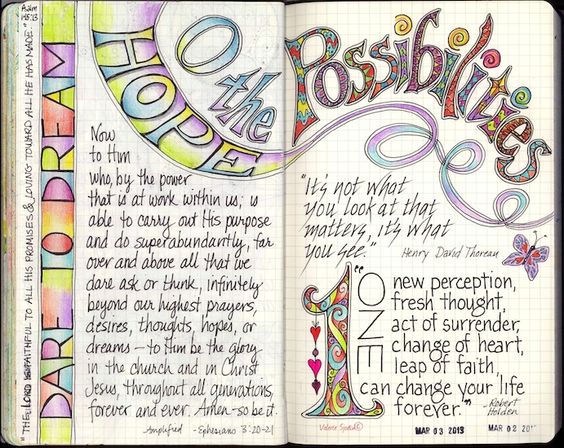
Six reasons why we shouldn’t worry
1. It’s fruitless.
2. It’s disobedience.
3. It’s taking what is not yet given.
4. It’s refusing the given.
5. It is the antithesis of trust. If you trust, you can’t worry. If you worry, you can’t trust.
6. It is a wicked squandering of time and energy.
~ Elizabeth Elliott Quotes
DON’T STROLL THROUGH THE SWAMP
“You’re gonna regret it!” I waved away the warning without turning around. What was to regret? I took the shortcut.
I was on my way to a picnic. The tables sat on the other side of a marsh. The parks department had kindly constructed a bridge over the marsh. But who needed a bridge? I ventured in. The mud swallowed my feet. Squiggly things swam past me. I think I saw a set of eyeballs peering in my direction. I backpedaled—flip-flops sucked into the abyss. I exited, mud covered, mosquito bitten, and red faced.
I walked over and took my seat at the picnic table. It made for a miserable picnic, but it makes for an apt proverb. Life comes with voices. Voices lead to choices, and choices have consequences!
~ Max Lucado
Grace and Power
No part of our lives is hidden from God’s grace and power.
~ Our Daily Bread
No fear

ABC’s of Salvation

Kindling

We are the World! Happy New Year!
Praying for blessings to all of you around the world. May we all come together to find what is best in each of us. Love surely is better than hate. Working together, standing together, loving together will make the difference. If you are upset about something, find your voice. Go on Twitter, Facebook, start a Website, care and share positive ideas and progressive thinking instead of crying in a corner. We can all light the place where we stand and that light will shine enough to change things.
Be blessed with much love, joy, and happiness!
Sharon & Erick
There comes a time when we heed a certain call
When the world must come together as one
There are people dying
And its time to lend a hand to life
The greatest gift of all
We can’t go on pretending day by day
That someone, somehow will soon make a change
We are all a part of Gods great big family
And the truth, you know,
Love is all we need
We are the world, we are the children
We are the ones who make a brighter day
So lets start giving
Losing my religion for equality
Although this article was published in 2015, when I discovered it today, I thought it important to share. ~ Sharon Rule
Jimmy Carter
Published: April 27, 2015 – 11:12AM
Women and girls have been discriminated against for too long in a twisted interpretation of the word of God.
I HAVE been a practising Christian all my life and a deacon and Bible teacher for many years. My faith is a source of strength and comfort to me, as religious beliefs are to hundreds of millions of people around the world. So my decision to sever my ties with the Southern Baptist Convention, after six decades, was painful and difficult. It was, however, an unavoidable decision when the convention’s leaders, quoting a few carefully selected Bible verses and claiming that Eve was created second to Adam and was responsible for original sin, ordained that women must be “subservient” to their husbands and prohibited from serving as deacons, pastors or chaplains in the military service.
This view that women are somehow inferior to men is not restricted to one religion or belief. Women are prevented from playing a full and equal role in many faiths. Nor, tragically, does its influence stop at the walls of the church, mosque, synagogue or temple. This discrimination, unjustifiably attributed to a Higher Authority, has provided a reason or excuse for the deprivation of women’s equal rights across the world for centuries.
At its most repugnant, the belief that women must be subjugated to the wishes of men excuses slavery, violence, forced prostitution, genital mutilation and national laws that omit rape as a crime. But it also costs many millions of girls and women control over their own bodies and lives, and continues to deny them fair access to education, health, employment and influence within their own communities.
The impact of these religious beliefs touches every aspect of our lives. They help explain why in many countries boys are educated before girls; why girls are told when and whom they must marry; and why many face enormous and unacceptable risks in pregnancy and childbirth because their basic health needs are not met.
In some Islamic nations, women are restricted in their movements, punished for permitting the exposure of an arm or ankle, deprived of education, prohibited from driving a car or competing with men for a job. If a woman is raped, she is often most severely punished as the guilty party in the crime.
The same discriminatory thinking lies behind the continuing gender gap in pay and why there are still so few women in office in the West. The root of this prejudice lies deep in our histories, but its impact is felt every day. It is not women and girls alone who suffer. It damages all of us. The evidence shows that investing in women and girls delivers major benefits for society. An educated woman has healthier children. She is more likely to send them to school. She earns more and invests what she earns in her family.
It is simply self-defeating for any community to discriminate against half its population. We need to challenge these self-serving and outdated attitudes and practices – as we are seeing in Iran where women are at the forefront of the battle for democracy and freedom.
I understand, however, why many political leaders can be reluctant about stepping into this minefield. Religion, and tradition, are powerful and sensitive areas to challenge. But my fellow Elders and I, who come from many faiths and backgrounds, no longer need to worry about winning votes or avoiding controversy – and we are deeply committed to challenging injustice wherever we see it.
The Elders are an independent group of eminent global leaders, brought together by former South African president Nelson Mandela, who offer their influence and experience to support peace building, help address major causes of human suffering and promote the shared interests of humanity. We have decided to draw particular attention to the responsibility of religious and traditional leaders in ensuring equality and human rights and have recently published a statement that declares: “The justification of discrimination against women and girls on grounds of religion or tradition, as if it were prescribed by a Higher Authority, is unacceptable.”
We are calling on all leaders to challenge and change the harmful teachings and practices, no matter how ingrained, which justify discrimination against women. We ask, in particular, that leaders of all religions have the courage to acknowledge and emphasise the positive messages of dignity and equality that all the world’s major faiths share.
The carefully selected verses found in the Holy Scriptures to justify the superiority of men owe more to time and place – and the determination of male leaders to hold onto their influence – than eternal truths. Similar biblical excerpts could be found to support the approval of slavery and the timid acquiescence to oppressive rulers.
I am also familiar with vivid descriptions in the same Scriptures in which women are revered as pre-eminent leaders. During the years of the early Christian church women served as deacons, priests, bishops, apostles, teachers and prophets. It wasn’t until the fourth century that dominant Christian leaders, all men, twisted and distorted Holy Scriptures to perpetuate their ascendant positions within the religious hierarchy.
The truth is that male religious leaders have had – and still have – an option to interpret holy teachings either to exalt or subjugate women. They have, for their own selfish ends, overwhelmingly chosen the latter. Their continuing choice provides the foundation or justification for much of the pervasive persecution and abuse of women throughout the world. This is in clear violation not just of the Universal Declaration of Human Rights but also the teachings of Jesus Christ, the Apostle Paul, Moses and the prophets, Muhammad, and founders of other great religions – all of whom have called for proper and equitable treatment of all the children of God. It is time we had the courage to challenge these views.
Jimmy Carter was president of the United States from 1977 to 1981
May 4 2015
Want equality for all? Then spurn organised religion.
This story was found at: The Age
Make me a gift and a blessing

Christmas
So happy to be sharing this amazing day with all of you. Hoping you are having a wonderful, blessed, full-of-love day. If any of you are alone today, we reach out to you to let you know you are never alone because we love you and are with you in spirit. Remembering those who are no longer with us and feeling the loss of their presence. Sharon and Erick

Press On!

Choosing to Love
The Heart of the Human Problem
The sinful nature is the stubborn, self-centered attitude that says, “My way or the highway.” The sinful nature is all about self: pleasing self, promoting self, preserving self. I have a sin nature! So do you. Under the right circumstances you will do the wrong thing. You’ll try not to, but you will. You have a sin nature. You were born with it. The heart of the human problem is the problem of the human heart!
Christmas commemorates the day and the way God saved us from ourselves. The angel speaking to Mary in Matthew 1:21 says, “. . .you are to give him the name Jesus, because he will save his people from their sins.”
Each of us entered the world with a sin nature. God entered the world to take it away!
~ Max Lucado
Kindness
Be kind and compassionate to one another. Ephesians 4:32
Who can add to Christmas?

We’re back!
So glad to be back writing and posting things I find interesting. Thanks so much to all of you who are sharing and following us. Be blessed. Until I write again, soon.
Worried Enough to Pray?
| by Max Lucado |
|
God’s Agape Love
Paul reminded the church at Corinth the kind of love Christ offers to us– Agape love that “bears all things, believes all things, hopes all things, and endures all things.” Don’t we need the same prescription today? Don’t groups still fight with each other? Don’t we flirt with those we shouldn’t? Aren’t we sometimes quiet when we should speak?
Someday there will be a community where everyone behaves and no one complains. But it won’t be this side of heaven. So till then we reason, we confront, and we teach. But most of all we love. Such love isn’t easy. Not even for Jesus. Listen to his frustration in Mark 9:19: “You people have no faith. How long must I stay with you? How long must I put up with you? How long? Until it kills me! Jesus bore all things, believed all things, hoped all things, and endured all things! Even the cross.
From A Love Worth Giving

You are loved!
Just wanted you to know
on this day,
and every day,
You are loved.
Not only by your creator,
but by me.
Have a blessed Valentine’s Day,
knowing,
no matter what,
YOU ARE LOVED!
Love yourself
Chasing God
If you were chasing God like you chase people and things,
you’d know true love and real wealth.
The God Who Sees You
https://bookshout.com/ebooks/the-god-who-sees-you#_=_
I found this little ebook on Bookshout. I think it will minister to you as it did to me. Enjoy! Reflect! Know God Sees You!
What if I fall?
“What if I fall?”
“Oh but my darling, what if you fly?”
– Erin Hanson
An encouraging video
Sowing Seeds
Many parents aren’t proud of their family trees. The harvest was taken, but no seed was sown. Childhood memories bring more hurt than inspiration. If such is the case, put down the family scrapbook and pick up your Bible. John 3:6 reminds us, “Human life comes from human parents, but spiritual life comes from the Spirit.” Your parents have given you genes, but God gives you grace.
Didn’t have a good father? Galatians 4:7 says God will be your father. Didn’t have a good role model? Ephesians 5:1 says, “You are God’s child whom He loves, so try to be like Him.”
You cannot control the way your forefathers responded to God. But you can control the way you respond to Him. The past does not have to be your prison. Choose well and someday—generations from now—your grandchildren and great-grandchildren will thank God for the seeds you sowed!
From When God Whispers Your Name
~ Max Lucado
You’re not selfish . . .
You’re not selfish for deciding to cut someone off.
There comes a point when you got to stop
being unfair to yourself.
#Rehab Time
Letting Go

(Photo of the Pacific Ocean along the Hwy 1 California Coast)
~ ~ ~
I’ve been having a rough time lately learning the lesson of “Letting Go”.
From time to time, I feel I already “know” this lesson.
But then I turn around and realize, “Letting Go” is a daily thing.
The subject of the “Letting Go” project changes,
but the lesson is always the same.
I have to let go to the right person —
and that is My Lord.
The latest lesson was to go to the Serenity Prayer
and repeat it until I let go of whatever is controlling my life.
I hope these words help someone
who is going through the same lesson.
~ Sharon
You’ll never be enough . . .
You’ll never be enough to somebody
who can’t recognize your worth.
You can’t make them see
what they choose to stay blind to.
#Rehab Time
Trent Shelton
And so I choose . . .
It’s quiet.
It’s early.
For the next 12 hours I’ll be exposed to the day’s demands.
It’s now that I must make a choice.
And so I choose—love.
I will love God and what God loves.
- I choose joy.
- I choose peace. I will live forgiven.
- I choose patience—Rather than complain that the wait is too long, I’ll thank God for a moment to pray.
- I choose kindness—for that’s how God has treated me.
- I choose goodness.
- I choose faithfulness. Today I’ll keep my promises. My wife will not question my love.
- I choose gentleness. If I make a demand, may it be only of myself.
- I choose self-control. I will be impassioned only by my faith and influenced only by God.
Love, joy, peace, patience, kindness, goodness, faithfulness, gentleness, and self-control.
When this day is done, I’ll place my head on my pillow and rest.
~ Max Lucado
Perfectly Lonely
Sometimes it takes being
perfectly lonely
Just so God can show you
what being
PERFECTLY LOVED
feels like.
~ Trent Shelton

 sharin' His love & Prophecy Unfolding