The most important thing about Jesus is having Him in your heart; inviting Him in, giving Him full access to every room, talking with Him about everything, sharing all your secrets with Him, asking His advice on everything, and letting Him decorate how He wants to. Then constantly working on your private relationship with Him, figuring out how He speaks to you, so that you fully understand each other. This is going to be different for each person. He is not the author of fear or confusion. He will guide you through love if you let Him. The more you grow, the deeper your relationship with Him gets, the more you can share His love…
It is of utmost importance to pray for discernment from God to confirm what is true, noble, right, pure, lovely, admirable, excellent, and praiseworthy. Then, we should make the habit of keeping our minds centered, through Jesus, and think about those things. If we think of things that are negative, then our minds are not centered on what God wants us to think about. sharinHislove.com
Philippians 4:8 Finally, brothers and sisters, whatever is true, whatever is noble, whatever is right, whatever is pure, whatever is lovely, whatever is admirable—if anything is excellent or praiseworthy—think about such things.
No one likes to learn that there may be errors or falsehoods in their religions, traditions, churches, or personal beliefs. We should find ways to determine the accuracy of our research, use those that we trust, and seek to understand what religions teach or believe to accurately discuss or write concerning those subjects.
—
An article How to Identify Reliable Information, addresses this topic:
“Whether you are a journalist, researcher writer or someone in the professional fields, it is important to know how to identify real information and use it accurately. That is our real challenge in the 21st century – Lee E Krahenbuhl, Communication Studies Program Coordinator
With the infinite amount of information online, it can be difficult to decipher what is true and accurate and what is not. Once you know the trick to identifying reliable information, you can quickly determine if what you are reading is accurate or not.
What is reliable information?
Reliable information must come from dependable sources. According to UGA Libraries, a reliable source will provide a “thorough, well-reasoned theory, argument, based on strong evidence.”
Widely credible sources include:
Scholarly, peer-reviewed articles and books
Trade or professional articles or books, magazine articles, books, and newspaper articles from well-established companies
Other sources like websites and blog posts can be dependable but require further evaluation.
You may be asking yourself, “what source is best for me?” Depending on the type of information you need, your sources may vary. Look at journal articles and research-based reports. This is because those types of sources typically include more information on the topic at hand.
How to identify reliable sources
What makes the source reliable?
To determine whether a source is reliable or not, you must look at certain criteria. That criteria are as follows:
Authority:
Who is the author?
What are their credentials?
Do they have knowledgeable experience in the field
What is their reputation?
Accuracy: Compare the author’s information to that which you already know is dependable.
Are there proper citations?
Is the information biased?
If so, does it affect research conclusions?
Coverage: Is the information relevant to your topic and does it meet your needs? Consider what you need such as statistics, charts, and graphs.
Currency: Is your topic constantly evolving? Topics in the news require sources that are up to date.
The importance of reliable information
The Internet is scattered with biased, misleading, and altogether incorrect information and that is why it is important to follow the above criteria. The importance of using reliable sources truly boils down to effective communication. If your knowledge is based on unreliable information, you will not be a trustworthy asset.
Credible communication is key in discussing a subject. That is why you should not just grab any information off the Internet. Using unreliable sources results in negative consequences.
Credibility is especially important because using unreliable data can cause questions that may undermine your reliability and may cause others to rely solely on their own opinions rather than factual data.
Using credible sources for information will increase your reputation and trustworthiness. An article by the Ivy Business Journal supports this idea by expressing that trust is a key factor in building loyalty, increasing credibility, and supporting effective communication. It is important to develop your skills in identifying reliable resources, because it will help you become an effective communicator, reader, and/or writer.
With all that is going on all over the world, listening to others, watching tv, or receiving information from a myriad of sources, it is often difficult to determine what is “truth”.
It is very important to ask God for guidance of our every thought, words, and actions.
If we choose the way of personally accepting Jesus (which is the decision to do everything through love, and as a result gives us a new heart-set), then we don’t ever have to go down the road of destruction that the other decision leads to.
Today’s social media and internet chat platforms have become tantalizing playgrounds for those who enjoy stirring up arguments. But the Bible has nothing good to say about a person who sows discord: “A worthless person, a wicked man, goes about with crooked speech, winks with his eyes, signals with his feet, points with his finger, with perverted heart devises evil, continually sowing discord; therefore calamity will come upon him suddenly; in a moment he will be broken beyond healing” (Proverbs 6:12–15, ESV).
In Proverbs 6:14, “discord” is translated from the Hebrew (madan), meaning “strife, bitter conflict, heated and often violent dissension.” “Sowing” discord implies spreading conflict or scattering it widely. The passage reveals that an individual who sows discord is corrupted by sin and afflicted with a perverted heart. Solomon repeated the sentiment in Proverbs 16:28: “A perverse person stirs up conflict, and a gossip separates close friends.” In Proverbs 6:16–19, he listed seven things the Lord hates, and “one who sows discord among brothers” (ESV) was one of them.
Solomon pointed to a dangerous heart problem as the root issue for someone who sows discord. Jesus said the same: “But what comes out of the mouth comes from the heart, and this defiles a person. For from the heart come evil thoughts, murders, adulteries, sexual immoralities, thefts, false testimonies, slander. These are the things that defile a person” (Matthew 15:18–20, CSB). According to Proverbs 10:12, hatred, as opposed to love, dwells in the heart of those who stir up conflict. Hateful people delight in breaking up friendships and spoiling peace and harmony between brothers and sisters.
The Bible is clear that sin provokes quarrels and disagreement: “When you follow the desires of your sinful nature, the results are very clear: sexual immorality, impurity, lustful pleasures, idolatry, sorcery, hostility, quarreling, jealousy, outbursts of anger, selfish ambition, dissension, division” (Galatians 5:19–20, NLT; cf. James 4:1). The apostle Paul counseled believers to stay away from “people who cause divisions and upset people’s faith by teaching things contrary to what you have been taught” (Romans 16:17, NLT).
“Anyone who loves to quarrel loves sin,” stated Solomon (Proverbs 17:19, NLT). Believers cannot walk in the light of God’s love and continue spewing hatred and sowing discord: “If anyone claims, ‘I am living in the light,’ but hates a fellow believer, that person is still living in darkness. Anyone who loves a fellow believer is living in the light and does not cause others to stumble. But anyone who hates a fellow believer is still living and walking in darkness. Such a person does not know the way to go, having been blinded by the darkness” (1 John 2:9–11, NLT).
Paul warned believers against involving themselves in arguments and fights, even about spiritual matters: “These things are useless and a waste of time. If people are causing divisions among you, give a first and second warning. After that, have nothing more to do with them. For people like that have turned away from the truth, and their own sins condemn them” (Titus 3:9–11, NLT).
“Any fool can get himself into a quarrel,” stated the wise old teacher, but “honor belongs to the person who ends a dispute” (Proverbs 20:3, CSB). Solomon compared people who sow discord to troublemakers who go around lighting fires: “As charcoal for embers and wood for fire, so is a quarrelsome person for kindling strife” (Proverbs 26:21, CSB). Fires leave death and destruction in their wake. Proverbs 6:15 explains that the consequence of such foolish and evil behavior is sudden “calamity,” which literally refers to “a crushing weight.” A person who continually and actively sows discord is pursuing a life of sin, and such a life is destined for destruction (Romans 6:23; James 1:15).
Jesus said, “God blesses those who work for peace, for they will be called the children of God” (Matthew 5:9, NLT). But wicked mischief-makers who sow discord can expect to experience devastating distress and severe suffering. If they stubbornly refuse to listen to God’s warning and accept correction, they will be broken and ruined beyond all hope of healing (Proverbs 29:1). The Scriptures issue no light word of caution on this matter. Having a heart perverted by evil is a matter of life and death. The aftermath of such wickedness cannot be reversed.
The angel that came to Daniel in the pit did not kill the lions he simply closed their mouths and stood with him in the midst of terrible danger.Meshach, Shadrach, and Abednego were not saved from the fire they stood in the midst of it with their savior. Moses and the Israelites did not have the Red Sea removed from in front of them it was simply parted for them to walk through. Silver is refined in the refiner’s fire and it’s only finished once the Refiner’s reflection can be seen in the silver. Grapes are crushed under foot to produce the sweetest wine, and olives are pressed in order to extract the purest oil.What makes you think that we are any different? We will walk through this tribulation, many will fall away because they stand on sand not the Cornerstone, Yeshua and scriptural truth, The WORD.
Once a person is saved are they always saved? Yes, when people come to know Christ as their Savior, they are brought into a relationship with God that guarantees their salvation as eternally secure. To be clear, salvation is more than saying a prayer or “making a decision” for Christ; salvation is a sovereign act of God whereby an unregenerate sinner is washed, renewed, and born again by the Holy Spirit (John 3:3; Titus 3:5). When salvation occurs, God gives the forgiven sinner a new heart and puts a new spirit within him (Ezekiel 36:26). The Spirit will cause the saved person to walk in obedience to God’s Word (Ezekiel 36:26–27; James 2:26). Numerous passages of Scripture declare the fact that, as an act of God, salvation is secure:
(a) Romans 8:30 declares, “And those He predestined, He also called; those He called, He also justified; those He justified, He also glorified.” This verse tells us that from the moment God chooses us, it is as if we are glorified in His presence in heaven. There is nothing that can prevent a believer from one day being glorified because God has already purposed it in heaven. Once a person is justified, his salvation is guaranteed—he is as secure as if he is already glorified in heaven.
(b) Paul asks two crucial questions in Romans 8:33-34 “Who will bring any charge against those whom God has chosen? It is God who justifies. Who is he that condemns? Christ Jesus, who died—more than that, who was raised to life—is at the right hand of God and is also interceding for us.” Who will bring a charge against God’s elect? No one will, because Christ is our advocate. Who will condemn us? No one will, because Christ, the One who died for us, is the one who condemns. We have both the advocate and judge as our Savior.
(c) Believers are born again (regenerated) when they believe (John 3:3; Titus 3:5). For a Christian to lose his salvation, he would have to be un-regenerated. The Bible gives no evidence that the new birth can be taken away.
(d) The Holy Spirit indwells all believers (John 14:17; Romans 8:9) and baptizes all believers into the Body of Christ (1 Corinthians 12:13). For a believer to become unsaved, he would have to be “un-indwelt” and detached from the Body of Christ.
(e) John 3:15 states that whoever believes in Jesus Christ will “have eternal life.” If you believe in Christ today and have eternal life, but lose it tomorrow, then it was never “eternal” at all. Hence, if you lose your salvation, the promises of eternal life in the Bible would be in error.
(f) In a conclusive argument, Scripture says, “For I am convinced that neither death nor life, neither angels nor demons, neither the present nor the future, nor any powers, neither height nor depth, nor anything else in all creation, will be able to separate us from the love of God that is in Christ Jesus our Lord” (Romans 8:38–39). Remember the same God who saved you is the same God who will keep you. Once we are saved, we are always saved. Our salvation is most definitely eternally secure!
(Forgive typos…Today has been long. Well, this year has been long.) So much is weighing heavy on the hearts of others. This week I listened to those who grieve the loss of identity, the loss of love, the loss of faith, and the loss of purpose. So many questions that have so few answers or at least answers that satisfy and calm their fears. They feel aimless and stuck. Maybe you feel similar. Maybe it is your job, the future, a relationship. You simply feel stuck by not knowing what decision is the “right” decision so you make no decision at all. Maybe you are nursing scars no one see. Maybe you are bleeding from wounds that do not bleed crimson and bandages do not help. The running theme of many who are experiencing this level of pain is that they do not want to burden another person with their “stuff”. Sadly, they suffer in silence and feel totally alone. Think for a moment. Have you ever seen a lone goose? A solitary, Canadian, turd dropping, Christmas goose flying all by their lonesome? My guess is that you haven’t. If you do, that is one lost goose. They are most always in a flock. They take turns with the burden of leading. They encourage by those obnoxious honks. They rest often. They have a destination, but it is often arrived at in the company of others. They will fly despite the clouds and gloom around them. They will fly at times in the rain, but they seek shelter together. They do not feel the need to do anything singularly. Why then do we believe we have to do anything by ourselves? We are called to bear one another’s burdens. So, I’m calling my brothers and sisters in Christ to help those around them. Sit with them. Eat with them. Shelter with them. Listen to their story. Encourage them with hope. But more than anything, fly with them through their clouds of depression, anxiety, abuse, loss, hopelessness, and failure. We all are more likely to fly on, fly farther, and fly with purpose when we have others behind us despite the dark clouds hanging over us. Quit saying, “If you need me, I’m always here.” They will almost never call you. If we want the world to know we love Jesus, we must intentionally bear the burdens of others by vulnerability and loving one another.
So much going on right now all over the world. It would be easy to be tempted to lose our faith. But that’s not going to be an option, is it?
I found this message on a facebook site and I was having one of those moments, primarily because I’m trying to spread the love of God around a lot of places today, and my computer is acting up…even while trying to post this. So I’m going to put a Ha Ha to Satan, and keep going.
When was the last time your suffering led others to Christ? Ever since I scribbled these words, they continue to stare me in the eye—expecting a response.
The truth is I don’t know if I’ve ever prompted anyone to step closer to the Lord by how I handled sorrow. Pain tends to compel the crabby in me – enough to blame someone else for my suffering.
I doubt I’m alone. When in pain, it seems only human to default to finger-pointing—including at God.
“Are you heartless, or are you just incapable of healing my chronic pain, God?” “If the store had posted a warning sign, I wouldn’t have slipped on the wet floor.” “We got into the accident because you ran the red light!”
Jesus modeled suffering in a radically different way. The Son determined to live and die by glorifying the Father, even while enduring crucifixion and its excruciating pain. Jesus carried Himself with such dignity, it forced a handful of witnesses to face their own day of reckoning.
More on this later.
As a Christian, I aspire to emulate Jesus in every way—including during life’s harrowing moments. Don’t you?
The good news is learning to suffer Jesus’ way is doable. If it wasn’t, the Bible wouldn’t have recorded the following five principles He demonstrated while crucified:
Non-Defensive When those around Jesus did nothing but revile Him, He didn’t defend Himself. Neither did He attack them back (1 Peter 2:23). Jesus stayed silent (Isaiah 53:7). By doing so, He fully exhibited trust that God would avenge Him without having to do so Himself (1 Samuel 24:12).
Do you know how hard it is to clamp your mouth when you’re being assailed? I do. As a therapist, I strive to not defend myself if something I say riles up my client. It doesn’t matter how innocent my intentions might have been. If there’s a part of the client who finds my words offensive, my job is to listen and process that experience with the client. Defending ourselves is improper for therapists to do because that’s hardly what any client needs. Ever.
Like Jesus, you and I don’t need to engage in self-defense even if someone decides to harass us in our pain. The Lord is still the most powerful Avenger there is (Psalm 94:1). The One who sees everything will make things right in due time (Ecclesiastes 3:11).
No Pity Party Every group of people surrounding Jesus mocked Him mercilessly:
Passersby (Matthew 27:39-40), Spiritual leaders (Matthew 27: 41-43, Luke 23:35), Roman soldiers (Luke 23: 36-37), And the two criminals condemned to death alongside him (Matthew 27: 38, Matthew 27: 44, Mark 15:32). But even though their derision must have hurt, what might have stung even more was the roaring passivity of Jesus’ own loved ones. A tiny band of followers, including His mother, a few other women, and the apostle John, all witnessed Jesus’ abuse and humiliation—but none of them said a peep (John 19: 25-27).
If it were me bleeding on the cross? Hearing vicious sneers, coupled with my support system’s sustained silence, would’ve easily triggered a serious self-pitying episode.
Not Jesus. Never once did He pull a psalm-style lamentation of how long will you let these guys pummel me like this, Lord, when I did nothing to provoke them? Scour every book in the Bible, Old and New Testament combined, and you’ll find zero mention of Jesus crying on the cross. None.
Crucifixion is likely the most painful way to die ever invented, yet the Son of God shed no tears. Why?
Because Jesus refused to indulge in a pity party.
Self-pity sucks all of the attention to ourselves—This hurts so bad! Why hasn’t anyone checked up on me? Does anyone even care? Because the whining in self-pity repulses everyone else, pity partiers tend to cry all by themselves. Their act makes it impossible for others to respond with compassion.
Let’s resolve to ban any pity party even if our suffering feels unjust.
Selflessness Because Jesus squelched the temptation to pity Himself, He allowed the love of God to fully commandeer His attention.
Even though breathing—let alone speaking—would’ve wrecked His body with more unimaginable pain, Jesus intentionally did the following. He spent the energy to instruct His disciple, John, to care for His mother, Mary, from that point on (John 19:26-27).
Such selfless love!
A friend demonstrated how striking it is when we mimic Jesus’ winsome attitude. This fellow believer suffers from pancreatitis. She spent three weeks at the hospital for a major surgery. She has steadily lost weight and has to eat through a feeding tube for six months—yet, despite all the mental and physical pain she has to endure, she cares enough to ask how I’m doing.
Anytime we attend to another person, regardless of the intensity of our pain, we’re gently leading that person closer to our Father. That’s because only God’s love can inspire us to exhibit the unselfish love of 1 Corinthians 10:24—including in the midst of our suffering.
In this me-first world, such outrageous benevolence creates an unforgettable impression. It may even compel the recipient to investigate, “why are you so kind?”
At which point we can smile and explain: Christ in us, the hope of glory (Colossians 1: 27).
He Sought Proper Help There’s another reason I cherish the friend I mentioned above: she recognizes her limits. She didn’t conceal her need due to pride. Instead, she reached out to me and confided in me about her medical struggles. And when I offered to intercede, she gladly received my prayer.
How many are too proud to disclose our needs to each other?
My friend sought appropriate assistance because she needed it. In doing so she modeled after Jesus, who also appealed for help while on the cross.
On the surface, it seems as though Jesus’ words to the Father conveyed a son’s protest for his dad’s abandonment (Matthew 27:46). However, notice that Jesus directed His plea to God in a transparent and respectful manner. Contrast this attitude to many who, in their pain, give God the silent treatment or curse Him instead—like Job’s wife, for instance (Job 2:9).
The Lord will never forsake anyone who seeks Him (Psalm 9:10). So, if you want your suffering to count, never abandon the God who has loved you with an everlasting love (Jeremiah 31:3). Then, seek proper help—in the spiritual, physical, as well as emotional realm.
He Forgave Fiercely Forgiveness benefits the forgiver. We don’t forgive for the sake of those who wronged us, but for our own (Matthew 6:14-15, Luke 6:37). But if this truth is applicable to humans, then it applies to Jesus, too, given his status as fully God and fully human (John 1:1, John 1:14, Philippians 2:7).
I once had a profound moment with a boy in fourth grade. I gave some words of encouragement to young boys about how the Lord has a purpose for every man of God. I told them that they were special and had a unique calling to be men one day. Afterward, one young man came up and said thank you because he had two sisters and his mom who were always watching female-empowering shows and movies. He wanted to be encouraged too. Today we are going to study some of the main characteristics of a man of God.
What Is the Meaning of the Phrase ‘Man of God’?
1 Timothy 4:8 says, “For physical training is of some value, but godliness has value for all things, holding promise for both the present life and the life to come.”
When I think about men around me who have dedicated their lives to Christ, I think of humility, courage, and leadership. They may not always be the quarterbacks or the CEO types, but they are faithful to the Lord no matter what their personalities and giftings include. When I was praying for my husband, I prayed specifically that he would be a man of God. What I meant by this, was a man pursuing the Lord, who surrendered His life to Christ. I think of men who acknowledge that they are sinners, but still, choose to live by the Spirit and not by their flesh (Galatians 5:16).
The phrase, “A man of God” is used in the Bible 35 times. Aaron Brown from Crosswalk says, “Being a man of God is not something to be condemned but rather encouraged. For any boy becoming a man, or men trying to commit themselves more thoroughly to God, there is an answer to the question.” A man seeking to know Jesus more and living like Him more is a man of God. He is not a perfect man, but he is a godly one. A man of God admits he is not able to represent the Lord without the help of the Holy Spirit (Ephesians 5:18). He will be strong through Christ and seek Him each day (Psalm 105:3-4).
What Are Some Key Characteristics of Men of God?
There are some qualities of a Christian man that are the same in a Christian woman. Everyone who has Christ has the Holy Spirit and can live a godly life. So what are some specific characteristics in which men of God obtain?
Gentle
This might sound like an interesting trait to begin with, but it reminds me of the word gentleman. In the book “Gentle and Lowly” by Dane C. Ortlund, he describes that Jesus Himself describes his heart once in the Bible as “gentle and lowly” (Matthew 11:29). When someone thinks of a manly man by the world’s standards, he might imagine a physically tough guy who shows no weaknesses, gets angry, and has no fear. This is not an accurate depiction of biblical manhood. Gentleness is a character trait that does not come naturally but reveals the interworking of the Lord to enable men to be slow to anger and quick to listen. It leads to great patience and steadiness.
Courageous
One of the main qualities described when discussing a man of God is courage. Nelson Mandela once said, “Courage is not the absence of fear, but the triumph over it. The brave man is not he who does not feel afraid, but he who conquers that fear.” Men have fear, but God gives them the strength to walk in the midst of that fear and have victory through the Lord. Men many times are called upon to be brave. Bravery could look like anything from killing a spider to sharing about a struggle in a men’s group. It could be carrying a heavier load because of the gift of physical strength. Courage is even the great faith in the Lord it takes to lead a family and point them to Christ (Joshua 1:9).https://2132aa14c9f9630258fbcb5475bfd650.safeframe.googlesyndication.com/safeframe/1-0-38/html/container.html
Honest
Cole Douglas Claybourn from Crosswalk says, “Men have been trained and socialized to avoid and ignore knowing their insecurities, which is one of the reasons they are less verbal than women about their insecurities, Vierra said. ‘This results in less being known and understood about them.’” A man of God is not beyond sharing his thoughts and feelings. He pushes past the “macho man” mentality and can step into vulnerability (2 Corinthians 8:21).
A man who follows the Lord takes responsibility. He pursues Christ and follows Him with boldness. He does not sit back as Adam did in the garden when Eve was sinning. He stands up for what is right and takes action. He is reliable and loyal. You can trust that he is who he claims to be to others (Colossians 3:23).
Who Are Examples of Men of God in the Bible?
Some specific men who were given this title of honor in Scripture include, Moses, David, Elijah, and Elisha.
Moses—Deuteronomy 33:1 “Now this is the blessing with which Moses the man of God blessed the sons of Israel before his death.”
David—Nehemiah 12:36“and his kinsmen, Shemaiah, Azarel, Milalai, Gilalai, Maai, Nethanel, Judah and Hanani, with the musical instruments of David the man of God. And Ezra the scribe went before them.”
Elijah—1 Kings 17:18 So she said to Elijah, “What do I have to do with you, O man of God? You have come to me to bring my iniquity to remembrance and to put my son to death!”
Elisha—2 Kings 5:8“It happened when Elisha the man of God heard that the king of Israel had torn his clothes, that he sent word to the king, saying, ‘Why have you torn your clothes? Now let him come to me, and he shall know that there is a prophet in Israel.’”
What Does a Man of God look like in the 21st Century?
Bible Study Tools shares it beautifully, “While the world tends to tell men to hide their emotions and act tough, God’s Word is filled with men who passionately and whole-heartedly sought God with their heart, mind, and soul! God has a special calling for men to be strong, courageous leaders, and His Scripture can provide the inspiration you need to take daily steps towards your calling.”
Men of God in the 21st century represent Christ. No matter what a man’s denomination is or culture, he represents biblical manhood when he models loving God and loving others. He is not boxed in by a world definition of a man having power and prestige. He is confident in his personal identity in Jesus. He knows who he is and walks daily with God. He is willing to admit his wrongs and has the strength to try again when he fails. He is unashamed to share his heart with others and to step up to the plate to be brave. This is not in his own power, but the strength of the Holy Spirit within him.
A man cannot force anyone to be a man of God, but he can model it and show others how to live for Christ. The men in my life do this so well in their own ways. We can pray and speak words of encouragement to the young boys and young men in our homes and communities. We can give the same motivation to the men as the women. We are all created in the image of the Lord. He made us male and female. Our Great Creator has perfect plans for how he made us and loves us. If you are a man or know a man, remember that men have a wonderful calling and a purpose on this earth. Let us celebrate the men of God in this world.
There are many, many promises of God in Scripture. In each promise, God pledges that something will (or will not) be done or given or come to pass. These are not flippant, casual promises such as we often make; these promises of God are rock-solid, unequivocal commitments made by God Himself. Because God is faithful, the recipients of the divine promises can have full assurance that what God has pledged will indeed be realized (Numbers 23:19).
Here are just a few of the promises that God has made:
Promises of God in the Old Testament.
God promised to bless Abraham and, through his descendants, the whole world (Genesis 12:2–3). This promise, called the Abrahamic Covenant, pointed to the coming Messiah for whom Abraham looked (John 8:56).
God promised Israel to be their God and make them His people (Leviticus 26:12–13). Old Testament history is teeming with examples of God fulfilling this promise.
God promised that if we search for Him we will find Him (Deuteronomy 4:29). He is not playing hard-to-get. “Our God is near us whenever we pray to him” (Deuteronomy 4:7).
God promised protection for His children (Psalm 121). He was the vigilant watchman over all Israel.
God promised that His love will never fail (1 Chronicles 16:34). He is faithful in every way.
God promised Israel that their sin could be forgiven, their prosperity restored, and their nation healed (2 Chronicles 7:14). Repentance opened the road to fellowship and blessing.
God, under the terms of the Mosaic Covenant, promised prosperity to Israel for obedience and destruction for disobedience (Deuteronomy 30:15–18). Unfortunately, Israel eventually chose to disobey, and the nation was destroyed by Assyria and Babylon.
God promised blessing for all who will delight themselves in His Word (Psalm 1:1–3). Simple faith has its rewards.
Promises of God in the New Testament.
God promised salvation to all who believe in His Son (Romans 1:16–17). There is no greater blessing than the free gift of God’s salvation.
God promised that all things will work out for good for His children (Romans 8:28). This is the broader picture that keeps us from being dismayed by present circumstances.
God promised comfort in our trials (2 Corinthians 1:3–4). He has a plan, and one day we will be able to share the comfort we receive.
God promised new life in Christ (2 Corinthians 5:17). Salvation is the beginning of a brand-new existence.
God promised every spiritual blessing in Christ (Ephesians 1:3). Whereas, in the Old Testament, Israel had the promise of physical blessing, the church today has been promised spiritual blessings “in the heavenly realms.” Our inheritance is reserved for us (1 Peter 1:4).
God promised to finish the work He started in us (Philippians 1:6). God does nothing in half measures. He started the work in us, and He will be sure to complete it.
God promised peace when we pray (Philippians 4:6–7). His peace is protection. It will “guard your hearts and your minds in Christ.”
God promised to supply our needs (Matthew 6:33; Philippians 4:19). Not that we get everything we want, but our needs will be taken care of. We are more valuable than the birds, and our Heavenly Father feeds them (Matthew 6:26).
Jesus’ promises in the Gospels.
Jesus promised rest (Matthew 11:28–30). Burdens are lifted at Calvary.
Jesus promised abundant life to those who follow Him (John 10:10). Following Jesus brings us more spiritual fulfillment than we could have anticipated. We leave boring behind.
Jesus promised eternal life to those who trust Him (John 4:14). The Good Shepherd also promised to hold us securely: “No one will snatch them out of my hand” (John 10:28).
Jesus promised His disciples power from on high (Acts 1:8). In this power, they “turned the world upside down” (Acts 17:6, ESV).
Jesus promised that He will return for us (John 14:2–3). From then on, we will be with Him always.
There are many more promises of God that could be listed. All of them find their ultimate fulfillment in Jesus Christ, “the radiance of God’s glory” (Hebrews 1:3). “No matter how many promises God has made, they are ‘Yes’ in Christ” (2 Corinthians 1:20).
I’ve studied prophecy since I was 12 years old, so to find something NEW is very exciting. This video is a fresh and distinct approach. I, personally, am unable to verify the calculations that are revealed here, but they are sufficiently presented in continuity to certainly give pause and reflection to them.
(NOTE) Jesus as the teacher, had the best interests of His students at heart; always, the subject of His teaching was the absolute and unchanging truth of God. We also have the best interests of our readers at heart. However, as we seek to share, we do not claim that we are qualified to be called teachers per se.
Having been given the gift of the desire to teach, doesn’t qualify us to state that we are teaching the absolute and unchanging truth of God. It is our hope, and intention, however, to be as accurate as humanly…
God’s people have always had to wrestle with the things from the dark. As believers, the Bible tells us that we’re in a permanent state of war against Satan. There has never been an armistice or treaty signed to my knowledge. Each one of us is on the front lines. The devil has been practicing with a deadly form of “spiritual terrorism.” And he terrorizes many with his posturing and manipulation.
Life can get quite dark, and desperately bleak. No one needs to educate us about the dark nightmare that is now active. Over a couple of millennia, God’s covenant people have been harmed and harassed. Enemies are constantly manipulating and twisting God’s Word. As disciples, we’re under steady surveillance by the dragon.
Sometimes heaven is silent. But I believe it is never, ever disinterested.
But He certainly has not overlooked us. As we read our Bible, our faith becomes like Teflon. Nothing can stick to you; even though so much is thrown at us. When life is really dark or terribly bleak, we can protect ourselves and others. There are times when we can sense nothing.
“Therefore, since we are surrounded by so great a cloud of witnesses, let us also lay aside every weight, and sin which clings so closely, and let us run with endurance the race that is set before us.”
We are not theologians, we are just simple disciples. He knows this. I believe He simplifies things in order to help us understand. God has little reason to complicate things for us.
I believe that we are “surrounded” by saints of all ages. They see in us a faith that justifies us. And I must admit, that helps me. I am part of a continuum. I now know that my simple faith must always pass the test of discouragement.
But now the torch is passed, and now you must run with it faithfully and honestly. And when all is so dark, and things seem far too quiet, I still intend to hold up that torch and carry it all the way to my Father’s house.
“There was a castle called Doubting Castle, the owner whereof was Giant Despair.”
I feel the most unsettled when I’m uncertain about the future.Many of you are also probably facing circumstances that have left you feeling caught off guard and unsure about what tomorrow holds. So many times I find myself bracing for impact when I check my daily news feed. If there’s one word that seems most certain to describe the times we are living in, it’s “uncertain.”There are thousands of scenarios that evoke these feelings of uncertainty, fear and exhaustion from life not being like you thought it would be.Whatever your situation, you probably feel like you can’t change it, but you still have to live through the realities of what’s happening right now. Sometimes you just have to walk in your “I don’t know.” The Lord makes it clear in His Word that things will not always go as we wish they would in this life. The crucial detail for us to have peace in the middle of everything we face is to stay close to the Lord. We think we want comfort in the “I don’t know” times of life. But comfort isn’t a solution to seek; rather, it’s a byproduct we’ll reap when we stay close to the Lord.I wish I could promise you that everything’s going to turn out like you’re hoping it will. I can’t, of course. But what I can promise you is this: God is close to us even in our “I don’t knows.” God has lessons for us that are crucially important for our future, and we’re learning them in the middle of our “I don’t knows.” God has a strength He must prepare us with, and the training ground is here in the “I don’t know.”This time isn’t a waste, and it’s definitely not pointless when we are walking with God. Let’s cry out to God, declaring that this hard time will be a holy time, a close-to-God time. And let’s choose to believe there is good happening, even in these places. We can rest in the knowledge that wherever God is, good is being worked.-What difficult “I don’t know” season are you walking through today?
Promise #124: I gently formed you in your mother’s womb.
Psalm 139:13 (WEB) For you formed my inmost being. You knit me together in my mother’s womb.
The New International Version Bible says Psalm 139:13 this way… For you created my inmost being; you knit me together in my mother’s womb. The New Living Translation says… You made all the delicate, inner parts of my body and knit me together in my mother’s womb. No matter what translation you prefer, this is a gentle picture of God’s loving creation process.
You were not blasted into creation, but gently formed in your mother’s womb by a loving God who took the time to delicately knit all your inward parts together. May the revelation of your creation bring a sense of well being to your soul. You were not a mistake. God planned you before the foundation of the world and He determined the exact time of your birth.
One of the greatest tragedies in this world today is the feeling that our lives were a mistake. Some people were even told that by their parents. The truth is that no life was ever a mistake. Each person ever created, was created with intention by the One who is love itself.
God gently formed you in your mother’s womb and He is the One who brought you forth on the day you were born. (Psalm 71:6) There is absolutely no doubt about it!
New International Version Jesus replied: “‘Love the Lord your God with all your heart and with all your soul and with all your mind.’ This is the first and greatest commandment. And the second is like it: ‘Love your neighbor as yourself.’
New International Version For I know the plans I have for you,” declares the Lord, “plans to prosper you and not to harm you, plans to give you hope and a future. Then you will call on me and come and pray to me, and I will listen to you. You will seek me and find me when you seek me with all your heart. Read at Bible Gateway Read all of Jeremiah 29
New International Version Whoever would foster love covers over an offense, but whoever repeats the matter separates close friends. Read at Bible Gateway Read all of Proverbs 17
Praying for blessings to all of you around the world. May we all come together to find what is best in each of us. Love surely is better than hate. Working together, standing together, loving together will make the difference. If you are upset about something, find your voice. Go on Twitter, Facebook, start a Website, care and share positive ideas and progressive thinking instead of crying in a corner. We can all light the place where we stand and that light will shine enough to change things.
There comes a time when we heed a certain call When the world must come together as one There are people dying And its time to lend a hand to life The greatest gift of all
We can’t go on pretending day by day That someone, somehow will soon make a change We are all a part of Gods great big family And the truth, you know, Love is all we need
We are the world, we are the children We are the ones who make a brighter day So lets start giving
Women and girls have been discriminated against for too long in a twisted interpretation of the word of God.
I HAVE been a practising Christian all my life and a deacon and Bible teacher for many years. My faith is a source of strength and comfort to me, as religious beliefs are to hundreds of millions of people around the world. So my decision to sever my ties with the Southern Baptist Convention, after six decades, was painful and difficult. It was, however, an unavoidable decision when the convention’s leaders, quoting a few carefully selected Bible verses and claiming that Eve was created second to Adam and was responsible for original sin, ordained that women must be “subservient” to their husbands and prohibited from serving as deacons, pastors or chaplains in the military service.
This view that women are somehow inferior to men is not restricted to one religion or belief. Women are prevented from playing a full and equal role in many faiths. Nor, tragically, does its influence stop at the walls of the church, mosque, synagogue or temple. This discrimination, unjustifiably attributed to a Higher Authority, has provided a reason or excuse for the deprivation of women’s equal rights across the world for centuries.
At its most repugnant, the belief that women must be subjugated to the wishes of men excuses slavery, violence, forced prostitution, genital mutilation and national laws that omit rape as a crime. But it also costs many millions of girls and women control over their own bodies and lives, and continues to deny them fair access to education, health, employment and influence within their own communities.
The impact of these religious beliefs touches every aspect of our lives. They help explain why in many countries boys are educated before girls; why girls are told when and whom they must marry; and why many face enormous and unacceptable risks in pregnancy and childbirth because their basic health needs are not met.
In some Islamic nations, women are restricted in their movements, punished for permitting the exposure of an arm or ankle, deprived of education, prohibited from driving a car or competing with men for a job. If a woman is raped, she is often most severely punished as the guilty party in the crime.
The same discriminatory thinking lies behind the continuing gender gap in pay and why there are still so few women in office in the West. The root of this prejudice lies deep in our histories, but its impact is felt every day. It is not women and girls alone who suffer. It damages all of us. The evidence shows that investing in women and girls delivers major benefits for society. An educated woman has healthier children. She is more likely to send them to school. She earns more and invests what she earns in her family.
It is simply self-defeating for any community to discriminate against half its population. We need to challenge these self-serving and outdated attitudes and practices – as we are seeing in Iran where women are at the forefront of the battle for democracy and freedom.
I understand, however, why many political leaders can be reluctant about stepping into this minefield. Religion, and tradition, are powerful and sensitive areas to challenge. But my fellow Elders and I, who come from many faiths and backgrounds, no longer need to worry about winning votes or avoiding controversy – and we are deeply committed to challenging injustice wherever we see it.
The Elders are an independent group of eminent global leaders, brought together by former South African president Nelson Mandela, who offer their influence and experience to support peace building, help address major causes of human suffering and promote the shared interests of humanity. We have decided to draw particular attention to the responsibility of religious and traditional leaders in ensuring equality and human rights and have recently published a statement that declares: “The justification of discrimination against women and girls on grounds of religion or tradition, as if it were prescribed by a Higher Authority, is unacceptable.”
We are calling on all leaders to challenge and change the harmful teachings and practices, no matter how ingrained, which justify discrimination against women. We ask, in particular, that leaders of all religions have the courage to acknowledge and emphasise the positive messages of dignity and equality that all the world’s major faiths share.
The carefully selected verses found in the Holy Scriptures to justify the superiority of men owe more to time and place – and the determination of male leaders to hold onto their influence – than eternal truths. Similar biblical excerpts could be found to support the approval of slavery and the timid acquiescence to oppressive rulers.
I am also familiar with vivid descriptions in the same Scriptures in which women are revered as pre-eminent leaders. During the years of the early Christian church women served as deacons, priests, bishops, apostles, teachers and prophets. It wasn’t until the fourth century that dominant Christian leaders, all men, twisted and distorted Holy Scriptures to perpetuate their ascendant positions within the religious hierarchy.
The truth is that male religious leaders have had – and still have – an option to interpret holy teachings either to exalt or subjugate women. They have, for their own selfish ends, overwhelmingly chosen the latter. Their continuing choice provides the foundation or justification for much of the pervasive persecution and abuse of women throughout the world. This is in clear violation not just of the Universal Declaration of Human Rights but also the teachings of Jesus Christ, the Apostle Paul, Moses and the prophets, Muhammad, and founders of other great religions – all of whom have called for proper and equitable treatment of all the children of God. It is time we had the courage to challenge these views.
Jimmy Carter was president of the United States from 1977 to 1981
So happy to be sharing this amazing day with all of you. Hoping you are having a wonderful, blessed, full-of-love day. If any of you are alone today, we reach out to you to let you know you are never alone because we love you and are with you in spirit. Remembering those who are no longer with us and feeling the loss of their presence. Sharon and Erick
When Christ was born, so was our hope! This is why I love Christmas. The event invites us to believe the wildest of promises! He did away with every barrier, fence, sin, bent, debt, and grave. Anything that might keep us from him was demolished.
He only awaits our word to walk through the door. Invite him in. Escort him to the seat of honor, and pull out his chair. Clear the table; clear the calendar. Call the kids and neighbors. Christmas is here. Christ is here. One request from you, and God will do again what he did then. He’ll scatter the night with everlasting light. He’ll be born in you.
Let “Silent Night” be sung! Every heart can be a manger. Every day can be a Christmas. The Christmas miracle—a yearlong celebration! ~Max Lucado
The sinful nature is the stubborn, self-centered attitude that says, “My way or the highway.” The sinful nature is all about self: pleasing self, promoting self, preserving self. I have a sin nature! So do you. Under the right circumstances you will do the wrong thing. You’ll try not to, but you will. You have a sin nature. You were born with it. The heart of the human problem is the problem of the human heart!
Christmas commemorates the day and the way God saved us from ourselves. The angel speaking to Mary in Matthew 1:21 says, “. . .you are to give him the name Jesus, because he will save his people from their sins.”
Each of us entered the world with a sin nature. God entered the world to take it away!
My note: Because we live in the area, I think this nightmare has affected us more than maybe some of you. Nonetheless, I am sure as you read this memoriam, and look at these beautiful faces, you will be unable to not feel it personally.
These victims were going to, or teaching in, schools in the Oakland Area, as I understand it. One of the victims was a student of Professor Chris Johnson at California College of the Arts. (My daughter graduated from CCA, and Professor Johnson has had a major influence in her life, and ours.)
Tragedy occurs when one least expects it. I imagine these victims were either living in this warehouse, or attending the party. I can envision them…artists, musicians, students, and educators–immersed in their life’s dream, creativity running rampant, determined to pass on the gifts they had been given by sharing their unique ability to see the world just a little differently than most.
Our hearts are aching for the losses their families and friends are feeling. Our prayers are covering all of them.
Let us remember these people–their names, their faces. We will keep them in our hearts forever.
12/06/2016 Climate ChangeThe science has long been settled: climate change is real and it’s happening all around us right now. Our new five-session discussion course on climate action will help you take action to increase resilience and mitigate the impacts of climate change. Presented in an interactive ebook, this new discussion course experience integrates video, audio and printed content with action plans that help you roll your sleeves up and get started taking action toward a better tomorrow.“Hope is a verb with its sleeves rolled up. In contrast to optimism or despair, hope requires that one actually do something to improve the world. Authentic hope comes with an imperative to act. There is no such thing as passive hope.” – David Orr, introduction to Hope Is an Imperative: The Essential David Orr
The science has long been settled, climate change is real and it’s happening all around us right now. Our lifestyles are not only a contributing factor, but the root cause, despite what many politicians and talking heads would have us believe. Those of us hoping for real solutions often despair at the unnecessary political gridlock and the lack of traction for widespread solutions.But there is reason to hope: many ordinary citizens desire to make positive change in their daily lives, in their communities, and in the world at large.
Yes, climate change is already happening. Yes, it is getting worse. But people working together to take action can find real solutions.The choice is ours – take action now or react to even larger systemic problems later.Climate Change link
So glad to be back writing and posting things I find interesting. Thanks so much to all of you who are sharing and following us. Be blessed. Until I write again, soon.
Last week’s blog struck a nerve. I wrote a piece entitled “Decency for President.” The premise was a simple one. Shouldn’t a presidential candidate who claims to be Christian talk like one? When a candidate waves a Bible in one speech and calls a reporter “bimbo” in the next, isn’t something awry? Specifically, when Donald Trump insists that he is a Christian (“a good Christian” to use his descriptor) and then blasts, belittles, and denigrates everyone from Barbara Bush to John McCain to Megyn Kelly, shouldn’t we speak up?
If the candidate is not a Christian, then I have no right to speak. But if the candidate does what Trump has done, wave a Bible and attempt to quote from it, then we, his fellow Christians need to call him to at least a modicum of Christian behavior, right?
Again, I struck a nerve. More than three million of you read the article in the first 36 hours! Thousands of you weighed in with your comments. They were fascinating to read. (Not all of them pleasant to read, mind you. The dozens of you who told me to stick to the pulpit and stop meddling in politics– I get it. By the way, I’d like to invite you to attend our services. My upcoming message is “Kindness”.) Detractors notwithstanding, your comments were heartfelt and passionate.
I detected a few themes.
You have a deep sense of love for our country. Patriotism oozed through your words. You cherish the uniqueness and wonder of the USA. You have varying opinions regarding leadership style, role of government, and political strategy. But when it comes to loving the country, you are unanimously off the charts.
You have an allergy to “convenient” Christians. You resist people who don the Christian title at convenient opportunities (i.e., presidential campaigns). You would prefer the candidate make no mention of faith rather than leave the appearance of a borrowed faith that will be returned to the lender after the election.
You are concerned, profoundly concerned, about the future of our country. The debt. Immorality. National security. The role of the Supreme Court. Immigration. Religious liberty. The list is as long as the worries are deep.
So where does this leave us? When a person treasures the country, but has trepidation about its future, what is the best course of action?
Elijah can weigh in on this question.
He lived during one of the darkest days in the history of Israel. The Northern Kingdom had 19 kings, each one of whom was evil. Hope had boarded the last train and optimism the final flight. The leaders were corrupt and the hearts of the people were cold. But comets are most visible against the black sky. And in the midst of the darkness, a fiery comet by the name of Elijah appeared.
The name Elijah means, “My God is Jehovah.” And he lived up to his name. He appeared in the throne room of evil King Ahab with a weather report. “‘As the LORD, the God of Israel, lives, whom I serve, there will be neither dew nor rain in the next few years except at my word’” (1 Kings 17:1).
Elijah’s attack was calibrated. Baal was the fertility god of the pagans, the god to whom they looked for rain and fertile fields. Elijah called for a showdown: the true God of Israel against the false god of the pagans. How could Elijah be so confident of the impending drought? Because he had prayed.
Eight centuries later the prayers of Elijah were used as a model.
“The prayer of a righteous person is powerful and effective. Elijah was a human being, even as we are. He prayed earnestly that it would not rain, and it did not rain on the land for three and a half years. Again he prayed, and the heavens gave rain, and the earth produced its crops” (James 5:16-18).
James was impressed that a prayer of such power came from a person so common. Elijah was “a human being” but his prayers were heard because he prayed earnestly. This was no casual prayer, comfortable prayer, but a radical prayer. “Do whatever it takes, Lord,” Elijah begged, “even if that means no water.”
What happened next is one of the greatest stories in the Bible. Elijah told the 450 prophets of Baal: You get a bull, I’ll get a bull. You build an altar, I’ll build an altar. You ask your god to send fire; I’ll ask my God to send fire. The God who answers by fire is the true God.
The prophets of Baal agreed and went first.
“At noon Elijah began to taunt them. ‘Shout louder!’ he said. ‘Surely he is a god! Perhaps he is deep in thought, or busy, or traveling. Maybe he is sleeping and must be awakened.’
“So they shouted louder and slashed themselves with swords and spears, as was their custom, until their blood flowed. Midday passed, and they continued their frantic prophesying until the time for the evening sacrifice. But there was no response, no one answered, no one paid attention” (1 Kings 18:27-29).
(Elijah would have flunked a course in diplomacy.) Though the prophets cut themselves and raved all afternoon, nothing happened. Finally Elijah asked for his turn.
“Then Elijah said to all the people, ‘Come here to me.’ They came to him, and he repaired the altar of the LORD, which had been torn down. Elijah took twelve stones, one for each of the tribes descended from Jacob, to whom the word of the LORD had come, saying, ‘Your name shall be Israel’” (1 Kings 18:30-31).
Elijah poured four jugs of water (remember, this was a time of drought) over the altar three times. Then Elijah prayed.
“LORD, the God of Abraham, Isaac and Israel, let it be known today that you are God in Israel and that I am your servant and have done all these things at your command. Answer me, LORD, answer me, so these people will know that you, LORD, are God, and that you are turning their hearts back again” (1 Kings 18:36-37).
Note how quickly and dramatically God answered.
“Then the fire of the LORD fell and burned up the sacrifice, the wood, the stones and the soil, and also licked up the water in the trench. When all the people saw this, they fell prostrate and cried, ‘The LORD—he is God! The LORD—he is God!’” (1 Kings 18:38-39).
“Pow!” the altar was ablaze. God delighted in and answered Elijah’s prayer. God delights in and answers our prayers as well.
Let’s start a fire, shall we?
If your responses to my blog are any indication, you are anxious. You love this country, yet you are troubled about the future. You wonder what the future holds and what we can do. Elijah’s story provides the answer. We can pray. We can offer earnest, passionate prayers.
It’s time to turn our concerns into a unified prayer. Let’s join our hearts and invite God to do again what he did then; demonstrate His power. Super Tuesday, March 1, is the perfect day for us to step into the presence of God.
Dear Lord,
You outrank any leader. You hold sway over every office. Greater is the occupant of Heaven’s throne than the occupant of the White House.
You have been good to this country. You have blessed us in spite of our sin and guarded us in spite of our rebellion.
We unite our hearts in one prayer. Let your kingdom come. Let your will be done. Please, speak through the electoral process to reveal your leader.
Paul reminded the church at Corinth the kind of love Christ offers to us– Agape love that “bears all things, believes all things, hopes all things, and endures all things.” Don’t we need the same prescription today? Don’t groups still fight with each other? Don’t we flirt with those we shouldn’t? Aren’t we sometimes quiet when we should speak?
Someday there will be a community where everyone behaves and no one complains. But it won’t be this side of heaven. So till then we reason, we confront, and we teach. But most of all we love. Such love isn’t easy. Not even for Jesus. Listen to his frustration in Mark 9:19: “You people have no faith. How long must I stay with you? How long must I put up with you? How long?Until it kills me! Jesus bore all things, believed all things, hoped all things, and endured all things! Even the cross.
Need more patience? Is generosity an elusive virtue? Having trouble putting up with ungrateful relatives or cranky neighbors? God puts up with you when you act the same.
Luke 6:35 says, “But love your enemies, do good to them, and lend to them without expecting to get anything back.” Can’t we love like this? Not without God’s help we can’t. Our relationships need more than a social gesture. Some of our friends need a flood of tears. Our children need to be covered in the oil of our love.
But if we haven’t received these things ourselves, how can we give them to others? Jeremiah 17:9 reminds us that apart from God, “the heart is deceitful about all things.” We need help from an outside source. A transfusion. Would we love as God loves? Then we start by receiving God’s love!
I was listening to a podcast recently by two of my favorite human beings — Emily P. Freeman of Chatting at the Sky and Myquillyn Smith of The Nesting Place (this podcast is called, Hope*Ologie and I recommend it as a sort of Vitamin D for the soul). Anyway, they were each taking a turn answering listener questions but soon discovered that while one was sharing their answer the other was inevitably not listening because they were too busy trying to think up their own answer.
It made me laugh.
It made them laugh.
Listening to friends laughing while you’re folding laundry is a great way to start a week.
But it got me thinking.
Because some days I think friendship feels like that — one person sharing and another person thinking about what they’re going to say. Instead of listening to what’s being said.
Some days a friend is trying to share and instead of laying down all the things we’re mentally fiddling around with and focusing our heads, hearts, eyes, and mouths at our friend, we’re actually preoccupied with a sort of mental gymnastics planning what WE want to say next.
Sometimes I imagine those conversations like this:
Friend: Gah, I’m so sad today. I feel stupid and dumb at my job, and there’s this weird nagging loneliness I can’t seem to shake.
Me: (internally thinking: Oh man, I know EXACTLY how that feels — this week has been the WORST. Just wait till I tell her about how I blew that deadline and how I’m sure my boss thinks I’m stupid and why won’t my kids go to bed on time anymore.)
Friend takes a breath: —-
Me: Oh man, I know EXACTLY how that feels — this week has been the WORST. Just wait till I tell you about how I blew that deadline and how I’m sure my boss thinks I’m stupid and why won’t my kids go to bed on time anymore.
Friend: (stranded and without a way to steer the conversation back to the encouragement they so desperately need just feels even lonelier instead).
The thing is, sometimes it’s not our turn to talk.
“Lead with your ears, follow up with your tongue, and let anger straggle along in the rear.” {James 1: 19-21, MSG}
Sometimes, listening is the most powerful gift we can give a friend. Especially when they’re trying to share something that feels vulnerable to them or that feels vulnerable to us — for example, when they feel misunderstood and they’re trying to tell us about it.
Because sometimes our determination to speak before we’re properly done listening is an act of self-defense. We load our responses, our arguments, and our words up in front of us to block out what’s being said and lob our own point of view out into the conversation instead.
Nothing will shut down true communication faster.
But nothing will disarm a friend more than the grace you grant them when you listen with palms up and walls down — inviting their hurt or their joy, their exhaustion or their delight, their fear or their fun, into your own self so you can understand it from the inside out.
Nothing is more powerful than giving someone the gift of truly hearing them without tagging on your own conditions, explanations, or justifications.
Here are three easy ways to put this into practice:
1. Listen to the whole story before you start formulating a response.
2. Ask follow-up questions.
3. Repeat the key parts of what you heard, empathizing with them.
Question for you: What makes you feel truly heard? Let’s crowd-source some of the best ways we can revive the lost art of listening well.
Many parents aren’t proud of their family trees. The harvest was taken, but no seed was sown. Childhood memories bring more hurt than inspiration. If such is the case, put down the family scrapbook and pick up your Bible. John 3:6 reminds us, “Human life comes from human parents, but spiritual life comes from the Spirit.” Your parents have given you genes, but God gives you grace.
Didn’t have a good father? Galatians 4:7 says God will be your father. Didn’t have a good role model? Ephesians 5:1 says, “You are God’s child whom He loves, so try to be like Him.”
You cannot control the way your forefathers responded to God. But you can control the way you respond to Him. The past does not have to be your prison. Choose well and someday—generations from now—your grandchildren and great-grandchildren will thank God for the seeds you sowed!
(My Note: Considering the previous message on the site today, I think this one was also “right on” and meant for me to contemplate today. Funny how that happens, huh?)
Who but God goes up to the heaven and comes back down? Who holds the wind in his fist? Who wraps up the oceans in his cloak? Who has created the whole wide world? What is his name — and his son’s name? Tell me if you know!
Proverbs 30:4 NLT
Impressive panorama
When people understand events clearly, we often say that they “see the big picture.” This passage in Proverbs makes the point that the clearest view of the “big picture” will always include God. The sequence of rhetorical questions helps us consider the awesome identity and capacity of God. Much like the litany of questions that God showered on Job (Job 38:1-41:34), these push us toward humble and silent worship.
Agur was feeling overwhelmed (30:1), insignificant (30:2), and limited (30:3). But when he turned away from his smallness to contemplate God’s greatness, an atmosphere of confidence filled the rest of the chapter. He began with a little picture, no bigger than himself, but he soon looked at the big picture and forgot that he was weary and worn out. God gave him a new and refreshing point of view.
WISE WAYS One of the best remedies for a weary and tired spirit is to contemplate the majesty and greatness of God. How have you found that to be true?
Dear Lord, when I look at all you have made, I know it makes me feel smaller, but it also fills me with wonder over how great you are! I worship you.
God wants you to stop being “absorbed with the things right in front of you.
Look up, and be alert to what is going on around Christ—
that’s where the action is.
See things from his perspective”.
(Colossians 3:2 MSG)
If I ever needed to hear this verse, today was the day! I’m having a rough time facing the fact that my sister’s leukemia has now progressed and she will be starting chemo soon. Also, it seems, people who are “supposed friends”, just simply “aren’t”. So I need to look up, and try to see it all in “God’s perspective”.
First: Nobody can manage time. But you can manage those things that take up your time.
Second: Time is expensive. As a matter of fact, 80 percent of our day is spent on those things or those people that only bring us two percent of our results.
Third: Time is perishable. It cannot be saved for later use.
Fourth: Time is measurable. Everybody has the same amount of time…pauper or king. It is not how much time you have; it is how much you use.
Fifth: Time is irreplaceable. We never make back time once it is gone.
Sixth: Time is a priority. You have enough time for anything in the world, so long as it ranks high enough among your priorities.
No good thing will the Lord withhold from those who do what it right. O Lord Almighty, happy are those who trust in you.
Psalm 84:11-12 NLT
This is what I told them: “Obey me, and I will be your God, and you will be my people. Only do as I say, and all will be well!”
Jeremiah 7:23 NLT
We all live in a web of relationships dependent upon obedience to authority. Like a loving parent, God sets standards for our good and to protect us from evil and harm. God desires obedience motivated not by fear but by love and trust. Ironically, obedience actually frees us up to enjoy life as God intended, because it keeps us from becoming entangled or enslaved to those things that distract us and cause us heartache. Even though God’s command is sometimes difficult, or doesn’t make sense from our human perspective, obedience will always bring blessing, joy, and peace.
adapted from TouchPoint Biblewith devotional commentary by Ron Beers and Gilbert Beers, Tyndale House Publishers (1996), p 1238
Digging Deeper
For more on obedience, see End of the Spear by Steve Saint, Tyndale House Publishers (2005).
Steve Saint was five years old when his father, missionary pilot Nate Saint, was speared to death by a primitive Ecuadorian tribe. In adulthood, Steve, having left Ecuador for a successful business career in the United States, never imagined making the jungle his home again. But when that same tribe asks him to help them, Steve, his wife, and their teenage children move back to the jungle. There, Steve learns long-buried secrets about his father’s murder, confronts difficult choices, and finds himself caught between two worlds.
Content is derived from the Holy Bible, New Living Translation and other publications of Tyndale Publishing House
In Bethlehem, the human being who best understood who God was and what he was doing, is a teenage girl in a smelly stable. As Mary looks into the face of the baby. Her son. Her Lord. His majesty—she can’t take her eyes off him. Somehow Mary knows she’s holding God. So this is he. She remembers the words of the angel. “His kingdom will never end!”
He looks like anything but a king. His cry, though strong and healthy, is still the helpless and piercing cry of a baby. Majesty in the midst of the mundane. Holiness in the filth of sheep manure and sweat. Divinity entering the world on the floor of a stable, through the womb of a teenager and in the presence of a carpenter.
God came near!
“And He will reign over the house of Jacob forever, and of His kingdom there will be no end.
I have always loved this passage in Psalm 34. Read the whole chapter (which I have copied from biblegateway.com and included it after the following message from The Life Application Study Bible). Let it bathe over you with comfort.
~~~~~
God pays attention to those who call on Him. Whether God offers escape from trouble or help in times of trouble, we can be certain that He always hears and acts on behalf of those who love Him.
God promises great blessings to His people, but many of these blessings require active participation. He will deliver us from:
fear (34:4),
save us out of our troubles (34:6),
guard and deliver us (34:7),
show us goodness (34:8),
supply our needs (34:9),
listen when we talk to Him (34:15)
and redeem us (34:22),
but we must do our part.
We can appropriate His blessings when:
we seek Him (34:4, 10),
cry out to Him (34:6, 17),
trust Him (34:8),
fear Him (34:7,9),
refrain from lying (34:13),
turn from evil,
do good and seek peace (34:14),
are humble (34:18,
and serve Him (34:22).
34:8 “Taste and see” does not mean “Check out God’s credentials.” Instead it is a warm invitation. “Try this; I know you’ll like it.” When we take that first step of obedience in following God, we will discover that Je is good and kind. When we begin the Christian life, our knowledge of God is partial and incomplete. As we trust Him daily, we experience how good He is.
34:9 You say you belong to the Lord, but do you fear Him? To fear the Lord means to show deep respect and honor to Him. We demonstrate true reverence by our humble attitude and genuine worship. Reverence was shown by Abraham (Genesis 17:2-4), Moses (Exodus 3:5, 6), and the Israelites (Exodus 19:16-24) showed this kind of fear of the Lord.
34:9, 10 At first we may question David’s statement, because we seem to lack many good things. This is not a blanket promise that all Christians will have everything they want. Instead, this is David’s praise for God’s goodness–all those who call upon God in their need will be answered, sometimes in unexpected ways.
Remember, God knows what we need, and our deepest needs are spiritual. Even though many Christians face unbearable poverty and hardship, they still have enough spiritual nourishment to live for God. David was saying that to have God is to have all you really need. God is enough.
If you feel you don’t have everything you need, ask:
Is this really a need?
Is this really good for me?
Is this the best time for me to have what I desire?
Even if you answer yes to all three questions, God may allow you to go without to help you grow more dependent on Him. He may want you to learn that you need Him more than having to achieve your immediate desires.
34:11-14 The Bible often connects the fear of the Lord (love and reverence for Him) with obedience. “Fear God and keep His commandments (Ecclesiastes 12:13); “Anyone who loves me will obey my teaching” (John 14:23).
David said that a person who fears the Lord
doesn’t lie,
turns from evil,
does good,
and promotes peace.
Reverence is much more than sitting quietly in church. It includes obeying God in the way we speak and the way we treat others.
34:14 Some may think that peace should come with no effort. But David explained that we are to seek and pursue peace. Paul echoed this thought in Romans 12:18. A person who wants peace cannot be argumentative and contentious. Because peaceful relationships come from our efforts at peacemaking, work hard at living in peace with others each day.
34:18, 19 We often wish we could escape troubles–
the pain of grief,
loss,
sorrow,
and failure;
or even the small daily frustrations that constantly wear us down.
God promises to be “close to the brokenhearted,” to be our source of
power,
courage,
and wisdom,
helping us through our problems.
Sometimes He chooses to deliver us from those problems. When trouble strikes, don’t get frustrated with God. Instead, admit that you need God’s help and thank Him for being by your side.
34:20 This is a prophecy about Christ when He was crucified. Although it was the Roman custom to break the legs of the victim to speed death, not one of Jesus’ bones was broken (John 19:32-37). In addition to the prophetic meaning, David was pleading for God’s protection in times of crisis.
Psalm 34
1 I will extol the Lord at all times;
His praise will always be on my lips. 2 My soul will boast in the Lord;
let the afflicted hear and rejoice. 3 Glorify the Lord with me;
let us exalt His name together.
4 I sought the Lord, and He answered me;
He delivered me from all my fears. 5 Those who look to Him are radiant;
their faces are never covered with shame. 6 This poor man called, and the Lord heard him;
He saved him out of all his troubles. 7 The angel of the Lord encamps around those who fear Him,
and He delivers them.
8 Taste and see that the Lord is good;
blessed is the man who takes refuge in Him. 9 Fear the Lord, you His saints,
for those who fear Him lack nothing. 10 The lions may grow weak and hungry,
but those who seek the Lord lack no good thing.
11 Come, my children, listen to me;
I will teach you the fear of the Lord. 12 Whoever of you loves life
and desires to see many good days, 13 keep your tongue from evil
and your lips from speaking lies. 14 Turn from evil and do good;
seek peace and pursue it.
15 The eyes of the Lord are on the righteous
and His ears are attentive to their cry; 16 the face of the Lord is against those who do evil,
to cut off the memory of them from the earth.
17 The righteous cry out, and the Lord hears them;
He delivers them from all their troubles. 18 The Lord is close to the brokenhearted
and saves those who are crushed in spirit.
19 A righteous man may have many troubles,
but the Lord delivers him from them all; 20 He protects all his bones,
not one of them will be broken.
21 Evil will slay the wicked;
the foes of the righteous will be condemned. 22 The Lord redeems His servants;
no one will be condemned who takes refuge in Him.
To read this passage in the King James Version, please click on this link:
Do I really love my enemies?And better yet, who are my enemies? Do I really have any?
First of all, we are so blessed that we do not have to endure the kind of persecution referred to in this story. But if we did, what would be our attitude? our response?
On a routine day, how do we respond to our neighbors when they do something that displeases us?
Do we vent to them?
Take it out on them?
Are we passive aggressive?
Do we fuss and fume about it in our homes?
Do we love, instead?
Food for thought!
~ Sharon
But I tell you: Love your enemies and pray for those who persecute you…Matthew 5:44
Perhaps the most difficult of Jesus’ commands is to love even our enemies. A true Christian always seeks another person’s highest good—even when mistreated. Brother Andrew says “The Christian’s only method of destroying his enemies is to ‘love’ them into being his friends.”
Romanian pastor, Dr. Paul Negrut, was visiting an old friend in Romania named Trian Dors in his humble home. As Paul entered, he realized that Trian was bleeding from open wounds. He asked, “What happened?”
Trian replied, “The secret police just left my home. They came and confiscated my manuscripts. Then they beat me.”
Pastor Paul says, “I began to complain about the heavy tactics of the secret police. But Trian stopped me saying, ‘Brother Paul, it is so sweet to suffer for Jesus. God didn’t bring us together tonight to complain but to praise him. Let’s kneel down and pray.”
“He knelt and began praying for the secret police. He asked God to bless them and save them. He told God how much he loved them. He said, ‘God, if they will come back in the next few days, I pray that you will prepare me to minister to them.’” Paul continued, “By this time I was ashamed. I thought I had been living the most difficult life in Romania for the Lord. And I was bitter about that.”
Trian Dors then shared with Paul how the secret police had been coming to his home regularly for several years. They beat him twice every week. They confiscated all his papers. After the beating he would talk to the officer in charge. Trian would look into his eyes and say, “Mister, I love you. And I want you to know that if our next meeting is before the judgement throne of God, you will not go to hell because I hate you but because you rejected love.” Trian would repeat these words after every beating.
Years later that officer came alone to his home one night. Trian prepared himself for another beating. But the officer spoke kindly and said, “Mr. Dors, the next time we meet will be before the judgement throne of God. I came tonight to apologize for what I did to you and to tell you that your love moved my heart. I have asked Christ to save me. But two days ago the doctor discovered that I have a very severe case of cancer and I have only a few weeks to live before I go to be with God. I came tonight to tell you that we will be together on the other side.”
RESPONSE: Today I will destroy my enemies only with love.
PRAYER:God give me Your kind of love for my enemies—so they too will love You.
Standing Strong Through The Storm (SSTS)
A daily devotional message by SSTS author Paul Estabrooks
For the same reason the artist loves his paintings. You are His idea!
Ephesians 2:10 confirms that we are “God’s masterpiece. He has created us anew in Christ Jesus, so we can do the good things he planned for us long ago.”
In the movie Hook, Peter Pan had become old and looked nothing like the Peter the lost boys knew. In the midst of the boys shouting that this was NOT Peter, one of the smallest boys pulled him down to his level. He places his hands on Peter’s face, moved the skin around and reshaped his face. The boy looked into Peter’s eyes and said, “There you are, Peter!”
Shh. Listen. Do you hear?
God is saying the same words to you. There you are! There you are!
If you had a bank that credited your account each morning with $86,400—with no balance carried from day to day—what would you do? Well, you do have such a bank…time.
Every morning it credits you with 86,400 seconds. Every night it rules off as “lost” whatever you have failed to use toward good purposes. It carries over no balances and allows no overdrafts. You can’t hoard it, save it, store it, loan it or invest it. You can only use it—time.
Here’s a story that drives the point home. Arthur Berry was described by Time as “the slickest second-story man in the East,” truly one of the most famous jewel thieves of all times. In his years of crime, he committed as many as 150 burglaries and stole jewels valued between $5 and $10 million. He seldom robbed from anyone not listed in the Social Register and often did his work in a tuxedo. On an occasion or two, when caught in the act of a crime by a victim, he charmed his way out of being reported to the police.
Like most people who engage in a life of crime, he was eventually caught, convicted and served 25 years in prison for his crimes. Following his release, he worked as a counterman in a roadside restaurant on the East Coast for $50 a week.
A newspaper reporter found him and interviewed him about his life. After telling about the thrilling episodes of his life he came to the conclusion of the interview saying, “I am not good at morals. But early in my life I was intelligent and clever, and I got along well with people. I think I could have made something of my life, but I didn’t. So when you write the story of my life, when you tell people about all the burglaries, don’t leave out the biggest one of all… Don’t just tell them I robbed Jesse Livermore, the Wall Street baron or the cousin of the king of England. You tell them Arthur Berry robbed Arthur Berry.”
Here are six terrific truths about time:
First: Nobody can manage time. But you can manage those things that take up your time.
Second: Time is expensive. As a matter of fact, 80 percent of our day is spent on those things or those people that only bring us two percent of our results.
Third: Time is perishable. It cannot be saved for later use.
Fourth: Time is measurable. Everybody has the same amount of time…pauper or king. It is not how much time you have; it is how much you use.
Fifth: Time is irreplaceable. We never make back time once it is gone.
Sixth: Time is a priority. You have enough time for anything in the world, so long as it ranks high enough among your priorities.
51 Listen, I tell you a mystery: We will not all sleep, but we will all be changed — 52 in a flash, in the twinkling of an eye, at the last trumpet. For the trumpet will sound, the dead will be raised imperishable, and we will be changed. 53 For the perishable must clothe itself with the imperishable, and the mortal with immortality. 54 When the perishable has been clothed with the imperishable, and the mortal with immortality, then the saying that is written will come true: “Death has been swallowed up in victory.”[a]
55 “Where, O death, is your victory? Where, O death, is your sting?”[b]
56 The sting of death is sin, and the power of sin is the law. 57 But thanks be to God!He gives us the victory through our Lord Jesus Christ.
1 Thes. 4:13-17
13 Brothers, we do not want you to be ignorant about those who fall asleep, or to grieve like the rest of men, who have no hope. 14 We believe that Jesus died and rose again and so we believe that God will bring with Jesus those who have fallen asleep in him. 15 According to the Lord’s own word, we tell you that we who are still alive, who are left till the coming of the Lord, will certainly not precede those who have fallen asleep. 16 For the Lord himself will come down from heaven, with a loud command, with the voice of the archangel and with the trumpet call of God, and the dead in Christ will rise first. 17 After that, we who are still alive and are left will be caught up together with them in the clouds to meet the Lord in the air. And so we will be with the Lord forever.
WHEN TRUMPETS FADE
Intro: These verses that we have read this morning give us a little insight into a future event known as “The Rapture”. While this word itself does not appear in the Bible, the event is real nonetheless. We get the word “Rapture” from the Latin translation of the Greek word arpazw (harpazo). It means just what the King James Bible says it does, “caught up“. The Rapture is that future event when the Lord Jesus Himself will return in the clouds above this earth and will catch away all the saved people of the world. It is a time that is known in the Bible as “The Blessed Hope Of The Believer“, Titus 2:13. This future event will be the focus of our preaching this morning.
While the return of our Lord is spoken of many times in the New Testament, there are only three passages which deal with the Rapture in any detail. I have read two of them this morning. The other is found in Revelation 4:1-2a, “After this I looked, and, behold, a door was opened in heaven: and the first voice which I heard was as it were of a trumpet talking with me; which said, Come up hither, and I will shew thee things which must be hereafter. And immediately I was in the spirit:…” I want to draw your attention to one common theme that punctuates each of these references. That common theme is the mention of the “trumpet”. We are told in clear language that the Rapture will be a time that will be heralded with the sound of trumpets.
When the writers of the New Testament used the imagery of trumpets, the people to whom they were writing were well acquainted with what they were saying. However, we modern readers need to be educated about the significance of the trumpet.
In the Bible, trumpets were used for four specific purposes.
1. To Proclaim Victory
2. To Call An Assembly
3. To Announce A Warning
4. To Call The Troops To Battle
It is clear to see how the trumpets fit with the idea of the Rapture. All four of these events will take place when the Rapture comes about.
1. Victory over the world will be announced by the church.
2. The saints will be called to assemble themselves in the presence of the Lord.
3. The trumpets will announce a warning of judgment to the world.
4. The angelic troops will be summoned to battle.
Also, in the society of that day, trumpets were heard on a daily basis. The Roman army, which occupied most of the civilized world at that time used trumpets to carry out the movement of their troops. Typically, when a Roman legion moved, there would be three blasts from the trumpets. The first would tell the troop to strike their tents and to prepare to move. The second would alert them to fall in and line up. The last trumpet would be the signal to move out. Notice what Paul says in 1 Cor. 15:52. He tells us that we are leaving at the “last trump”. When the trumpet sounds, it will be the signal to move up to glory!
Folks, when the trumpet sounds, all those who are saved by grace will be leaving this world. It is that event that I want to preach about today. I want you to know that before the sound of that trumpet blast fades from our ears, several great and precious events will take place. Allow me to share them with you this morning as we think on the thought, “When Trumpets Fade.”
I. OUR LORD WILL HAVE RETURNED1 Thes. 4:17
A. In Fulfillment Of His Promise – Before the Lord Jesus went to the cross, He promised His disciples that He would return for them one day, John 14:1-3. He later reaffirmed this promise to the Apostle John, Rev. 22:20. Just as sure as there is a blue sky above us He will return as He promised He would! Even as He was ascending back into Heaven, angelic messengers were dispatched to tell the Apostles of the Lord’s impending return, Acts 1:9-11, “And when he had spoken these things, while they beheld, he was taken up; and a cloud received him out of their sight. And while they looked stedfastly toward heaven as he went up, behold, two men stood by them in white apparel; Which also said, Ye men of Galilee, why stand ye gazing up into heaven? this same Jesus, which is taken up from you into heaven, shall so come in like manner as ye have seen him go into heaven.”
B. In Fulfillment Of His Purpose – While the Lord was making His promise to return some day, He also stated His purpose, John 14:3. The Lord desires to receive His bride unto Himself, Eph. 5:25-27. After all, He paid the ultimate price to redeem her from her sins and to cleanse her from her filthiness! He died on the cross to purchase His Bride and He wants her to be with Him in His heavenly home.
II. ALL DEPARTED SAINTS WILL HAVEBEEN RESURRECTED 1 Thes. 4:13-16; 1 Cor. 15:52b
A. Their Present Condition – 1 Thes, 4:13 tells us that those saints who have departed are “asleep“. This does not refer to “soul sleep“. It refers to the fact that their bodies are asleep. When a saint of God leaves this world, they are immediately ushered into the presence of the Lord. This was the conviction Paul Held, 2 Cor. 5:8, “We are confident, I say, and willing rather to be absent from the body, and to be present with the Lord.“; Phil. 1:23, “For I am in a strait betwixt two, having a desire to depart, and to be with Christ; which is far better:” Presently, all those who left this world in a saved condition are in the presence of the Lord Jesus Christ.
(Ill. The question may arise as to what manner of body they possess. Certainly they do not have their glorified bodies yet. However, it would seem that they possess some sort of a spiritual body. When Moses and Elijah appeared with Christ on the Mount of Transfiguration, they possessed bodies that could be seen and recognized, Matt. 17:3. Whatever form they are in this morning, they are certainly in a place free from the cares, pains and burdens of this world. The Bible is clear when it teaches us that “nothing that defileth shall enter” Heaven, Rev. 21:27.)
B. Their Promised Completion – 1 Cor. 15:52b tells us that the departed saints will be raised “incorruptible“. That is, they will be changed! When they left their body, it was destined for the ground from which it came. However, when the Lord Jesus returns, He will bring their spirits back with Him, He will raise their bodies and glorify them. He will then place the spirits back into those newly glorified bodies!
(Ill. There will be more said about that future body in just a moment!)
(Ill. How will all this happen? Certainly, to our mortal minds it is a great mystery. However, if you take the time to look back at the times our Lord shouted while He was on this earth, you will discover that each time He did so, dead folks got out of their graves.
1. He shouted in Bethany and Lazarus lived! – John 11:43-44
2. He shouted at Calvary and some lived! – Matt. 27:50-52
3. He will shout from the clouds and all the departed saints will live – 1 Thes. 4:16.
There is power is the Word of our Lord!)
III. ALL LIVING SAINTS WILL HAVE BEEN RAPTURED – 1 Thes. 4:17; 1 Cor. 15:51-52a
A. The Church Will Leave Instantaneously – Notice the use of words that imply speed and swiftness, 1 Cor. 15:52, “moment” – This word speaks of an “indivisible point in time. A span of time so short that there is none shorter.“; “twinkling of an eye” – Scientists have determined that the blink of an eye is 1/30th of a second in duration. That is fast! However, a twinkling is event faster than that, somewhere in the neighborhood of 1000th of a second! Then in 1 Thes. 4:17, Paul uses the term “caught up“. This phrase means “to snatch away, to seize with force, to claim for oneself.” It refers to a sudden event when the saints of God will be “snatched from this world with force and claimed for the glory of God.“)
(Ill. The whole idea here is one of speed! There will be no forewarning. There will be no announcements on TV, on radio, or in the papers. There will be no announcements from the pulpits. God will not proclaim in a booming, Charlton Heston voice that the end is nearing. It will just happen! My friend, if you have ever listened to anything in your life, then listen to this. You need to be ready! Jesus Himself said, “Therefore be ye also ready: for in such an hour as ye think not the Son of man cometh.”, Matt. 24:44.
If He were to come today, would He find you ready? Oh friend, do not be deceived, it could happen! Today could be that glorious day when the Lord returns for His people. Will you be in that number that hears the shout, that hears the trumpets and that leaves this world in an instant? Only if you are born again! Be ready, He is coming!)
(Ill. Can you imagine the chaos that will ensue when this event takes place? All babies missing! Most children gone! Some husbands and wives missing. Many Cars, planes, trains, etc without drivers. Television personalities taken right off the air. It will be a time of great hysteria and mayhem. Some of you had better prepare for it, because you may experience it first hand! Why not come to Jesus before that happens?)
B. The Church Will Leave Intact – In 1 Cor. 15:51, Paul tells us that “all” will be changed. The Rapture will not be an event enjoyed by a select few. But, every born again believer will have a part in the Rapture of the church! The body of Christ will not be fragmented! Part will not be taken and part left behind to endure the Tribulation. When the Rapture comes ALL the saints will go together!
(Ill. Because of the lives they have lived, some will not deserve to go, but they will go nonetheless. All the redeemed of all the ages will leave this world as one when the trumpet sounds. There are no second class citizens in the Kingdom of God! Saved is saved and lost is lost! All the saved will go, all the lost will stay behind!)
IV. ALL SAINTS WILL HAVE BEENRECONSTRUCTED – 1 Cor. 15:52b-57
A. Changed Physically – At the moment of the Rapture, all the saints will experience a radical change. These mortal bodies will be changed to immortal ones. The bodies that are destined to perish will be made like the body of our Lord. A body that cannot experience death, decay or disease. A body that will shine with the brilliance of 10,000 suns. What a day that will be!
B. Changed Perfectly – When this change comes, it will remake us into the image of our glorified Lord. 1 John 3:2, “Beloved, now are we the sons of God, and it doth not yet appear what we shall be: but we know that, when he shall appear, we shall be like him; for we shall see him as he is.” We do not know a lot about our Lord’s glorified body, but we do know:
1. It is a body not bound by time or space – John 20:19.
2. It is a body that can enjoy food and fellowship – Luke 24:36-43.
3. It is a body that can never die – Heb. 7:25.
4. It is a body that shines with a heavenly brilliance – Rev. 21:23; Matt. 17:2
All of this is enough to let me know that I want one of these bodies some day. All the saints will wear a glorified body when we arrive in that Heavenly home!)
C. Changed Permanently – The language of our texts tells us that we will no longer be mortal. These new bodies will never wear down or wear out, but they will last throughout eternity. They will be a perfect in 10,000,000 years as they were the day we received them! Notice what Paul says about this body in 2 Cor. 5:1, “For we know that if our earthly house of this tabernacle were dissolved, we have a building of God, an house not made with hands, eternal in the heavens.“
V. ALL SAINTS WILL BE ENJOYING AREUNION – 1 Thes. 4:17
A. With Our Loved Ones – Notice the phrase “together with them in the clouds“. This indicates that all the children of God will be together forever in Heaven. Imagine being reunited with spouses, parents, children and grandparents. Imagine seeing your departed loved ones in their new glorified bodies in the presence of the Lord Jesus! What a glorious privilege has been given to all the saints of God!
B. With Our Lord – As great as that reunion with our loved ones will be, it will be eclipsed by another reunion. This same verse tells us that “so shall we ever be with the Lord.” My friends, one day, we will see Him Who died for us on the cross! We will look at His face. We will be able to bow before Him in adoration and worship. We will be in the presence of the Lord Jesus Christ! I can imagine no thrill any greater in this universe than to see the One Who loved me enough to lay down His life in payment for my own. Hallelujah! Just the thought of that is enough to make a Baptist shout! Glory! Glory!
Conc: Well, I’ve done a lot of preaching this morning and I have tried to describe several events that will happen when the Lord returns for His church. But please remember, all this will take place before the sound of the trumpet fades away. Are you ready for that event? Have you been washed in the blood of the Lamb? If Jesus came back for His church today, and He could, would you go, or would you be left behind? What I am asking is this: Have you ever come to the place where you knew you were lost? Have you confessed your sins to God? Have you placed your faith in the death and resurrection of the Lord Jesus Christ? Have you received Christ as your personal Savior? Are you saved? If you are, then you have a reason to rejoice this morning! There are exciting things ahead for the children of God! If you are not saved, I beg you to come to Jesus right now! This is the only time you have to be saved! If the Lord is tugging at your heart and is calling you to come to Him, then please come! Don’t delay another minute. It is too dangerous! Jesus may come at any time and you really need to be ready when He does. Will you come to Him right now while there is still time? Will you be saved so that you too can be ready for that meeting in the air? Jesus is coming! Don’t be caught unprepared!







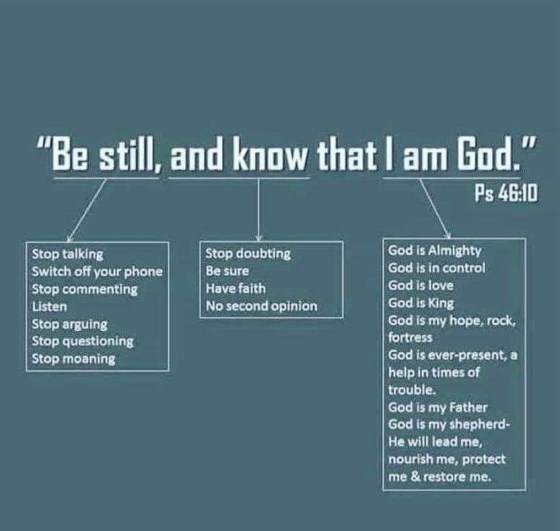

































 sharin' His love & Prophecy Unfolding
