

God’s Peace
The most important thing about Jesus is having Him in your heart; inviting Him in, giving Him full access to every room, talking with Him about everything, sharing all your secrets with Him, asking His advice on everything, and letting Him decorate how He wants to. Then constantly working on your private relationship with Him, figuring out how He speaks to you, so that you fully understand each other. This is going to be different for each person. He is not the author of fear or confusion. He will guide you through love if you let Him. The more you grow, the deeper your relationship with Him gets, the more you can share His love…

This picture sends chills over me!
What a day that will be!

Ask, using my name, and you will receive, and you will have abundant joy.
John 16:24b


John 16:33b (NLT)
Here on earth you will have many trials and sorrows.
But take heart, because I have overcome the world.
1 Corinthians 16 (Good News Translation)
13 Be alert, stand firm in the faith, be brave, be strong.

This is the day the Lord has made.
We will rejoice and be glad in it.
Psalm 118:24 NLT

From the Vulture Trail you will also get a sight of the spectacular Mount Gamla. You can cross to it from the bird watching site – following signs to the “ancient path”, a hiking trail which takes about 90 minutes to cross (it is only about 1 hour to 1 and a half hours return but is windy and steep.) For those who do venture across, ancient Mount Gamla is a site of historic importance with a similar tale to tell as Masada, aside the Dead Sea. A battle against the Romans and many people committed mass suicide to avoid falling into the hands of the enemy.

From the entrance of Gamla, a 90 minute trail (45 minutes each way) leads to the Gamla Waterfall, passing ancient dolmans – stone structures which are shaped like tables, but nobody is sure of why. Once you reach the waterfall, you’ll be struck with what is the tallest flowing waterfall in Israel – at 170 feet.
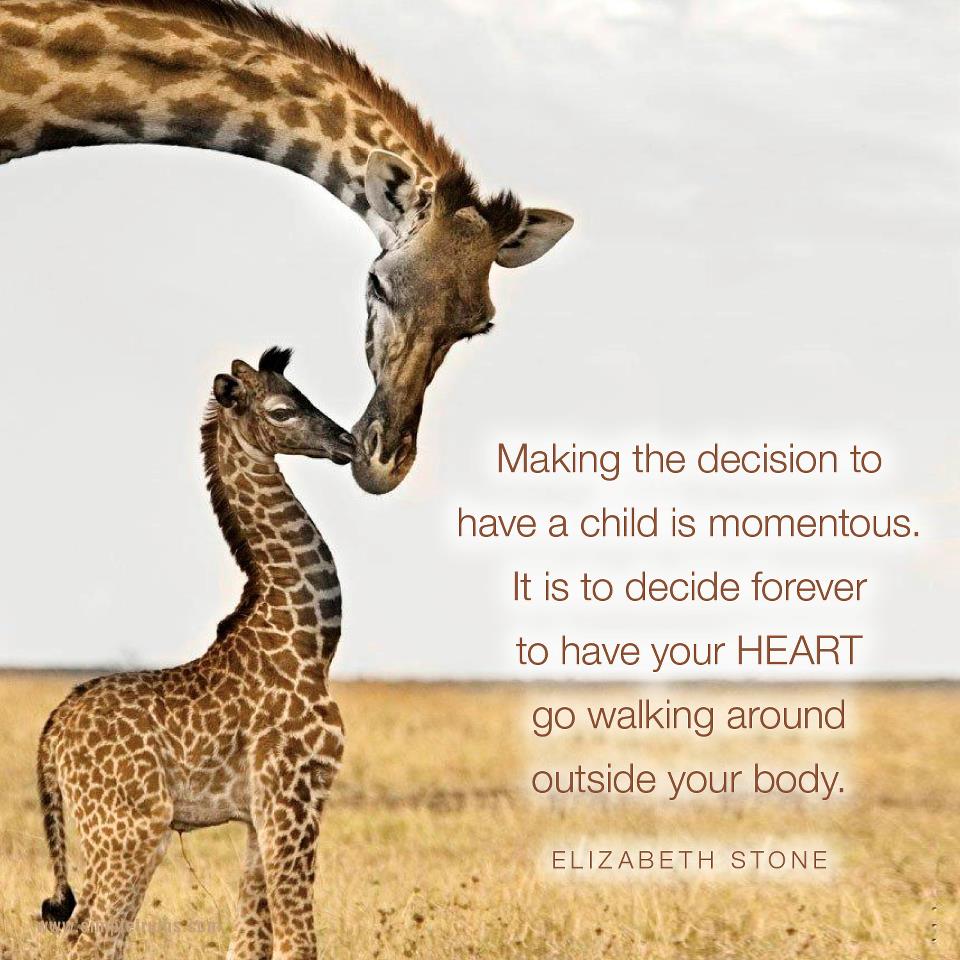

Beautiful and graceful,
varied and enchanting,
small but approachable,
butterflies lead you to the sunny side of life.
And everyone deserves a little sunshine.
~ Jeffrey Glassberg
Caesarea is a magnificent site, a national park where amazing amazing ancient harbor ruins, beautiful beaches, and impressive modern residences sit side by side. Caesarea is originally an ancient Herodian port city located on Israel’s Mediterranean Coast about half way between Tel Aviv and Haifa. The site recently been restored to create one of Israel’s most attractive and fascinating archaeological sites. The restored Caesarea amphitheater hosts modern-day concerts during the summer months, whilst the Old City has a range of boutiques and restaurants. The new town of Caesarea is a luxurious neighborhood of villas, whose beach, the Caesarea Aquaduct Beach is one of the best beaches in Israel.
 Citadel at Caesarea by Adam Reeder, on Flickr
Caesarea National Park is one of, if not Israel’s, most impressive archaeological site. The beautifully restored harbor here was built by King Herod and is a work of engineering marvel. The site is a fascinating place to explore and the museum includes a great multimedia explanation of the history of the port.
Within the park is the Caesarea Amphitheater, also restored, which during the summer regularly hosts concerts of both local, and international acts. The Harbor Beach is located within the Park although you can enter seperately, and is totally unique in its setting, with superb facilities.
The Park is also home to a unique museum, the world’s only underwater museum where you are able to dive through the underwater ruins of this ancient city. Wow! For more call the Caesarea Dive Club (04-6265898).
 Caesarea Aqueduct by luzer, on Flickr
Outside the national park, in the modern day neighborhood of Caesarea is the Aquaduct Beach one of the most breathtaking beaches imaginable. With an ancient aquaduct marking the edge of the beach the breathtaking approach is even more stunning up close. There is no life guard here so bathing is not strictly allowed although it does get busy on summer weekends, but the is worlds away from the beaches further south with a more rural surrounding and breathtaking archaeological feature

Caesarea Amphitheater where concerts are held in the summer by Flickr user heatkernel
Caesarea also hosts the Ralli Museum, one of four museums around the world funded by philanthropist Harry Recanti. The two galleries at Caesarea focus on Latin American and Sephardic Jewish artwork. The museum is free to enter and has some fantastic pieces so if you’re in the area, and cant resist the urge to see some art, this is the place to go. Nearby is Caesarea Golf Club which is Israel’s only full size golf course. Recently reconstructed by renowned designer Pete Dye, this course plays host, every four years to the Maccabi Games, the Jewish Olympics.
All this is exploring is likely to get your appetite going, and there are some brilliant restaurants in Caesarea at the Harbor. They vary in price although most are pretty good and serve seafood with an awesome location overlooking the Mediterranean.
Caesarea National Park is a half-day attraction which is great all-year round. It is easily accesisble by road, although getting to Caesarea by public transport can be tricky. Many tourists therefore decide to visit the site on a tour of Caesarea, many of which incorporate other sites along the coast and can start from either Tel Aviv or Jerusalem.
Caesarea is a great place to enjoy a sunset and meal so go late afternoon in the summer and enjoy the sunset in one of the many restaurants in Caeasarea harbor. The museum is open in summer months (April-September) from 8am to 6pm and winter months until 4pm, with the site itself and restaurants remaining open later into the evening.
Enquiries: 04-626-7080
Fees: Adult: NIS 38; child: NIS 23Israeli senior citizen: 50% discount. Group (over 30 people): Adult: NIS 34: child NIS 21
Caesarea is located just off of Road 2, the main coastal highway about mid-way between Haifa and Tel Aviv. It is about a 1 hour drive from downtown Tel Aviv.
Public transport to Caesarea is slightly difficult. There is a train link between Tel Aviv and Haifa, and Kesarya, however from the station you will need to take a taxi to the site about a five minute ride away (it is too far to walk). There are no inter-city buses to the town although local buses do come from Hadera irregularly during the day.
 Any ideas where?


ישעיהו כ’’ח:ט’ז
hee-ne-NEE yee-SAD be-tzee-OHN eh-VEN eh-VEN boh-KHAN pee-NOT yeek-RAT moo-SOHD moo-SOHD ha-ma-ah-MEEN loh ya-KHEESH
From United with Hebrew, “The word for ‘stone’ in HEBREW is אבן/EH-VEN. It is a very interesting word, as it is made up of the word אב/av, meaning ‘father’ and בן/ben, meaning ‘son.’ Perhaps this is because the bond between a father and son is as solid as a boulder and as precious as a fine stone.” Are you United with Hebrew?
Photograph of boulders on the beach by Hagai Nativ. On the peak of Mount Moriah in the Old City of Jerusalem lies the foundation stone, אבן שתיה / eh-VEN she-tee-AH. According to “Legends of Jerusalem” by Zev Vilnay, “The sages of Israel commented: ‘And it was called the Foundation Stone, because the world was founded on it. For Isaiah the prophet said: ‘Thus said the Lord, Behold I am laying a stone for a foundation in Zion.’”


The Old City of Jaffa, located on the southern edge of Tel Aviv on the Mediterranean coast, was known in ancient times as the gateway to the Land of Israel. With its 3,000 years of history, Old Jaffa is the world’s most ancient port. It is said that the city, called Yafo in Hebrew and Joppa in the New Testament, derives its name from either Japheth, one of Noah’s three sons, or from the Hebrew word “yaffa” meaning beautiful.
At the Visitors Center, located on the main square, visitors can obtain brochures, maps and general tourist information. The recently reopened Center has numerous artifacts from the Hellenistic and Roman eras on display, and screens two informative movies on the history of the city.
Jaffa is famous as the place from which Jonah sailed as he tried to flee the Lord’s calling to go preach repentance to the inhabitants of Niniveh (Jonah 1:3). As the story tells us, Jonah’s ship was caught in a storm, and he was thrown overboard. He was swallowed by a giant fish and remainedin its belly for three days.
Jaffa is where St. Peter raised Tabitha from the dead (Acts 9:36-43). He then stayed at the home of Simon the Tanner, just a short walk from the Visitors Center. It was on the rooftop of this house that Peter was praying one day when he had a vision of a sheet coming down from heaven, full of unclean animals, and he heard a voice commanding him: “Rise, Peter; kill and eat” (Act 10:13). The command to eat unclean animals was a sign for Peter to baptize Cornelius, a Roman centurion and Gentile considered unclean by pious Jews. This meant that Gentiles, for the first time, could receive the Holy Spirit and join the Church.
The most distinctive building in Old Jaffa is St. Peter’s Church, which towers over the main square and is visible all the way up the beach of Tel Aviv. The church belongs today to the Franciscan Custody of the Holy Land. Fr. Peter, the Franciscan friar on duty, tells us that it was originally built as a guest house to welcome pilgrims sailing from around the world to Jerusalem. The principal painting in front of the church depicts St. Peter’s vision on the roof of Simon the Tanner’s house. Other panels show the major episodes in Peter’s life: the miraculous catch of fishes, the giving of the keys, the Transfiguration of Christ and the washing of the feet at the Last Supper. The pulpit, carved in the shape of a tree, is also unique. St. Peter’s Church continues to welcome pilgrims today, offering Mass in several languages for both local Christian communities and visitors from around the world.
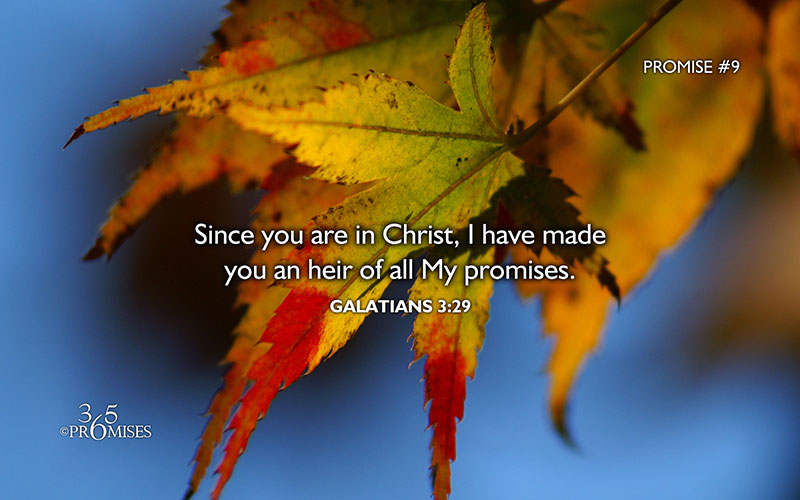
Galatians 3:29
When God said to Abraham that He would be the father of many nations, and a blessing to many (Genesis 12), you were part of that promise. The New Living Translation says Galatians 3:29 this way… And now that you belong to Christ, you are the true children of Abraham. You are his heirs, and God’s promise to Abraham belongs to you. NLT
May our God and Father give each one of us a revelation today about what it means to be an heir in His amazing kingdom. An heir of God and a co-heir with our elder brother, Jesus Christ. There is no higher call, there is no greater destiny, than to be part of the eternal family of the living God. Be encouraged by the words found in Galatians 4:7 – So you are no longer a bondservant, but a son; and if a son, then an heir of God through Christ.(WEB)
Photo by Jeff Epp
Click here to read Barry Adams’ new daily devotional at Fatherheart.tv
Galatians 4:6
The Spirit of the Son that lives within us continually calls out ‘Abba Father!’. Abba is an Aramaic word for father that little children would call out to their dads in New Testament times. It would be like us saying ‘papa’ or ‘daddy’ in the English language. Because we carry within our very being the Spirit of the Son, our spirit man continually cries out ‘Papa’ to God, whether we are aware of this cry in our heart or not.
I believe it delights our heavenly Father when we cry out ‘Abba!’ to Him, for that is the very reason why God has given us the Spirit of His Son… so that He could be a Father to us. So may a cry resonate deep in our heart today as we join with the Spirit of the Son that lives within us that calls out ‘Abba Father!’.
Photo by Jeff Epp
Click here to read Barry Adams’ new daily devotional at Fatherheart.tv

I will cause a sprout of righteousness to sprout forth for David, and he will administer justice and righteousness in the Land.
JEREMIAH (33:15)
ahts-mee-OKH le-da-VEED tze-MOKH tze-da-KAH ve-ah-SAH meesh-POT oo-tze-da-KAH ba-ah-RETS
A Taste of Torah for Shabbat
This Shabbat, Jews around the world read Parshat Yitro/Jethro, the Biblical portion (Exodus 18-20) describing the greatest event of human history, when God revealed Himself to man through His giving of the Ten Commandments. Rabbinic commentators point out that Jethro is singled out and rewarded by having this special reading eternally connected with his name because he was a righteous gentile who recognized the great miracles the One True God performed for the Jewish people. Jews have always shown admiration and appreciation for the righteous gentiles throughout our history who have stood by the People of Israel.
About Today’s Photograph
Almond trees, known in Hebrew as שקדיה/she-kay-dee-YA are amongst the first to blossom throughout Israel and are a welcome reminder that spring is just around the corner. The pink and white flowers turn into leaves and finally give way to almonds in just a few months. Almond trees have grown in Israel since Biblical times and were amongst the gifts sent by Jacob to Joseph in Egypt according to Genesis (43:11). Today’s photograph is by Galit Trager. Happy Birthday Galit – יום הולדת שמח גלית

ve-ye-hoo-DAH le-oh-LOHM tay-SHEV vee-roo-sha-la-YEEM le-DOR va-DOR
Today’s Bible Lesson: Guest Post
by Sondra Baras, Director of CFOIC
Judah was Jacob’s fourth son and when the land was divided amongst the Tribes of Israel, Judah received the vast area of land south of Jerusalem extending from the Dead Sea in the east to the Mediterranean in the west. For centuries, this area was known as the Region of Judah, or Judea. Today, many people seek to sever the Jewish people from Judea, the Biblical Heartland of the Jewish People. But God promised through His prophet Joel, that Judah would exist forever. “Many are the plans in the mind of a man, but it is the purpose of the Lord that will stand” (Proverbs 19:21).
About Today’s Photograph
Photograph of a father and son walking through the streets of Jerusalem’s Old City by Vladi Alon. Today’s verse and much of Jewish literature connect Jerusalem with eternity. “While pondering the creation of the world, the sages asked: ‘From where did He create it? And the answer is ‘From Zion.’ And when the Holy One, blessed is He, shall renew the world, He shall renew it out of Zion.” From “Legends of Jerusalem” by Zev Vilnay.

Jesus is our center! He is the hub around which we turn. Rather than trying to add on to the truth of Jesus, we must learn to accept it and trust it in child-like faith. But that child-like faith must be nourished and grown. As Jesus remains our central focus and our hearts remain thankful to God for his grace, we will that our faith is strengthened and that Jesus is more real than ever.
Holy and Righteous God, please give me eyes to see evil and avoid it. Please give me wisdom to know deceptive and false teaching when it is placed before me. Empower me to live a thankful life of holiness so that I can live in Jesus to your honor and glory. In Jesus’ name I pray. Amen.
John 3:16
It was the great love of our heavenly Father that caused Him to give up His most treasured possession, the life of His Son, so that we too could share in Jesus’ eternal life. What a glorious promise! We were loved so much by God, that He gave up all that He loved in order to gain our love!
May we never take the wonder of John 3:16 for granted, but may we continue to revel in the amazing love our God and Father has for us every day in our lives. Thank you Father for loving us so much, that you sent your only begotten Son to the world in order to purchase our redemption! ~ Barry Adams
Photo by Eric Boldt
Click here to read Barry Adams’ new daily devotional at Fatherheart.tv

When the Romans defeated the Jews in 70 C.E., they built this “Titus Arch” in Rome to commemorate their victory.
The sculpture depicts the booty the Romans took when they ransacked and destroyed the Second Temple in Jerusalem.
The Roman victors named the conquered Jewish region “Palestine.”

“You will yet plant vineyards in the mountains of Samaria;
the planters will plant and redeem.”
JEREMIAH (31:5)
Enjoy this photo of stunning vineyards!
Today marks the 15th day of the Hebrew month of Shvat,
and throughout Israel, children and adults alike will plant trees and vines throughout Samaria
and will celebrate Jeremiah’s prophecy coming to life!


The tomb of Benei Hezir is the oldest of 4 monumental rock-cut tombs that stand down the valley of Kidron Valley
( Jehoshaphat ) and date to the period of the Second Temple.

Zefat is situated on a protruding summit in the heart of the highest mountains of Israel, in the Upper Galilee region
You won’t believe what’s hidden under Jerusalem. A fascinating millennia-old subterranean world of tunnels, caves, aqueducts, plazas, and even a church are exciting evidence from an iota of the city of eternity’s history. Come on a tour through the depths of the earth, under 21st century Jerusalem
Many cities in the world boast mysterious and interesting subterranean complexes that attract adventure seekers and history buffs. Jerusalem, being an ancient city, has also been blessed with an abundance of subterranean sites, some better known than others.
 The Entrance to the Warren Shaft System
Jerusalem’s subterranean world is comprised of two types of sites: those that were quarried or intentionally built underground, and others that used to be at ground level but are now deep under the modern city due to the repeated ruin and destruction throughout history that the city endured. This article offers an in-depth tour, pun intended, of worlds hidden deep under the surface of modern-day Jerusalem.
The ancient water system in the City of David: This is a hidden and sheltered subterranean water system under the holy city of Jerusalem, within the City of David National Park. This monumental system, excavated about 3,800 years ago by the Canaanites-Jebusites residing in Jerusalem, was used to connect the fortressed city with the Gihon Spring, which was the only source of water available around Jerusalem.
One thousand years later, at the height of the Kingdom of Judah’s Israelite Period, King Hezekiah’s laborers dug a 582-yard long tunnel that channeled the Gihon Spring waters to the Pool of Siloam, which was built within the walls in the ancient city’s central ravine. You can now visit the entire water system and enjoy a unique experience – walking through flowing water, in Hezekiah’s Tunnel, by flashlight.
Following in the steps of the Second Temple Period pilgrims: After the Israelite Period, in the time of the Second Temple, Jerusalem grew a great deal, and according to historical sources, it became one of the most resplendent cities in the ancient world.
Thousands of pilgrims flocked to Jerusalem on holy days, the Second Temple as their destination. An exciting subterranean path connecting the Pool of Siloam with the Western Wall, at the foot of the Temple Mount, was recently exposed in Jerusalem. You can now walk through the Jerusalem of the Second Temple era on a 765-yard long underground path – from the Pool of Siloam in the southern City of David to the Davidson Center Archeological Park and to the Western Wall plaza. See up close the city’s prestige and grandeur during King Herod’s reign in the Roman period, about 2,000 years ago.
 Facing the Holy of Holies in the Western Wall Tunnel
The Western Wall Tunnels: A remarkable and awe-inspiring subterranean world that also belongs to the Second Temple era has recently been revealed to visitors, in the northern corner of the Western Wall plaza, under the houses of the Moslem Quarter. Years of destruction and construction next to the Temple Mount buried the city deep beneath the present. Subterranean guided tours will take you along the length of the Western Wall, but including the underneathunderground part of it. The several hundred yard long path exits onto the Via Dolorosa, and will introduce visitors to an ancient and magnificent world of palatial construction, coupled with engaging explanations about the customs of ancient Jerusalem residents and the city’s character during the days of the Second Temple.
Hasmonean Aqueduct Tunnel on the ridge of Armon Hanatziv (Government Governor House): An unforgettable subterranean adventure. During Jerusalem’s heyday, it required a lot of water, which could not be found in the city. To meet this vital need, aqueducts were built to channel water to Jerusalem from large natural springs south of the city, around Bethlehem.
The lower aqueduct, which led water to the Temple Mount, crossed the highest ridge of Armon Hanatziv through an excavated 437-yard long tunnel. You can tour the entire length of the excavated tunnel by flashlight and be dazzled by the superb construction quality and the original plaster that has survived here for more than 2,000 years.
 The Hasmonean Aqueduct in Armon Hanatziv
Zedekiah’s Cave (also known as Solomon’s Quarries): A small and unassuming opening can be found at the northern part of the Old City, next to Nablus Gate, and whoever enters it is surprised to find themselves in an enormous cave, more than 2.2 acres large.
Some of the most important Jerusalem researchers searched for this mysterious and picturesque place, until it was accidentally discovered in 1854 by Dr. James Turner Barclay, who went looking for his lost dog. The gigantic cave sparked the imagination of researchers, and it was quickly named Zedekiah’s Cave, since it is associated with the tragic story of King Zedekiah, the last king of Judah.
 Music at the Tzidkiyau cave during Hamshushalaim Festival
Accoridng to tradition, the king tried to escape the Babylonian conquerors through the tunnel, but they caught him as he emerged from the cave, blinded him, and led him to Babylon, where he was imprisoned for life. But the truth is that the cave is actually a huge quarry for Jerusalem building stones, which masons used throughout most of the city’s historical periods. Captain Charles Warren, Jerusalem’s famous archeologist, conducted the founding gathering of the Freemasons movement in the Holy Land in this cave, in 1868. Additional areas and galleries totaling an area of almost 1.2 acres were recently discovered inside the cave.
 The End of the Western Wall Tunnel – Lithostrotos and the Strouthion Pool
: 0n the northern end of the Via Dolorosa, near the first station, lies the Ecce Homo Convent of the Sisters of Zion. The modest opening, visible from the side of the street, does not allude to the rich subterranean world that lies beneath.
Through the small convent, you enter an ancient Roman Jerusalem site from the second century C.E. The path crosses the large Roman floor tiles (a style called Lithostrotos, meaning “pavement”) and along ancient water pools, one of which is the Strouthion Pool, found in the northern area of the Western Wall Tunnels, right next to the street exit. To wrap up a fascinating tour of life during the Roman Period in Aelia Capitolina (Jerusalem’s Roman name) don’t miss the impressive Roman Square under Nablus Gate.
 The Church of the Ascension of Mary
Mary’s Tomb at the Church of the Assumption: Located in the Kidron Valley, next to Gethsemane, lies one of the oldest, most beautiful and impeccable churches in Jerusalem. This Crusader church, which according to Christian tradition is where St. Mary, Mother of Jesus, is buried.
The church is resplendently built from Jerusalem stone and lies in its full glory in the ancient level of the Kidron Stream, found deep under modern-day street level. To reach the church’s outdoor plaza, you need to go down a large stairwell, from which a dim and mysterious stairwell descends into the belly of the earth – to Mary’s Tomb and to the dark galleries infused with the fragrance of frankincense.
This does not conclude Jerusalem’s subterranean wonders. Other great destinations include Nicanor Cave, an ancient cave in the botanical garden at Mount Scopus, the Well of Souls, a natural cave located under the Foundation Stone inside the Dome of the Rock at the top of the Temple Mount, the Burnt House and Herodian Quarter under the Jewish Quarter, and more. See these sites during an extended and leisurely visit to Jerusalem.


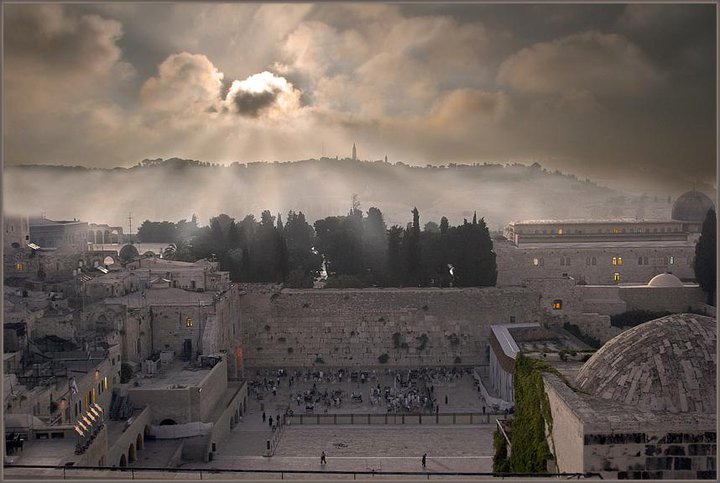

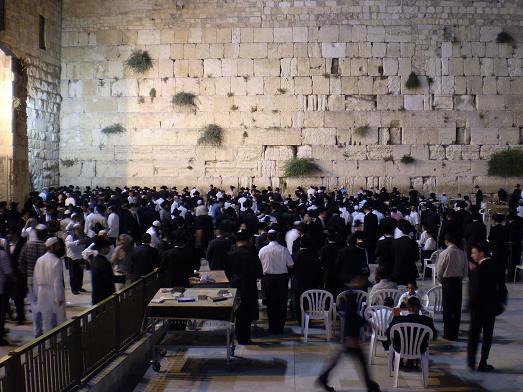


Sundown is approaching in our Beautiful Land.
Enjoy this gorgeous picture from George Arnon.

A beautiful morning here in Israel.
Do you like this awesome view of the Yam Kinneret (Sea of Galilee)?
How about the lush greenery and farmland?
What a beautiful Land!

We hope you ‘LIKE’ today’s awesome scene of inspiration! This incredible photo of Israel was taken by Natasha Pnini. Thank you Natasha for SHARING the beauty of the Land of Israel with the entire world! Click below to learn more about ‘ISRAEL365’ and to sign up for our FREE daily email and iPhone app –> http://israel365.co.il/

What a beautiful, inspiring sight.
No words can adequately describe a magnificent moment like this!
The Old City of Jerusalem is one of the most intense places on Earth! At the heart of the Jewish, Islamic, and Christian religions, this walled one kilometer area in the center of Jerusalem is beyond words and cannot be missed.
 The Old City of Jerusalem as seen from Tower of David Museum by Brian Negin, on Flickr
The Old City is home to the Western Wall (aka Wailing Wall and in Hebrew Kotel). This is the last remaining wall of what was the Jewish Temple, and is today the holiest site in the world for Jews.
Above the Western Wall lies the Dome of the Rock important for Muslims as the site where the prophet Muhammad is said to have risen to heaven.
 Dome Of The Rock by mockstar, on Flickr
And, just a few minutes walk away, lies the Church of the Sepulcher, where some believe Jesus was crucified and buried.
The Old City of Jerusalem is divided into four quarters; The Jewish Quarter, The Armenian Quarter, The Christian Quarter, and The Muslim Quarter. The walled city is entered by one of seven entry gates, although the busiest for tourists is the Jaffa Gate next to which is the Tower of David Museum, providing the history of Jerusalem within the Old City Walls. Each quarter has its own unique atmosphere and observations, sites and smells, and experiences.
 Jewish men going to pray in the Old City of Jerusalem by chany14, on Flickr
In the Jewish Quarter, for instance, the narrow alleyways are lined by the homes of Ultra-Orthodox (Haredi) Jewish families, and Yeshivas (schools for Torah study). Walking and observing the residents of the Jewish quarter rush about on their daily life, whether teenage students in the Yeshivas who are often here from around the world for extended periods of time, children as they walk with school between lessons, or the men, as they rush around between places of worship, and the Western Wall. The houses of the Old City, and the Jewish quarter in particular, are for good reason, hotly contested real estate, and command spectacular prices when they rarely trade hands.
The Jewish Quarter’s narrow alleyways open up as you reach the Western Wall Plaza and the wall itself. At times of Jewish festival the wall can be crowded, and observing the tourists brushing alongside daily prayers here is an interesting site. Anybody can go up to the wall, although men and women have separate areas, and men should cover their heads (there are paper kuppels available), and women wear modest clothing. It is customary to place a small prayer on a piece of paper within a crack on the wall. Amazingly the vast Western Wall represents just a tiny percentage of this elevation of the Temple, and the Western Wall Tunnels accessed via the plaza, allow visitors to see even more of the wall underground. Also interestingly, within the Muslim Quarter is whats known as the Little Western Wall where the wall is once again exposed and visible. This is argued to be holier than the iconic section of wall because it is closer to the ‘Holy of Holies’ – the holiest part of the Temple.
 Old City ‘Shuk’ by RonAlmog, on Flickr
The Muslim Quarter is a huge contrast to the Jewish Quarter its streets are busier, more crowded, with vendors, especially within the famous Shuk selling all varieties of products. In contrast to the other quarters where shops are generally selling religious or tourist-appealing products, here the Shuk is literally an ancient shopping mall in the 21st century where one can practicing their bartering skills and buy almost anything imaginable. As in the Jewish Quarter, and the rest of the Old City, tourists wondering the streets of the Muslim Quarter find it hard to imagine how the locals go about their everyday business so normally in what is such an intense and looked upon place. Kids play in the street, and men sit out in cafes smoking nargila (hookah or shisha).
 Old City of Jerusalem by RonAlmog, on Flickr
The Dome of the Rock sits above the Western Wall Plaza and whilst non-Muslims are not allowed to enter the building itself, tourists are able to tour the compound and nearby Al-Aqsa Mosque.
Moving into the Christian Quarter of the Old City of Jerusalem, there is yet another change. Home to about 40 holy sites to Christians, in the streets here you will see priests and pilgrims from around the world. This quarter was constructed around the Church of the Holy Sepulchre where Jesus is said to have been crucified and buried. Within this hot patch of real estate, even the Church is divided, with different parts controlled by different Christian sects, meaning that there are often disputes over maintenance and some parts are in poor condition.
 Behind a door in the Armenian Quarter by chany14, on Flickr
The smallest quarter of the Old City is the Armenian Quarter. This area is home to some 2,500 Armenians, an ancient community who have resided here for over 2,000 years.

| Yotvata | ||
|
||
| Hebrew | יָטְבָתָה | |
| Founded | 1957 | |
| Region | Aravah | |
| District | South | |
| Affiliation | Kibbutz Movement | |
| Coordinates |  29°53′44.16″N 35°3′36.35″ECoordinates: 29°53′44.16″N 35°3′36.35″E 29°53′44.16″N 35°3′36.35″ECoordinates: 29°53′44.16″N 35°3′36.35″E |
|
| Population | 640[1] (2009) | |

 Yotvata
|
||
| Website | www.yotvata.org.il | |
Yotvata (Hebrew: יָטְבָתָה) is a kibbutz along the Aravah road in the southern Negev in Israel. It has approximately 310 members and a total of 700 residents. The Aravah valley is an arid desert where the average annual rainfall is less than 30 mm and temperatures often exceed 40 °C (104 °F) in summer, and 21 °C (70 °F) in winter.[2]
Contents[hide] |
Located approximately 40 km north of the Red Sea, Yotvata is the first, biggest, and most prosperous Kibbutz in Hevel Eilot Regional Council. Being relatively far from major urban centers (41 kilometers north of Eilat and 130 kilometers south of Dimona), it is the center of the region, where most regional facilities are based: regional school, regional council offices, community center, sports center, movies and concerts hall and local airfield.
Yotvata is a cooperative community, where most adult residents work on the kibbutz in production, services or education. The revenues are equally distributed among the members regardless of their position, along the idea of each one gives as much as he can and gets as much as he needs. Most of daily affairs are conducted communally – education, holidays, dining (three meals a day conducted in the commune dining-room are giving the community more relaxed time to get together) and more.[3]
Yotvata Dairy is a milk products factory which provides the kibbutz with its main source of income and occupies the highest number of members.
Agriculture is second in income but perhaps the first in importance for the community character and pride. Agriculture branches are Irrigated land (onions, potatoes, corn, animal feed, garlic and pumpkins), Plantations (dates and mangos) and a big and modern Dairy Farming.[3]

Yotvata’s road stop
There is also a big road stop shop on the Aravah Road providing refreshments for the travelers.
Other small branches are a picturesque horse stable that lies in the dates plantation east to the kibbutz and few artistic studios.
All members take turns contributing to the kibbutz service branches – kitchen, dining-room, laundry, security, etc.
The kibbutz gets all its drinking and irrigation water from aquifer wells in the Aravah valley.

Ein Radian Nahal Settlment
Yotvata started in 1951 as a Nahal settlement named Ein Radian. In 1957 it was established as the first kibbutz in the southern Aravah region by Ihud HaKvutzot VeHaKibbutzim. The kibbutz is named after an Israelite encampment mentioned in Numbers 33:34 and Deuteronomy 10:7: “…from there they went to Gudgodah, and then to Jotbatha, a land of streaming water.”[4][5][6] Although there are some debates over the exact location of the biblical Yotvata (some say that it is closer to the Red Sea near Taba), the idea of a desert oasis for Israelis was in the founders’ mind; the local oasis was the Ein Radian wellspring.[3]
The founders, a small group of men and women 20 years of age and just out of the military service, decided to pursue a life of pioneering and built their home in the desert. They had massive challenges presented by the desert: the burning sun, the heat, shortage of water, salty land and water, limited transportation and no secure source of income. They started making all kinds of agricultural trials growing grapes, pomegranates and vegetables; they raised cattle and chickens – all with little success. The dates plantation proved more suitable to the arid conditions.

Yotvata – 2003
And then came the initiative to found a dairy that would provide milk to Eilat, which was expected to grow rapidly. Breeding milking cows in the desert was considered an impossible mission. In 1962 the dairy was founded, with four cows, the member who led the vision and the operation was Ori Horazo (1939-1966).[3] The members tried to get funds from the Jewish Agency, but failed. Eventually, they received funding from the Israeli Trade and Industry Minister, Pinhas Sapir. In the first year, the dairy produced 500,000 liters of milk. By 2008, it was producing 62 million liters a year and controlled 63% of the Israeli dairy beverages market (making NIS400 million a year), and 49% of the fortified milk market (making NIS 250 million a year). It employed 130 workers and had 700 cows.[7] The dairies of Kibbutz Yahel, Lotan, and Ketura provide milk for Yotvata.
In 1960 the first children of the community were born, and six years later the school opened with three first graders; today there are 200 kids in the kibbutz, and 600 students from all of the region communities attend Maale Shaharut School (from 1st to 12th grades)[3] in Yotvata.
Judging by the numerous historic forts surrounding the Kibbutz, Yotvata’s location was a strategic one:[8]
Yotvata Hai-Bar Nature Reserve is dedicated to reintroducing extinct species mentioned in the Bible, as well as other endangered desert animals, to the wild. It has three parts: a park for herbivorous animals; the Predators Center that displays reptiles, small desert animals and large predators; and the Desert Night Life Exhibition Hall to observe nocturnal animals during their active hours.[11]
15 km south of Yotvata lies Timna valley, where the sandstone and calcareous rock formations present some breathtaking desert features such as the Solomon’s Pillars, Mushrooms, Arches and more. Timna is also known for its ancient copper mines.
The area provides many great desert walks including canyons, roman routes, sand dunes, fossil hunting, rock-climbing and more.
 |
Wikimedia Commons has media related to: Yotvata |

The Eilat Mountains, located in the southernmost part of Israel, are mentioned in Deuteronomy 2:8 as one of the locations the Jewish people passed through in their trek out of Egypt!

Ein Gedi is where David hid from King Saul and where he wrote many of the Psalms.
You can visit the breathtaking nature reserve located just west of the Dead Sea less than an hour drive from Jerusalem.

“The Lord, God is my strength, and He makes my legs as swift as hinds’ feet; and He leads me to walk upon my high places. To the conductor, with my songs.”
HABAKKUK 3:19
Do you know what type of beautiful animal this is?
It’s actually called a Sinai Ibex, and its favorite habitat is the desert mountains of Israel!
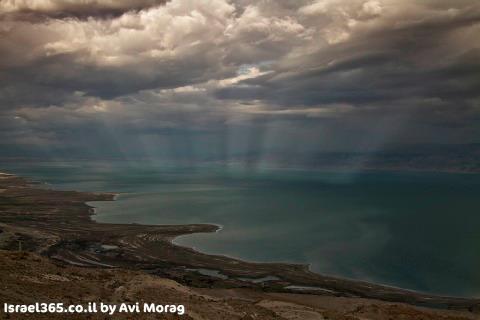
Researchers have discovered microorganisms and underground springs in the deepest levels of the lowest spot on earth.


Luke 9:28-36
The Transfiguration
…after Jesus said this,… went up onto a mountain to pray. As he was praying, the appearance of his face changed, and his clothes became as bright as a flash of lightning….
Location: Mount of Transfiguration – Israel
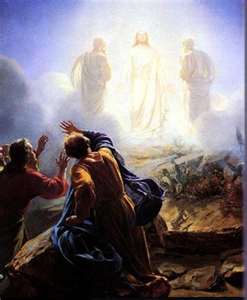
One of the unknowns of the New Testament is the identification of the mountain where Jesus underwent his Transfiguration. The Matthew account of the Transfiguration is as follows.
“And after six days Jesus taketh Peter, James, and John his brother, and bringeth them up into an high mountain apart, And was transfigured before them: and his face did shine as the sun, and his raiment was white as the light. And, behold, there appeared unto them Moses and Elijah talking with him. Then answered Peter, and said unto Jesus, Lord, it is good for us to be here: if thou wilt, let us make here three tabernacles; one for thee, and one for Moses, and one for Elijah. While he yet spake, behold, a bright cloud overshadowed them: and behold a voice out of the cloud, which said, This is my beloved Son, in whom I am well pleased; hear ye him. And when the disciples heard it, they fell on their face, and were sore afraid. And Jesus came and touched them, and said, Arise, and be not afraid. And when they had lifted up their eyes, they saw no man, save Jesus only. And as they came down from the mountain, Jesus charged them, saying, Tell the vision to no man, until the Son of man be risen again from the dead.” (Matthew 17:1-9, KJV)
Three candidates for this mountain have been suggested:
(Note* – However, it is important to note that this location was extremely far from Jerusalem, and Yeshua & his Disciples would have been in Jerusalem for the Feast of Sukkot (Tabernacles), as it is one of three Pilgrimage feasts set forth in Leviticus 23, thereby making Mt. Hermon an unlikely reality for the place of Transfiguration)
Mount Hermon = 9,232 feet High. (33°24′N, 35°51′E; Hebrew: הר חרמון, Har Hermon) More Information on Mount Hermon
Mount Tabor = 1,886′ High. (Hebrew: הר תבור), For more information on Mount Tabor: Mount Tabor
Mount Sinai = 7497′ High. (Arabic: طور سيناء , Hebrew: הר סיני), For more information on Mount Sinai: Mount Sinai
Jesus was claimed to stand on the Mountain with Elijah and Moses. These would be the three figures which had the most miracles surrounding them in the Bible. Moses, representing the law and Elijah, the prophets. In Luke Jesus spoke to Moses of Jesus departure( in Greek exodus ).
29And as he was praying, the appearance of his face was altered, and his clothing became dazzling white. 30And behold, two men were talking with him, Moses and Elijah, 31who appeared in glory and spoke of his departure,[a] which he was about to accomplish at Jerusalem. ( Luke 9:29-31 ESV)
Peter who was one of the claimed eyewitnesses with James and John reflects on this in 2 Peter about Peter’s own departure – exodus.
13I think it is right to refresh your memory as long as I live in the tent of this body, 14because I know that I will soon put it aside, as our Lord Jesus Christ has made clear to me. 15And I will make every effort to see that after my departure you will always be able to remember these things. 16We did not follow cleverly invented stories when we told you about the power and coming of our Lord Jesus Christ, but we were eyewitnesses of his majesty. 17For he received honor and glory from God the Father when the voice came to him from the Majestic Glory, saying, “This is my Son, whom I love; with him I am well pleased.” 18We ourselves heard this voice that came from heaven when we were with him on the sacred mountain. (2 Peter 1:13-18 ESV )
This account is one of three in the New Testament where God is heard audibly speaking. All three accounts concern Jesus. They are:
The account of the Transfiguration occurs six (Matthew 17:1, Mark 9:2) or eight (Luke 9:28) days after Peter’s confession that Jesus is the Messiah at Caesarea Phillipi and immediately followed by coming down off the mountain and healing an epileptic boy. Peter’s confession and Jesus’ announcement He would die and rise are both in a sense confirmed with the discussion of Jesus’ “exodus – departure” with Moses. The mountain top experience contrasts with the difficulties of life and healing of the boy ( Mk:14-29).
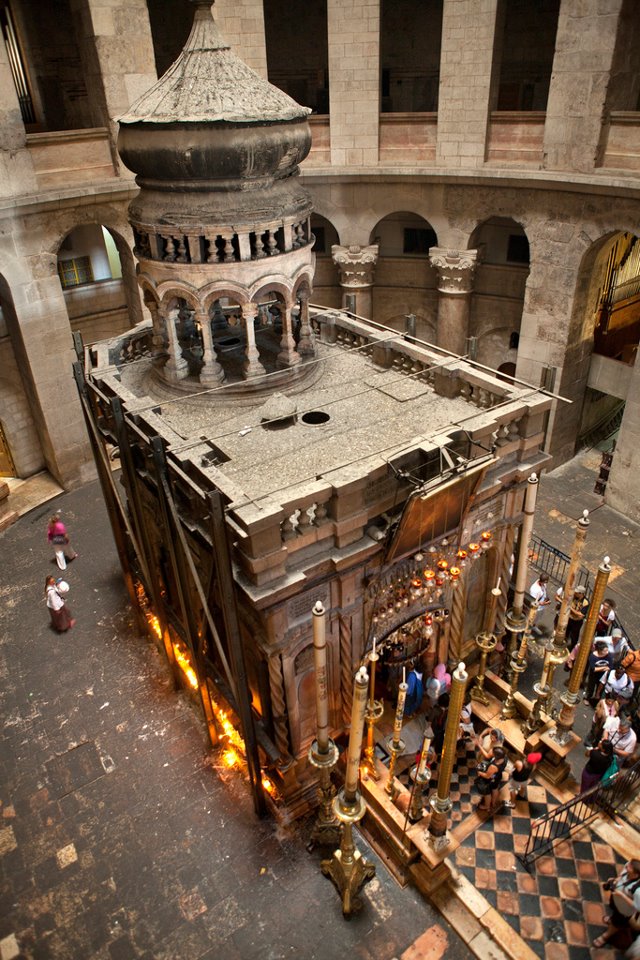


For more information regarding the Church of the Holy Sepulchre, click on the links below.
http://en.wikipedia.org/wiki/Church_of_the_Holy_Sepulchre
https://www.facebook.com/pages/The-Spirit-of-the-Holy-Land


Joy of the Redeemed – Isaiah 35
The desert and the parched land will be glad;
the wilderness will rejoice and blossom….
Location: Israel – The Negev Desert
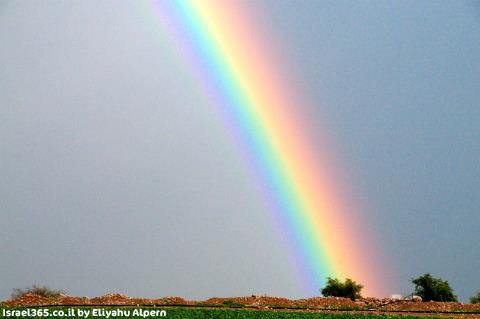
Photograph of rainbow by Eliyahu Alpern, of Safed, Israel.
The rainbow symbolizes God’s first covenant with mankind, promising to remember His promise to Noah.
The next Biblical covenant represents God’s eternal promise of the Land to Abraham and his descendants.

Enjoy this cool shot of a herd of camels in the Negev desert (photo by Ilan Rosen). Camels have been an important part of the Holy Land’s landscape from Biblical times as described by Isaiah, “they carry their wealth…and riches upon the camels’ hump” (30:6).

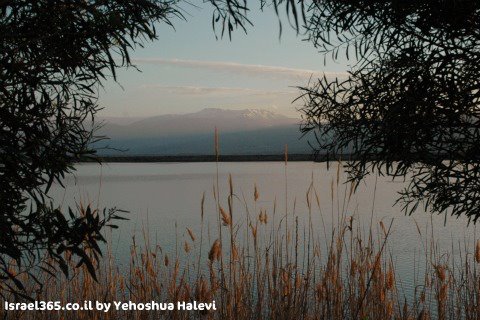
“Tabor and Hermon sing forth Your name” Psalms (89:12).
That’s Mount Hermon in the background! In the extreme northeast of Israel (the “Golan Heights”), Mount Hermon with its 2,814-meter peak is the country’s highest point (and the only mountain with ski slopes…)
It served as the northern boundary of the Israel (Deut. 3:8) and is now called “the eyes of the nation.”
Mt. Hermon is extremely valuable as a strategic early warning system against unpleasant surprises from our northern neighbors. We ‘LIKE’ having this towering, beautiful mountain as part of the Land of Israel!

This is a beautiful photograph of Bat Galim Beach by photographer Natasha Pnini. Bat Galim is the only beach in Israel which faces north, making it one of Israel’s windiest locations!


I would love to see this scene in person.
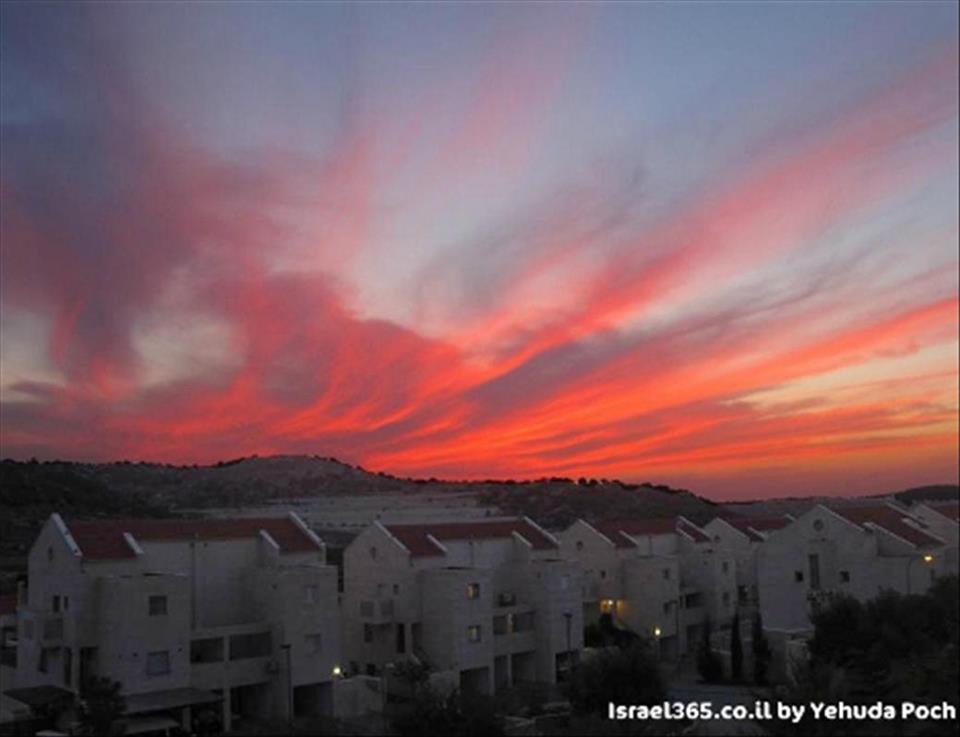
This photo is a real beauty- it is a picture of the sunset over the mountains and houses of Beit Shemesh, a city located in the outskirts of Jerusalem. Beit Shemesh is mentioned in the Torah several times, and till today it continues to be home to thousands of people.

Rosh Hanikra calls itself, the “love story between the sea and the mountain.”
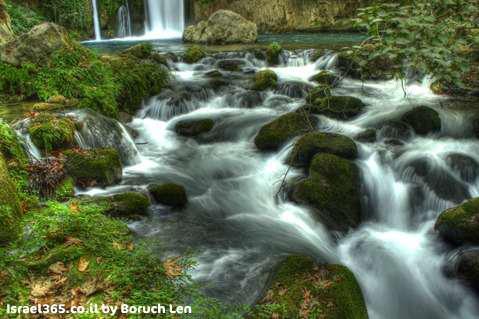
A flowing stream of the Banias Springs in the Golan Heights!

Here’s a photo of an ancient stone house in the Galilee (by Eliyahu Alpern).
“Ein Zeitim”, in the north of Israel by the Safed-Meron highway, was a prosperous village in the Middle Ages.
“Ein” means SPRING and “Zeitim” means OLIVES.
A stream flows in the midst of the numerous olives trees in this area.

Take a look at this beautiful field of poppy flowers blooming brightly in Israel!
Today marks the beginning of the Jewish month of Shevat (ראש חודש שבט – rosh kho-DESH she-VAT) marking the midpoint of winter, when the country starts looking towards springtime.


 sharin' His love & Prophecy Unfolding