It will only matter who truly followed Christ

Whether you support or oppose Trump, this message urges Christians to examine the spiritual realities behind leadership, deception, and the coming judgment.

I wish I could claim credit for this writing, but it is a transcript from a YouTube video we saw.

God has always been in control of human history from the beginning of time. The rise and fall of nations, empires, and individual leaders has never happened by chance. We may see elections, political campaigns, and public opinion polls. But heaven sees providence, judgment, and divine orchestration.

The Bible is very clear. God raises up kings and he brings them down. He appoints rulers for His purposes, whether to bless or to judge, to guide or to expose. That truth should cause every Christian to take a step back and ask, “Lord, what are you saying through this moment in history?”

When we look at the figure of Donald Trump, we are not just looking at a political leader. We are witnessing the unfolding of God’s sovereign hand in real time. Some believe he was raised up to protect the church, defend conservative values, and fight for truth. Others believe he’s a deeply flawed man whose presence has caused division and moral confusion. But the truth lies not in the emotions of the people, but in the plan of God. And if God has allowed Donald Trump to rise, to fall, and perhaps even to rise again, we must ask ourselves what God is doing, not just what man is saying.

Go back to the Old Testament. Pharaoh was raised up not because he honored God, but because God wanted to show His power through Him. God told Pharaoh, “For this very purpose, I have raised you up that I might show my power in you.” Nebuchadnezzar, a pagan king, was called my servant by the Lord, not because of his righteousness, but because he was used to accomplish God’s judgment against Israel. Even Cyrus, the Persian king, was used to free God’s people, though he never truly followed the God of Israel. This pattern continues throughout scripture.

God does not need righteous men to fulfill righteous purposes. He uses whom He wills. So what about Donald Trump? Can God use someone with a morally questionable past, a prideful spirit, a divisive tone, and a strong personality to accomplish His purposes? Of course, he can.

But here’s the danger. Too many Christians mistake God’s use of a man as God’s endorsement of a man. And that’s where we must exercise biblical discernment. The fact that someone is in power or appears to be a defender of Christian values does not mean God is pleased with them. It may mean God is using them as a test for the nation, for the church, and for the individual believer. This is not the time to put blind trust in a man. It’s the time to open our eyes to what God may be doing through that man.

Sometimes God gives a nation the leader it asks for, not as a blessing, but as a consequence. Israel cried out for a king, and they got Saul. He looked impressive, spoke with authority, and won the people’s loyalty. But inside, he was disobedient, proud, and unfit to lead. God allowed it, not because Saul was the answer, but because the people had rejected God as their true king.

Could it be that Trump is not the solution, but the spotlight, revealing the heart of the church and the soul of the nation? The church must not be naive. Just because someone waves the Bible or uses religious language does not mean they walk in the fear of God. The scriptures tell us that Satan himself disguises as an angel of light. That means deception is not always obvious. It can look patriotic. It can sound moral. It can appear strong. But only those who walk close to Christ will recognize whether a leader is being used by God for redemption or for judgment.

We are living in prophetic times. Every headline, every courtroom decision, every election result is echoing what the spirit is already saying to the church.

Wake up.

Discern the times.

Don’t put your trust in princes, in mortal men who cannot save.

If God has raised up Donald Trump in this hour, it is not for us to exalt him. It is for us to examine ourselves. One of the greatest tragedies in the modern church is how easily we exchange the glory of God for the excitement of politics. We are witnessing a generation of believers who are more passionate about defending a politician than proclaiming the gospel. That should deeply concern us. God never called His people to pledge their allegiance to a man, no matter how charismatic, bold, or seemingly conservative he may be. And yet what we’re seeing today is a disturbing shift in the hearts of many Christians where loyalty to Donald Trump has begun to eclipse loyalty to Jesus Christ. This isn’t about whether you agree with his policies or appreciate his leadership. This is about something much deeper, something spiritual.

When a man is talked about more in churches than the cross, when he is praised louder than Christ, when his critics are condemned more fiercely than sin itself, then we are no longer standing on the foundation of scripture. We are standing on the shaky ground of idolatry. And make no mistake, idolatry doesn’t always look like a golden statue or a carved image. Sometimes it looks like a political banner, a campaign slogan, or an unwavering defense of a leader who has become untouchable in the minds of the people. There’s a danger in elevating any human being to a level where criticism feels like blasphemy.

That is not how God has called us to think. The Lord is jealous for His glory. He will not share it. Not with a president, not with a party, not with a movement. And when the church begins to blur the lines between reverence for Christ and allegiance to a man, judgment always follows. Just look at Israel in the Old Testament. Time and time again, they placed their trust in kings and alliances, thinking they were securing peace and protection, only to find themselves under the hand of divine discipline.

Why? Because they forgot the one who delivered them in the first place.

We have to ask ourselves some hard questions. Are we more broken over the condition of our nation or over the condition of our own hearts? Are we more focused on what’s happening in Washington than what’s happening in the pulpits? Are we more committed to winning elections than winning souls? When the church becomes more energized by political victories than spiritual revival, we’ve lost our way.

God does not need a president to accomplish His will. He needs a holy church that fears Him more than it fears losing cultural influence. Let’s be honest. Some of us have defended sin in the name of strategy. We’ve excused arrogance, dismissed immorality, and explained away division because we believe the ends justify the means. But God never operates that way.

He never blesses compromise. He never uses darkness to achieve light without first exposing the darkness. And he never compromises without first exposing the darkness.

We must remember that truth is not optional. It is the sword of the spirit. And when we lay it down for political gain, we are disarming ourselves in a spiritual war. We can’t fight deception with deception. We fight it with holiness, humility, and the unfiltered Word of God. Now more than ever, we need discernment.

The enemy is not always outside the camp. Sometimes he walks right through the gates dressed like a savior. Satan doesn’t mind using someone who sounds conservative if it leads the church into complacency, pride, or blind loyalty.

That’s why God warns us over and over again, do not put your trust in princes.

Our hope is not in who sits in the Oval Office. Our hope is in the one who sits on the throne of heaven. So if God is sending a prophetic warning in this hour, it may not be about Trump alone. It may be about the condition of our worship. In other words, who do we praise? Who do we trust? Who do we follow when the world is burning?

If the answer is anyone other than Jesus Christ, then we have already traded truth for a lie, and God will not leave that unchallenged. It’s essential that we understand the difference between being used by God and being approved by God. That distinction may seem small, but it’s critical.

All throughout scripture, God has used individuals, some righteous, some wicked, to fulfill His divine purposes. But in no way did that usage mean he condoned their character or blessed their behavior. God can work through anyone, including deeply flawed people, but that doesn’t mean he endorses them.

We must never confuse God’s sovereignty with His approval. When we look at the figure of Donald Trump, we see a man who has undeniably shaken the political landscape and for better or worse disrupted the flow of how things have operated in America for decades. His boldness, his resistance to political correctness, and his stance on certain moral and national issues have attracted many Christians who feel like they finally have someone fighting for their values. In fact, we must face the fact that not everyone fights for their values. Some sects of a society have fallen because of it.

But here’s the danger. Just because someone fights for your values does not mean they walk in the spirit. And just because God uses someone to protect certain freedoms doesn’t mean we should blindly follow them. Let’s not forget that God used Pharaoh to demonstrate His power through the plagues. He used Balam’s donkey to speak truth when Balam himself was disobedient. He used Judas Iscariot to bring about the betrayal of Christ, fulfilling prophecy down to the detail. These people were all used by God, but they were not honored by God for their hearts. In fact, many of them were under judgment. And yet, they were instruments in the larger plan. That’s the sovereignty of God in motion. He uses all things, even those opposed to Him, to bring about His purposes. There are moments in history where God raises up a man not to bless the nation, but to expose it. Sometimes it’s not about building but about revealing. That’s what many have missed. We assume that if God is using someone, it must be a sign of divine favor.

But scripture reminds us that even the antichrist will perform signs and wonders. Even he will gather a massive following. Usefulness is not the test of righteousness.

Obedience, humility, and surrender to God’s word. That’s the true test.

And where those qualities are lacking, we must be cautious, not celebratory.

What we are witnessing may be a divine spotlight. Through Donald Trump, God may be revealing the idolatry in the church, the compromise in our pulpits, the shallowness of our discernment. If we support someone because they hold up a Bible, yet we never question how they live, what they promote, or how they speak, then we’ve lost sight of what matters. The enemy doesn’t always work by opposing the church. Sometimes he infiltrates it by offering a counterfeit champion, someone who looks like a defender but lacks the fruit of the spirit.

Now, this isn’t a call to political disengagement. Christians should care about truth, about justice, about the moral direction of our nation. But we cannot do so at the expense of our calling to be a holy, distinct, and Christ-centered people.

We are not here to serve an earthly kingdom. We are here to represent a heavenly one. And our witness becomes compromised when we excuse sin for the sake of influence or when we defend actions that contradict the very gospel we preach.

We need to step back and ask, are we following a man because we believe he is God’s chosen vessel? Or are we surrendering our discernment because it’s convenient?

Has our admiration become blind? Have we silenced the voice of the Holy Spirit in favor of loyalty to someone who, though used by God, may also be part of His judgment?

These are hard questions, but we must ask them because the health of the church depends on our ability to separate spiritual clarity from emotional allegiance. Just because someone is part of God’s plan doesn’t mean they are walking in God’s presence. We have to come to terms with something many don’t want to hear.

The turmoil in America right now is not just political unrest. It’s spiritual judgment. It’s not merely the result of policy failures, cultural shifts, or leadership flaws. This shaking we’re seeing across every level of society is not accidental. It’s not random. It’s divine.

God is not watching from a distance while a nation spirals into confusion. He is speaking through the chaos. And the question is, are we listening?

When you see a country torn in two, when truth is no longer welcomed, when corruption is celebrated and sin is normalized, don’t be fooled into thinking this is just another political season.

No, this is God removing the hedge. This is what happens when a people blessed beyond measure turn their backs on the One who gave them everything. America isn’t just declining. America is being warned. And sadly, many in the church are still asleep clinging to the hope that a politician or a party will fix what only repentance can heal.

There was a time when God would bless a land because of the righteous remnant within it. But there also comes a time when he allows a nation to be ruled by confusion, by lawlessness, by leaders who reflect the very heart of the people. When that happens, it’s not a glitch in the system. It’s a judgment from God. Read Romans 1. When a society rejects God, he gives them over to depraved minds. over to moral blindness, over to the very sins they celebrate. And when you look around at the state of this nation, it’s undeniable we are already under that kind of judgment.

Donald Trump didn’t cause all of this. Nor is he the solution to all of it. His rise to power was a symptom of something deeper, something brewing for decades. His fall from influence and return aren’t just headlines. They’re a divine mirror. Through his time on the world stage, God has exposed more than just political corruption. He’s exposed the hearts of men and women across the nation, including within the church. How quickly many traded conviction for convenience, traded discernment for loyalty, traded the fear of God for the favor of a man.

This shaking is God’s megaphone. And it’s not just about America. It’s about the church. Judgment begins at the house of God. Before nations are held accountable, God looks to His people and says, “What have you done with the truth I gave you?

What did you do with my Word, my spirit, my son?” And right now, the answer many churches would have to give is sobering. We watered down the gospel. We turned a blind eye to sin. We embraced political platforms more than prophetic truth. We got comfortable in Babylon.

We must not miss what God is saying. If we keep interpreting spiritual warnings as political trends, we will miss the whole point. God is not interested in whether America swings left or right. He is interested in whether His people will humble themselves and repent. If you think a better economy or a stronger border or a louder voice in Washington is the solution, you’ve missed the crisis entirely.

The crisis is spiritual. And only spiritual surrender will heal it. It may be that the Trump era, whether past, present, or future, isn’t about a man’s leadership, but about God’s alarm clock to the church.

He is telling us to wake up, to stop idolizing leaders, to turn from sin, to return to Him. Because when God sends judgment, he always sends warning first. And what we’re experiencing right now may be the last call before the collapse.

The shaking in this nation is not a call to fight harder in politics. It’s a call to fall lower in repentance. We are living in a time when the church is being tempted to trade its prophetic voice for political power. The call to holiness, the urgency of the gospel, the clarity of truth.

These things are being pushed aside by a desperate desire to remain relevant, influential, and aligned with whoever promises to protect our interests. That’s not the mission God gave us. The church was never called to be a political machine. We were called to be a light in the darkness, a pillar of truth, a prophetic witness to a fallen world.

But somewhere along the way, we decided that if we just attach ourselves to the right people, the right policies, the right personalities, we can preserve our influence. And in doing so, many have compromised the truth.

Truth is not negotiable. It’s not something we bend or soften depending on who’s in office. The Word of God is not Republican or Democrat. It’s not American or European. It is holy, eternal, and unchanging. And when the church begins to adjust its message so it doesn’t offend the political figures it supports, that’s not wisdom. That’s disobedience.

We cannot afford to soften our preaching just to maintain political access. God doesn’t honor compromise, no matter how strategic we think it is. He honors obedience. And if our loyalty to a candidate prevents us from calling out sin, then we’ve already surrendered our authority.

What has happened in recent years is that many pulpits have gone silent, not because there’s nothing to say, but because speaking would cost them something. Churches are afraid to speak out on issues of integrity, pride, immorality, and division if doing so would reflect poorly on the politicians they support.

That’s not boldness. That’s cowardice. And it reveals where our trust really lies. Are we trusting in Christ or in political figures?

Are we depending on the spirit of God or on the power of earthly influence?

Jesus didn’t die so we could preserve a culture. He died to save sinners. He didn’t come to install a government. He came to establish a kingdom. A kingdom not of this world. And yet many believers are acting as if our mission is to defend a temporary system rather than proclaim an eternal truth.

We have confused preserving Christian comfort with fulfilling the great commission. And because of that, we’ve allowed ourselves to excuse behavior that under any other circumstance we would condemn.

We must be honest. If the same arrogance, dishonesty, or immoral behavior came from someone outside our political tribe, we’d call it out immediately. Because it comes from someone we believe is on our side, we justify it. We explain it away. We say, “Well, at least he’s fighting for us.” But friends, God never calls us to defend sin because it’s politically useful. He calls us to stand for righteousness regardless of the cost. And that’s the challenge in this hour.

Will the church be the church? Will we be a people set apart? Or will we become a religious extension of a political campaign? God has never needed a president to accomplish His will. He needs a people who fear Him more than they fear losing popularity.

He needs leaders who are willing to speak the truth even when it’s not convenient. Even when it offends their own base, even when it costs them influence and friends and maybe even their position.

We are in a moment of decision. Will we uphold the gospel with integrity, or will we dilute it for access? Will we honor Christ with undivided hearts? Or will we keep sacrificing the truth on the altar of political expedience?

Because one thing is certain. If the church refuses to speak truth now, we may find ourselves irrelevant when the culture finally crumbles. Silence in the face of compromise is not neutrality. It is betrayal.

There’s something stirring in the spirit of the age. Something that feels like a final warning. The events unfolding in the world, the chaos in society, the division in families, the upheaval in government. It all points to a deeper shaking.

And many believers sense it. They may not be able to explain it, but they feel it in their bones. We are not living in normal times. We are standing at the edge of something eternal. And the window of God’s mercy is beginning to close.

Donald Trump, for all the controversy and commotion surrounding him, may not be the main character in this unfolding drama. He may simply be one of God’s instruments to wake the church up before it’s too late. His unexpected rise, his unrelenting presence in public discourse. None of this is accidental. It’s part of a divine pattern.

God often uses disruptive figures to shake His people out of complacency. He will sometimes raise up someone who doesn’t fit the mold, someone who turns the system upside down. Not because that person is righteous, but because the people have grown numb to righteousness.

God sent prophets to Israel, not always to comfort them, but to confront them. And sometimes when they stopped listening to the prophets, he allowed kings and rulers to take the stage. Not to save, but to sift. What if the era we’re witnessing is not God exalting a man, but God exposing a nation? What if Trump’s time in power and the reaction to him is meant to reveal what’s truly in the hearts of Americans, especially professing Christians.

Look at what has happened. We’ve seen churches split, not over doctrine, but over politics. We’ve watched believers attack one another, not over sin, but over party loyalty. We’ve seen pastors compromise their message, Christians compromise their character and the world looks on in confusion because those who are supposed to represent Christ have gotten lost in a sea of slogans and campaign rallies.

If that doesn’t tell us something is wrong, we are beyond blind.

This moment is not about Trump. It’s about time. God is not measuring our faithfulness by how loudly we support a candidate. He is measuring our readiness by how urgently we repent, how deeply we obey, and how boldly we proclaim Christ.

The storm we’re seeing isn’t just cultural. It’s prophetic. It’s the sound of God warning His people that judgment is at the door and grace will not be offered forever. We are approaching the midnight hour and what we do in this season will echo into eternity.

If the church continues to sleep through the warning, if we keep arguing over temporary things while eternal souls hang in the balance, we will stand before God one day and answer for our silence. This is not the time to double down on our political strategies. This is the time to fall on our faces in repentance. God is giving us a window, a short one, to turn from idols, to turn from compromise, and to fix our eyes back on the cross.

We are being tested, not by the world, but by the Lord Himself. He is watching to see whether His people will awaken before the judgment fully descends. The shaking in the economy, the moral collapse in society, the hatred, the deception, the confusion. These aren’t just warning signs. They’re acts of divine mercy.

God always warns before He judges.

And this may be our last warning. Whatever happens in the future, it will not change what God expects from His people. He’s not looking for political warriors. He’s looking for spiritual worshippers, those who will not bow to the golden calves of power, comfort, or control, those who will stand for truth, preach the gospel, and live holy lives even when the world burns around them.

When the final trumpet sounds, it won’t matter who led the nation. It will only matter who truly followed Christ.

Bible Verses about the Antichrist

#1) The Antichrist will come in his own name and be accepted –

John 5:43 I have come in My Father’s name, and you do not receive Me; if another comes in his own name, him you will receive.

In this verse Jesus told the Pharisees, the religious leaders of his day, that although they rejected him, someone else would come in his OWN name and be accepted.

The Antichrist will not only arrive on the scene having already achieved worldwide fame, thus coming in his own name, but he will be widely beloved throughout Israel.

And in a dual fulfillment of this verse, many Christian religious leaders will also accept the Antichrist as being chosen by God and even tout him as savior.

_______________________________________________

#2) The Antichrist has the mouth of a lion –

Revelation 13:2 Now the beast which I saw was like a leopard, his feet were like the feet of a bear, and his mouth like the mouth of a lion. The dragon gave him his power, his throne, and great authority.

This verse is reinforced by Daniel 7:4, The first was like a lion, and had eagle’s wings. I watched till its wings were plucked off; and it was lifted up from the earth and made to stand on two feet like a man, and a man’s heart was given to it, and the meaning is that the Antichrist will roar like a lion, letting everyone know that HE is the king of the beasts. The mouth of the Antichrist is one of his definitive qualities, and just like a lion, it is used to assert his dominance and defend his territory.

In an ironic twist to this prophecy being fulfilled, 1 Peter 5:8 describes Satan as a lion walking about seeking someone to devour.

_______________________________________________

#3) The Antichrist is arrogant, and magnifies himself above others –

Daniel 8:25 “Through his cunning
He shall cause deceit to prosper under his [m]rule;
And he shall exalt himself in his heart.
He shall destroy many in their prosperity.
He shall even rise against the Prince of princes;
But he shall be broken without human [n]means.

This verse is reinforced by Daniel 11:36, “Then the king shall do according to his own will: he shall exalt and magnify himself above every god, shall speak blasphemies against the God of gods, and shall prosper till the wrath has been accomplished; for what has been determined shall be done,

and both of these verses talk about the Antichrist as being extremely arrogant; someone who is filled with excessive pride about himself, and utter contempt for others.

His arrogance will be on full display whenever he speaks. He will denigrate others in order to elevate himself, and he will view himself as superior to those around him.

_______________________________________________

#4) The Antichrist is extremely boastful –

Daniel 7:8 I was considering the horns, and there was another horn, a little one, coming up among them, before whom three of the first horns were plucked out by the roots. And there, in this horn, were eyes like the eyes of a man, and a mouth speaking [c]pompous words.

Revelation 13:5 And he was given a mouth speaking great things and blasphemies, and he was given authority to [c]continue for forty-two months. 

_______________________________________________

#5) The Antichrist will throw truth to the ground –

Daniel 8:12 Because of transgression, an army was given over to the horn to oppose the daily sacrifices; and he cast truth down to the ground. He did all this and prospered.

The meaning of Daniel 8:12 isn’t just that the Antichrist will be a liar, but that truth itself holds no value to him. He casts it to the ground as if it was worthless or irrelevant.

_______________________________________________

#6) The Antichrist will deny the Father and the Son –

1 John 2:22 Who is a liar but he who denies that Jesus is the Christ? He is antichrist who denies the Father and the Son.

By asking who is a liar but he who denies that Jesus is the Christ, this verse is not only telling us that the Antichrist will deny the Father and the Son, but that he will do so not out of ignorance, but because he rejects the truth. He is a liar. He will KNOW that Jesus is our savior, but will deny him anyway.

_______________________________________________

#7) The Antichrist will be a vile person –

Daniel 11:21 And in his place shall arise a vile person, to whom they will not give the honor of royalty; but he shall come in peaceably, and seize the kingdom by intrigue.

Contrary to the popular belief that the Antichrist will be well-liked and charismatic, the bible says he is actually to be a vile person. Vile is defined as lacking class or decency. He’s simply repulsive – a sordid, crass, vulgar and despicable person.

_______________________________________________

#8) The Antichrist will honor the god of forces –

Daniel 11:38 But in their place he shall honor a god of fortresses; and a god which his fathers did not know he shall honor with gold and silver, with precious stones and pleasant things. 

Revelation 9:11 And they had as king over them the angel of the bottomless pit, whose name in Hebrew is [c]Abaddon, but in Greek he has the name [d]Apollyon.

This verse is telling us that the Antichrist, in his estate, shall honor the god of forces with gold, silver, precious stones and pleasant things. God of forces is translated as god of fortresses in versions other than the King James. So who is this god of forces? It’s a name we all know well.

During the 5th century BC, Apollo became known as the sun god, the symbol of which was often used in ancient battles to represent the god of forces. Apollo is also a derivative of the name Apollyon, who we see referenced in Revelation 9:11.

_______________________________________________

#9) The Antichrist is connected to gold –

Revelation 13:18 Here is wisdom. Let him who has understanding calculate the number of the beast, for it is the number of a man: His number is 666.

This famous verse about the number 666 is actually pointing us to another figure in the bible, and that figure is King Solomon. The reason it does so is because when Solomon was older he became a type of antichrist as his heart turned away from the Lord and toward pagan gods.

King Solomon was obsessed with gold, having hundreds of shields made out of hammered gold, all of his drinking vessels made out of gold, and to directly connect the number 666 in Revelation to Solomon, we read that he received 666 talents of gold in one year.

All of the pagan gods that Solomon worshiped in his later years are themselves variations of and subservient to the one pagan god that nearly every culture in history has placed above the others: the sun god. And over and over again the sun god is symbolized by one specific thing: gold.

_______________________________________________

#10) The Antichrist is called the Little Horn –

Daniel 7:8 I was considering the horns, and there was another horn, a little one, coming up among them, before whom three of the first horns were plucked out by the roots. And there, in this horn, were eyes like the eyes of a man, and a mouth speaking [c]pompous words.

One of the more descriptive names given to the Antichrist is the “Little Horn”, which we read about in the book of Daniel. This is a reference to a shofar, which is literally a little horn, being made from the horn of a small animal, usually a ram. The shofar was an early version of our modern trumpet.

_______________________________________________

#11) The Antichrist has a covenant with many –

Daniel 9:27 Then he shall confirm a [k]covenant with many for one week;
But in the middle of the week
He shall bring an end to sacrifice and offering.
And on the wing of abominations shall be one who makes desolate,
Even until the consummation, which is determined,
Is poured out on the [l]desolate.”

One of the more well-known prophecies involving the Antichrist is that he will put together a 7 year agreement between Israel and her neighbors, referred to as the covenant with many (perhaps even worldwide – peace treaty). Halfway through those 7 years the Antichrist will break the agreement, and enter the 3rd temple.

Incidentally, some teach that Daniel 9:27 is a reference to Jesus, but that is impossible because its covenant lasts for only one week, whereas the New Covenant is everlasting. So the fact that the covenant with many lasts only one week is telling us that it’s the false covenant from the Antichrist.

_______________________________________________

#12) The Antichrist will disguise himself as an angel of light –

2 Corinthians 11:15 Therefore it is no great thing if his ministers also transform themselves into ministers of righteousness, whose end will be according to their works.

For those who believe the Antichrist will be Islamic or an atheist or clearly anti-Christian, the bible says to expect just the opposite. As one of Satan’s ministers, he will in fact be transformed into or disguised as an angel of light.

Thus, rather than being clearly anti-Christian – the bible is teaching us that we should expect the final Antichrist to come on the scene as a strong supporter of Christianity and of Israel. He will masquerade himself as a force for good, and as a defender of Christian values.

_______________________________________________

#13) The Antichrist will love money as it’s the root of all kinds of evil –

1 Timothy 6:10 For the love of money is a root of all kinds of evil, for which some have strayed from the faith in their greediness, and pierced themselves through with many sorrows.

It’s noteworthy that the Bible doesn’t make such a proclamation about any other sin as being at the root of all kinds of evil. Not murder, not lying, not stealing, not lust, nor anything else. It’s specifically the love of MONEY that’s referred to as the root of all kinds of evil.

This love of money can best be defined as greed – an overwhelming desire to possess more than what we need, especially with respect to material wealth. This greed for money is the root cause of so much sin, and there’s a specific reason why.

You see, the love of money, and all that money brings, is at its heart, a desire for the things of this world. And because of that, the love of money is describing the predominant character trait of the Antichrist. He is all about loving money and possessing the things of this world.

_______________________________________________

#14) The Antichrist is revealed by the falling away –

2 Thessalonians 2:3 Let no one deceive you by any means; for that Day will not come unless the falling away comes first, and the man of [b]sin is revealed, the son of perdition,

A remarkable and yet often overlooked meaning behind this verse is that the “falling away” – or those that leave the faith – will be tied in with the revealing of the man of sin. In other words, these two events are related, as those who fall away from the faith will fall TOWARDS the man of sin.

Thus, it is the falling away that reveals the Antichrist, as we simply need to look at those who have fallen away from the faith and see WHO they are gravitating towards. It’s not simply a falling away for the sake of leaving the faith, but a falling away FROM Jesus Christ and TOWARDS the Antichrist.

_______________________________________________

#15) The Antichrist has the ultimate ego to call himself God –

2 Thessalonians 2:4 who opposes and exalts himself above all that is called God or that is worshiped, so that he sits [c]as God in the temple of God, showing himself that he is God.

In this remarkable verse, we are told that the Antichrist will be so full of himself, will magnify himself in his heart to such a degree, and will possess such an out of control ego, that he will actually proclaim himself to be God.

Perhaps this proclamation will come in the form of announcing that he is the savior of the world, since after all, the Antichrist is not only anti-Jesus Christ, but he also looks to replace Jesus Christ.

_______________________________________________

 #16) The Antichrist is named the Man of Sin –

2 Thessalonians 2:3 Let no one deceive you by any means; for that Day will not come unless the falling away comes first, and the man of [b]sin is revealed, the son of perdition,

In this verse we find the Antichrist referred to as the Man of Sin, or to put it another way, sin incarnate. The sins that the Bible refer to over and over again are those are related to vanity, to dishonesty, to lust, to greed, to envy, and to wrath.

The Antichrist will not only live an extremely sinful life by the Bible’s standard, but he will actually brag about his lust, his greed, his desire for vengeance.

The Antichrist will not only be an extraordinarily sinful man, he will even take pride in his sinning. He will seemingly view his character flaws as badges of honor, as if each sin of the Bible were on his personal bucket list waiting to be checked off.

_______________________________________________

#17) The Antichrist is named the Lawless One –

2 Thessalonians 2:8 And then the lawless one will be revealed, whom the Lord will consume with the breath of His mouth and destroy with the brightness of His coming. 

In this verse the Antichrist is described as not being constrained by ANY law, whether the laws of man or the laws of God. It’s not that he’s simply a lawbreaker – but that he considers himself to be above the law, or a law unto himself.

_______________________________________________

#18) The Antichrist does as he pleases –

Daniel 11:36 “Then the king shall do according to his own will: he shall exalt and magnify himself above every god, shall speak blasphemies against the God of gods, and shall prosper till the wrath has been accomplished; for what has been determined shall be done. 

In this verse the Antichrist is described as doing whatever he wishes, and it expands upon him being the Lawless One. He will not feel restrained by law.

_______________________________________________

#19) The Antichrist works deceitfully –

Daniel 11:23 And after the league is made with him he shall act deceitfully, for he shall come up and become strong with a small number of people.

This verse is reinforced by Daniel 8:25, and these two verses together tell us that the Antichrist’s modus operandi – or habits of working – are filled with deceit. Deceptiveness is simply part and parcel of how he operates.

_______________________________________________

#20) The Antichrist understands dark sentences –

Daniel 8:23 “And in the latter time of their kingdom,
When the transgressors have reached their fullness,
A king shall arise,
Having fierce [k]features,
Who understands sinister schemes.

This verse gives us one key insight into the intelligence of the Antichrist: he understands “dark sentences.” Other translations render this verse as “understanding sinister schemes”, and it’s a window into the innate intelligence of the Antichrist.

He is a master of intrigue. Intrigue is defined as machination, which is a scheming or crafty action intended to accomplish some usually evil end.

_______________________________________________

#21) The Antichrist attains the kingdom by flatteries –

Daniel 11: 21 And in his place shall arise a vile person, to whom they will not give the honor of royalty; but he shall come in peaceably, and seize the kingdom by intrigue.

Some translations render this verse as intrigue, reinforcing Daniel 8:23’s reference to “dark sentences”, but the context of this verse goes in a bit of a different direction.

Looking at Strong’s Concordance, we see that the word used for “flatteries” in Daniel 11:21 more closely means smoothness, slipperiness, or fine promises, which tells us that the Antichrist will attain the kingdom because of his scheming with a small group of people, as Daniel 11:23 references.

_______________________________________________

#22) The bible speaks of nationalism –

Matthew 24:7 For nation will rise against nation, and kingdom against kingdom. And there will be famines, 

One of the more famous bible verses about the end times speaks of nation rising against nation and kingdom and kingdom. Nation versus nation is the inevitable result of nationalism, which has swept the world in recent years.

_______________________________________________

#23) The Antichrist will amaze the world –

Revelation 13:3 And I saw one of his heads as if it had been mortally wounded, and his deadly wound was healed. And all the world marveled and followed the beast. 

This verse tells us that that the Antichrist will be such a unique person, that the entire world will be amazed by him. They will wonder after him, asking who is like he is?

_______________________________________________

#24) The Antichrist will succeed in all that he does –

Daniel 8:24 His power shall be mighty, but not by his own power;
He shall destroy [l]fearfully,
And shall prosper and thrive;
He shall destroy the mighty, and also the holy people.

This verse gives us background on John 5:43, which says that the Antichrist will come in his own name. In short, it tells us that the Antichrist will arrive on the scene having already been a worldwide success.

_______________________________________________

#25) The Antichrist has a stout look –

Daniel 7:20 and the ten horns that were on its head, and the other horn which came up, before which three fell, namely, that horn which had eyes and a mouth which spoke [i]pompous words, whose appearance was greater than his fellows.

This verse gives us an intriguing description of the physical appearance of the Antichrist, saying that he looks more stout than his fellows. Stout is defined as haughty, full of oneself, and even heavyset.

Haughty, of course, is an absolutely perfect description for the Antichrist – as it describes someone who is scornfully and condescendingly proud, and also arrogant and overbearing. He is full of himself to an extreme, as Daniel 8:25 also stated.

_______________________________________________

#26) The Antichrist sows discord –

Proverbs 6:14 Perversity is in his heart,
He devises evil continually,
He sows discord.

Proverbs 6:12-15 A worthless person, a wicked man,
Walks with a perverse mouth;
13He winks with his eyes,
He [g]shuffles his feet,
He points with his fingers;
14Perversity is in his heart,
He devises evil continually,
He sows discord.
15Therefore his calamity shall come suddenly;
Suddenly he shall be broken without remedy.

Commonly referred to as “The Wicked Man”, Bible scholars generally consider the descriptions in these verses as a reference to the Antichrist.

Verse 14 tells us that one notable trait of the Antichrist is that he will sow discord. The inference being that he is intentionally dividing one person or one group against another for his own benefit. He isn’t simply divisive, but he purposely sows divisiveness to reap the rewards.

_______________________________________________

#27) The Antichrist is a unique, unstoppable force that can’t be fought against –

Revelation 13:4 So they worshiped the dragon who gave authority to the beast; and they worshiped the beast, saying, “Who is like the beast? Who is able to make war with him?”

This verse tells us not only of how incredibly singular the Antichrist is, “who is like unto the beast”, but it also tells us that he is a literal force of nature: no one is able to fight against him.

The Bottom Line

There’s a reason that the bible has given us this many descriptions of the Antichrist, and that reason is so that we are NOT deluded by him, and we don’t end up following him down the road to perdition.

If we simply pay attention to what the bible says, we may learn that there might be someone on the world scene right now who matches those descriptions.

Discover the Book Academy

https://dtbma.org/

Discover the Book Academy is a free resource to study books of the Bible, helping us to understand God’s Word more clearly through courses and lessons. This study is presented by John Barnett, a gifted teacher and minister. His historical studies background surpasses most others who teach. We have found this resource to be invaluable as we share the love of God with all of you.

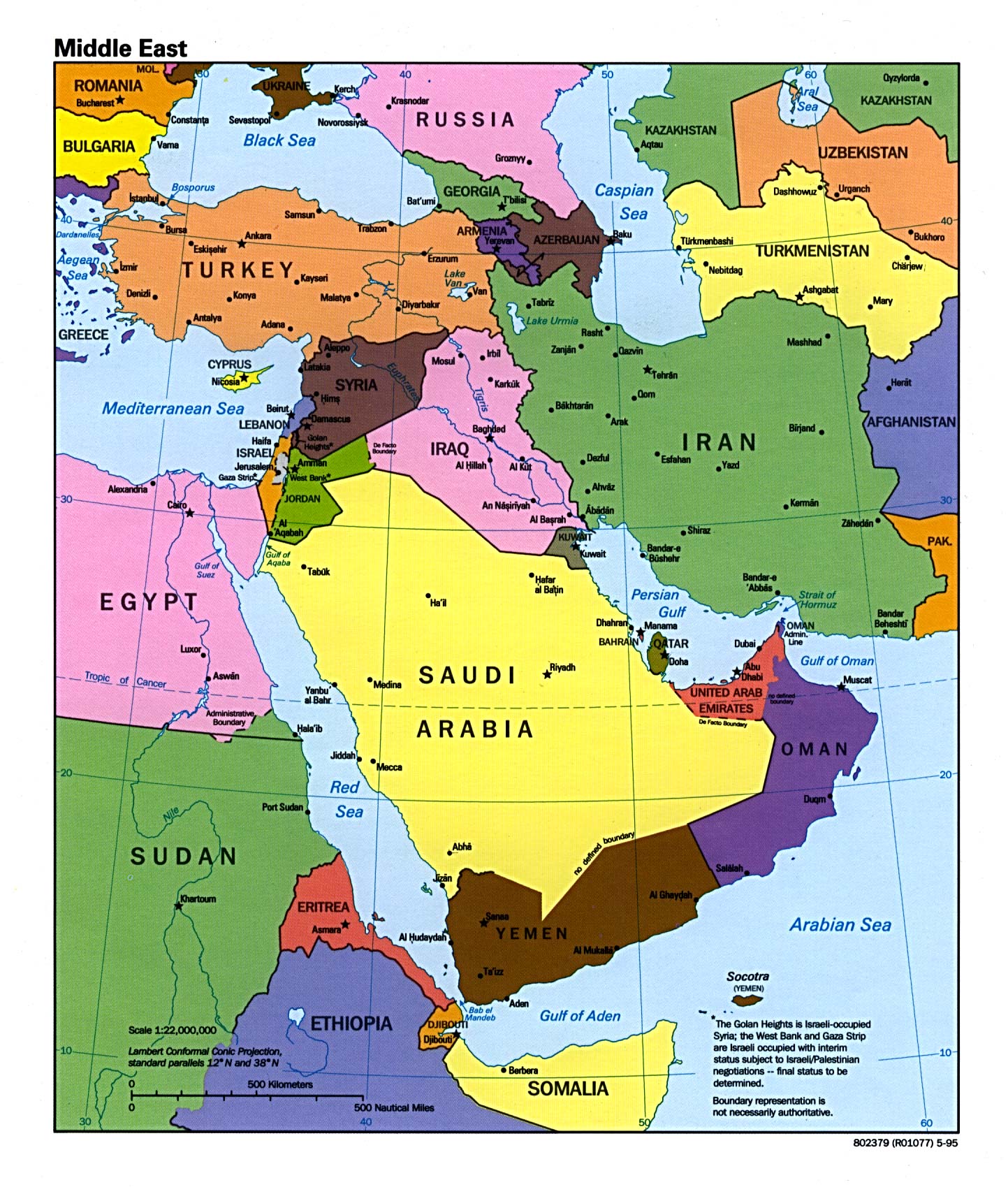
Map of Invasion of Israel as related to the book of Ezekiel

ANCIENT NAMES OF MODERN NATIONS

Rosh (ancient Sarmatians known as Rashu,Rasapu,Ros and Rus) RUSSIA
Magog (ancient Scythians) Central Asia (Islamic southern republics of the former Soviet Union with a population of 60 million Muslims)
Meshech (ancient Muschki and Musku in Cilicia and Cappadocia) Turkey
Tubal (ancient Tubalu in Cappadocia) Turkey
Persia (name changed to Iran in 1935) Iran
Ethiopia (ancient Cush, south of Egypt) Sudan
Libya (ancient Put, west of Egypt) Libya
Gomer (ancient Cimmerians from seventh century to first century B.C. in central/western Anatolia Turkey
Beth-Togarmah (Tilgarimmu between ancient Carchemish and Haran) Turkey

The Deadliest Form of Fake News, and How to Identify Reliable Information

12.5.2023

No one likes to learn that there may be errors or falsehoods in their religions, traditions, churches, or personal beliefs. We should find ways to determine the accuracy of our research, use those that we trust, and seek to understand what religions teach or believe to accurately discuss or write concerning those subjects.

An article How to Identify Reliable Information, addresses this topic: 

https://www.stevenson.edu/online/about-us/news/how-to-identify-reliable-information/

 “Whether you are a journalist, researcher writer or someone in the professional fields, it is important to know how to identify real information and use it accurately. That is our real challenge in the 21st century – Lee E Krahenbuhl, Communication Studies Program Coordinator

With the infinite amount of information online, it can be difficult to decipher what is true and accurate and what is not. Once you know the trick to identifying reliable information, you can quickly determine if what you are reading is accurate or not.

What is reliable information?

Reliable information must come from dependable sources. According to UGA Libraries, a reliable source will provide a “thorough, well-reasoned theory, argument, based on strong evidence.”

 Widely credible sources include:

  • Scholarly, peer-reviewed articles and books
  • Trade or professional articles or books, magazine articles, books, and newspaper articles from well-established companies
  • Other sources like websites and blog posts can be dependable but require further evaluation.

You may be asking yourself, “what source is best for me?” Depending on the type of information you need, your sources may vary. Look at journal articles and research-based reports. This is because those types of sources typically include more information on the topic at hand.

How to identify reliable sources

What makes the source reliable?

To determine whether a source is reliable or not, you must look at certain criteria. That criteria are as follows:

Authority:

  • Who is the author?
  • What are their credentials?
  • Do they have knowledgeable experience in the field
  • What is their reputation?

Accuracy: Compare the author’s information to that which you already know is dependable.

  • Are there proper citations?
  • Is the information biased?
  • If so, does it affect research conclusions?

Coverage: Is the information relevant to your topic and does it meet your needs? Consider what you need such as statistics, charts, and graphs.

Currency: Is your topic constantly evolving? Topics in the news require sources that are up to date.

The importance of reliable information

The Internet is scattered with biased, misleading, and altogether incorrect information and that is why it is important to follow the above criteria. The importance of using reliable sources truly boils down to effective communication. If your knowledge is based on unreliable information, you will not be a trustworthy asset.

Credible communication is key in discussing a subject. That is why you should not just grab any information off the Internet. Using unreliable sources results in negative consequences.

Credibility is especially important because using unreliable data can cause questions that may undermine your reliability and may cause others to rely solely on their own opinions rather than factual data.

Using credible sources for information will increase your reputation and trustworthiness. An article by the Ivy Business Journal supports this idea by expressing that trust is a key factor in building loyalty, increasing credibility, and supporting effective communication. It is important to develop your skills in identifying reliable resources, because it will help you become an effective communicator, reader, and/or writer.

The Key to Daniel’s 70th Week Revealed

sharinHislove's avatarProphecy Unfolding

I’ve studied prophecy since I was 12 years old, so to find something NEW is very exciting. This video is a fresh and distinct approach. I, personally, am unable to verify the calculations that are revealed here, but they are sufficiently presented in continuity to certainly give pause and reflection to them.

(NOTE) Jesus as the teacher, had the best interests of His students at heart; always, the subject of His teaching was the absolute and unchanging truth of God. We also have the best interests of our readers at heart. However, as we seek to share, we do not claim that we are qualified to be called teachers per se.

Having been given the gift of the desire to teach, doesn’t qualify us to state that we are teaching the absolute and unchanging truth of God. It is our hope, and intention, however, to be as accurate as humanly…

View original post 35 more words

Who is in you!

You are of God, little children, and have overcome them, because He who is in you is greater than he who is in the world.
1 John 4:4

Remember this verse as we go into the next year!

May God bless all of you, as we embrace Him and each other.

Worried Enough to Pray?

by Max Lucado
Last week’s blog struck a nerve. I wrote a piece entitled “Decency for President.” The premise was a simple one. Shouldn’t a presidential candidate who claims to be Christian talk like one? When a candidate waves a Bible in one speech and calls a reporter “bimbo” in the next, isn’t something awry? Specifically, when Donald Trump insists that he is a Christian (“a good Christian” to use his descriptor) and then blasts, belittles, and denigrates everyone from Barbara Bush to John McCain to Megyn Kelly, shouldn’t we speak up?

If the candidate is not a Christian, then I have no right to speak. But if the candidate does what Trump has done, wave a Bible and attempt to quote from it, then we, his fellow Christians need to call him to at least a modicum of Christian behavior, right?

Again, I struck a nerve. More than three million of you read the article in the first 36 hours! Thousands of you weighed in with your comments. They were fascinating to read. (Not all of them pleasant to read, mind you. The dozens of you who told me to stick to the pulpit and stop meddling in politics– I get it. By the way, I’d like to invite you to attend our services. My upcoming message is “Kindness”.) Detractors notwithstanding, your comments were heartfelt and passionate.

I detected a few themes.

You have a deep sense of love for our country. Patriotism oozed through your words. You cherish the uniqueness and wonder of the USA. You have varying opinions regarding leadership style, role of government, and political strategy. But when it comes to loving the country, you are unanimously off the charts.

You have an allergy to “convenient” Christians. You resist people who don the Christian title at convenient opportunities (i.e., presidential campaigns). You would prefer the candidate make no mention of faith rather than leave the appearance of a borrowed faith that will be returned to the lender after the election.

You are concerned, profoundly concerned, about the future of our country. The debt. Immorality. National security. The role of the Supreme Court. Immigration. Religious liberty. The list is as long as the worries are deep.

So where does this leave us? When a person treasures the country, but has trepidation about its future, what is the best course of action?

Elijah can weigh in on this question.

He lived during one of the darkest days in the history of Israel. The Northern Kingdom had 19 kings, each one of whom was evil. Hope had boarded the last train and optimism the final flight. The leaders were corrupt and the hearts of the people were cold. But comets are most visible against the black sky. And in the midst of the darkness, a fiery comet by the name of Elijah appeared.

The name Elijah means, “My God is Jehovah.” And he lived up to his name. He appeared in the throne room of evil King Ahab with a weather report. “‘As the LORD, the God of Israel, lives, whom I serve, there will be neither dew nor rain in the next few years except at my word’” (1 Kings 17:1).

Elijah’s attack was calibrated. Baal was the fertility god of the pagans, the god to whom they looked for rain and fertile fields. Elijah called for a showdown: the true God of Israel against the false god of the pagans. How could Elijah be so confident of the impending drought? Because he had prayed.

Eight centuries later the prayers of Elijah were used as a model.

“The prayer of a righteous person is powerful and effective. Elijah was a human being, even as we are. He prayed earnestly that it would not rain, and it did not rain on the land for three and a half years. Again he prayed, and the heavens gave rain, and the earth produced its crops” (James 5:16-18).

James was impressed that a prayer of such power came from a person so common. Elijah was “a human being” but his prayers were heard because he prayed earnestly. This was no casual prayer, comfortable prayer, but a radical prayer. “Do whatever it takes, Lord,” Elijah begged, “even if that means no water.”

What happened next is one of the greatest stories in the Bible. Elijah told the 450 prophets of Baal: You get a bull, I’ll get a bull. You build an altar, I’ll build an altar. You ask your god to send fire; I’ll ask my God to send fire. The God who answers by fire is the true God.

The prophets of Baal agreed and went first.

“At noon Elijah began to taunt them. ‘Shout louder!’ he said. ‘Surely he is a god! Perhaps he is deep in thought, or busy, or traveling. Maybe he is sleeping and must be awakened.’

“So they shouted louder and slashed themselves with swords and spears, as was their custom, until their blood flowed. Midday passed, and they continued their frantic prophesying until the time for the evening sacrifice. But there was no response, no one answered, no one paid attention” (1 Kings 18:27-29).

(Elijah would have flunked a course in diplomacy.) Though the prophets cut themselves and raved all afternoon, nothing happened. Finally Elijah asked for his turn.

“Then Elijah said to all the people, ‘Come here to me.’ They came to him, and he repaired the altar of the LORD, which had been torn down. Elijah took twelve stones, one for each of the tribes descended from Jacob, to whom the word of the LORD had come, saying, ‘Your name shall be Israel’” (1 Kings 18:30-31).

Elijah poured four jugs of water (remember, this was a time of drought) over the altar three times. Then Elijah prayed.

“LORD, the God of Abraham, Isaac and Israel, let it be known today that you are God in Israel and that I am your servant and have done all these things at your command.   Answer me, LORD, answer me, so these people will know that you, LORD, are God, and that you are turning their hearts back again” (1 Kings 18:36-37).

Note how quickly and dramatically God answered.

“Then the fire of the LORD fell and burned up the sacrifice, the wood, the stones and the soil, and also licked up the water in the trench. When all the people saw this, they fell prostrate and cried, ‘The LORD—he is God! The LORD—he is God!’” (1 Kings 18:38-39).

“Pow!” the altar was ablaze. God delighted in and answered Elijah’s prayer. God delights in and answers our prayers as well.

Let’s start a fire, shall we?

If your responses to my blog are any indication, you are anxious. You love this country, yet you are troubled about the future. You wonder what the future holds and what we can do. Elijah’s story provides the answer. We can pray. We can offer earnest, passionate prayers.

It’s time to turn our concerns into a unified prayer. Let’s join our hearts and invite God to do again what he did then; demonstrate His power. Super Tuesday, March 1, is the perfect day for us to step into the presence of God.

Dear Lord,

You outrank any leader. You hold sway over every office. Greater is the occupant of Heaven’s throne than the occupant of the White House.

You have been good to this country. You have blessed us in spite of our sin and guarded us in spite of our rebellion.

We unite our hearts in one prayer. Let your kingdom come. Let your will be done. Please, speak through the electoral process to reveal your leader.

This we pray in the name of Jesus,

Amen

© Max Lucado
February 29, 2016

THE FUTURE OF BABYLON | World Monuments Fund

THE FUTURE OF BABYLON | World Monuments Fund.

Another interesting website regarding the rebuilding of Babylon. Important information in relation to Prophecy.

Also read the following by Joel C. Rosenberg.

IRAQ REBUILDING ITS MILITARY, EVEN AS THEY REBUILD BABYLON: Prophetic significance?

Posted: April 13, 2012 in Uncategorized

Bible prophecy indicates that in the End Times, the nation we know today as the Republic of Iraq — known variously in Scripture as Babel, Babylon, Babylonia, Mesopotamia and Shinar — will emerge as the global center of wealth, power and terrible evil. Eventually Iraq will pose a direct and existential threat to the State of Israel, particularly during the Tribulation.

Since the fall of Saddam Hussein and his regime in 2003, Iraq has not been a regional threat, much less a danger to Israel. Some have assumed, therefore, that Iraq would no longer play a major role in Middle Eastern or global affairs in the future. But such a conclusion would be a mistake. As I wrote about in my first non-fiction book, Epicenter, those who read, understand and believe Bible prophecy have been watching for Iraq to: 1) begin rebuilding its offensive military capability; 2) begin rebuilding its economy; 3) continue rebuilding the ancient city of Babylon into a major center of commerce and tourism.

Interestingly, all three developments are currently underway.

IRAQ IS REBUILDING ITS MILITARY

Now that the Iraqi government has forced the American military out of their country, they have embarked on a dramatic arms build-up, including the purchase of American weapons systems that could be used for offensive purposes in the future. Examples:

  • The Iraqis are buying 140 state-of-the-art American M1A1 combat tanks. “The Government of Iraq has purchased 140 tanks from the United States, all of which have arrived in Iraq,” reports an Iraqi business website. “131 of those tanks are already in the possession of the Iraqi Army. The nine remaining tanks are in Iraq, but in U.S. possession.”
  • The Iraqis are buying 36 advanced American F-16 fighter jets. “Israel is monitoring Iraq’s rearmament program, particularly Bahgdad’s acquisition of 36 Lockheed Martin F-16s, with some disquiet amid intelligence reports Iran is consolidating its influence in Iraq following the U.S. military withdrawal,” reports UPI. “Baghdad ordered the F-16 Block 52 multi-role Fighting Falcon jets — enough to equip the Iraqi air force’s first two fighter squadrons — in two 18-plane batches in 2011 at an estimated total cost of $7 billion.”
  • In 2010, the Iraqis embarked on a $13 billion weapons spending spree. “Iraq is preparing to buy as much as $13 billion in American arms and military equipment, a huge order of tanks, ships and hardware that U.S. officials say shows Iraqi-U.S. military ties will be tight for years to come,” reported USA Today. “‘It helps to build their capabilities, first and foremost; and second, it builds our strategic relationship for the future,’ said Army Lt. Gen. Michael Barbero, the ranking U.S. officer responsible for training and advising Iraq forces.”

IRAQ IS REBUILDING ITS ECONOMY

Now that the war of liberation is over and most of Iraq has been pacified and stabilized from the terrorist insurgency, Iraq’s economy is not only growing but is poised for hyper-growth. Analysts expect Iraq’s GDP to grow by more than 9% annually for the next few years, and expect Iraq’s oil production to nearly triple by 2017.

  • “Iraq’s gross domestic product is expected to grow by an average rate of at least 9.4 percent annually between 2012 and 2016 as the oil-producing country benefits from larger windfalls in oil revenues, a senior central bank official said [in February],” reports Reuters. ”Iraq, which has the fourth-biggest oil reserves in the world, is currently producing around 2.9 million barrels per day (bpd). Iraq’s oil minister said last year he expected production to reach between 8-8.5 million bpd by 2017.”
  • Some analysts within the Iraqi Planning Ministry believe Iraq could reach a 47% growth rate by 2017, once the oil starts flowing fast and furious.
  • More and more major international companies are signing deals to do business in Iraq — see this intriguing list published by Reuters, published in December 2011.
  • In 2011, ExxonMobil — the world’s largest oil company — signed a major deal to help develop the oil industry in Iraq’s northern region of Kurdistan. Despite the fact being mired in some political controversy, the deal is likely to be fully ratified in the not-too-distant future.
  • Also in 2011, Royal Dutch Shell signed a $17 billion deal to help Iraq develop its enormous lucrative oil industry in its southern regions.
  • In 2010, the Iraqi government ratified four other major oil deals.

IRAQ IS REBUILDING THE CITY OF BABYLON

Largely overlooked by Westerners is the fact that the government of Iraq is moving forward with plans to protect the archaeological remains of the ancient City of Babylon, in preparation for building a modern city of Babylon. As I wrote in 2009, the project — originally started by the late Saddam Hussein — is aimed eventually at attracting scores of “cultural tourists” from all over the world to see the glories of Mesopotamia’s most famous city. What’s more, the Obama Administration has actually helped contribute U.S. taxpayer dollars to “The Future of Babylon Project” through the State Department’s budget. Read more at the World Monuments Fund website for the rebuilding Babylong project.

In 2011, I noted that the New York Times had published an intriguing article on Iraqi efforts to preserve, protect, restore and then rebuild the ancient city of Babylon and make it a draw for tourists, with U.S. taxpayer assistance. The Times reports that a modern Babylon museum will open later this month. Times’ reporter Steven Lee Myers also posted a fascinating four minute video walking through some of the rebuilt ruins of Babylon, and explaining Iraqi efforts to protect and restore numerous Biblical sites.

“The Babylon project is Iraq’s biggest and most ambitious by far, a reflection of the ancient city’s fame and its resonance in Iraq’s modern political and cultural heritage,” the Times reported, noting that “in November, the State Department announced a new $2 million grant to begin work to preserve the site’s most impressive surviving ruins. They include the foundation of the Ishtar Gate, built in the sixth century B.C. by Nebuchadnezzar’s father, Nabopolassar, and adorned with brick reliefs of the Babylonian gods Marduk and Adad.”

“The American reconstruction team has refurbished a modern museum on the site, as well as a model of the Ishtar Gate that for decades served as a visitors’ entrance. Inside the museum is one of the site’s most valuable relics: a glazed brick relief of a lion, one of 120 that once lined the processional way into the city. The museum, with three galleries, is scheduled to open this month, receiving its first visitors since 2003. And with new security installed, talks are under way to return ancient Babylonian artifacts from the National Museum in Baghdad. The fate of Babylon is already being disputed by Iraqi leaders, with antiquities officials clashing with local authorities over when to open it to visitors and how to exploit the site for tourism that, for the most part, remains a goal more than a reality. Even now they are clashing over whether the admission fee should go to the antiquities board or the provincial government.”

(Photo by New York Times: Iraqi women walking through the city of Babylon that is currently being rebuilt.)

Prayer changes things!

A banner on the wall in my home church when I was growing up

kept us reminded of that wonderful personal relationship

we can have with our Lord by just talking to Him.

Prayer Changes Things!

He knows what’s going on.

He just wants us to talk to Him about it.

He wants to talk to us, too.

He wants to know we care enough to stop what we’re doing

and offer up our concern to Him.

YSIC,

Sharon

Likelihood of Israel-Iran War Growing

Some analysts say spring, others see Sept-Oct as “sweet spot”

Posted: February 18, 2012 in Uncategorized

The debate seems increasingly to be over “when,” not “if” Israel will launch preemptive strikes against Iran. A story in a major British newspaper today reports the Obama administration realizes that economic sanctions aren’t working well enough to stop Iran from vigorously pursuing nuclear weapons, and thus makes an Israeli war with Iran all the more likely. According to the story, some experts believe that the Israelis won’t strike in the April to June window suggested by Defense Secretary Leon Panetta, but might wait until the fall during the height of the U.S. presidential elections. “Earlier this month, the US defence secretary, Leon Panetta, told the Washington Post that he thought the window for an Israeli attack on Iran is between April and June,” the story noted. “But other official analysts working on Iran have identified what one described as a ‘sweet spot,’ where the mix of diplomacy, political timetables and practical issues come together to suggest that if Israel launches a unilateral assault it is more likely in September or October, although they describe that as a ‘best guess.’” Expect more speculation — and even disinformation — to keep the “experts” guessing. Should Israel strike, it will be hard, fast and without notice.

Time is running out, according to Bible prophecy

THE EVIL ASSAD REGIME MUST BE BROUGHT DOWN AND BROUGHT TO JUSTICE, OR FACE JUDGMENT: Time is running out according to Bible prophecy

By Joel Rosenberg

Posted: February 18, 2012 in Uncategorized

The butchery of the Assad regime is horrifying to behold. More than 6,000 Syrians have been brutally murdered by the thugs in Damascus. The evil Assad government must be brought down and brought to justice, or face judgment.

Bible prophecy tells us in Isaiah 17:1-3 and Jeremiah 49:23-27 that Damascus will be destroyed as a city in the last days. Scripture doesn’t tell us exactly when or how this will happen, but I believe that day is steadily approaching. Indeed, it may not be far off. I’m currently writing a political thriller called The Damascus Countdown about how this could play out.

In the meantime, followers of Jesus Christ around the world must be praying and working for the spiritual and political liberation of the Syrian people. We need to be praying and working to strengthen the persecuted Church in Syria, and to help believers there spread of the Gospel to every person in that precious country. Make no mistake: God loves the people of Syria. The Apostle Paul came to faith in Jesus Christ on the road to Damascus. Believers were first called “Christians” in Antioch, Syria. And our God and Father wants every Syrian to receive Jesus as Savior and Lord. We need to act now and share the good news with Syria before judgment comes. For God is not going to allow this current evil to go unchecked much longer. In Genesis 12:1-3, the Lord told us that those who bless the children of Israel will be blessed, and those who cursed them will be cursed. The Syrian government faces judgment for killing its own citizens, but also for killing so many Jews and Israelis over the years, and cursing the State of Israel on a daily basis.

Meanwhile, since we don’t know when the judgment of Syria’s government will happen, the U.S. government — and our allies — can and must take decisive steps to stand with and for the people of Syria against the Assad regime. This past week, 58 foreign policy experts urged President Obama to take strong, specific action. Among their recommendations:

  • Immediately establish safe zones within Syrian territory, as well as no-go zones for the Assad regime’s military and security forces, around Homs, Idlib, and other threatened areas, in order to protect Syrian civilians.  To the extent possible, the United States should work with like-minded countries like Turkey and members of the Arab League in these efforts.
  • Establish contacts with the Free Syrian Army (FSA) and, in conjunction with allies in the Middle East and Europe, provide a full range of direct assistance, including self-defense aid to the FSA.
  • Improve U.S. coordination with political opposition groups and provide them with secure communications technologies and other assistance that will help to improve their ability to prepare for a post-Assad Syria.
  • Work with Congress to impose crippling U.S. and multilateral sanctions on the Syrian government, especially on Syria’s energy, banking, and shipping sectors.

The experts noted: “For eleven months now, the Syrian people have been dying on a daily basis at the hands of their government as they seek to topple the brutal regime of Bashar al-Assad.  As the recent events in the city of Homs—in which hundreds of Syrians have been killed in a matter of days—have shown, Assad will stop at nothing to maintain his grip on power. Given the United Nations Security Council’s recent failure to act, we believe that the United States cannot continue to defer its strategic and moral responsibilities in Syria to regional actors such as the Arab League, or to wait for consent from the Assad regime’s protectors, Russia and China.  We therefore urge you to take immediate steps to decisively halt the Assad regime’s atrocities against Syrian civilians, and to hasten the emergence of a post-Assad government in Syria. Syria’s future is not purely a humanitarian concern.  The Assad regime poses a grave threat to national security interests of the United States.  The Syrian government, which has been on the State Department’s State Sponsors of Terrorism list since 1979, maintains a strategic partnership with the terror-sponsoring government of Iran, as well as with Hamas and Hezbollah.  For years, it facilitated the entry of foreign fighters into Iraq who killed American troops.  For years, it secretly pursued a nuclear program with North Korea’s assistance.  And for decades, it has closely cooperated with Iran and other agents of violence and instability to menace America’s allies and partners throughout the Middle East….The Syrian people are asking for international assistance.  It is apparent that American leadership is required to ensure the quickest end to the Assad regime’s brutal reign, and to clearly show the Syrian people that, as you said on February 4, 2012, the people of the free world stand with them as they seek to realize their aspirations.”

I agree. Time is running out, according to Bible prophecy. Now is the time for the free world to speak out, and act decisively. Now is also the time for followers of Jesus Christ to do our part.

Does Russia Have A Cogent Middle East Strategy?

 February 9, 2012

Russia’s support for Syrian President Bashar Assad has put it at odds with other countries in the Arab world.

Russia drew a lot of flack from Arab countries and the West when it vetoed a U.N. Security Council resolution aimed at pressuring Assad to stop his crackdown on protesters. That has some analysts in Russia doubting whether the Kremlin really has a cogent strategy for the Middle East.

The dilemma for Russia policy in the Arab world can be illustrated by two very different events that took place this week.

On Tuesday, crowds of Assad supporters in Damascus greeted Russian Foreign Minister Sergei Lavrov and the country’s foreign intelligence chief, Mikhail Fradkov.

Lavrov said Russia was willing to serve as a mediator in the conflict, although Assad’s forces continued their assault on the opposition. Meanwhile, a very different scenario was playing out in New York.

Russia’s U.N. ambassador, Vitaly Churkin, appeared at a hastily called news conference to deny rumors that he had threatened the prime minister of Qatar. The rumors, which were widely circulated in the Arab media, said Churkin had warned the Qatari leader that Russia would “wipe Qatar off the map.”

“There was nothing, not even any hints of any threats, intimidation, rudeness from me or from the prime minister of Qatar, for that matter,” Churkin said.

Russia’s relations with Qatar have been strained since December, when customs officials in Doha allegedly manhandled Russia’s ambassador to that country.

Although Churkin denied using any bullying tactics, he added something that sounded vaguely like a warning.

“Apparently somebody is trying very hard in order to drive a wedge between Russia and the Arab world. If it’s somebody who is really coming from the Arab world, I think there is a very good Russian saying, which they, I think, should keep in mind: ‘Don’t spit into a well. You may well need it for a drink of water,’ ” he said.

At this point, it’s unclear who needs whom.

Analyst Yevgeny Satanovsky, president of the Moscow Institute for Middle Eastern Studies, says Russia doesn’t really need Syria as a trading partner. He says Russia’s support for Syria is part of a pragmatic effort to contain Islamic extremism by balancing opposing factions.

“Russians understand there are no nondictatorship regimes in the Middle East. There is no chance for democracy of the Western style in the Middle East. And we try to make balance,” Satanovsky says.

But other analysts say Russia needs to be careful of its image in the Arab world.

Dmitri Trenin, director of the Carnegie Moscow Center, points out that Russia’s stand on Syria puts it at odds with important members of the Arab League, such as Saudi Arabia.

“Saudi Arabia has enormous leverage on the global oil market. Saudi Arabia has resources that could be used to minimize Russia’s control of parts of its own country,” Trenin says. He means the North Caucasus, the region that includes volatile areas such as Chechnya.

Trenin says that what Lavrov, the Russian foreign minister, tried to do in Damascus this week should have been done months ago, when the Arab Spring protests first erupted.

“If Russia wanted to uphold its prestige as an important player, it needed to engage more fully in looking for a peaceful resolution to the Syrian conflict,” he says.

Both analysts say one of Russia’s main concerns is keeping a lid on Islamic radicalism, the kind that is spreading in the Muslim parts of Russia’s own territory.

Satanovsky says Russian policy seeks to play off the Islamic fundamentalist regimes of the Arab world against Iran.

In putting such strong and public support behind the Syrian regime, though, Russia has put itself at a pivot point in the major struggles of the Arab World.

It’s not clear whether it has a strategy to affect the balance there.

Related Articles:

https://sharinhislove.wordpress.com/2011/06/28/20-major-prophetic-events-yet-to-be-fulfilled-compiled-by-dr-tim-lahaye/

Map of Middle East Countries involved in War of Gog and Magog

Syria Revolution: Why Is Russia Supporting Syria? (ibtimes.com)

What is the War of Gog and Magog?


Middle East Burning


A riveting and timely survey of things to come!


Widespread revolutions in multiple Arab nations. New powers rising to challenge entrenched despots and ruling bodies. Bitter new conflicts further enflaming the many already in place. And a pall of uncertainty over how it will all play out.
Indeed the Middle East is burning.

How can we make sense of it all?

At first glance the many hotspots may seem without a pattern, without rhyme or reason. But Bible prophecy expert Mark Hitchcock takes a look at Scripture and helps paint a clear picture of what’s taking place, giving insight on current events in Egypt, Libya, Sudan, Russia, Turkey, Iran, Syria, and more.

=================================================================================

(Sharon’s note:)  To read an excerpt from this book, click on the link below. I think you will find it very interesting, as we relate it to our study of prophecy.

http://harvesthousepublishers.com/media/epr/excerpts/9780736939966_exc.pdf


Is Netanyahu’s Patience with Iran Running Out?

Posted: January 24, 2012 in Uncategorized
by Joel C. Rosenberg

Does Israeli Prime Minister Netanyahu think the West is taking decisive action to stop Iran from getting the Bomb, or does he think the West is fiddling while Tel Aviv runs the rising risk of burning? That’s the Big Question as tensions continue to mount in the epicenter this week. Iran is making new threats to close the Strait of Hormuz to oil shipments, just days after test-firing missiles over the Strait. The U.S., Britain and France are sending additional naval forces  into the Gulf. The European Union is taking new steps to impose an oil embargo on Iran. The U.S. is taking steps to sanction Iran’s third largest bank, though dragging its feet on actually sanctioning Iran’s Central Bank. Adding to the regional tensions, Russia is lashing out at the EU and selling $550 million worth of arms to one of Iran’s key regional allies. Will such Western moves be enough to stop Iran from building an arsenal of nuclear weapons? Personally, I’m not convinced. Such moves would have been good a few years ago. Now they strike me as too little too late, especially after the Obama White House disastrous decision recently to cancel joint military exercises with Israel for fear of being “too provocative” towards Iran. But it doesn’t matter what I think. What matters is what Netanyahu thinks. If he decides the West isn’t doing enough and Iran is going to get the Bomb, then he is going to hit Iran hard, soon, and without warning.

In that context, it’s worth noting a speech Netanyahu gave Tuesday warning his nation that the world has not internalized the lessons of the Holocaust. ”Speaking at the Knesset just days before  International Holocaust Remembrance Day (January 27), Netanyahu reasoned that the Jewish people must not put their fate in the hands of the  international community,” reported the Jerusalem Post. “Posing a rhetorical question, Netanyahu asked, ‘How does the world react to the calls for genocide against the Jews today? Seventy years after the shoa [Holocaust], Iran is calling for us to be wiped off the map, Hezbollah is calling for our extinction, as are many in Hamas….The Jerusalem Mufti [Sheikh Muhammad Hussein] called on Sunday for Jews to be killed wherever they are…echoing his predecessor Haj Amin Al Husseini, who actively helped Hitler and Eichman,’ he said. ‘I do not hear the international community condemning this. I hear them  condemning buildings in the West Bank. But I don’t hear them condemning  this incitement,’ said Netanyahu.”

Could Netanyahu be signaling that his patience — and that of the Israeli government and military – is running out?

Worth noting: “Two Iranian lawmakers on Monday stepped up threats their country would close the strategic Strait of Hormuz, through which a fifth of the world’s crude flows, in retaliation for oil sanctions on Tehran,” reports Haaretz. “The warnings came as EU nations agreed in Brussels on an oil embargo against Iran as part of sanctions over the country’s controversial nuclear program. The measure includes an immediate embargo on new contracts for Iranian crude and petroleum products while existing ones will be allowed to run until July. Iran has repeatedly warned it would choke off the strait if sanctions affect its oil sales, and two lawmakers ratcheted up the rhetoric on Monday….For its part, the United States has enacted, but not yet put into force, sanctions targeting Iran’s central bank and, by extension, the country’s ability to be paid for its oil. Some 80 percent of Iran’s oil revenue comes from exports and any measures or sanctions taken that affect its ability to export oil could hit hard at its economy. With about 4 million barrels per day, Iran is the second largest producer in OPEC.”

Two Mistakes Regarding Iran

by Joel Rosenberg


>> Rating the GOP presidential candidates on the Iran issue

The White House has made two new and serious mistakes on Iran in recent days:

  1. The Obama administration has just canceled joint military exercises with the Israelis.
  2. The Obama administration has both denied killing a top-ranking Iranian nuclear scientist and condemned the scientist’s assassination.

Given that U.S. Defense Secretary Leon Panetta says Iran could have the Bomb by the end of 2012, the U.S. should intensifying pressure on the evil regime in Tehran. This would include dramatically escalating covert ops inside Iran, and making preparations for possible air strikes if there are no other alternatives to neutralizing the Iran threat. Instead, the senior team at the White House just blinked — twice — showing weakness instead of resolve. They have also made it more likely, not less, that Israeli Prime Minister Netanyahu may conclude this year that he has no other choice but to launch a massive first strike against Iran. Thus: The United States has stepped up contingency planning in case Israel launches a military strike on Iran’s nuclear facilities, the Wall Street Journal reported on Saturday. According to the report, U.S. defense officials are becoming increasingly concerned that Israel is preparing to carry out such a strike.” At the moment, Army General Martin Dempsey, the new Chairman of the Joint Chiefs of Staff, is heading to Israel for talks about Iran.

Meanwhile, “Israeli Cabinet Minister Moshe Ya’alon said Sunday he was disappointed that the U.S. has not expanded sanctions to further damage Iran’s central bank and its energy industry. He also suggested that the Obama  administration hasn’t been as forceful as Britain and France in  imposing sanctions. ‘In the United States, the Senate passed a resolution, by a majority of 100-to-1, to impose these sanctions, and in the U.S. administration there is hesitation for fear of  oil prices rising this year, out of election-year considerations,’ Ya’alon told  Israel Radio, according to Haaretz newspaper. ‘In that regard, this is certainly  a disappointment, for now.’”

This is exactly why I’m saying we’d better keep praying for peace, while preparing ourselves for war.


CAR BOMB KILLS IRANIAN NUCLEAR SCIENTIST

Posted: January 11, 2012 in Uncategorized
by Joel Rosenberg

>>  Iranian president arrives in Cuba; U.S. warns of ‘dangerous alliance’

UPDATED: Another headline this morning ripped from the pages of my two recent novels, The Twelfth Imam and The Tehran Initiative. This one from the BBC: Iran car explosion kills nuclear scientist in Tehran. Excerpt: “A university lecturer and nuclear scientist has been killed in a car explosion in north Tehran. Mostafa Ahmadi-Roshan, an academic who also worked at the Natanz uranium enrichment facility, and the driver of the car were killed in the attack. The blast happened after a motorcyclist stuck an apparent bomb to the car. Several Iranian nuclear scientists have been assassinated in recent years, with Iran blaming Israel and the US. Both countries deny the accusations….” FLASHBACK FROM DEC 2011: COVERT WAR HEATS UP IN IRAN AND MIDEAST: Will it be enough to neutralize nuclear threat, or will Israel launch preemptive strikes in 2012?

Studying Biblical Prophecy

The study of prophecy is not to Scare us,

but to Prepare us.

Studying Biblical Prophecy has been a passion of mine since I was a teenager. My first exposure to the subject was from a book entitled “The Bible and Tomorrow’s News”.

Studying prophecy can bring confusion and fear to a lot of people. I think that is because it is hard to understand.

We are attempting to wade into the study of prophecy a little at a time on our blog. We think it will be interesting for our readers to understand the basics as you follow each day’s news and how they are related.

The study can also be a source of encouragement and inspiration.  As we understand the relationship of knowledge of the scriptures and motivate our call to share the gospel, it will strengthen all of us.

I have included direct links below to the categories on our blog that will help us as we study.

We encourage comments and discussion of this wealth of knowledge that God has given us in His word.

Blessings,

Sharon & Erick


Related Articles:

https://sharinhislove.wordpress.com/category/studying-prophecy/

https://sharinhislove.wordpress.com/category/maps-biblical/

https://sharinhislove.wordpress.com/category/current-events-in-light-of-bible-prophecy/

https://sharinhislove.wordpress.com/category/headlines-to-track/

https://sharinhislove.wordpress.com/category/historial-maps/

https://sharinhislove.wordpress.com/category/israel-interesting-information/

https://sharinhislove.wordpress.com/category/maps/

https://sharinhislove.wordpress.com/category/maps-in-light-of-biblical-prophecy/

https://sharinhislove.wordpress.com/category/world-information/


Jesus and a Palestinian State

Israel Today Magazine

September 25, 2011

The Palestinian statehood bid provided a platform for many views and positions regarding the Middle East, including those of Evangelical Christians who no longer believe in the validity of the promises contained in the Bible.

In the run-up to Palestinian leader Mahmoud Abbas officially requesting UN membership for the “State of Palestine,” Carl Medearis, a recognized expert on Middle East Christians, suggested on CNN’s Belief Blog that Jesus would support the Palestinian statehood motion.

“So how would Jesus vote this week if he had a seat at the UN?” Medearis asked. “Surely love, compassion, justice and peace-making would top his lists of concerns for all involved. Maybe he would give a new parable – the Parable of the Good Palestinian – offending all who would hear.”

Medearis continued by deriding the Christian Zionist movement and its insistence on a literal reading of the Bible:

“In their minds, the modern Israeli state is not only a fulfillment of biblical prophecy. In a bizarre twist that leaves most outsiders dumbfounded, Christian Zionists say the Bible predicts that Jews and Palestinians will forever be at war until Jesus returns.”

Medearis’ remarks were hotly debated in various publications, but it is not his personal view of the situation that is troubling. Medearis was merely the mouthpiece of a post-modern, humanist-infected strand of Christianity that no longer believes the Bible carries any literal meaning beyond the commandments regarding basic gestures of goodwill and proper moral behavior.

In other words, while it is still important to love one’s neighbor and not to steal, passages like Jeremiah 31:36-38 or Ezekiel 36:24-28 that confirm the eternal nature of Israel’s divine right to the land are, in Medearis’ words, “obscure Old Testament promises.”

In order to cement their position as the “sane Christians,” Medearis and others like him will highlight the often-unsympathetic positions of those perceived “lunatics” who do hold fast to the Bible’s every promise.

It is true that in their zealousness a good many Christian Zionists often spout rhetoric that is hateful toward the Palestinian Arabs. It is also true, as Medearis pointed out, that Yeshua told us to love our enemies, even those seeking Israel’s demise. But this point of supporting Israel (uncritically, Medearis wrongly claims) and opposing Palestinian statehood is not what Christian Zionism is really about, not at its core.

Christian Zionism is the recognition that long-awaited biblical promises and prophecies are being fulfilled in our time. It is about getting behind that fulfillment, and opposing efforts to reverse it. And though God may not actually need our help in preventing that attempted reversal, one day we will be held accountable for the stand we took (or didn’t take). Ultimately it is a question of whether or not God keeps His word and has the sovereignty in our lives to do so.

“Christian Zionists believe the scriptures are true, active and alive today. They believe that by acknowledging the truth that God has given the Land of Israel to the Jewish People as an everlasting inheritance we are acknowledging God’s sovereignty,” wrote local Messianic leader Eliyahu Ben-Chaim in his book Setting the Record Straight.

If God can renege on a promise to Israel that He repeatedly labeled as “everlasting,” surely we should all be concerned that other promises can be annulled or rewritten, like that promise of eternal life for the members of an equally sinful Church.

The truth is that God does not go back on or alter His promises. He made abundantly clear that the most important factor is the glory of His name. The biblical record has shown, even up to the present day with the rebirth of Israel, that when God makes a promise, He keeps it, not for our sake, but for the sake of His good name. To suggest otherwise is to attack not only God’s credibility, but, more detrimentally, the glory of His name.

Middle East Map


(Note: This map is significant as we study  the “War of Gog and Magog”, based on the book of Ezekiel,  indicating the countries of present day Russia, Persia (present day Iran), Cush (present day Sudan), Gomer (present day Turkey), Beth Togarmah (present day countries where turkish-speaking people  spread out from Turkey and settled in  Causasus and the areas of Central Asia, and Put (present day Libya and Algeria –those countries are on a different map in the Maps in Light of Biblical Prophecy category).

FOUR REASONS WHY GOD IS SHAKING AMERICA & THE WORLD: Text of “Wake Up Call” sermon

Posted: September 13, 2011 by joelcrosenberg in Uncategorized


http://flashtrafficblog.wordpress.com/

The following is the text of the sermon I delivered Sunday night, September 11th during the “Wake Up Call.” The video will soon be posted online, and I’ll let you know where and when as soon as possible.

“FOUR REASONS WHY GOD IS SHAKING AMERICA AND THE WORLD”

The Wake Up Call Event

Joel C. Rosenberg

September 11, 2011

Thank you. It is an honor to be here tonight — especially at this critical moment in American history, and in the history of the world.

Thousands of years ago, through the Hebrew Prophet Haggai, God told us what He was going to do — that He was going to shake us.  “For thus says the Lord of hosts, ‘Once more in a little while, I am going to shake the heavens and the earth, the sea also and the dry land. I will shake all the nations…. I am going to shake the heavens and the earth. I will overthrow the thrones of kingdoms and destroy the power of the kingdoms of the nations.’” (Haggai 2:6-7, 21-22)

That’s what Bible prophecy is – an intercept from the mind of the all-knowing, all-seeing God of the universe….a weather report from the future….a storm warning from the future — not so that we will be afraid, but so that we will be awake and ready and faithful and walking close to Jesus when the storms come.

  • Do you remember where you were on September 11th, 2001?
  • Do you remember how you felt when you saw the Pentagon burning, the smoldering wreckage in Pennsylvania, the two towers imploding?
  • Not since Pearl Harbor had so many Americans been killed in a single attack – more than 3,000 that day.

None of us will ever forget that day — nor should we.

God didn’t cause 9/11 to happen….fanatics devoted to the false teachings of Radical Islam caused 9/11 to happen….but the True and Living God — the God of the Bible — let it happen to shake America….to get our attention….to wake us up.

I want to ask you some questions tonight as we reflect on 9/11, as we reflect on the state of our union, and the state of the Church, both here and around the world: On this anniversary of 9/11, are you morally and spiritually better off ten years ago? Is your family? Is your church?

Now is an appropriate time to take a spiritual audit — to assess how you’re doing morally and spiritually, how your family is doing, how your congregation is doing. Ten years ago, God shook us – the question is: Were we listening?

In the Book of Hebrews we read: “See to it that you do not refuse Him who is speaking. For if those did not escape when they refused him who warned them on earth, much less will we escape who turn away from Him who warns from heaven. And His voice shook the earth then, but now He has promised, saying, ‘Yet once more I will shake not only the earth, but also the heaven.” Hebrews 12:25-26)

Our Lord Jesus Christ — sitting with His disciples on the Mount of Olives in Jerusalem — also warned in Matthew 24 that we would be shaken in the last days, those days leading up to Jesus’ return. “The sun will be darkened, and the moon will not give its light, and the stars will fall from the sky, and the power of the heavens will be shaken,” Jesus said. And then, when men least expect it, Jesus said, “the sign of the Son of Man will appear in the sky, and then all the tribes of the earth will mourn, and they will see the Son of Man coming on the clouds of the sky with power and great glory. (Matthew 24:29-30)

America was shaken on 9/11. Today, God is shaking us again.

  • Nine of the ten costliest – most expensive – hurricanes in American history have happened since 9/11. The worst was Hurricane Katrina which nearly wiped out an American city and ended up costing $108 billion.[i]
  • Hurricane Irene will likely rank in the top five and has made 2011 the worst year in American history for natural disasters, with ten separate catastrophes costing $1 billion or more.[ii]
  • This year, we’ve seen the worst outbreak of tornadoes in nearly half a century.[iii]
  • The worst fires in the history of Texas – amidst the worst drought in the history of the state.[iv]
  • The biggest earthquake on the East Coast since 1875.[v]
  • The biggest earthquake in Colorado since 1882.

At the same time, our economy is being shaken to its core.

  • 42,000 American factories have shut down since 9/11.[vi]
  • Fourteen million Americans have lost their jobs just in the past few years.
  • Millions of families have lost their homes.
  • Washington is running up the national credit card to jump start our economy, but it’s not working.
  • Our federal debt is now more than $14 trillion – that’s trillion with a “t.” It’s hard to imagine so much money. But put it this way: if we were to pay one dollar per second every hour of every day of every month to pay down our national debt, it would take us more than 32,000 years just to pay off $1 trillion – but we have more than $14 trillion of debt.[vii]
  • No wonder nearly eight-in-ten say America is on the “wrong track.”[viii]
  • No wonder nearly half of all Americans fear we’re heading for another Great Depression.[ix]

People are beginning to wonder if we can turn this thing around, or whether we’re heading towards an economic collapse, an economic implosion. Sometimes, it feels like we’re out on the middle of a frozen lake and suddenly we begin to hear the ice cracking under our feet. We haven’t plunged down into the icy waters yet, but we’re not sure where to step, or whether we can get back to the safety of the shore.

That’s the economy.  But what of the state of our culture?

  • Since 1973, more than 53 million abortions. More than 53 million children murdered, and there is no end in sight.[x]
  • Pornography revenues today exceed the revenues of ABC, CBS and NBC – combined.[xi]
  • Today the pornography industry is larger than the revenues of Microsoft, Google, Amazon, eBay, Yahoo!, Apple, Netflix and EarthLink – combined.[xii]

Where are the Christians? What difference are we making? The answer is painful too hear. Too many people who say they are Christians are asleep, or distracted, or intoxicated by the world. Like the old country and western song, “Looking for love in all the wrong places,” too many people who say they are Christians have been looking love and meaning and purpose outside of Christ and His love.

George Barna, the Christian pollster and researcher, has just released a fascinating but sobering book entitled, Futurecast, Which I commend to your attention. In it, he devotes consider time to analyzing the state of Christianity in America today, and it is revealing:

  • 85 percent of Americans identify themselves as Christians.[xiii]
  • “84 percent consider it a holy or sacred book” and “the typical American household owns four Bibles” [xiv]
  • Yet only 56 percent believe that “the Bible is accurate and without error.”[xv]

Clearly, there’s a disconnect between who we say we are, and what we say we believe, and how we’re living. Barna offers many examples. Let me share just two.

  • First, there is no statistical difference between the percentage of non-Christians who get divorced (33 percent) and the percentage of “born-again Christians” who get divorced (32 percent).[xvi]
  • Second, only half of all born again Christians say they even try to share the Gospel with even one unsaved person one time – one time – a year.[xvii]

How is this possible? How can we be salt and light to the lost world around us if we are no different than that lost world? How can possibly hope for a spiritual revival or a Third Great Awakening in this land if we are barely all sharing our faith in Jesus Christ with one person a year? Jesus said in Luke 6:46, “Why do you call Me, ‘Lord, Lord,’ and do not do what I say?” This is an important question for us tonight.

Yet God isn’t merely shaking America — the Lord said through the prophet Haggai, “I will shake all the nations.”

  • Japan is suffering what her Prime Minister calls the worst disaster since World War II – a devastating earthquake, the resulting tsunami, and multiple nuclear meltdowns all at once.[xviii]
  • Australians have faced devastating flooding this year – one headline read: “Australia Faces Biblical Floods”[xix]
  • God is shaking the Arab world through revolutions and uprisings. The prophet Haggai said, “I will overthrow the thrones of kingdoms and destroy the power of the kingdoms of the nations.” And sure enough we have see rulers and regimes overthrown and destroyed in Tunisia, Egypt, Yemen, and Libya – and more may be coming.
  • Russia is suffering the worst drought in 100 years.[xx]
  • China is currently suffering its worst drought in 200 years.[xxi]
  • The earthquake in Christchurch last year was the worst in the history of New Zealand and left 1/3 of the city’s buildings facing demolition.[xxii]
  • Last year, God shook Haiti – the deadliest earthquake in nearly 500 years, and the second deadliest in all of human history.[xxiii]

The question is: Why is God shaking us?

The Bible teaches us that at this stage in history, God is shaking us not to punish us — though judgment will come.

There are, however, four reasons, I believe.

First, God is shaking us because He loves us and He wants us to repent – What is repentance? Some people think of it as a very heavy religious word. But my wife, Lynn, and I have tried to teach our four sons what repentance means in a very simple way. Our youngest is Noah, and so I’ll bring Noah over to my side and say, “Noah, start running away from me, out of the family room, through the kitchen and to the dinning room. Ready? Go!” So Noah starts running. Then suddenly I say, “Stop, Noah!” And he stops. And I say, “Repent, Noah.” And he turns around. And I say, “Come back to daddy!” And he comes running to me and jumps up in my arms and I hug him and kiss him. That’s repentance. God is telling to stop, because we’re running in the opposite direction, away from Him. He tells us to repent – to turn around – and to come running back to Him so that He can forgive us and dust us off and restore us. And that’s why He shakes us. He is trying to get us to let go of anything and everything we are holding – every form of ideology, or philosophy, or religious beliefs, or political beliefs, or material possessions – whatever we’re holding onto that we think will give us hope and peace and security other than Jesus Christ, His only begotten Son.

Second, God is shaking us because He wants us to realize there is no One else who can satisfy us or give us true peace and security except Jesus Christ – no other water that will quench our spiritual and emotional thirst except His living water, and He wants us to discover Him and draw near to Him and drink the water only Jesus Christ gives us.

Third, God is shaking us because He has a mission for His Church, a mission for each follower of His – good works that He prepared before the world began that we should walk in them – and He doesn’t want us to miss the blessing of serving Him and seeing Him bear fruit through our lives of obedience.

I’ve had the opportunity to travel into Iraq four times in recent years. Last year, we were invited to bring a team of pastors and staff from The Joshua Fund to do a pastors conference in northern Iraq, near the province of Ninevah. We have a son named Jonah, and he really wanted to go with me so he could see Ninevah. Lynn and I weren’t so sure about that, but we prayed, and felt God’s peace, so Jonah came with me. But as we were flying in, a big storm came up and prevented our flight from landing in northern Iraq. We were diverted back to Amman, Jordan. There, I texted Lynn and told her what happened and said Jonah and I were disappointed and weren’t sure what was going to happen next. She texted back to say, “Don’t worry. This would be the first time in history that a Jonah wanted to go to Ninevah and God prevented him from going. But I think God is going to actually let you and Jonah get to Ninevah after all.” And she was right.

Now, in the Bible, the Lord gave the Hebrew prophet Jonah a mission — to take a warning of judgment and the urgency of repentance to the people of Ninevah in modern day northern Iraq, but Jonah refused to listen to the word of the Lord, and tried to run away from the Lord by boarding a ship that was heading for Tarshish, which is modern day southern Spain.

What happened? God began to shake Jonah’s world. We pick up the story in Jonah 1:4-6. “The Lord hurled a great wind on the sea and there was a great storm on the sea so that the ship was about to break up. Then the sailors became afraid and every man cried to his god, and they threw the cargo which was in the ship into the sea to lighten it for them. But Jonah had gone below into the hold of the ship, lain down and fallen sound asleep. So the captain approached him and said, ‘How is it that you are sleeping? Get up, call on your god. Perhaps your god will be concerned about us so that we will not perish.’”

Jonah — a man of God, a prophet of God, a teacher of God’s Word — was on the run from God, and asleep to His voice.

How convicting is this: that a pagan ship captain had to shake a teacher of God’s word, and wake him up, and beg him to pray for his salvation?

What about you? What mission has God given you? Are you obeying, or are you on the run from the Lord and asleep to His voice?

There is a fourth reason, too — the Lord is shaking us because Jesus Christ is coming back soon, and the time to get right with the Lord is running out.

How do we know Christ is coming back? Because He said so.

Revelation 22:12 – Jesus said, “Behold, I am coming quickly, and My reward is with Me, to render to every man according to what he has done.”

John 14:1-6 – Jesus said, ‘Do not let your heart be troubled; believe in God, believe also in Me. In My Father’s house are many dwelling places; if it were not so, I would have told you; for I go to prepare a place for you. If I go and prepare a place for you, I will come again and receive you to Myself, that where I am, there you may be also. And you know the way where I am going.’ Thomas said to Him, ‘Lord, we do not know where You are going, how do we know the way?’ Jesus said to him, ‘I am the way, and the truth, and the life; no one comes to the Father but through Me.’”

When is Jesus coming back? We don’t know exactly, because He didn’t tell us. “But of that day and hour no one knows,” Christ said, “not even the angels of heaven, nor the Son, but the Father alone.” (Matthew 24:36)

But our Lord Jesus did give us signs to watch for that would tell us when His return was near.

In Matthew 24, and Luke 21, and Mark 13, and throughout the Scriptures we find lists of signs:

  • wars and rumors of wars
  • uprisings and revolutions
  • earthquakes
  • natural disasters
  • lawlessness
  • false prophets
  • false teachers
  • false messiahs
  • the rise of evil in our cultures previously unimaginable
  • persecution of the believers
  • betrayal
  • apostasy
  • …..to name just a few.

Jesus said we will experience “birth pangs.” Are we not experiencing all these today?

But you say, Joel, when in history have we not had wars and revolutions and earthquakes and apostasy? What makes this period of time different from all others?

The answer is Israel. Bible prophecy makes it crystal clear that in the last days before the Second Coming, the world would witness the miraculous, prophetic rebirth of the State of Israel, Jews coming back to the Holy Land after centuries of exile, Jews rebuilding the ancient ruins, Israel becoming the epicenter of international attention, and growing international hostility and isolation — and we have seen all this happen in our lifetime.

The prophetic rebirth of Israel on May 14, 1948 — together with the reunification of Jerusalem under Jewish control in June 1967 — is what Bible scholars call the “super sign,” the definitive sign that we are truly in what the Bible calls the “last day” before the return of Christ. Throughout the Old Testament, Israel is symbolized as a “fig tree.” Jesus told us the “parable from the fig tree” in Matthew 24. Jesus said, “Now learn the parable from the fig tree; when its branch has already become tender and puts forth its leaves, you know that summer is near; so, you too, when you see all these things, recognize that He is near, right at the door.” (Matthew 24:32-33)

  • We are seeing the signs that will precede Christ’s return.
  • We are experiencing the birth pangs that will come before Christ’s return.
  • We are being shaken, as prophecy warned, because Jesus wants to wake us up.

We don’t know the day or the hour, but Jesus said we would know the season, and we should be living as though His hand is on the door, ready to come back.

Matthew 24:42 — “Therefore be on the alert, for you do not know which day your Lord is coming.”

Matthew 24:43 – Be “on the alert.”

Matthew 24:44 – “For this reason you also must be ready; for the Son of Man is coming at an hour when you do not think He will.”

Are you ready to see Jesus face to face? Have you given your life to Jesus Christ? Are you absolutely sure that if you were to die tonight that you would go to heaven? Tonight, you can be certain.

Maybe you are already believer — maybe you have given your life to the Lord….but in your heart you know you’re not walking faithfully with Him….you’re drifting….or far away….tonight, God is calling you back to Him….He’s calling you to repent, turn around, come running back into His arms, asking for His forgiveness – for a fresh start, for a righteous and willing spirit. And the Scriptures tell us, “if we confess our sins, He is faithful and just and will forgive us our sins and cleanse us from all unrighteousness.” (I John 1:9)

But to start, we need to wake up.

The Hebrew Prophet Joel wrote: “Wake up and weep, you drunkards!” Why? “For the Day of the Lord is coming; surely it is near.” (Joel 1:5, 2:1)

The Lord Jesus said in the Book of Revelation to the Church in Sardis: “I know your deeds, that you have a name that you are alive, but you are dead. Wake up, and strengthen the things that remain, which were about to die; for I have not found your deeds completed in the sight of My God. So remember what you have received and heard; and keep it, and repent. Therefore if you do not wake up, I will come like a thief, and you will not know at what hour I will come to you.” (Revelation 3:1-3)

Is that you tonight? Is that your family? Is that your church?  Perhaps you have a reputation that you’re spiritually alive — but maybe that’s not how Jesus sees you. Maybe He sees you as dead inside. Maybe you’re not obeying Him. Maybe you’re not worshipping Him — not really — not with your heart. Maybe you’re not sharing the gospel with family or friends. Maybe you’re not making any disciples. Maybe you’ve never made a single disciple. Maybe you don’t know what it means to make a disciple, even though Jesus commanded, “Go and make disciples of all nations.”

Where are you tonight? Are you awake, or asleep? Are you running with Jesus, or are you running from Him, and from the mission He has for your life — like Jonah?

Ten years ago, Americans got a wake up call. The 9/11 attacks stunned us, and they drove us back to church by the millions. But did it last? George Barna’s research shows that “after the 9/11 attacks, religious activity surged, but within two months, virtually every spiritual indicator available suggested that things were back to pre-attack levels.”[xxiv] In other words, the wake up call came and people jumped out of bed — but before long, they went back to sleep, back to business as usual.

But look at the list of signs that the Bible says we will see in the last days. Then look at what is happening in our world. Wouldn’t you say the list is being checked off, one by one? I would. Which is why I would this: if you consider yourself a follower of Jesus Christ and you’re planning any major sins in your life right now, can I urge you to postpone those plans, or better yet, cancel them outright. This is not a good time to be goofing around. This is not a good time to be doing something, watching something, listening to something, reading something, spending time with someone or something for which you would be ashamed when Jesus comes back.

The Apostle John put it this way: “Now, little children, abide in Him, so that when He appears, we may have confidence and not shrink away from Him in shame at His coming.” (1 John 2:28)

Let’s be clear: the Bible tells us that these shakings are going to continue, and get worse, like birth pangs, increasing in frequency and intensity — contraction and release, contraction and release. Our Father is trying to wake us up before it is too late. Our Lord Jesus Christ is giving us time…..

  • to rekindle our first love with Him
  • to embrace Him
  • to eat of the Bread of Life
  • to drink of the living water
  • to follow Him no matter what the journey
  • to serve Him no matter how high the cost
  • to discover His mercies afresh every morning
  • to discover that when the world is being shaken, you don’t have to be – not in your heart, not in your soul – because your hope and trust is fully in Him.

Hebrews 12:28 — When we give our lives to Christ, the Scriptures say we will “receive a kingdom which cannot be shaken”

The Psalmist wrote: “I have set the Lord continually before me; because He is at my right hand, I will not be shaken.” (Psalm 16:8)

And, “Cast your burden upon the Lord and He will sustain you; He will never allow the righteous to be shaken.” (Psalm 55:22).

Where are you tonight? Are you ready to meet Jesus face to face?

– End –


[i] Eric Blake, et al, “The Deadliest, Costliest, and Most Intense United States Tropical Cyclones From 1851 to 2010,” NOAA Technical Memorandum NWS NHC-6, National Weather Service/National Hurricane Center, August 2011, p. 9, http://www.nhc.noaa.gov/pdf/nws-nhc-6.pdf

[ii] “2011 Record Year For Weather Disasters,” UPI, August 19, 2011, http://www.upi.com/Top_News/US/2011/08/19/2011-record-year-for-weather-disasters/UPI-57581313783153/

[iii] Marty Roney and Carolyn Pesce, “Dozens of Tornadoes Kill At Least 297 People In South,” USA Today, April 29, 2011, http://www.usatoday.com/weather/storms/tornadoes/2011-04-28-deadly-tornado-south_n.htm?loc=interstitialskip.

[iv] See “Worst Fires On Record Ravage Texas,” Voice of America, http://www.voanews.com/english/news/usa/Worst-Fires-on-Record-Ravage-Texas-129366213.html; see also, “Worst Drought In Texas History Ravages Crops, Livestock,” PBS NewsHour, August 31, 2011, http://www.pbs.org/newshour/bb/weather/july-dec11/texasdrought_08-31.html,

[v] Katharine Q. Seeyle, “Above All, Eastern Quake Rattles Nerves,” New York Times, August 23, 2011, http://www.nytimes.com/2011/08/24/us/24quake.html?_r=1&pagewanted=all.

[vi] Richard McCormack, “The Plight of American Manufacturing,” American Prospect, December 29, 2009, http://prospect.org/cs/articles?article=the_plight_of_american_manufacturing.

[vii] 1 trillion seconds is 31,688 years; see http://www.defeatthedebt.com/understanding-the-national-debt/millions-billions-trillions/

[viii] A Reuters/Ipsos poll taken in August 2011 found 73 percent of Americans believing the country was on the “wrong track.” See Steve Holland, “Most Americans say U.S. on wrong track: poll,” Reuters, August 10, 2011.

[ix] Specifically, some 48 percent of Americans believe a Great Depression is coming, CNN poll released June 8, 2011.

[x] National Right To Life fact sheet, January 27, 2011, http://www.nrlc.org/Factsheets/FS03_AbortionInTheUS.pdf.

[xi] Jerry Ropelato, “Internet Pornography Statistics,” Internet Filter Software Reviews, http://internet-filter-review.toptenreviews.com/internet-pornography-statistics-pg2.html.

[xii] Ibid.

[xiii] George Barna, Futurecast (Carol Stream, IL: Barna/Tyndale House Publishers, 2011), p. 124.

[xiv] Barna, p. 132-134.

[xv] Barna, p. 132-134.

[xvi] Barna, p. 35.

[xvii] Barna, p. 172.

[xviii] “Japan Quake Worst Crisis Since WWII, Says PM,” BBC, March 13, 2011.

[xix] Nick Meo, “Australia Faces Biblical Floods,” U.K. Telegraph, January 1, 2011, http://www.telegraph.co.uk/news/worldnews/australiaandthepacific/australia/8235159/Australia-faces-biblical-floods.html.

[xx] “Russia Struck By Worst Drought In 100 Years,” Voice of Russia, July 18, 2010, http://english.ruvr.ru/2010/07/18/12667465.html.

[xxi] “East China wheat basket braces for worst drought in 200 years,” Xinhua news service, February 8, 2011.

[xxii] “Christchurch earthquake leaves third of city buildings facing demolition: New Zealand’s PM says quake is country’s worst-ever disaster as death toll climbs to 145 and much of business district in ruins,” The (U.K.) Guardian, February 26, 2011.

[xxiii] The deadliest quake in all of human history occurred in 1556 A.D. in China. See “Earthquakes With 50,000 Or More Deaths,” U.S. Geological Survey, http://earthquake.usgs.gov/earthquakes/world/most_destructive.php, accessed September 2, 2011.

[xxiv] George Barna, “The Year’s Most Intriguing Findings, From Barna Research Studies,” Barna Update, December 17, 2011, http://www.barna.org/barna-update/article/5-barna-update/64-the-years-most-intriguing-findings-from-barna-research-studies.

Israel Sends Warships to Egyptian Border as Iran Dispatches Fleet to Red Sea

Fox News – August 31, 2011

Israel sent two more warships to the Red Sea border with Egypt, the military said Tuesday, part of a military reinforcement there following warnings that militants are planning another attack on southern Israel from Egyptian soil. This comes as Iran’s Press TV reports that Tehran has decided to send the 15th fleet to the Red Sea, ynetnews.com reports.

Iran’s Navy Commander Rear Admiral Habibollah Sayyari told Iranian TV that the objective is to patrol the high seas and to thwart pirate attacks.


Aug. 19: Israeli soldiers secure the area near roads leading to the sites of several attacks in the Arava desert, near the southern Israeli resort town of Eilat.

“The presence of Iran’s army in the high seas will convey the message of peace and friendship to all countries,” he said, according to the website.

Earlier this week, Israel’s military ordered more troops to the border area following intelligence reports of an impending attack, days after militants crossed into Israel through the Egyptian border and killed eight Israelis in a brazen attack that touched off a wave of violence between Israel and militants in the Gaza Strip.

Relative calm has returned, but Israel has remained on alert since the deadly Aug. 18 raid, closing roads near the border and warning citizens against traveling to Egypt’s Sinai Peninsula, a popular vacation destination for Israelis.

Israel’s Home Front Minister Matan Vilnai said Tuesday that militants from the Gaza-based Islamic Jihad were in Sinai, waiting to strike.

“The Palestinian Islamic Jihad wants to carry out a terror attack along the Egyptian border,” Vilnai told reporters. “The Egyptian border is absolutely porous. We have known this for many years.”

The attack this month sparked calls to increase security on both sides of the frontier and created new tensions between Israel and Egypt, which have maintained cool relations since signing a 1979 peace treaty. The violence shattered the usual sense of calm that has held for decades along the border, though there have been sporadic attacks in Sinai.

Beyond announcing that two more warships were patrolling the border area, the military would give no further details.

Israel has a permanent naval presence with a base in Eilat, at the northern tip of the Red Sea on the Egyptian border. The Israeli military would not disclose the number of warships usually positioned on its maritime border with Egypt or from where the two extra ships were sent.

Access for ships to the Eilat naval base from the rest of Israel is possible only through Egypt’s Suez Canal. Egyptian officials there were not immediately available for comment.

No changes in security alignments have been observed on the Egyptian side of the border in the last two weeks. Earlier this month, the Egyptian government dispatched thousands of additional troops to Sinai as part of a major operation against al-Qaida inspired militants who have been increasingly active since longtime Egyptian leader Hosni Mubarak was toppled in February.

The Associated Press contributed to this report.

Iran Threat Rising


By Joel C. Rosenberg
(Washington, D.C, August 24, 2011) — “While the U.S. is entering into a catastrophic financial and economic phase,” Iranian Brigadier-General Masoud Jazayeri recently said in a speech to the Revolutionary Guards Corps ground forces, “Iran can, with a serious offensive, emerge economically and financially.”

You probably didn’t hear that on any of the networks’ evening newscasts. What about these headlines:

* Iranian persecution of Christians grows

* Reza Kahlili: Iranians: Time ripe for ‘Great Satan’ to be removed: Military leader says crises will bring America to its knees

* Ahmadinejad says Iran can cripple enemies on their ground, Tehran shows off new cruise missile

The Iranian threat to Israel and the West is rising. What’s more, next month Iranian President Mahmoud Ahmadinejad is expected to return to New York City to speak to the opening session of the United Nations General Assembly. Will he again pray for Allah to hasten the coming of the Twelfth Imam? Will he go further?

To Shake us, to Wake us, to Get our Attention

RARE EARTHQUAKES SHAKE AMERICAN EAST COAST, ROCKY MOUNTAIN STATES

Is the Lord trying to get our attention? “The Gathering Storm” simulcast set for Oct. 22, will focus on rising threats to America, Israel and the Church.

By Joel C. Rosenberg
(Washington, D.C, August 23, 2011) — Two rare earthquakes have hit the U.S. in two days — a 5.9 magnitude tremor epicentered in southern Virginia on Tuesday shook the White House, Capitol and Pentagon and was felt up and down the Eastern seaboard; and the largest earthquake in Colorado and New Mexico four decades occurred on Monday. Until now, I’d never experienced an earthquake before. While the one here in the D.C. area was relatively mild (compared to the one in Japan, for example), it made me think of the column I wrote last month, entitled, “The Lord is shaking the nations physically, spiritually, financially: Why, and how should we respond?” A few excerpts might be worth reconsidering today:

* “Americans, too, are being shaken. We face arguably the worst economic crisis since the Great Depression. Nearly half of all Americans believe we are heading towards another Great Depression. Unemployment is over 9%. Housing foreclosures are skyhigh. People have lost enormous sums of money due to depressed housing prices and stock market volatility. The federal government is trying to spend our way to prosperity but is making things worse. Our annual federal budget deficit topped $1.3 trillion last year. This year, it looks like the feds will spend more than $1.5 trillion beyond what they are taking in in revenue. Our debt is skyrocketing. The U.S. is now on the verge of financial default, and hampered further by political ineptitude in Washington that threatens to comp0und an already precarious situation.”

* “What if these events are not all random? What if the God of the Bible is allowing these to happen to shake us, to wake us, to get our attention, that we might turn to Him and ask Him to have mercy on us and help us?”

* “The Lord said through the ancient Hebrew Prophet Haggai that the nations would be shaken in the future. “For thus says the Lord of hosts, ‘Once more in a little while, I am going to shake the heavens and the earth, the sea also and the dry land. I will shake all the nations….I am going to shake the heavens and the earth. I will overthrow the thrones of kingdoms and destroy the power of the kingdoms of the nations.” (Haggai 2:6, 7, 21, 22)

Now would be a good time to rededicate ourselves to praying and fasting for America and Israel at this critical time and turning our hearts to spending more time in the Scriptures.

IS A PALESTINIAN STATE INEVITABLE?

Posted: July 22, 2011 by joelcrosenberg in Uncategorized

(Jerusalem, Israel) — While traveling through Israel this month, I’ve been asked by many people if a Palestinian state inevitable, and will it happen this fall? It’s a controversial topic, to be sure, and an increasingly relevant one given the upcoming vote in the U.N. General Assembly this fall. Here’s what I’ve been sharing with people here:

  1. The Bible doesn’t speak specifically to the issue of whether a sovereign Palestinian state will be created or not.
  2. That said, I tend to believe the geopolitical and prophetic evidence suggests there will probably be a Palestinian state in the not-too-distant future.
  3. International pressure on Israel to cut a deal, divide the Land, and create a Palestinian state is overwhelming, relentless, and intensifying.
  4. Currently, the Palestinian leadership refuses to negotiate directly with Israel. Rather, they hope to unilaterally declare a state by getting the vast majority of countries at the U.N. to vote for the creation of state at the General Assembly session in New York in September.
  5. The Palestinians have more than enough votes to pass such a U.N. resolution in the General Assembly (though the U.S. has suggested it would veto a unilateral declaration if it came to the Security Council).
  6. The most intense international pressure for a Palestinian state is coming from Western Europe, which has grown anti-Israel and increasingly anti-Semitic.
  7. A majority of Israelis have become exhausted with the Arab-Israeli conflict and now would support a Palestinian state under certain conditions.
  8. Even Prime Minister Benjamin Netanyahu — the leader of the center-right Likud Party (which has historically opposed creating a Palestinian state) — has offered to divide the Land and help create one, so long as it is demilitarized and doesn’t divide Jerusalem.
  9. However, the Bible strongly warns the nations not to divide the Land of Israel and states that all nations who do so will face God’s judgment. The Lord said to the Hebrew Prophet Joel, “And I will gather all the nations and bring them down to the valley of Jehoshaphat. Then I will enter into judgment with them there on behalf of My people and My inheritance, Israel, whom they have scattered among the nations; and they have divided up My land.” (Joel 3:2) 
  10. Despite this warning, the nations have repeatedly divided the Land of Israel over the centuries.
  11. Bible prophecy suggests the Land will be divided again in the last days. The Hebrew prophet wrote in Daniel 9:26-27 that in the last days “the prince who is to come” (the Antichrist) “will make a firm covenant” (a peace treaty) “with the many” (neighbors of Israel) for seven years, but will then break that treaty after  three and a half years. This strongly — though not definitively — suggests a state will be created or reaffirmed through this treaty.
  12. Eventually, after breaking the peace treaty, the Antichrist will invade and conquer Israel and rule the world with great evil and tyranny from the “Beautiful Land.” The Prophet Daniel wrote, “He will also enter the Beautiful Land, and many countries will fall….and he will go forth with great wrath to destroy and annihilate many. He will pitch the tents of his royal pavilion between the seas and the beautiful Holy Mountain [Jerusalem]” before being destroyed and judged by the Lord Himself. (Daniel 11:41, 44, 45)
  13. On the basis of these and other Scriptures, I suspect a sovereign Palestinian state will be created, though it would likely be temporary in duration. The outlines of a geopolitical deal are already done. Israeli and Palestinian officials have been negotiating on and off for decades. 
  14. So we should expect European pressure to continue to build and eventually a European leader to take the lead and get a deal done — to many, it will look like a wonderful peace deal, at first, but the Bible makes clear it will turn disastrous for Israel, and the Palestinians, and the world.
  15. I do not support the creation of a sovereign Palestinian state because I believe this would violate the Biblical admonition not to divide to the Land. I do support Palestinian autonomy, the right of Palestinians to run their daily lives and their local governments. I believe Israel should always work on doing a better job of treating Arabs with love, compassion and justice. What’s more, I believe the Church should do a much better job loving and caring for Israeli Arabs and Palestinian Arabs, and sharing with them the glorious gospel of Jesus Christ that they might find forgiveness for their sins, peace in their hearts, hope for their future, and salvation for their souls (John 3:16)
  16. The Scriptures are crystal clear: the Lord loves the Palestinian people as much as He loves the Jewish people, and He told Moses to tell the children of Israel to care for non-Jews in the Land and bless them and treat them honestly and fairly and with justice and compassion. (See Deuteronomy 14:29, 23:7, 24:14-15, 24:19-22, 26:12-13)
  17. Jesus modeled love for the Jewish people (Matthew 15:32, Mark 6:34, Mark 8:1-3, Luke 10:3-9, Luke 23:34), and their neighbors (Matthew 19:19, Luke 10:27-37), and their enemies (Matthew 5:43-44) and told His followers to do the same.
  18. Let us continue to pray for the Prince of Peace — Jesus the Messiah — to draw more and more people in the epicenter to Himself. This is the only true and lasting hope for peace.

Netanyahu: Boycott law reflects democracy in Israel

In a heated Knesset debate, prime minister defends controversial law which bans calls for boycotts on Israel; opposition head Livni: You are leading the country into an abyss.

By Jonathan Lis  Haaretz.com

Prime Minister Benjamin Netanyahu defended Wednesday the boycott law, which was passed in the Knesset Monday night. The law, which penalizes people or organizations who call for a boycott on Israel or the settlements, provoked sharp criticism from opposition MKs and leftist organizations in Israel.

Netanyahu said the law does not taint Israeli democracy. “What stains (Israel’s) image are those savage and irresponsible attacks on a democracy’s attempt to draw a line between what is acceptable and what is not,” he said.

Don’t get confused,” Netanyahu continued. “I approved the law, and if I hadn’t approved it it wouldn’t have passed. I am against boycotts targeting Israel.” Netanyahu spoke of the settler families who might be affected by boycotts. “We have brothers living eleven minutes away from here, in Ma’ale Adumim. You want to get rid of Ariel and Gush Etzion? Go to the Knesset and form a government that will act that way. But hurting families and children in Ariel? I find that illegitimate .”

Netanyahu also mentioned the political freedom enjoyed by Sheikh Raad Saleh of the Islamic Movement and MK Hanin Zuabi (Balad). “Do you know Sheikh Raad Saleh? He is walking freely and speaks everywhere. And he wasn’t allowed into Britain.” Referring to Zuabi, Netanyahu said “an MK who spoke here took part of a the provocation flotilla that was trying to break a security naval blockade.”

Kadima chairwoman MK Tzipi Livni took the podium after Netanyahu and blamed him for using others’ weaknesses to gain more power. “You are leading Israel into an abyss,” she said.

On Tuesday, Israeli leftist organizations launched a series of protests against the boycott law passed in the Knesset the night before.

The Gush Shalom movement took its campaign to the legal level and filed a petition to the Supreme Court claiming the boycott law is unconstitutional and anti-democratic.

According to the law, a person or an organization calling for the boycott of Israel, including the settlements, can be sued by the boycott’s targets without having to prove that they sustained damage. The court will then decide how much compensation is to be paid. The second part of the law says a person or a company that declare a boycott of Israel or the settlements will not be able to bid in government tenders.

Israel-Lebanon tensions rise over natural gas rights

Israel Today Magazine

Monday, July 11, 2011 | Ryan Jones

Israel and Lebanon have become embroiled in a legal and diplomatic battle over rights to undersea natural gas fields that could potentially turn violent.

Dispute over natural resources has long been a catalyst for war, and few would be surprised if Lebanon’s dominant Hizballah terrorist militia used this latest quarrel as justification for a fresh attack on the Jewish state.

“Lebanon has warned that it insists on protecting its borders and resources,” a spokesman for Lebanese Parliament Speaker Nabih Berri told Bloomberg.

Berri and the Lebanese government were responding to an Israeli cabinet vote that defined the nation’s maritime borders. Israel was keen to take that step after Lebanon began laying claim to offshore territories that encompass huge natural gas reserves discovered by Israel in recent years.

Last year, Lebanon submitted maps demarcating new maritime borders to the UN. But the lines differ greatly from those decided upon by Israel, and even from those Lebanon itself agreed to years ago.

“The line that Lebanon submitted to the UN is significantly south of the Israeli line,” said Netanyahu. “It contradicts the line Israel has agreed upon with Cyprus, and what is more significant to me is that it contradicts the line that Lebanon itself concluded with Cyprus in 2007.”

Israel will submit its own maps to the UN later this week.

The natural gas reserves discovered in the eastern Mediterranean in recent years are estimated to be the largest in the world, and could drastically alter Israel’s economic and energy situation.

But the new maritime border insisted upon by Lebanon would mean a loss of billion of dollars worth of gas rights to Israel.

Israeli firms working the Tamar and Leviathan undersea gas fields announced last year that in addition to the enormous amount of natural gas, there may also be rich oil reserves in the area.

Hizballah, which effectively controls Lebanon’s government, responded by accusing Israel of “stealing” Lebanon’s natural resources, and threatening war.

Hizballah has attacked and started war with Israel for less in the past.

Israel recognizes, welcomes South Sudan


Sunday, July 10, 2011 | Ryan Jones

 Israeli Prime Minister Benjamin Netanyahu on Sunday officially recognized the new Republic of South Sudan, and welcomed it into the global family of nations.

“Yesterday, a new state was born, South Sudan. I hereby announce that Israel recognizes the Republic of South Sudan,” Netanyahu said at Sunday’s cabinet meeting. “We wish it success. This is a peace-seeking country and we would be pleased to cooperate with it in order to ensure its development and its prosperity.”

South Sudan’s first president, Salva Kiir, hinted months ago that the new nation would establish diplomatic ties with Israel.

The Arab-dominated northern Sudan has a long history of hostility toward the Jewish state. But the black African residents of the south are by and large not Muslim, and therefore do not harbor the same enmity for Israel.

Some Israeli politicians also hope the new Republic of South Sudan will provide a solution to the Sudanese refugee situation in Israel.

Thousands of Sudanese refugees today reside in Israel after fleeing conflicts in Darfur and other parts of Sudan over the past decade. Israel is ill-equipped to handle and assimilate this foreign community given its own demographic problems, but has largely felt a moral obligation to not turn them away.

Gaza rocket fire resumes

Israel Today Magazine

Sunday, July 10, 2011 | Ryan Jones

 Palestinian terrorists operating out of the Gaza Strip fired three rockets into southern Israel Saturday night.

Two rockets hit open fields near communities in southern Israel, causing no injuries or damage. The third landed inside Gaza.

Last week, an Israeli soldier was lightly wounded when a bomb planted by Palestinian terrorists along the Gaza security fence exploded near his tank.

Some Israelis fear the Palestinians could begin ratcheting up the level of violence ahead of a Palestinian bid to unilaterally declare statehood at the UN in September.

While that strategy would seem counterproductive, the international community had demonstrated time and again that its chosen method of dealing with Palestinian violence is appeasement.

UN vote on Palestine will lead to war

Wednesday, June 29, 2011 | Ryan Jones

The result of the Palestinian Authority’s bid to win international recognition for a Palestinian state at the UN in September is likely to be war with Israel.

That according to a survey of Palestinian Arabs conducted by the Palestinian Center for Policy and Opinion this week.

While most Palestinians do not believe the motion on an independent Palestinian state will pass in both the General Assembly and the Security Council, if it does, they have very specific and violent ideas about what should happen next.

If the UN recognizes Palestine, 76 percent of Palestinian Arabs said their security forces must immediately exert control over all of Judea, Samaria and the eastern half of Jerusalem, even at the risk of open warfare with the Israeli army.

They also want Palestinian forces to seize control of the Allenby Bridge crossing into neighboring Jordan.

Report: Israel threatens to assassinate Syria’s Assad

Wednesday, June 29, 2011 | Ryan Jones

Israel has threatened to assassinate Syrian leader Bashar Assad if he instigates or sanctions any kind of attack on the Jewish state, the Kuwaiti newspaper Al-Jarida reported on Tuesday.

The threat was reportedly conveyed to Assad via Turkey.

According to the newspaper, Israeli intelligence has become concerned over unusual troop and missile deployments in Syria, movements that could signal an imminent attack on the Jewish state.

Israeli experts have speculated that Assad could attack Israel in order to divert attention from his security forces’ brutal and bloody crackdown on pro-democracy activsts in Syria. Or, Assad could turn to his Hizballah allies in Lebanon to do his dirty work.

Either way, Israel will hold Assad personally responsible.

There is also concern that if Assad sees his regime falling, he could launch one final assault on Israel to secure a lasting legacy for himself.

Court: Why the First Amendment protects violent video games

New King James Version (NKJV)

2 Timothy 3

Perilous Times and Perilous Men

 1 But know this, that in the last days perilous times will come: 2 For men will be lovers of themselves, lovers of money, boasters, proud, blasphemers, disobedient to parents, unthankful, unholy, 3 unloving, unforgiving, slanderers, without self-control, brutal, despisers of good, 4 traitors, headstrong, haughty, lovers of pleasure rather than lovers of God, 5 having a form of godliness but denying its power. And from such people turn away! 6 For of this sort are those who creep into households and make captives of gullible women loaded down with sins, led away by various lusts, 7 always learning and never able to come to the knowledge of the truth.

Can’t ban violent video sales to kids, court says

AP

Leland Yee AP – Calif. State Sen. Leland Yee, D-San Francisco, holds up three video games after a news conference in …
By JESSE J. HOLLAND, Associated Press 43 mins ago

WASHINGTON – States cannot ban the sale or rental of ultraviolent video games to children, the Supreme Court ruled Monday, rejecting such limits as a violation of young people’s First Amendment rights and leaving it up to parents and the multibillion-dollar gaming industry to decide what kids can buy.

The high court, on a 7-2 vote, threw out California’s 2005 law covering games sold or rented to those under 18, calling it an unconstitutional violation of free-speech rights. Writing for the majority, Justice Antonin Scalia, said, “Even where the protection of children is the object, the constitutional limits on governmental action apply.”

Scalia, who pointed out the violence in a number of children’s fairy tales, said that while states have legitimate power to protect children from harm, “that does not include a free-floating power to restrict the ideas to which children may be exposed.”

Justices Stephen Breyer and Clarence Thomas dissented from the decision, with Breyer saying it makes no sense to legally block children’s access to pornography yet allow them to buy or rent brutally violent video games.

“What sense does it make to forbid selling to a 13-year-old boy a magazine with an image of a nude woman, while protecting the sale to that 13-year-old of an interactive video game in which he actively, but virtually, binds and gags the woman, then tortures and kills her?” Breyer said.

Video games, said Scalia’s majority opinion, fall into the same category as books, plays and movies as entertainment that “communicates ideas — and even social messages” deserving of First Amendment free-speech protection. And non-obscene speech “cannot be suppressed solely to protect the young from ideas or images that a legislative body thinks unsuitable for them,” he said.

This decision follows the court’s recent movement on First Amendment cases, with the justices throwing out attempts to ban animal cruelty videos, protests at military funerals and political speech by businesses.

The court will test those limits again next session when it takes up a new case involving government’s effort to protect children from what they might see and hear. The justices agreed to review appeals court rulings that threw out Federal Communications Commission rules against the isolated use of expletives as well as fines against broadcasters who showed a woman’s nude buttocks on a 2003 episode of ABC’s “NYPD Blue.”

The decision to hear the FCC case was one of the last the full court made this session. Before leaving on their annual summer break on Monday, the justices also:

• Voted 5-4 to strike down a provision of a campaign financing system in Arizona that gives extra cash to publicly funded candidates who face privately funded rivals and independent groups.

• Agreed to hear arguments in the fall or winter on whether police need a warrant before using a global positioning system device to track a suspect’s movements.

• Refused to hear an appeal from former detainees at the Abu Ghraib prison in Iraq who wanted to sue defense contractors over claims of abuse.

More than 46 million American households have at least one video-game system, with the industry bringing in at least $18 billion in 2010. The industry has set up its own rating system to warn parents which video games are appropriate for which ages, with the rating “M” placed on games that are considered to be especially violent and only for mature adults.

That system is voluntary, however. California’s 2005 law would have prohibited anyone under 18 from buying or renting games that give players the option of “killing, maiming, dismembering, or sexually assaulting an image of a human being.” Parents would have been able to buy the games for their children, but retailers who sold directly to minors would have faced fines of up to $1,000 for each game sold.

That means that children would have needed an adult to get games like “Postal 2,” the first-person shooter by developer Running With Scissors that includes the ability to light unarmed bystanders on fire. It would also apply to the popular “Grand Theft Auto” games, from Rockstar Games, that allow gamers to portray carjacking, gun-toting gangsters.

The California law never took effect. Lower courts have said that the law violated minors’ constitutional rights, and that California lacked enough evidence to prove that violent games cause physical and psychological harm to minors. Courts in six other states, including Michigan and Illinois, reached similar conclusions, striking down similar bans.

Video game makers and sellers celebrated their victory, saying Monday’s decision puts them on the same legal footing as other forms of entertainment. “There now can be no argument whether video games are entitled to the same protection as books, movies, music and other expressive entertainment,” said Bo Andersen, president and CEO of the Entertainment Merchants Association.

But the battle may not be over. Leland Yee, a child psychologist and California state senator who wrote the video game ban, told The Associated Press Monday that he was reading the dissents in hopes of finding a way to reintroduce the law in a way that would be constitutional.

“It’s disappointing the court didn’t understand just how violent these games are,” Yee told the AP.

Thomas argued in his separate dissent that the nation’s founders never intended for free speech rights to “include a right to speak to minors (or a right of minors to access speech) without going through the minors’ parents or guardians.”

And at least two justices, Chief Justice John Roberts and Justice Samuel Alito, indicated they would be willing to reconsider their votes under certain circumstances. “I would not squelch legislative efforts to deal with what is perceived by some to be a significant and developing social problem,” Alito said, suggesting that a narrower state law might be upheld.

States can legally ban children from getting pornography. But Scalia said in his ruling that, unlike depictions of sexual conduct, there is no tradition in the United States of restricting children’s access to depictions of violence. He noted the violence in the original depictions of many popular children’s fairy tales such as Hansel and Gretel, Cinderella and Snow White.

Hansel and Gretel kill their captor by baking her in an oven, Cinderella’s evil stepsisters have their eyes pecked out by doves and the evil queen in Snow White is forced to wear red hot slippers and dance until she is dead, Scalia said.

“Certainly the books we give children to read — or read to them when they are younger — contain no shortage of gore,” he said.

And there is no proof that violent video games cause harm to children, or any more harm than another other form of entertainment, he said.

One doctor “admits that the same effects have been found when children watch cartoons starring Bugs Bunny or the Road Runner or when they play video games like Sonic the Hedgehog that are rated `E’ or even when they `view a picture of a gun,” Scalia said.

Tim Winter, president of the Parents Television Council, said the decision created a constitutionally authorized “end-run on parental authority.”

“I wonder what other First Amendment right does a child have against their parents’ wishes?” he said. “Does a child now have a constitutional right to bear arms if their parent doesn’t want them to buy a gun? How far does this extend? It’s certainly concerning to us that something as simple as requiring a parental oversight to purchase an adult product has been undermined by the court.”

The case is Brown v. Entertainment Merchants Association, 08-1448.

___

Associated Press writers Paul Elias and Derrik J. Lang contributed to this story from California.

Court: Why the First Amendment protects violent video games

By Yahoo! News Mon Jun 27, 1:11 pm ET

By Ken Paulson
President, First Amendment Center

The U.S. Supreme Court today ruled that states cannot restrict the sale or rental of video games to minors, a decision that reinforces  both the First Amendment protection for interactive games and the free expression rights of children.

The courts struck down a California law restricting preventing the sale to minors of games involving “killing, maiming, dismembering or sexually assaulting an image of a human being.”

The Supreme Court acknowledged California’s legitimate concern in protecting children, but said the First Amendment sets limits.

Protecting children “does not include a free-floating power to restrict the ideas to which children may be exposed,” Justice Antonin Scalia wrote.

In reaching this decision, the Court reaffirmed core First Amendment principles, noting that the government cannot limit messages, ideas or content. There are narrow exceptions to freedom of speech involving obscenity or words that incite violence,  but new restrictions must have a historical basis and can’t simply be imposed on emerging media.

The key points in today’s decision:

  • Entertainment is protected by the First Amendment:  The Court notes that although video games are primarily intended for entertainment, “we have long recognized that it is difficult to distinguish politics from entertainment, and dangerous to try.”
  • Sexual and violent content are viewed differently:  America has a long tradition of limiting depictions of sexual acts, the Court notes, but has never been as restrictive about violence.  “Certainly the books we give children to read — or read to them when they are younger — contain no shortage of gore,” Scalia wrote.  “Grimm’s Fairy Tales, for example, are grim indeed.”
  • States can’t target emerging media:  As new technologies are invented, states cannot target them for restriction because of concern about the potential influence on children.  In this case, for example, the Court concluded that the interactive nature of video games did not warrant government action any more than a compelling book would.
  • The science doesn’t support censorship: The Supreme Court dismisses research that violence poses a threat to children, saying that it doesn’t prove that violent video games cause children to act aggressively.
  • Disgust alone can’t justify limits: Justice Samuel Alito did some of his own research into video games and shared his findings with his colleagues.  “Justice Alito recounts all of these disgusting video games in order to disgust us — but disgust is not a valid basis for restricting expression,” Scalia wrote.

Overall, the Supreme Court’s ruling is a vibrant application of 219- year- old Constitutional principles to cutting edge technology. It asserts that any new forms of communication or media to come will be protected by the First Amendment to the same extent as newspapers, films and other more traditional predecessors.

“New categories of unprotected speech may not be added to the list (of free speech exceptions) by a legislature that concludes certain speech is too harmful to be tolerated,” Scalia wrote.

(To learn more about the First Amendment, visit www.firstamendmentcenter.org.)

‘Arabs must seek peace for the sake of peace’

Thursday, June 23, 2011 | Ryan Jones

 Leaders of the Europe-based Friends of Israel Initiative on Wednesday released a statement calling on the Palestinians and the Arab world to seek peace with Israel for the sake of peace alone, and not in order to recover lost land.

The organization lamented that the Middle East peace process has reached a point where only Israel is subjected to major demands, and that the failure of the peace process is always blamed on Israel for insisting on reciprocity.

“If it is only one side that gives in, then there will be no solution, ever,” read the statement. “If it is only Israel that is subjected to demands, the peace process will go nowhere.”

The Friends of Israel Initiative insisted that “peace between Israelis and Palestinians is not dependent upon a question of territory: it is a matter of unequivocally accepting the other side’s right to exist.”

The primary demand of Israeli Prime Minister Benjamin Netanyahu in the peace process has been that Palestinian leader Mahmoud Abbas recognize Israel’s right to exist as the Jewish state. Abbas has refused, and has instead maintained the position that the only question is how much land the Palestinians will receive.

The Friends of Israel Initiative believes Abbas is barking up the wrong tree.

“Israel’s experience with the view that peace can only be achieved by making territorial concessions has not been good,” the group pointed out. “Its successive withdrawals from territories that neighbour Israel have only brought about more violence and the need to fight once again to ensure its security.”

The Friends of Israel Initiative is headed by former Spanish Prime Minister Jose Maria Aznar, and includes many distinguished members like former First Minister of Northern Ireland David Trimble and former US Ambassador to the UN John Bolton.

Air raid sirens send Israelis to bomb shelters

Israel Today Magazine

Wednesday, June 22, 2011 | Ryan Jones

Air raid sirens send Israelis to bomb shelters

Air raid sirens sent Israelis across the country scurrying into their bomb shelters Wednesday morning. Even members of Knesset had to seek shelter, while Prime Minister Benjamin Netanyahu’s cabinet met in a secret underground bunker.

The siren was part of a nation-wide civil defense exercise dubbed “Turning Point 5.” The week-long exercise, which began on Sunday, simulated critical damage to Israel’s national infrastructure as the result of a ballistic missile attack.

Israel remains concerned that Islamic forces in Lebanon, Syria and Iran could soon use their extensive arsenals to launch a devastating coordinated assault on the Jewish state.

The danger has escalated of late with Syria in the throws of a national uprising that is expected to end with the downfall of dictator Bashar Assad. Many Israelis fear that if Assad sees no way out, he may try to secure a legacy for himself by launching one final attack against Israel.

If Syria’s flailing regime were to attack Israel, it is almost certain that Lebanon’s ruling Hizballah militia would do the same, and that Iran would use Israel’s retaliatory actions to jutsify its own assault.

On top of that, the Hamas-ruled Gaza Strip is still believed to be in possession of thousands of short- and medium-ranged missiles.

Israeli military officials estimate that in the next war, the tiny Jewish state will be bombarded by up to 800 missiles every day.

From Israel, Yuli Edelstein in letter to Steve Jobs asking Apple to remove App called the “3rd intifada”

Jerusalem Post

By HERB KEINON 
06/21/2011 18:38

Yuli Edelstein in letter to Steve Jobs: “Application calls for uprising against Israel, iPad apps should not be instrument for incitement to violence.”

 Public Diplomacy and Diaspora Affairs Minister Yuli Edelstein sent a letter Tuesday to Apple CEO Steve Jobs requesting that the computer giant remove an application called the “3rd intifada” that gives information about protest activities, some of them violent, planned against Israel.

The same organization, Edelstein wrote, opened a Facebook page three months ago “calling for an uprising against the State of Israel by use of lethal force, while using hateful material based on wild and groundless accusations.”

RELATED:
Facebook removes ‘3rd intifada’ page
Facebook ‘monitoring’ page calling for 3rd intifada

Edelstein said that Facebook removed the page after it became convinced of the page’s “harmful nature” and its potential of leading to the loss of life.

“I believe Apple, as a pioneering and progressive company, places the values of liberty, freedom of expression and creativity as a guiding light,” Edelstein wrote. “Also, as a leader in its area, I am convinced that you are aware of this type of application’s ability to unite many toward an objective that could be disastrous.”

 Edelstein called on the company to remove the application and continue in its tradition of applications “dedicated to purely entertainment and informative purposes and not serve as a instrument for incitement to violence.”

Is Your Next Credit Card Your Cell Phone?

(Note: Another article showing a reference point for my opinion.)

VIDEO: The latest way to pay at the stores relies on smart phone app technology.
(ABCNEWS.com)
Jan. 26, 2011

Get ready to retire that worn leather wallet. If some of the country’s biggest tech companies have their way, all the plastic cards crammed into your billfold will soon find their way into your phone.

Apple is planning to introduce a service that would let consumers use their iPhones and iPads to purchase products, essentially turning a user’s cell phone into a credit or debit card, according to a Bloomberg report.

Citing Richard Doherty of consulting firm Envisioneering Group, the report said Apple plans to embed NFC (near field communication) chips into its next generation iPhones and iPads that can beam and receive information within a distance of up to 4 inches.

Instead of swiping plastic to pay at the register, a user could just take out a cell phone and wave it near an NFC-enabled reader. The purchase amount would be deducted instantaneously.

When reached by ABCNews.com, Apple spokeswoman Natalie Harrison said the company does not comment on rumor and speculation. But the report has industry watchers buzzing about the potentially game-changing technology that could eventually transform cell phones into so-called digital wallets.

Although Apple hasn’t yet publicly declared its support for NFC technology, other major stakeholders, such as Google, Samsung, Nokia, Research in Motion (RIM) and cell phone carriers AT&T, Verizon and T-Mobile, have already started lining up behind it.

Google’s latest Nexus S smarphone from Nexus is NFC-enabled, and Nokia and BlackBerry’s RIM have said that they intend to offer more NFC phones in the near future.

Gwenn Bezard, co-founder and research director at technology research firm Aite Group, said that regardless of whether the Apple NFC plans are true, the technology is poised to take the mobile industry by storm.

“It’s not a matter of if Apple is going to come up with something, it’s a matter of when,” he said. “Whether it’s going to be this year or next or the year after, I think there’s a very high chance that Apple and other companies will push NFC payments.

The pay-by-phone market is expected to make up $22 billion in transactions by 2015, according to Aite Group. That’s “still a drop in the ocean” compared to the total amount consumers spend in the U.S., Bezard said, but considering that the pay-by-phone market is about nil right now, Aite’s research still shows that the market is accelerating.

How Secure Are NFC-Enabled Cell Phones?

Bezard said big companies are getting behind the new technology because it significantly boosts the level of interactivity between consumers and merchants by integrating payment, marketing and promotion at the point of purchase.

At a CVS checkout counter, for example, a user wouldn’t need to pull out a credit card, loyalty card and coupon to score a deal on toothpaste. She or he could just use a cell phone payment system that rolls all those streams of information into one.

For consumers, pay-by-phone services mean more convenience and a potentially easier way to manage and save money. For corporations, it increases the potential for targeted mobile advertising and data collection.

Just this month, Starbucks introduced a nationwide mobile payment system that lets users pay for coffee with an application loaded on their smartphones.

More complex versions of the service are still in the early stages, but Bezard said mainstream adoption NFC-supported payment services could be upon us in 10 years.

“Hopefully, everyone gets a better deal out of it,” said Bezard. “Money is already digital in many respects, but it would be great, all the way to the finish line, to have the payment disappear into the device.”

NFC-Enabled Phones Pose New Class of Threats, Security Expert Says

Experts warn that before consumers and corporations jump on board the new technology, security concerns need to be addressed. With credit card account information tied so closely to users’ mobile phone, identity theft could become a rising concern.

“It’s probably a new enough technology that concerns over the security are healthy,” said Jonathan Giffin, a Georgia Tech College of Computing professor who specializes in system and software security. “Until this technology is analyzed in a public way by experts in security and wireless protocols, I think we don’t know how secure this is yet.”

Similar to RFID (radio frequency identification) technology, NFC technology is a kind of radio communication that works only a very short range. But Giffin said security experts have shown that RFID cards are vulnerable to attacks.

“People have demonstrated that you can walk behind someone and scan their RFID card without their knowledge,” he said.

And NFC-enabled cell phones potentially pose an even greater security threat than RFID cards: Not only would these phones store a user’s financial credentials, they would be connected to the Internet, he said.

PHOTO CELL PHONE COMPONENTS PAYMENT
Carlos Casariego/Getty Images
According to a Bloomberg News, Apple is… View Full Caption
The Incredible Shrinking Wallet Watch Video
Top Financial iPhone Apps Watch Video
Top Financial iPhone Apps for College Students Watch Video

Mobile Commerce Firm: Digital Wallet Is Coming

Attackers could try to access that valuable data across the Web or through nearby NFC readers.

“There’s a whole different class of threats that designers need to be concerned about,” he said.

Still, Francesca Nisco, a spokeswoman for Isis, a mobile payment network backed by AT&T, Verizon and T-Mobile, said that, in trials, consumers say that they’re ready to embrace a digital wallet despite security concerns.

“Many people have had trials for a long time, but I think there’s a recent surge of action in the marketplace because there’s been an increased understanding of how much consumers are excited about this technology,” she said.

The carrier-backed network was officially launched in November and in the next 12 to 18 months will roll out its mobile commerce service nationwide, Nisco said.

Forget carrying credit cards, cash, debit cards, loyalty cards, gas cards, coupons, transit passes and all the other cumbersome contents of your wallet. The new service puts it all in your cell phone.

Nisco said the company is still working out the details of its payment process, but said a hardware-based, passcode-protected and encrypted system will safeguard consumers’ information.

If a user loses an Isis-connected cell phone, he or she can erase all the financial data stored on it with a single phone and then restore the information instantly with another call, if the phone is found..

The initial Isis roll-out will focus on mobile commerce, Nisco said, but mobile phones that store insurance cards, driver’s licenses and other kinds of wallet-worthy information are expected to follow close behind.

“We believe that the mobile wallet is certainly coming,” said Nisco. “It will certainly be some time before it is mainstream, but we certainly believe that there will come a day when everything you carry in your wallet will be on your mobile device.”

Smartphones as credit cards: Possibly dangerous, definitely inevitable

Regular smartphone users will need to take security precautions on par with enterprise users

By Brad Reed, Network World
August 05, 2010 02:54 PM ET
(Note: This was written almost a year ago.)

Now that AT&T and Verizon have decided to turn smartphones into credit cards, you may be asking yourself, “Is this really a good idea?”

After all, it’s not hard to imagine some wily thief picking up the BlackBerry you left at a restaurant and going on a major shopping spree. How, exactly, do the carriers and device manufacturers plan to make smartphones safe to be used on a mass-market level for financial transactions?

AT&T, Verizon want to replace your credit card

The answer is that consumers will have to start adopting practices and applications that have traditionally been used by corporate users. While credit card transactions will undoubtedly be encrypted before being sent over networks, that won’t prevent someone from taking your phone and using it as his own credit card, or from hacking into your phone using malicious applications. In other words, the phone itself will have to be just as secure as the software used to complete credit card transactions.

“The integrity of a transaction is only as good as the device itself,” says Dan Hoffman, the CTO of SMobile. “You have to look at mobile devices in the same way you look at PCs.”

For starters, smartphone credit card users are going to have to install some form of remote-wipe application that will let them erase any and all data on their smartphone if they ever lose it. Although remote-wipe capabilities have been staples of Research in Motion’s BlackBerry devices for years, they’ve only recently come to more popular consumer devices such as the Apple iPhone and devices based on Google’s open source Android operating system. In addition to remote wipe, users should subscribe to some sort of mobile backup service so they can retrieve their data to a new device after wiping out data from their old device.

But remote wipe and data backup capabilities are only part of the story. In an era where users can unwittingly download applications riddled with malware and viruses on their smartphones, they will have to be much more active in protecting themselves from malicious apps.

“With the proliferation of applications out there right now it’s difficult to sort out what apps are safe,” says McAfee CTO George Kurtz. “Among other things, we’re concerned about malicious apps that will be downloaded onto smartphone platforms that can sniff out credit card information and use those credentials to commit fraud.”

To prevent this, users need to not only take care in the types of apps they download onto their phones but to also install antivirus, antimalware and firewall programs onto their devices. Khoi Nguyen, the group product manager for the Mobile Security Group at Symantec, says that companies that run and manage application stores might also have to step up their games to ensure they aren’t inadvertently selling applications that will spread malware to their users. So while he says he admires the success of Google’s user-policed Android Market application store, he thinks Google might have to start taking more of a direct role in ensuring that applications on the store are safe, particularly in an era when more people will be using Android-based devices as personal credit cards.

“I think it’s a potential issue for Google going forward since anyone can publish an application on the Google market, and then only after the fact people may discover that it’s a malicious app,” he says. “At the same time, Google is trying to keep everything open and spur innovation so there has to be a balance there.”
Kurtz says that if carriers, device makers and users take all the proper precautions — from remote wipe capabilities to complex password policies to preinstalled firewalls on smartphones — then there’s no reason that using smartphones as credit cards won’t become both popular and safe for users. After all, he reasons, the practice of using smartphones for payments is already common in both Europe and Asia.

“The U.S. is actually pretty late to the game,” he says. “You’re not going to be able to hold back having people use their smartphones for payments.”

Read more about wireless & mobile in Network World’s Wireless & Mobile section.

Is your Smartphone your next credit card?

(Note: The reason I am posting this article is to keep us aware of progressive strides in technology that, at this point, look harmless. It will become more and more logical to have an easier method to buy and sell. In Revelation we are told that the Anti-Christ will require all people to have his mark on their forehead or on their right hand to be able to buy and sell. My opinion is that technology such as credit cards, phone apps, medical information which is now in chips in animals and some alzheimer’s patients, will become not only more widely used, but eventually required. Just keep our eyes open to these possibilities.)

Is Your Phone Your Next Credit Card?

You may soon find yourself reaching for your smartphone instead of your wallet to pay for purchases. Cell phone manufacturers are getting serious about integrating Near Field Communication (NFC) technology into smartphone applications for retail transactions.

How does it work? NFC technology enables smartphones and other devices to communicate when close together. Just wave your smartphone in front of a retailer’s terminal and your purchase will be automatically deducted from your credit card.

The technology isn’t big yet in the United States, but in Tokyo passengers are buying train tickets with their contactless payment systems. And a Swedish company is testing NFC-enabled cell phones as hotel keys. The NFC Forum was formed in 2004 to help advance the technology, and more and more U.S. cell phone manufacturers today are developing phones equipped with NFC.

What else can it do? NFC technology has the potential to be used in thousands of interactive applications. In addition to transmitting information from your smartphone, you can also use your phone to read NFC tags. These tags, placed on posters, books, bus stop signs and other sites, allow the smartphone user to gain information from the tagged source. For example, diners can pass their phone over a menu to gain information about a restaurant’s nightly specials, and doctors and nurses can use an NFC tag to learn information about patients and track their visits.

Is it safe? Because NFC transmissions are extremely short range, the technology is relatively secure, and many cell phone manufacturers are deeming it safer than a plastic credit card. An NFC-enabled device keeps your account information encrypted and password-protected, rather than printed outright on your card. As with most payment devices, NFC technology has some transmission risks, but many of these bugs are being worked out before the retail apps are introduced en masse.

As cool as NFC sounds, it will not eliminate concerns about identity theft.

Iconic Israeli poet invokes Jesus in latest book

Israel Today – Sunday, June 19, 2011 | Tsvi Sadan

Iconic Israeli poet invokes Jesus in latest book

It is difficult to be certain why Haim Gouri uses New Testament motifs in his latest book of poems, entitled Eyval, named after Mount Ebal (Deut. 11:29).

Gouri is an iconic figure in Israeli culture—the personification of the ideal Israeli. Born in Tel Aviv in 1923, he joined the Palmach militia and was sent to Hungary in 1947 to assist survivors of the Holocaust making their way to Palestine. During the 1948 Israeli War of Independence he served as a deputy company commander in the Palmach’s Negev Brigade.

Although perhaps best known as a poet, Gouri is also a novelist, filmmaker, and journalist.

Eyval is a rebuttal of the prevalent tendency amongst so many Israelis to indulge in condemnation of their mother country. “Since…every leper opens up his mouth to frighten her,” Gouri “writes her glory and splendor, counts like a peddler her glories, [and] grinds Balm of Gilead, healing and remedy for her sorrows and illness” (Poem 59).

And in Poem 86, he quotes Jesus Himself: “Who amongst you has not sinned, let him be the first to throw stones at her.”

In Eyval, Gouri dialogues with the Messiah who endlessly tarries. In Poem 23, he seems to identify the Messiah as Jesus and commands Him as a military commander—much like God commanded Abraham before Him: “Move, move over. Get out by night to your land, to your family, through the stone, through the tiredness, through the silence and the shadow of death. Move, move as in a dream of the night. Remember that you have already been here, with the [crown of] thorns that have already became a familiar literary symbol that never lose their greatness.”

While one can understand this poem in various ways, the reader must face Gouri’s need to command Jesus to return immediately to His land and family.

Analysis: Making Israel the source of all trouble, again

Jerusalem Post

By YAAKOV KATZ 
06/15/2011 01:45

Instability in Egypt? Not the new gov’t’s fault. It is Israel. Bloody crackdown in Syria? Not the work of the ruthless Bashar Assad. It is all Israel.

  Ilan Grapel might not be the most responsible person by traveling to post-revolution Egypt and raising suspicions with inquisitive questions and visits to various tense locations – but that does not automatically make him a spy for the Mossad.

His Facebook page makes this quite clear.

Besides having writing in Hebrew, it has pictures from his service in the IDF Paratroopers Brigade, including a graphic photo of a hole in his shoulder from the Hezbollah bullet that hit him during the Second Lebanon War in 2006.

RELATED:
Azzam Azzam offers advice for accused spy in Egypt
The spy ‘scandal’ that so obviously isn’t

The questions are, then: Why would Egypt decide to turn the American-Israeli Emory University law student into a spy? What could the current Egyptian government gain?

The concern in Israel is that Grapel’s arrest is indicative of the negative trend that has taken control of Cairo and has led to a deterioration in ties with Israel, but also a warming in ties between Egypt and Iran, as well as with Hamas – as demonstrated by the recent decision to open the Rafah Crossing and host senior Hamas officials in Cairo.

The understanding in Israel is that the current Egyptian government is trying to blame Israel for the ongoing instability in the country and the violence that left demonstrators dead and injured. The articles that appeared on the front pages of Egypt’s newspapers made this clear.

The government in Egypt is also threatened by the Muslim Brotherhood, which is considered a strong political opponent in the elections that are scheduled to be held by the end of the year.

By arresting an Israeli “spy,” the government is showing that it, too, is distancing itself from Israel and aligning itself with the more radical Islamic elements.

This is likely the same reason that it has warmed-up its ties with Iran, allowing its warships to cross recently through the Suez Canal for the first time since the Islamic revolution of 1979.

This does not mean Egypt will immediately annul the peace treaty with Israel – which was beneficial for Cairo in establishing ties with the Unites States – but in the long-term, Israel needs to be concerned.

The more immediate problem is how to get Grapel released.

The problem is that Egypt’s security and intelligence agencies have concocted such a story that it will be difficult to justify his sudden release. If he is released quickly, the Egyptian public will legitimately question the arrest altogether, and it will put the intelligence services – already hated due to their history under Hosni Mubarak – under even greater suspicion.

 This is not the first time Egypt has fabricated stories about the Mossad for political purposes. Most memorable was the story of the shark that Mossad had “sent” to the Sinai coast to attack tourists and ruin the tourist season.

Other cases have included Azzam Azzam and Ouda Tarabin, a Bedouin who has been sitting in an Egyptian jail for over a decade.

The “Israel card” is commonly used throughout the Arab world as a way to shift blame and attention away from domestic troubles.

The instability in Egypt? Not the new government’s fault. It is Israel. The violent and bloody crackdown in Syria? Not the work of the ruthless Bashar Assad. It is all Israel.

Without knowing, Ilan Grapel walked right into the middle of it all.

He is an innocent tourist, but the question of how he will be released is not a simple one. In the meantime, Grapel’s luck is that he entered Egypt using his US passport, and that the State Department, and not the Israeli Foreign Ministry, is leading efforts to secure his release.

’60 years of Zionism brought only humiliation, destruction’

Jerusalem Post

By HERB KEINON 
06/15/2011 12:54

Ahmadinejad launches brutal attack on Israel at Asian security conference, saying Zionism is one of history’s worst ills, also slams US, West for slavery, colonialization, World Wars, use of nuclear weapons.

  ASTANA – Iranian President Mahmoud Ahmadinejad launched into a brutal attack of the West at a summit of the Shanghai Cooperation Organization on Wednesday, mentioning Zionism as one of history’s worst ills.

He said that 60 plus years of Zionism has brought only humiliation and destruction to the Palestinians and the region.

RELATED:
Iran accuses West, Israel’s allies, of meddling in Syria
‘Iran reiterates its desire to be Lebanese partner’

But Israel got off easy in Ahmadinejad’s tirade, viciously attacking the US and the West for a long litany that includes slavery, colonializations, the pillaging of Africa, World War I and II and numerous wars since then, dropping a nuclear bomb on defenseless civilians, and creating the atmosphere leading to 9/11 which he said was the pretext for wars in Afghanistan and Iraq which he said has cost some one million casualties

The other leaders at the conference, including Chinese President Hu Jintao, Russian President Dmitry Medvedev, and the leaders of Kazakhstan, Kyrgyzstan, Uzbekistan,Tajikistan, India, Pakistan and Mongolia, sat impassively during his comments.

Each leader at the conference, marking the 10 years since the founding of the regional security organization that presents itself as counterbalance to NATO, spoke briefly and – with Ahmadinejad’s short exception – steered wide of the Palestinian-Israeli conflict or the current upheaval in the Middle east. The leaders also made no mention of Iran’s nuclear threat.

China, Russia, Kazakhstan, Kyrgyzstan, Uzbekistan and Tajikistan are full members of the organization, which promotes economic, military and security cooperation. Iran, Pakistan, India, and Mongolia enjoy observer status.

Because of UN sanctions against it, Iran is presently barred from joining as a full member. 

Peres warns: Israel in danger of ceasing to exist as Jewish state

  • Published 03:01 17.06.11
  • Latest update 03:01 17.06.11

President says that Israel ‘doomed’ unless negotiations with the Palestinians leading to a peace agreement begin in the immediate future.

By Yossi Verter

President Shimon Peres is concerned that Israel might become a binational state, in which case, he warned, it would cease to exist as a Jewish state.

“I’m concerned about the continued freeze [in the peace talks],” Peres said to people who visited him this week. “I’m concerned that Israel will become a binational state. What is happening now is total foot-dragging. We’re about to crash into the wall. We’re galloping at full speed toward a situation where Israel will cease to exist as a Jewish state.”

peres - Tomer Appelbaum - June 17 2011 President Shimon Peres. “We’re about to crash into the wall,” he warned this week.
Photo by: Tomer Appelbaum

Peres celebrated four years as president this week. He has three years to go until he decides on his next career move. But people who met him this week found the president’s mood far from festive. He prophesied that Israel would be doomed unless negotiations with the Palestinians leading to a peace agreement began in the immediate future.

“Whoever accepts the basic principle of the 1967 lines will receive international support from the world,” Peres said. “Whoever rejects it will lose the world.” He was referring to Prime Minister Benjamin Netanyahu’s vehement objection to starting peace talks on the basis of the 1967 lines, which he called “indefensible” in both the Knesset and the U.S. Congress.

But Peres continues to reject the advice of friends and various political figures that he come out openly against Netanyahu’s positions. “I’m not the head of the opposition, I’m the state president,” he repeatedly tells them.

Peres also voiced fear that Israel might be subjected to economic boycotts and sanctions. There’s no need for boycotts,” he said. “It would suffice for ports in Europe or Canada to stop unloading Israeli merchandise. It’s already beginning.

“September is only a date,” he added, referring to Palestinian plans to seek UN recognition as a state then. “The question is what will happen before and after.”

RUSSIAN AND IRANIAN LEADERS MEET FOR SUMMIT IN CENTRAL ASIA: Echoes of Ezekiel 38-39 coalition

by Joel Rosenberg, June 15, 2011

Russian President Dmitry Medvedev met Wednesday with Iranian President Mahmoud Ahmadinejad and other Central Asian and Far East Asian leaders at the Shanghai Cooperation Organization (SCO) summit held in the Kazakhstan capital of Astana. The SCO, formed in 2001, is widely seen a rival to NATO. There, Ahmadinejad delivered a blistering speech against the “slavers and  colonizers” of the West, called for a new world order, including the building of an anti-Western military and political alliance.

“I believe together we can reform the way the world is managed,” Ahmadinejad declared, according to a report by Agence France Presse. “We can restore the tranquillity of the world.”  He reportedly then addressed the leaders of Russia and Asia, asking: ”Have any of us used an atomic bomb against the defenceless citizens of any other country? Have any of our countries played a part in the creation of 9/11 under whose pretext Afghanistan and Iraq were invaded and more than one million people have been killed or wounded?”

An Associated Press report quotes Ahmadinejad as calling on Russia, China and Central Asian countries “to form a united front against the West.” He also asked, “Which one of our countries (has played a role) in the black era of slavery, or in the destruction of hundreds of millions of human beings?”

Ahmadinejad did not attend the SCO’s summit in 2010. But he did attend the 2009 summit in Moscow. As I noted at the time: “Currently, Iran has ‘observer’ status in the SCO, but has requested full member status. The SCO alliance is evocative of the eastern-portion of the biblical alliance foretold in Ezekiel 38-39 that will come against Israel and seek to destroy the Jewish people in what the Bible calls the “last days” of history. When one considers how closely Russia and Iran are currently growing to the western portion of the prophetic alliance — Sudan, Libya and Algeria, for example — it’s not hard to envision these prophecies coming true in our lifetime, or even in the next few years. That said, I believe it is currently too soon to draw any conclusions. There are many intriguing trends and developments, but it remains far from clear that we’re seeing Bible prophecy come to pass. That said, we cannot rule out the possibility. Events in the region are both unprecedented and riveting. All the more reason for followers of Jesus Christ to ‘get ready and be prepared’ for whatever lies ahead.”

Are many Palestinians really Jews?

Israel Today

Thursday, June 16, 2011 | Aviel Schneider

Are many Palestinians really Jews?

In the shadow of the conflict over the Promised Land more and more Palestinians are disclosing the truth: Entire families are considering conversion to Judaism. They claim that their ancestors were forced to choose between religion (Judaism) and remaining on the Land, and hence, they were compelled to convert to Islam.

On our forays into the biblical heartland of Judea and Samaria we have met many Palestinians who have told us about their Jewish ancestry. For their own protection, we cannot publish everything that we were told.

These Palestinians are part of the seed of Israel and could be called “Palestinian Marranos” – like the “secret Jews” of Spain in the 15th century who were forced to convert to Christianity, but covertly remained observant Jews. By returning to the Jewish religion and nation, they foresee a peaceful resolution of the conflict.

“My great great-grandparents immigrated to Israel from Yemen about 300 years ago,” Mohammed Sir told Israel Today. “My grandfather and my father told me that we are actually Jews. As Jews they would have been forced to pay protection money in order to live here under Islamic rule.”

Could Assad vent his wrath on Israel?

Jerusalem Post

By YAAKOV KATZ
06/10/2011 17:43

Security and Defense: In event of foreign military intervention in Syria, IDF is concerned Syrian president might decide to attack the Jewish state.

  Some nations may be able to turn a blind eye to atrocities in other countries. The United States of America is different. And as president, I refused to wait for the images of slaughter and mass graves before taking action.”

President Barack Obama made this statement on March 28 in an address to the National Defense University, during which he explained America’s rationale for approving a military campaign to stop Libyan leader Col. Muammar Gaddafi’s violent crackdown on protesters.

The war in Libya is almost three months old and seems to be continuing, but one question that remains unanswered is why the above policy of not turning a blind eye to atrocities doesn’t apply to other countries in the Middle East – like Syria, for example.

By Thursday, the death toll in Syria was believed to have already reached over 1,500 people, but the international community, led by the US, could not even find itself in agreement over the language of a resolution censuring Syria that some countries in Europe wanted to push through the Security Council.

So why the difference? In a word: Israel.

Israel does not share a border with Libya, but it does share one with Syria, and there are fears in the IDF that in the event of foreign military intervention there, Israel would feel the brunt of Bashar Assad’s retaliation.

While Assad is already believed to be trying to divert attention from his lethal crackdown on protesters by encouraging Palestinians to raid the Israeli border, as occurred this past Sunday, this is just the tip of the iceberg of what Syria can do.

One intelligence assessment speaks of the possibility that, under extreme pressure – caused politically or militarily – Assad might decide to attack Israel with more than just angry Palestinians from the Yarmouk refugee camp near Damascus.

Instead, he would have available the thousands of ballistic missiles Syria has manufactured over the years, as well as an extensive chemical arsenal, bolstered as a replacement for the nuclear reactor Israel destroyed in 2007.

For this reason, Jerusalem is quietly warning about the potential consequences of Western military action aimed at toppling Assad. This does not mean, of course, that Israel wants Assad to remain in power; in reality, the opposite is true. But the concern cannot be ignored; what will happen the day after Assad falls, and into whose hands will the ballistic missiles and chemical weapons fall?

At the same time, senior IDF officers believe that there is no turning back for Assad and that after killing some 1,500 of his own people, he will not be able to rule again as he once did. What this means practically is still unclear, but the hope is that it will ultimately lead to a larger break in the Iranian axis that connects Tehran, Damascus and Beirut, and will further isolate Iran and cut off supplies to Hezbollah.

Syria’s close allies – Hezbollah and Iran – are also extremely concerned with the ongoing demonstrations in Syria and the potential impact on them.

Western intelligence agencies have raised the possibility that Hezbollah is trying to transfer advanced weaponry it reportedly maintains on Syrian soil to Lebanon due to the ongoing turmoil in the country.

The group is believed to have stored advanced arms in Syria – including longrange Scud missiles- as part of its logistical deployment along Israel’s northern border.

Iran is also not waiting for Assad, and just this week – in the midst of the ongoing upheaval in the Middle East – announced that it was implementing plans to triple its production of uranium. It also said that the secret nuclear facility it was caught covertly building near the city of Qom in 2009 would no longer remain empty and would be equipped with advanced centrifuges for the enrichment of higher-grade uranium.

The Iranian announcement came just two days after International Atomic Energy Agency (IAEA) Director-General Yukiya Amano said the nuclear watchdog had obtained information that “seems to point to the existence” of possible military dimensions to Iran’s nuclear program.

Amano’s announcement came just a few weeks after the IAEA released its latest report on Iran’s nuclear program, pointing to a significant increase in the enrichment of uranium – up from 133 kilograms per month to 156 kg. – with a total of just over 4 tons of low-enriched uranium (LEU), enough for at least two nuclear weapons if enriched again to higher military-grade levels.

While Iran is still encountering some technological difficulties, overall it seems to have overcome the setback caused last year by Stuxnet, the virus that attacked its uranium enrichment plant at Natanz and is believed to have destroyed over 1,000 centrifuges.

In simpler terms, Iran is taking advantage of the current shift in the world’s focus from its illicit nuclear activities to the ongoing upheaval in the Middle East, and is moving forward with enriching uranium. The decision on Tuesday to send submarines to the Red Sea is another indication of Iran’s growing confidence and its belief that it will not pay a price for any of these provocations.

There are a number of reasons for the confidence. While the current sanctions in place against Iran have had some effect, they are overshadowed and undermined by the increase in the price of oil. In addition, while other tyrants in the Middle East are battling for survival, in Iran the protests have waned and almost disappeared.

According to Israeli intelligence assessments, Iran wants to wait until it has enough fissionable material to produce an arsenal of nuclear weapons, which means it will need several more tons of low-enriched uranium. From the stage when it decides to break out and begin enriching uranium at military levels, until the point that it has a testable nuclear device, it will likely be a year.

Iran’s confidence also appears to have received a boost from the recent media mayhem in Israel over former Mossad chief Meir Dagan’s comments about Jerusalem’s military option vis-à-vis the Iranian nuclear issue. Dagan said it was a “stupid idea” to attack Iran, and pointed out the “impossible” regional challenge Israel would face following such an attack.

For Tehran, these comments fell on welcoming ears. For years, the Iranians have questioned Israel’s military capabilities. Now here comes Dagan – their archnemesis – and gives them a reason to. Dagan’s justification for doing this – his concern with Israel’s current political leadership – might be genuine, even though it was done with the awareness that it would eat away at the deterrence Jerusalem has tried for years to create in the face of the Iranian threat.

Strategic Affairs Minister Moshe “Bogie” Ya’alon has long spoken about the importance of creating a “credible military option” for Iran’s nuclear program. According to Ya’alon, it is not enough to speak about the option; it is also necessary to show the Iranians that it is real, viable and effective.

“They need to fear that the military option is real and can be used,” Ya’alon has said in the past.

To back up this argument, Ya’alon has referred to Tehran’s 2003 decision to suspend its enrichment of uranium and weapons program. That move was based on fear that after the US invasion of Iraq, it was next in line. President George W. Bush had already listed Iran has part of the “Axis of Evil” mentioned in his 2002 State of the Union address.

Judging by its recent decisions, Iran no longer feels threatened. As it continues to provoke the world without paying a price, there is unfortunately no reason it should.

Israeli police storm Temple Mount

Israel Today

Sunday, June 12, 2011 | Ryan Jones

Israeli security forces stormed Jerusalem’s Temple Mount on Friday after Muslims there began hurling stones at Jews praying at the Western Wall below.

Non-lethal crowd control methods were used to disperse the dozens of Muslim rioters, and three young Arabs were arrested for taking a leading role in the violence.

No Jews were injured by the dozens of stones that were thrown down from the top of the Temple Mount.

Most weeks, Israel restricts access to Friday prayers atop the Temple Mount to Muslims over the age of 50 in order to avoid precisely this kind of violence. But, because the site had been quiet for many weeks, the police decided to lift the restriction last week. They likely won’t make that mistake again any time soon.

In related news, a Muslim mob raided and razed a small Jewish community in the Jordan Valley following Friday prayers at a local mosque.

Apparently whipped into a frenzy by an anti-Jewish sermon (which are all too common in Palestinian mosques), an estimated 200 Palestinian Arabs arrived at the Gaon Hayarden outpost armed with clubs and metal chains.

The few Jewish youth who were at the outpost (one of many set up without government approval and in defiance of international pressure) resisted briefly before escaping with their lives.

The Muslim mob burned several tents and small structures, including one used for prayer and containing numerous Jewish holy books.

One of the Muslim leaders told Israel’s Ynet news portal that the Jews of Judea and Samaria could expect more such raids in the future.

Syria massacres ‘rebels,’ Israel fears violence will cross border

Israel Today

Sunday, June 12, 2011 | Ryan Jones

Syrian forces brutally attacked a town in the north of the country on Sunday, accusing local residents of being “rebels” after they joined nationwide demonstrations demanding democratic freedoms.

Tens of thousands of residents of Jisr al-Shughour fled into neighboring Turkey after an estimated 150 tanks and several helicopter gunships invaded the town and began firing indiscriminately.

It is believed that at least 30 civilians have been killed in the fighting. The refugees in Turkey also described being beaten and raped at the hands of the government soldiers.

The fighting in Jisr al-Shaghour is only the latest in a string of atrocities that have marked the Syrian movement for open democracy, which was sparked by Egypt’s own democratic revolution earlier this year.

While Western governments have expressed muted condemnation, many Israelis are left wondering why the international community is not reacting more strongly. After all, when Israel responds to Palestinian terror in a far more restrained manner, it is a matter for UN Security Council resolutions and widespread criticism.

The response to the Syrian massacres has paled in comparison to the responses to Israel’s 2006 war in Lebanon, the 2009 incursion into Gaza and the 2010 interception of a flotilla trying to break the Gaza maritime blockade.

Meanwhile, there is growing concern in Israel that as the situation in Syria intensifies, and international pressure slowly ramps up on Damascus, the ruling regime of dictator Bashar Assad could lash out at Israel as a last resort.

If Assad feels he is going down and has nothing left to lose, he may want to secure a legacy for himself by launching one final massive attack on Israel, according to some intelligence assessments.

Syria has an arsenal of tens of thousands of ballistic missiles that can reach every corner of Israel. It also has an extensive supply of chemical warheads to fit on those missiles.

German man who typed ‘Schindler’s List’ dies at 91

Jerusalem Post
By JTA 
06/11/2011 23:41

Mietek Pemper was responsible for typing the famous list that saved 1,000 Jews during the Holocaust; will be buried in Jewish cemetery in Germany.

  Mietek Pemper, the man responsible for typing Oskar Schindler’s famous list that saved more than 1,000 Jews during the Holocaust, died Tuesday in Augsburg, Germany, at age 91.

Pemper is to be buried in the city’s Jewish cemetery, and local officials plan to order flags to be lowered to halfmast, the Agence France-Presse reported.

RELATED:
‘NY judge allows Schindler’s original list to be sold’
The fight for Schindler’s list

During his imprisonment in the Plaszow concentration camp, Pemper served as the personal typist of Nazi commandant Amon Goeth, from 1943 to 1944.

At one point, he secretly read a letter sent to Goeth from Berlin announcing that all factories not producing goods for the Nazi-war effort would be closed down. Pemper was subsequently able to convince Schindler, a Nazi-party member – who initially hoped to profit from the Germany’s invasion of Poland – to switch his plant’s focus from enamel production to anti-tank grenade rifles.

Pemper then, at great personal risk, gave Schindler a typed list of more than 1,000 fellow prisoners who could work in the plant.

Schindler famously saved more than 1,200 lives through a mixture of work opportunities and bribes to Nazi officers.

Though he died in anonymity in 1974, Schindler’s story was famously adapted by director Steven Spielberg in the 1993 film Schindler’s List, which won seven Academy Awards, including Best Picture and Best Director.

Pemper served as a consultant on the film, and in 2005 published his memoir, The Road to Rescue: The Untold Story of Schindler’s List.

In the book, Pemper pondered what the world would have been like if there had been no war, or Nazi extermination effort.

“Goeth would probably not have been a mass murderer, nor Schindler a saver of lives. It was only the extraordinary circumstances of war and the immense power granted to individual men that revealed the nature of these men to such an impressive and terrifying degree,” he wrote. “Fate had placed me between the two of them, and it was like having an angel on one side and a demon on the other.”

Congress further opposes Obama Mideast peace plan

Yea to those who are willing to make a stand. It will be interesting to watch this story and see how many other congressmen and women are willing to continue to befriend Israel and work for their good.

Israel Today

Friday, June 10, 2011 | Ryan Jones

Congress further opposes Obama Mideast peace plan

Prominent US Senators on Thursday threw another wrench in the Middle East peace plans of President Barack Obama when they proposed a new resolution opposing an Israeli withdrawal to its pre-1967 borders.

The draft resolution presented by senators Orrin Hatch and Joe Lieberman states that “it is contrary to United States policy and national security to have the borders of Israel return to the armistice lines that existed on June 4, 1967.”

Echoing Israeli Prime Minister Benjamin Netanyahu, the senators insisted that the 1967 borders were indefensible, and invited Arab attacks on the narrow Jewish state.

The resolution is supported by at least 30 other senators, and possibly many more.

The resolution comes just weeks after a joint session of Congress made the extraordinary move of providing a foreign leader – Netanyahu – with a platform to oppose the policies of the US president. Congress was unhappy that just days prior to Netanyahu’s address Obama had publically called for Israel to return to its pre-1967 borders for the sake of peace.

Analysts noted that Obama’s statements had for the first time turned Arab demands that peace be based on a full and complete Israeli withdrawal the official policy of the White House.

Gas Field Confirmed Off Coast of Israel-December 30, 2010

December 30, 2010

JERUSALEM — Exploratory drilling off Israel’s northern coast this week has confirmed the existence of a major natural gas field — one of the world’s largest offshore gas finds of the past decade — leading the country’s infrastructure minister to call it “the most important energy news since the founding of the state.”

Houston-based Noble Energy, which is working with several Israeli partner companies, said that the field, named Leviathan, whose existence was suspected months ago, has at least 16 trillion cubic feet of gas at a likely market value of tens of billions of dollars and should turn Israel into an energy exporter.

“If it acts correctly, levelheadedly and responsibly, Israel can enjoy not only the benefit of using the gas, but it can also turn into a gas supplier in the Mediterranean region,” the infrastructure minister, Uzi Landau, said in a statement. “The large reserves of natural gas will enable Israel’s citizens to enjoy the benefit of clean and inexpensive electricity, as well as the expected profits for the state.”

The find means that Israel, with a long history of dependence on foreign energy, and hostility and boycotts from many of the biggest energy powers, could find itself in a much more advantageous position in the coming decade.

But the find has been accompanied by a heated debate over how much in taxes and royalties Israel will charge. A state-appointed committee headed by an economist at Hebrew University, Eytan Sheshinski, is planning to recommend substantially increased profit taxes, opposed by the companies and some on the political right.

Gideon Tadmor, the chief executive of Delek Energy and Avner Oil Exploration, partners in this venture with Noble, said the taxes could make the project prohibitively expensive. “The gas may stay in the ground because we will not succeed in obtaining from banks around the world the tens of billions of shekels for developing the reservoir,” he said in an interview.

He said that this new find could impel neighboring countries, including Cyprus, Lebanon and Syria, to explore and possibly develop their potential gas fields, and warned that Israel needed to move quickly to be the first to export its gas. Delek estimates that if it moves aggressively, it could begin producing gas from Leviathan in five to six years.

This year, the United States Geological Survey estimated that more than 120 trillion cubic feet of recoverable gas reserves, equivalent to 20 billion barrels of oil, lay beneath the waters of the Eastern Mediterranean. That would put it in the same league as the Alaskan North Slope (about 22 billion barrels) but far short of Saudi Arabia, which has proven reserves of 262 billion barrels.

In reaction to the Israeli announcement, Lebanese politicians said they would move more quickly in exploring their country’s gas potential.

Professor Sheshinski said that Israel had among the very lowest energy tax rates anywhere and that it was time to update that.

“We have proposed a profit tax to be imposed after the firms earn an adequate return on their investment,” Professor Sheshinski said in an interview. “We have checked with the banks and we will be well within world averages. Anyone who knows the numbers can be assured of a proper return.”

Professor Sheshinski said that his report, due out on Monday, had already been endorsed by the governor of the Bank of Israel, Stanley Fischer; the International Monetary Fund; and the Organization for Economic Cooperation and Development, which Israel recently joined. He said that the profit tax rate recommended by his committee would be 55 to 60 percent and that the O.E.C.D. average was 62 percent.

The committee’s recommendations require government and parliamentary approval.

Sever Plocker, an economic columnist for the newspaper Yediot Aharonot, said in a commentary on Thursday that it was far from clear that the new discovery could be developed profitably. Gas prices could fall, the techniques needed to extract the gas were likely to be complicated and expensive to develop, and exporting natural gas required enormous investment for pipelines or the means of transforming the gas into liquid to be moved on tankers, he said.

“Creative thinking is our great natural resource, not gas,” he wrote. “It is our obligation to guard it with utmost care.”

VIOLENCE ERUPTS IN THE EPICENTER AS RADICAL ARABS MARK “AL-NAKBA” DAY

Posted: May 15, 2011 by joelcrosenberg in Uncategorized

(Jerusalem, Israel) — As The Joshua Fund held the first of two days of our 2011 Epicenter Conference teaching through the Book of Joel and how to live in light of the fact that “the Day of the Lord is coming,” violence erupted in and around Israel. The reason: Radical Arabs were marking “Al-Nakba” day, or “the catastrophe”, as they see it, of Israel’s prophetic rebirth in May 1948. Just before lunch time I got a report that an Arab Israeli had just driven a truck into a crowd of Jewish Israelis in Tel Aviv, killing one man and wounding 17 others. My colleagues and I immediately prayed for God’s mercy on all those involved and for healing for the injured and for the Israeli security forces to be able to effectively defend the country’s borders and streets. As the day progressed, we learned from a Reuters reports that “violence erupted on Israel’s borders with Syria, Lebanon and Gaza on Sunday, leaving at least eight dead and dozens wounded.” Thousands of Radical Muslims tried to penetrate Israel’s borders, but eventually were repulsed by IDF forces. Please keep praying for peace, and for the Lord’s grace and favor on the conference as we try to put current events in the context of the Bible.

HAMAS LEADER CALLS FOR PRAYER FOR AN END TO ISRAEL

Posted: May 16, 2011 by joelcrosenberg in Uncategorized

(Jerusalem, Israel) — “Hamas Prime Minister Ismail Haniyeh spoke to Muslim worshipers on Sunday morning, telling them to pray for an end to Israel,” reports the Jerusalem Post. “‘Palestinians mark the Nakba with great hope of bringing to an end the Zionist project in Palestine,’ Haniyeh told 10,000 people at Gaza City’s al-Omari mosque, AP reported. ‘To achieve our goals in the liberation of our occupied land, we should have one leadership,’ he reportedly said, praising the recent unity accord between Hamas and Fatah. Haniyeh added that Hamas would not recognize Israel.”

In that context, the Day 2 of the 2011 Epicenter Conference has just begun with the blowing of the shofar and Jewish and Arab believers leading the conference participants in worship to our Lord Jesus. In a moment, I will lead the conference in prayer for the Lord to protect Israel and bring great blessings to the people of this precious Land. Then we’ll begin a discussion on “Assessing the Threat of Radical Islam in the Epicenter.”

Please watch the messages at www.epicenterconference.com.

WARNING TO THE NATIONS: DON’T DIVIDE THE LAND OF ISRAEL

Posted: May 19, 2011 by joelcrosenberg in Uncategorized

UPDATE: The President made an enormous mistake this week in calling for the Land of Israel to be divided and Jerusalem to be divided along pre-1967 borders. This is in direct defiance of the Bible. It won’t work, and it will bring judgment to the U.S., according to Joel chapter 3. Please pray that the President changes his heart and changes course very soon.

ANALYSIS: NETANYAHU GOES TO WASHINGTON TO DISCUSS “EPIC BATTLE” IN THE EPICENTER

Posted: May 25, 2011 by joelcrosenberg in Uncategorized

(Jerusalem, Israel) — Will it work?

That’s the key question as Israeli Prime Minister Netanyahu finishes his high-profile trip to Washington, meeting with President Obama, addressing 10,000-plus pro-Israel activists at the AIPAC Policy Conference, addressing a Joint Session of Congress, and doing a flurry of major media interviews. Will his passionate case that Israel is America’s best friend, the only solid and secure democracy in the Middle East, endangered by Iranian nukes, and in need of unwavering American friendship and support in tumultuous times fully convince the President, the Congress and the American people to stand with Israel through the darkest of times that are steadily approaching?

I would like to believe this will be the case, but Bible prophecy says otherwise.

The Hebrew Prophets such as Ezekiel, Daniel, Isaiah, Jeremiah and Joel tell us again and again that Israel will be all alone in the last days of history. All the nations will eventually turn against her. All the nations will work to divide the Land of Israel. Jerusalem, too, will be divided. The New Testament reconfirms this. Indeed, the Scriptures indicate that the only hope for Israel is for her to turn fully and completely to the God of Abraham, Isaac and Jacob. As the “time of Jacob’s troubles” approaches — as the Day of the Lord approaches — the Bible tells us that the nations will betray the Jewish people. Only the Lord will be faithful. The question is, when the dark times come will Israelis turn their hearts to the Lord?

The Hebrew Prophet Joel warned us that the Lord is going to judge “all the nations” because “they have divided up My Land.” (Joel 3:2) Yet Joel doesn’t call Israel to political activism, to international diplomacy, to military adventurism, or any other human endeavor. The Lord says through the Prophet Joel, “‘Yet even now, return to Me with all your heart, and with fasting, weeping and mourning; and rend your heart and not your garments’…Now, return to the Lord your God for He is gracious and compassionate, slow to anger and abounding in lovingkindness and relenting of evil.” (Joel 2:12-13) And if Israel does this, Joel tells us: “Then the Lord will be zealous for His land and will have pity on His people.” (Joel 2:18, 27)

The Prime Minister’s speech to Congress was excellent in many ways. He rightly described the “epic battle” underway in the epicenter. He described a great shaking going on in the Middle East. He rightly warned that Iran and her nuclear program is the greatest threat, that Hamas is the new al Qaeda, and that in all of the Arab world, only Israeli Arabs have true safety, security, and fully protected human and civil rights. I’ve included some important excerpts from the speech below. However, it should be noted that Netanyahu never cited the Bible, never called on the name of the Lord, and never called the Jewish people to trust fully and completely in the God of Israel, but rather promised to divide the land of Israel as a concession to the Palestinians, even while promising never to divide Jerusalem. These were mistakes. He wasn’t the first Israeli Prime Minister to make them. But he is making them nonetheless. He was right to thank the U.S. for all our help and support of Israel over the years, and he was right to seek continued help and support from the American people and government. But neither he nor Israel should become dependent upon American help because the Bible tells us it won’t be there for long.

The Bible is clear: only the Lord will save Israel. It is time for Israelis to consider this very carefully. For time is short. “The Day of the Lord is coming; surely it is near.” (Joel 2:1)

Excerpts of PM’s speech to Congress:

  • “An epic battle is now unfolding in the Middle East, between tyranny and freedom. A great convulsion is shaking the earth from the Khyber Pass to the Straits of Gibraltar. The tremors have shattered states and toppled governments. And we can all see that the ground is still shifting….”
  • “These extraordinary scenes in Tunis and Cairo, evoke those of Berlin and Prague in 1989. Yet as we share their hopes, we also must remember that those hopes could be snuffed out as they were in Tehran in 1979. You remember what happened then. The brief democratic spring in Iran was cut short by a ferocious and unforgiving tyranny. This same tyranny smothered Lebanon’s democratic Cedar Revolution, and inflicted on that long-suffering country, the medieval rule of Hezbollah. So today, the Middle East stands at a fateful crossroads…”
  • “Courageous Arab protesters, are now struggling to secure these very same rights for their peoples, for their societies. We’re proud that over one million Arab citizens of Israel (Note: Israel’s total population as of 2011 is approximately 7.7 million) have been enjoying these rights for decades. Of the 300 million Arabs in the Middle East and North Africa, only Israel’s Arab citizens enjoy real democratic rights. I want you to stop for a second and think about that. Of those 300 million Arabs, less than one-half of one-percent are truly free, and they’re all citizens of Israel! This startling fact reveals a basic truth: Israel is not what is wrong about the Middle East. Israel is what is right about the Middle East….”
  • “When I last stood here, I spoke of the dire consequences of Iran developing nuclear weapons. Now time is running out, and the hinge of history may soon turn. For the greatest danger facing humanity could soon be upon us: A militant Islamic regime armed with nuclear weapons. Militant Islam threatens the world. It threatens Islam. I have no doubt that it will ultimately be defeated. It will eventually succumb to the forces of freedom and progress. But like other fanatacisms that were doomed to fail, militant Islam could exact a horrific price from all of us before its inevitable demise. A nuclear-armed Iran would ignite a nuclear arms race in the Middle East. It would give terrorists a nuclear umbrella. It would make the nightmare of nuclear terrorism a clear and present danger throughout the world. I want you to understand what this means. They could put the bomb anywhere. They could put it on a missile. It could be on a container ship in a port, or in a suitcase on a subway….”
  • “Now the threat to my country cannot be overstated. Those who dismiss it are sticking their heads in the sand. Less than seven decades after six million Jews were murdered, Iran’s leaders deny the Holocaust of the Jewish people, while calling for the annihilation of the Jewish state….”
  • “The Ayatollah regime briefly suspended its nuclear program only once, in 2003, when it feared the possibility of military action. That same year, Muammar Qadaffi gave up his nuclear weapons program, and for the same reason. The more Iran believes that all options are on the table, the less the chance of confrontation. This is why I ask you to continue to send an unequivocal message: That America will never permit Iran to develop nuclear weapons. As for Israel, if history has taught the Jewish people anything, it is that we must take calls for our destruction seriously. We are a nation that rose from the ashes of the Holocaust. When we say never again, we mean never again. Israel always reserves the right to defend itself….”
  • “Two years ago, I publicly committed to a solution of two states for two peoples: A Palestinian state alongside the Jewish state. I am willing to make painful compromises to achieve this historic peace. As the leader of Israel, it is my responsibility to lead my people to peace. This is not easy for me. I recognize that in a genuine peace, we will be required to give up parts of the Jewish homeland. In Judea and Samaria, the Jewish people are not foreign occupiers. We are not the British in India. We are not the Belgians in the Congo. This is the land of our forefathers, the Land of Israel, to which Abraham brought the idea of one God, where David set out to confront Goliath, and where Isaiah saw a vision of eternal peace. No distortion of history can deny the four thousand year old bond, between the Jewish people and the Jewish land….”
  • “So now here is the question. You have to ask it. If the benefits of peace with the Palestinians are so clear, why has peace eluded us?   Because all six Israeli Prime Ministers since the signing of Oslo accords agreed to establish a Palestinian state. Myself included. So why has peace not been achieved?  Because so far, the Palestinians have been unwilling to accept a Palestinian state, if it meant accepting a Jewish state alongside it. You see, our conflict has never been about the establishment of a Palestinian state. It has always been about the existence of the Jewish state. This is what this conflict is about. In 1947, the United Nations voted to partition the land into a Jewish state and an Arab state. The Jews said yes. The Palestinians said no. In recent years, the Palestinians twice refused generous offers by Israeli Prime Ministers, to establish a Palestinian state on virtually all the territory won by Israel in the Six Day War. They were simply unwilling to end the conflict. And I regret to say this: They continue to educate their children to hate. They continue to name public squares after terrorists. And worst of all, they continue to perpetuate the fantasy that Israel will one day be flooded by the descendants of Palestinian refugees….”
  • “My friends, this must come to an end. President Abbas must do what I have done. I stood before my people, and I told you it wasn’t easy for me, and I said: ‘I will accept a Palestinian state.’ It is time for President Abbas to stand before his people and say: ‘I will accept a Jewish state.’….”
  • “As for Jerusalem, only a democratic Israel has protected freedom of worship for all faiths in the city. Jerusalem must never again be divided. Jerusalem must remain the united capital of Israel. I know that this is a difficult issue for Palestinians. But I believe with creativity and goodwill a solution can be found….”
  • “Hamas is not a partner for peace. Hamas remains committed to Israel’s destruction and to terrorism. They have a charter. That charter not only calls for the obliteration of Israel, but says ‘kill the Jews wherever you find them’. Hamas’ leader condemned the killing of Osama bin Laden and praised him as a holy warrior. Now again I want to make this clear. Israel is prepared to sit down today and negotiate peace with the Palestinian Authority. I believe we can fashion a brilliant future of peace for our children. But Israel will not negotiate with a Palestinian government backed by the Palestinian version of Al Qaeda. So I say to President Abbas: Tear up your pact with Hamas! Sit down and negotiate! Make peace with the Jewish state! And if you do, I promise you this. Israel will not be the last country to welcome a Palestinian state as a new member of the United Nations. It will be the first to do so….”

Headlines to Track

Syrian civilians paid to assault Israel border

Israel Today – Monday, June 06, 2011 | Ryan Jones

The mass Arab march on Israel’s borders scheduled for Sunday was largley a dud, but nearly two dozens Syrians were reportedly killed while trying to infiltrate the Golan Heights, reported Syrian media.

It was apparently more difficult than expected to convince the Arab masses to gather and assault Israel’s borders. So, according to the Syrian opposition, the regime in Damascus paid poor farmers $1,000 to cross into Israeli territory and harass the Israeli army. Any who were killed in the stunt were promised $25,000 to their families.

The Reform Party of Syria wrote on its official website that Syrian farmers make less than $200 a month, so many were tempted by the offer. And, if Syrian government media is to be believed, at least 23 paid with their lives for accepting the bribe.

Israeli army officials noted that very few of the Syrian demonstrators were actually injured or killed by Israeli gunfire, and most were the victims of minefields stretching along the border region. The minefields are clearly marked.

The Reform Party of Syria was furious with the regime of dictator Bashar Assad for sending the poor farmers to their deaths, and accused the government of trying to create a diversion to take international focus off of the bloody pro-democracy uprising taking place in Syria. Thousands of Syrians demanding democratic freedoms have been massacred by government forces.

The largest march on Israel’s borders marking the anniversary of the start of the Six Day War in 1967 – which the Arabs refer to as “the Setback” – was to come from Lebanon. But it didn’t materialize.

Early estimates were that upwards of 100,000 Lebanese would try to cross into northern Israel. But the Lebanese army prevented most from reaching the border region.

The Palestinians were only slightly more enthusiastic. Palestinians clashed with Israeli soldiers north of Jerusalem, carrying signs that read “A million martyrs are marching on Jerusalem.” They seem to have miscounted, as in reality the numbers were far fewer.

Some 40 Palestinians were wounded when Israeli security forces used non-lethal crowd control methods to defend themselves against the rioters.

At least four Israeli Arab Knesset members took part in the violent anti-Israel demonstrations, once again prompting calls that they be stripped of their parliamentary immunity.

Arabs prepare to march on Israel’s borders

Saturday, June 04, 2011 | Ryan Jones

Arabs prepare to march on Israel's borders

The Israeli army this week was busy readying itself for the next pan-Arab assault on Israel’s borders, scheduled for Sunday.

Two weeks ago, Arabs from Lebanon, Syria and Gaza marched on Israel’s borders in an effort to infiltrate the Jewish state en masse. They were marking Nakba Day – the Day of Catastrophe when Israel was reborn as a nation-state.

The Nakba Day demonstrations saw at least 100 Syrians cross into the Golan Heights, where many clashed with Israeli soldiers.

The upcoming demonstration will mark “Naksa Day” – the Day of the Setback, the anniversary of the start of the Six Day War in 1967. Demonstrations are planned for Sunday and Tuesday. Sunday, which is the actual anniversary of the war, is expected to see the largest confrontations.

Israeli forces are determined that there will be no border breaches this time, but that the Arabs will also not score a public relations victory by baiting the IDF into killing demonstrators.

Israeli soldiers have been ordered to first shout for the demonstrators to halt if they approach the border. If the demonstrators continue to advance, the Israelis will fire warning shots in the air. If that doesn’t work, the soldiers are authorized to direct non-lethal fire at the demonstrators’ lower extremities.

Reports out of Lebanon suggest that some 100,000 may participate in Sunday’s march. But the Lebanese army has also suggested it will not allow any of them to reach the border.

Transcript: Israeli Prime Minister Binyamin Netanyahu’s address to Congress

Note: I have taken the liberty of bolding text that seems a good overall emphasis of this speech.

In a muscular and well-received address to a joint session of Congress Tuesday, Israeli Prime Minister Benjamin Netanyahu made the case for why his nation should not return to its pre-1967 borders as part of a future peace agreement with Palestinians — a question over which he has jousted with President Barack Obama in the past week.

Published: May 24

ISRAELI PRIME MINISTER BINYAMIN NETANYAHU DELIVERS REMARKS

TO A JOINT SESSION OF CONGRESS

MAY 24, 2011

SPEAKER: ISRAELI PRIME MINISTER BENJAMIN NETANYAHU

Thank you. Thank you. Thank you very much. Thank you.

Vice President Biden, Speaker Boehner, distinguished senators, members of the House, honored guests, I’m deeply moved by this warm welcome. And I’m deeply honored that you’ve given me the opportunity to address Congress a second time.

Mr. Vice President, do you remember the time that we were the new kids in town?

And I do see a lot of old friends here, and I see a lot of new friends of Israel here, as well — Democrats and Republicans alike.

Israel has no better friend than America, and America has no better friend than Israel.

We stand together to defend democracy. We stand together to advance peace. We stand together to fight terrorism.

Congratulations, America. Congratulations, Mr. President. You got bin Laden. Good riddance.

In an unstable Middle East, Israel is the one anchor of stability. In a region of shifting alliances, Israel is America’s unwavering ally. Israel has always been pro-American. Israel will always be pro-American.

My friends, you don’t have to — you don’t need to do nation- building in Israel. We’re already built.

You don’t need to export democracy to Israel. We’ve already got it.

And you don’t need to send American troops to Israel. We defend ourselves.

NETANYAHU: You’ve been very generous in giving us tools to do the job of defending Israel on our own. Thank you all, and thank you, President Obama, for your steadfast commitment to Israel’s security.

I know economic times are tough. I deeply appreciate this.

Some of you have been telling me that your belief has been reaffirmed in recent months that support for Israel’s security is a wise investment in our common future, for an epic battle is now under way in the Middle East between tyranny and freedom. A great convulsion is shaking the earth from the Khyber Pass to the Straits of Gibraltar. The tremors have shattered states. They’ve toppled governments. And we can all see that the ground is still shifting.

Now, this historic moment holds the promise of a new dawn of freedom and opportunity. There are millions of young people out there who are determined to change their future. We all look at them. They muster courage. They risk their lives.

They demand dignity. They desire liberty. These extraordinary scenes in Tunis and Cairo evoke those of Berlin and Prague in 1989. Yet, as we share their hopes…

(A protester)

You know, I take it as a badge of honor, and so should you, that in our free societies you can have protests. You can’t have these protests in the farcical parliaments in Tehran or in Tripoli. This is real democracy.

Thank you.

So as we share the hopes of these young people throughout the Middle East and Iran that they’ll be able to do what that young woman just did — I think she’s young; I couldn’t see quite that far…

… we must also remember that those hopes could be snuffed out, as they were in Tehran in 1979.

You remember what happened there. The brief democratic spring in Tehran was cut short by a ferocious and unforgiving tyranny. And it’s this same tyranny that smothered Lebanon’s democratic Cedar Revolution and inflicted on that long-suffering country the Medieval rule of Hezbollah.

So today the Middle East stands at a fateful crossroads. And like all of you, I pray that the peoples of the region choose the path less traveled, the path of liberty.

No one knows what this path consists of better than you. Nobody.

This path of liberty is not paved by elections alone. It’s paved when governments permit protests in town squares, when limits are placed on the powers of rulers, when judges are beholden to laws and not men, and when human rights cannot be crushed by tribal loyalties or mob rule.

Israel has always embraced this path in a Middle East that has long rejected it. In a region where women are stoned, gays are hanged, Christians are persecuted, Israel stands out. It is different.

And this was seen…

There was a great English writer in the 19th century, George Eliot. It’s a she. That was a pseudonym in those days.

George Eliot predicted over a century ago that once established the Jewish state — here’s what she said, “The Jewish state will shine like a bright star of freedom amid the despotisms of the East.”

Well, she was right. We have a free press, independent courts, an open economy, rambunctious parliamentary debates.

Now, don’t laugh.

Ah, you see, you think you’re tough on another — on one another here in Congress? Come spend a day in the Knesset. Be my guest.

Courageous Arab protesters are now struggling to secure these very same rights for their peoples, for their societies.

We’re proud in Israel that over 1 million Arab citizens of Israel have been enjoying these rights for decades.

Of the 300 million Arabs in the Middle East and North Africa, only Israel’s Arab citizens enjoy real democratic rights.

Now, I want you to stop for a second and think about that. Of those 300 million Arabs, less than one-half of 1 percent are truly free and they’re all citizens of Israel.

This startling fact reveals a basic truth: Israel is not what is wrong with about the Middle East; Israel is what is right about the Middle East.

Israel fully supports the desire of Arab peoples in our region to live freely. We long for the day when Israel will be one of many real democracies in the region — in the Middle East.

Fifteen years ago, I stood at this very podium. By the way, it hasn’t changed.

I stood here and I said that democracy must start to take root in the Arab world. Well, it’s begun to take root. And this beginning holds the promise of a brilliant future of peace and prosperity. Because I believe that a Middle East that is genuinely democratic will be a Middle East truly at peace.

But while we hope for the best and while we work for the best, we must also recognize that powerful forces oppose this future.

They oppose modernity. They oppose democracy. They oppose peace.

Foremost among these forces is Iran. The tyranny in Tehran brutalizes its own people. It supports attacks against American troops in Afghanistan and in Iraq. It subjugates Lebanon and Gaza. It sponsors terror worldwide.

When I last stood here, I spoke of the consequences of Iran developing nuclear weapons. Now time is running out, the hinge of history may soon turn, for the greatest danger of all could soon be upon us: a militant Islamic regime armed with nuclear weapons.

Militant Islam threatens the world. It threatens Islam.

Now, I have no doubt, I’m absolutely convinced that it will ultimately be defeated. I believe it will eventually succumb to the forces of freedom and progress. It depends on cloistering young minds for a given amount of years, and the process of opening up information will ultimately defeat this movement.

But like other fanaticisms that were doomed to fail, militant Islam could exact an horrific price from all of us before its eventual demise. A nuclear armed Iran would ignite a nuclear arms race in the Middle East. It would give terrorists a nuclear umbrella. It would make the nightmare of nuclear terrorism a clear and present danger throughout the world.

I want you to understand what this means, because if we don’t stop it, it’s coming.

They could put a bomb anywhere. They could put it in a missile. They’re working on missiles that could reach this city.

They could put it on a — on a ship, inside a container. It could reach every port.

They could eventually put it in a suitcase or in a subway.

Now, the threat to my country cannot be overstated. Those who dismiss it are sticking their heads in the sand. Less than seven decades after 6 million Jews were murdered, Iran’s leaders deny the Holocaust of the Jewish people, while calling for the annihilation of the Jewish state.

Leaders who spew such venom should be banned from every respectable forum on the planet.

Now, there’s something that makes the outrage even greater. And you know what that is? It’s the lack of outrage. Because in much of the international community the calls for our destruction are met with utter silence.

It’s even worse, because there are many who rush to condemn Israel for defending itself against Iran’s terror proxies.

Not you. Not America.

You’ve acted differently. You’ve condemned the Iranian regime for its genocidal aims. You’ve passed tough sanctions against Iran.

History will salute you, America.

President Obama has said that the United States is determined to prevent Iran from developing nuclear weapons.

The president successfully led the Security Council at the U.N. to adopt sanctions against Iran. You in Congress passed even tougher sanctions.

Now, these words, and these, are vitally important. Yet the ayatollah regime briefly suspended its nuclear weapons program only once, in 2003, when it feared the possibility of military action. In that same year, Moammar Gadhafi gave up his nuclear weapons program and for the same reason.

The more Iran believes that all options are on the table, the less the chance of confrontation.

And this is why I ask you to continue to send an unequivocal message that America will never permit Iran to develop nuclear weapons.

Now, as for Israel, if history has taught the Jewish people anything, it is that we must take calls for our destruction seriously.

We are a nation that rose from the ashes of the Holocaust. When we say “Never again,” we mean never again.

Israel always reserves — Israel always reserves the right to defend itself.

My friends, while Israel will be ever-vigilant in its defense, we’ll never give up our quest for peace. I guess we’ll give it up when we achieve it.

Because we want peace. Because we need peace.

Now, we’ve achieved historic peace agreements with Egypt and Jordan, and these have held up for decades.

I remember what it was like before we had peace. I was nearly killed in a firefight inside the Suez Canal — I mean that literally — inside the Suez Canal. I was going down to the bottom with a 40- pound pack — ammunition pack on my back, and somebody reached out to grab me. And they’re still looking for the guy who did such a stupid thing.

I was nearly killed there.

And I remember battling terrorists along both banks of the Jordan.

Too many Israelis have lost loved ones, and I know their grief.

I lost my brother. So no one in Israel wants to return to those terrible days.

The peace with Egypt and Jordan has long served as an anchor of stability and peace in the heart of the Middle East. And this peace…

This peace should be bolstered by economic and political support to all those who remain committed to peace.

The peace agreements between Israel and Egypt and Israel and Jordan are vital, but they’re not enough. We must also find a way to forge a lasting peace with the Palestinians.

Two years ago, I publicly committed to a solution of two states for two peoples: a Palestinian state alongside a Jewish state.

I’m willing to make painful compromises to achieve this historic peace. As the leader of Israel it’s my responsibility to lead my people to peace.

Now, this is not easy for me. It’s not easy…

… because I recognize that in a genuine peace, we’ll be required to give up parts of the ancestral Jewish homeland. And you have to understand this: In Judea and Samaria, the Jewish people are not foreign occupiers.

We’re not the British in India. We’re not the Belgians in the Congo. This is the land of our forefathers, the land of Israel, to which Abraham brought the idea of one God, where David set out to confront Goliath, and where Isaiah saw a vision of eternal peace.

No distortion of history — and boy, am I reading a lot of distortions of history lately, old and new — no distortion of history could deny the 4,000-year-old bond between the Jewish people and the Jewish land.

But there is another truth: The Palestinians share this small land with us. We seek a peace…

… in which they’ll be neither Israel’s subjects nor its citizens. They should enjoy a national life of dignity as a free, viable and independent people living in their own state.

They should enjoy a prosperous economy where their creativity and initiative can flourish.

Now, we’ve already seen the beginnings of what is possible. In the last two years, the Palestinians have begun to build a better life for themselves.

By the way, Prime Minister Fayyad has led this effort on their part and I — I wish him a speedy recovery from his recent operation.

We’ve helped, on our side, we’ve helped the Palestinian economic growth by removing hundreds of barriers and roadblocks to the free flow of goods and people, and the results have been nothing short of remarkable. The Palestinian economy is booming. It’s growing by more than 10 percent a year. And Palestinian cities — they look very different today than what they looked just few — a few years ago. They have shopping malls, movie theaters, restaurants, banks. They even have e-businesses, but you can’t see that when you visit them.

That’s what they have.

It’s a great change.

And all of this is happening without peace. So imagine what could happen with peace.

Peace would herald a new day for both our peoples, and it could also make the dream of a broader Arab-Israeli peace a realistic possibility.

So now here’s the question — you’ve got to ask it — If the benefits of peace with the Palestinians are so clear, why has peace eluded us?

Because all six Israeli prime ministers since the signing of the Oslo accords agreed to establish a Palestinian state, myself included. So why has peace not been achieved?

Because so far the Palestinians have been unwilling to accept a Palestinian state if it meant accepting a Jewish state alongside it.

You see, our conflict has never been about the establishment of a Palestinian state. It’s always been about the existence of the Jewish state. This is what this conflict is about.

In 1947 the U.N. voted to partition the land into a Jewish state and an Arab state. The Jews said “Yes.” The Palestinians said “No.”

In recent years, the Palestinians twice refused generous offers by Israeli prime ministers to establish a Palestinian state on virtually all the territory won by Israel in the Six-Day War.

They were simply unwilling to end the conflict.

And I regret to say this: They continue to educate their children to hate. They continue to name public squares after terrorists. And, worst of all, they continue to perpetuate the fantasy the Israel will one day be flooded by the descendants of Palestinian refugees.

My friends, this must come to an end.

President Abbas must do what I have done. I stood before my people — and I told you it wasn’t easy for me. I stood before my people, and I said, “I will accept a Palestinian state.”

It’s time for President Abbas to stand before his people and say, “I will accept a Jewish state.”

Those six words will change history. They’ll make it clear to the Palestinians that this conflict must come to an end, that they’re not building a Palestinian state to continue the conflict with Israel, but to end it.

And those six words will convince the people of Israel that they have a true partner for peace.

With such a partner, the Palestinians — or, rather, the Israeli people will be prepared to make a far-reaching compromise; I will be prepared to make a far-reaching compromise.

This compromise must reflect the dramatic demographic changes that have occurred since 1967.

The vast majority of the 650,000 Israelis who live beyond the 1967 lines reside in neighborhoods and suburbs of Jerusalem and greater Tel Aviv.

Now, these areas are densely populated, but they’re geographically quite small. And under any realistic peace agreement these areas, as well as other places of critical strategic and national importance, will be (ph) incorporated into the final borders of Israel.

The status of the settlements will be decided only in negotiations. But we must also be honest. So I’m saying today something that should be said publicly by all those who are serious about peace: In any real peace agreement, in any peace agreement that ends the conflict, some settlements will end up beyond Israel’s borders.

Now, the precise delineation of those borders must be negotiated. We’ll be generous about the size of the future Palestinian state. But as President Obama said, the border will be different than the one that existed on June 4th, 1967. Israel will not return to the indefensible boundaries of 1967.

So I want to be very clear on this point: Israel will be generous on the size of a Palestinian state, but we’ll be very firm on where we put the border with it.

This is an important principle; shouldn’t be lost.

We recognize that a Palestinian state must be big enough to be viable, to be independent, to be prosperous.

All of you, and the president, too, have referred to Israel as the homeland of the Jewish people, just as you’ve been talking about a future Palestinian state as the homeland of the Palestinian people.

Well, Jews from around the world have a right to immigrate to the one and only Jewish state.

And Palestinians from around the world should have a right to immigrate, if they so choose, to a Palestinian state.

And here’s what this means: It means that the Palestinian refugee problem will be resolved outside the borders of Israel.

You know, everybody knows this. It’s time to say it. It’s important. And as for Jerusalem, only a democratic Israel has protected the freedom of worship for all faiths in the city.

Throughout the millennial history of the Jewish capital, the only time that Jews, Christians and Muslims could worship freely, could have unfettered access to their holy sites, has been during Israel’s sovereignty over Jerusalem.

Jerusalem must never again be divided. Jerusalem must remain the united capital of Israel.

I know this is a difficult issue for Palestinians, but I believe that with creativity and with goodwill, a solution can be found. So this is the peace I plan to forge with a Palestinian partner committed to peace. But you know very well that in the Middle East the only peace that will hold is a peace you can defend. So peace must be anchored in security.

In recent years, Israel withdrew from South Lebanon and from Gaza. We thought we’d get peace. That’s not what we got.

We got 12,000 rockets fired from those areas on our cities, on our children, by Hezbollah and Hamas.

The U.N. peacekeepers in Lebanon, they failed to prevent the smuggling of this weaponry. The European observers in Gaza, they evaporated overnight.

So if Israel simply walked out of the territories, the flow of weapons into a future Palestinian state would be unchecked. And missiles fired from it could reach virtually every home in Israel in less than a minute.

I want you to think about that, too. Imagine there’s a siren going on now, and we have less than 60 seconds to find shelter from an incoming rocket.

Would you live that way? Do you think anybody can live that way?

Well, we’re not going to live that way, either.

The truth is that Israel needs unique security arrangements, because of its unique size. It’s one of the smallest countries in the world.

Mr. Vice President, I’ll grant you this: It’s bigger than Delaware.

It’s even bigger than Rhode Island. But that’s about it.

Israel on the 1967 lines would be half the width of the Washington Beltway.

Now, here’s a bit of nostalgia. I came to Washington 30 years ago, as a young diplomat. It took me a while, but I finally figured it out: There is an America beyond the Beltway.

But Israel on the 1967 lines would be only nine miles wide. So much for strategic depth.

So it’s therefore vital, absolutely vital, that a Palestinian state be fully demilitarized.

And it’s vital, absolutely vital, that Israel maintain a long-term military presence along the Jordan River.

Solid security arrangements on the ground are necessary not only to protect the peace, they’re necessary to protect Israel in case the peace unravels. Because in our unstable region, no one can guarantee that our peace partners today will be there tomorrow.

And, my friends, when I say “Tomorrow,” I don’t mean some distant time in the future. I mean tomorrow.

Peace can only be achieved around the negotiating table. The Palestinian attempt to impose a settlement through the United Nations will not bring peace.

It should be forcefully opposed by all those who want to see this conflict end.

I appreciate the president’s clear position on this issue. Peace cannot be imposed. It must be negotiated.

But peace can only be negotiated with partners committed to peace, and Hamas is not a partner for peace.

Hamas — Hamas remains committed to Israel’s destruction and to terrorism.

They have a charter. That charter not only calls for the obliteration of Israel, it says kill the Jews everywhere you find them.

Hamas’ leader condemned the killing of Osama bin Laden and praised him as a holy warrior.

Now, again, I want to make this clear: Israel is prepared to sit down today and negotiate peace with the Palestinian Authority.

I believe we can fashion a brilliant future for our children.

But Israel will not negotiate with a Palestinian government backed by the Palestinian version of Al Qaida. That we will not do.

So I say to President Abbas, “Tear up your pact with Hamas, sit down and negotiate, make peace with the Jewish state. And if you do, I promise you this: Israel will not be the last country to welcome a Palestinian state as the new member of the United Nations. It will be the first to do so.”

My friends, the momentous trials of the last century and the unfolding events of this century attest to the decisive role of the United States in defending peace and advancing freedom. Providence entrusted the United States to be the guardian of liberty. All people who cherish freedom owe a profound debt of gratitude to your great nation.

Among the most grateful nations is my nation, the people of Israel, who have fought for their liberty and survival against impossible odds in ancient and modern times alike.

I speak on behalf of the Jewish people and the Jewish state when I say to you, representatives of America, thank you.

Thank you. Thank you for your unwavering support for Israel. Thank you for ensuring that the flame of freedom burns bright throughout the world.

May God bless all of you, and may God forever bless the United States of America.

Thank you. Thank you very much. Thank you. Thank you.

24 arrested, 3 wounded in Jerusalem Day skirmish

By MELANIE LIDMAN
06/01/2011 21:53

40,000 join flag parade marking anniversary of Six Day War; despite controversial route through Sheikh Jarrah, protesters face off near Old City.

Over 40,000 people marched through the streets of Jerusalem on Wednesday afternoon in a show of patriotism honoring the 44th anniversary of the Six Day War.

Dozens were arrested during the annual Flag Day parade, which marched through the east Jerusalem neighborhood of Sheikh Jarrah in a departure from the route through the city center used in previous years.

RELATED:
Police increase presence for 44th J’lem Day events
Capital’s severe housing shortage highlighted on J’lem Day

Despite the more controversial route, police said the biggest problems were in the area of the Damascus Gate and Rehov Hanevi’im, which are part of the permanent route used in previous years.

A total of 24 people were arrested for disturbing the peace, the majority of them Jewish, the police reported.

Three people were wounded from rocks thrown on Rehov Hanevi’im next to the Damascus Gate and Sultan Suleiman Street, one of whom was taken to the hospital with a head injury.

“In previous years we have also had problems and violence between the Arabs and the Jews, but in our opinion the number of arrests [this year] was not small, it was quite large,” Jerusalem police spokesman Shmuel Ben-Ruby said.

“Things were completely under control and different units responded in the way that’s appropriate, considering there were 40,000 people taking part. The streets in the Old City are very narrow, and tensions were high,” added Micky Rosenfeld, National Police spokesman.

The police had increased patrols of policemen, border police, undercover police and mounted patrols starting Tuesday morning.

The main route of the parade began in the Sheikh Jarrah neighborhood near the Shepherd Hotel. Thousands of participants thronged down Highway 1, waving flags and chanting “Am Yisrael Chai.”

Some participants chose to march into the Sheikh Jarrah neighborhood on a parade route determined in cooperation with the police.

“This is what it needs to be,” City Councilor David Hadari (NRP-National Union) said of the decision to hold the main march inside Sheikh Jarrah.

“We need to celebrate and live and settle in every part of Jerusalem.

“I’m happy all the youth came here to celebrate our sovereignty in this area,” Hadari said, adding that he was working to expand the Jewish presence in Sheikh Jarrah.

Hadari said he was working with organizations who had already secured ownership of dozens of properties around the Shimon Hatzadik tomb, and that Jewish families would move into the neighborhood in as little as two years.

Even within Sheikh Jarrah, most of the march was peaceful, with ecstatic groups of young people cheering, singing and breaking into spontaneous dance.

Arab residents watched warily from the sides. “This year is much worse than other years,” said 37-year-old Sheikh Jarrah resident Samir, who watched the parade from his friend’s flower shop. “It sends a clear message.

Look at them, they’re celebrating…it’s a provocation. Why are they doing it in an Arab neighborhood?” he asked as a truck went by with a band of yeshiva students playing “Zeh Hamakom Sheli” (This is my place).

Samir said that in previous years, there had been small groups of young people who had marched around the neighborhood, but that this year was larger than any he could remember.

He added that Sheikh Jarrah residents did not know that the parade would be held inside their neighborhood until they saw police setting up barricades in the morning.

“There will be more problems, there will never be peace,” Samir said.

“They just came to make trouble, they scream ‘death to Arabs!’ and ‘Arabs are trash!’” The highest point of tension inside Sheikh Jarrah was at the tomb of Shimon Hatzadik, where 50 left-wing protesters, who demonstrated without a permit, faced off against 50 right-wing protesters while Jewish music blared from the speakers of the yeshiva next to the tomb. Police tried to separate the two groups.

Dozens of right-wing teenagers surrounded an Arab house after they said one of the children spat on them, and started hitting left-wing protesters who stood in front of the house with flag poles.

MK Michael Ben-Ari (National Union), denounced the left-wing protesters as “racist anarchists.”

“These racist Jews are fighting against Jews, and they should go home,” he told The Jerusalem Post.

Ben-Ari accused the left-wing activists of inciting the Arab residents and slammed the police for being too lenient with them.

In a separate incident, a marcher entered a mosque in Sheikh Jarrah with an Israeli flag and was arrested by police forces. The marcher was taken into custody for interrogation along with three others.

After the incident, Arab children climbed on top of the roof of a tall building next to the mosque and raised five Palestinian flags, prompting raucous boos from the thousands of demonstrators below.

Five marchers were arrested near the Damascus Gate for allegedly attempting to assault Arabs while calling out nationalistic slogans. A woman was also arrested in the area for yelling anti-Semitic epithets at marchers passing by.

Border police arrested seven people for throwing stones at police forces in the east Jerusalem neighborhood of Silwan on Wednesday, as well. The suspects were taken into custody for interrogation.

Increased patrols of police, border police and volunteers were put in place in the capital until the conclusion of events on Wednesday.

The Flag March has taken place annually since 1976, as traditionally thousands of people marched from the city center down Rehov Yaffo to the Kotel.

This year, the municipality refused to halt the light rail tests for the parade, forcing Am K’Lavia (Nation Like a Lion), the parade organizers, to take the case to the Supreme Court. Ultimately, the parade was rerouted to begin in Sheikh Jarrah and end at the Kotel.

“This is not about the march making a controversial statement,” Meir Indor, an activist with Am K’Lavia and one of the parade organizers, told the Post before the parade. He said the route was decided as a “technical issue” due to the light rail, but that the parade organizers laughed when they saw how the parade would be rerouted.

“After all the protests from the anarchists, it’s time to show for once who this city really belongs to,” he said, referring to the weekly protests in the area by the Sheikh Jarrah Solidarity Movement.

“[The route] just shows how much Jerusalem is so tiny and so close to one another, if a big crowd wants to march, this is the place they choose. It shows how much the city is small and can never be divided,” Indor said.

He added that part of the route through Sheikh Jarrah would be following the path that the paratroopers took in 1967 on their way to Ammunition Hill.

Ben-Ruby said he did not know if the parade would use the same route in the coming year. He added that police would assess the security situation on Thursday to determine the additional patrols needed for Friday prayers and Sunday’s “Naksa Day,” when Arabs mark the “setback” anniversary of the Six Day War.

Jerusalem Post staff contributed to this report.

Largest underground water source discovered in J’lem

By OREN KESSLER
06/02/2011 03:32

The source was discovered 75 meters underground while workers were laying groundwork for the high-speed Tel Aviv-Jerusalem railway.

An underground water source discovered recently near the Jerusalem International Convention Center is, experts say, the largest subsurface water resource ever discovered in Israel.

The source was discovered 75 meters underground while workers were laying groundwork for the high-speed Tel Aviv-Jerusalem railway.

The cave appears to have developed after water seeped in from the surface and dissolved the underlying limestone.

“The cave is the largest and most impressive underground water channel ever discovered in Israel,” Prof. Amos Frumkin of the Hebrew University told Channel 2 News.

Frumkin said the water channel can be preserved without compromising infrastructure projects for the railway route.

Netanyahu on Jerusalem Day: This city is ours!

                 Israel Today  – 6-1-11

As Israel marked the 44th anniversary of the reunification of Jerusalem on Wednesday, Prime Minister Benjamin Netanyahu insisted that Israel would never allow the city to be again divided.

“Forty-four years ago, IDF soldiers realized the prophets’ vision and returned Jerusalem to its proper place,” Netanyahu said, referring to the liberation of the eastern half of Jerusalem during the 1967 Six Day War.

Speaking at Jerusalem’s Merkaz Harav Yeshiva, which has long been at the forefront of religious Zionism, Netanyahu continued:

“Jerusalem will never be divided. There’s nothing more holy to us than Jerusalem, we’ll protect Jerusalem, it’s unity, and we’ll build and develop it.”

US President Barack Obama and other Western leaders have been pushing hard to restart Israeli-Palestinian peace talks based on Arab demands that Israel return to its pre-1967 borders.

For its part, the Palestinian leadership insists it will never sign a peace deal with Israel that does not include the full surrender of the eastern half of Jerusalem, including the Temple Mount.

But a Jerusalem Day poll revealed that a strong majority of Israelis remain firmly behind Netanyahu’s policies, and do not agree to divide Jerusalem even as part of a comprehensive peace agreement.

Conducted by the Geocartography Knowledge Group on behalf of Israel’s Channel One News, the survey showed that 66 percent of Israelis oppose handing over any part of Jerusalem to the Palestinian Authority.

A 23 percent minority said they would be willing to surrender Jerusalem’s Arab neighborhoods, a compromise the Palestinian Authority has already rejected.

An even larger 73 percent majority opposed placing Jerusalem’s holy sites under international control, a proposal that first came up during former US President Bill Clinton’s oversight of the peace process.

Rather than talk about how to divide Jerusalem, 67 percent of Israelis want to simply get on with building up and developing the city as the capital of Israel.