

Is your soul well?
The most important thing about Jesus is having Him in your heart; inviting Him in, giving Him full access to every room, talking with Him about everything, sharing all your secrets with Him, asking His advice on everything, and letting Him decorate how He wants to. Then constantly working on your private relationship with Him, figuring out how He speaks to you, so that you fully understand each other. This is going to be different for each person. He is not the author of fear or confusion. He will guide you through love if you let Him. The more you grow, the deeper your relationship with Him gets, the more you can share His love…

Maybe it’s time to do a quick checkup on our love? If we hate anyone, we go against Jesus’ command to love with all of our heart, soul, strength and mind.
Someone once told me they couldn’t love a particular kind of person. I told them about Jesus’ command, also saying God didn’t ask us to like or love people’s behavior, but that we should love the person and pray for that person. It’s important to know the difference and act accordingly.
So I repeat the question, do you love? Completely?

Youtube has a lot of videos, some good, some not so good. Brandon Robbins is a pastor/teacher who freely shares deep spiritual insights on a myriad of subjects. This video was one that we thought very helpful in learning ways to further study the Bible accurately. Hope you gain something that will encourage you in your study.
12.5.2023

No one likes to learn that there may be errors or falsehoods in their religions, traditions, churches, or personal beliefs. We should find ways to determine the accuracy of our research, use those that we trust, and seek to understand what religions teach or believe to accurately discuss or write concerning those subjects.
—
An article How to Identify Reliable Information, addresses this topic:
https://www.stevenson.edu/online/about-us/news/how-to-identify-reliable-information/
“Whether you are a journalist, researcher writer or someone in the professional fields, it is important to know how to identify real information and use it accurately. That is our real challenge in the 21st century – Lee E Krahenbuhl, Communication Studies Program Coordinator
With the infinite amount of information online, it can be difficult to decipher what is true and accurate and what is not. Once you know the trick to identifying reliable information, you can quickly determine if what you are reading is accurate or not.
What is reliable information?
Reliable information must come from dependable sources. According to UGA Libraries, a reliable source will provide a “thorough, well-reasoned theory, argument, based on strong evidence.”
Widely credible sources include:
You may be asking yourself, “what source is best for me?” Depending on the type of information you need, your sources may vary. Look at journal articles and research-based reports. This is because those types of sources typically include more information on the topic at hand.
How to identify reliable sources
What makes the source reliable?
To determine whether a source is reliable or not, you must look at certain criteria. That criteria are as follows:
Authority:
Accuracy: Compare the author’s information to that which you already know is dependable.
Coverage: Is the information relevant to your topic and does it meet your needs? Consider what you need such as statistics, charts, and graphs.
Currency: Is your topic constantly evolving? Topics in the news require sources that are up to date.
The importance of reliable information
The Internet is scattered with biased, misleading, and altogether incorrect information and that is why it is important to follow the above criteria. The importance of using reliable sources truly boils down to effective communication. If your knowledge is based on unreliable information, you will not be a trustworthy asset.
Credible communication is key in discussing a subject. That is why you should not just grab any information off the Internet. Using unreliable sources results in negative consequences.
Credibility is especially important because using unreliable data can cause questions that may undermine your reliability and may cause others to rely solely on their own opinions rather than factual data.
Using credible sources for information will increase your reputation and trustworthiness. An article by the Ivy Business Journal supports this idea by expressing that trust is a key factor in building loyalty, increasing credibility, and supporting effective communication. It is important to develop your skills in identifying reliable resources, because it will help you become an effective communicator, reader, and/or writer.

With all that is going on all over the world, listening to others, watching tv, or receiving information from a myriad of sources, it is often difficult to determine what is “truth”.
It is very important to ask God for guidance of our every thought, words, and actions.


If we choose the way of personally accepting Jesus (which is the decision to do everything through love, and as a result gives us a new heart-set), then we don’t ever have to go down the road of destruction that the other decision leads to.


Today’s social media and internet chat platforms have become tantalizing playgrounds for those who enjoy stirring up arguments. But the Bible has nothing good to say about a person who sows discord: “A worthless person, a wicked man, goes about with crooked speech, winks with his eyes, signals with his feet, points with his finger, with perverted heart devises evil, continually sowing discord; therefore calamity will come upon him suddenly; in a moment he will be broken beyond healing” (Proverbs 6:12–15, ESV).
In Proverbs 6:14, “discord” is translated from the Hebrew (madan), meaning “strife, bitter conflict, heated and often violent dissension.” “Sowing” discord implies spreading conflict or scattering it widely. The passage reveals that an individual who sows discord is corrupted by sin and afflicted with a perverted heart. Solomon repeated the sentiment in Proverbs 16:28: “A perverse person stirs up conflict, and a gossip separates close friends.” In Proverbs 6:16–19, he listed seven things the Lord hates, and “one who sows discord among brothers” (ESV) was one of them.
Solomon pointed to a dangerous heart problem as the root issue for someone who sows discord. Jesus said the same: “But what comes out of the mouth comes from the heart, and this defiles a person. For from the heart come evil thoughts, murders, adulteries, sexual immoralities, thefts, false testimonies, slander. These are the things that defile a person” (Matthew 15:18–20, CSB). According to Proverbs 10:12, hatred, as opposed to love, dwells in the heart of those who stir up conflict. Hateful people delight in breaking up friendships and spoiling peace and harmony between brothers and sisters.
The Bible is clear that sin provokes quarrels and disagreement: “When you follow the desires of your sinful nature, the results are very clear: sexual immorality, impurity, lustful pleasures, idolatry, sorcery, hostility, quarreling, jealousy, outbursts of anger, selfish ambition, dissension, division” (Galatians 5:19–20, NLT; cf. James 4:1). The apostle Paul counseled believers to stay away from “people who cause divisions and upset people’s faith by teaching things contrary to what you have been taught” (Romans 16:17, NLT).
“Anyone who loves to quarrel loves sin,” stated Solomon (Proverbs 17:19, NLT). Believers cannot walk in the light of God’s love and continue spewing hatred and sowing discord: “If anyone claims, ‘I am living in the light,’ but hates a fellow believer, that person is still living in darkness. Anyone who loves a fellow believer is living in the light and does not cause others to stumble. But anyone who hates a fellow believer is still living and walking in darkness. Such a person does not know the way to go, having been blinded by the darkness” (1 John 2:9–11, NLT).
Paul warned believers against involving themselves in arguments and fights, even about spiritual matters: “These things are useless and a waste of time. If people are causing divisions among you, give a first and second warning. After that, have nothing more to do with them. For people like that have turned away from the truth, and their own sins condemn them” (Titus 3:9–11, NLT).
“Any fool can get himself into a quarrel,” stated the wise old teacher, but “honor belongs to the person who ends a dispute” (Proverbs 20:3, CSB). Solomon compared people who sow discord to troublemakers who go around lighting fires: “As charcoal for embers and wood for fire, so is a quarrelsome person for kindling strife” (Proverbs 26:21, CSB). Fires leave death and destruction in their wake. Proverbs 6:15 explains that the consequence of such foolish and evil behavior is sudden “calamity,” which literally refers to “a crushing weight.” A person who continually and actively sows discord is pursuing a life of sin, and such a life is destined for destruction (Romans 6:23; James 1:15).
Jesus said, “God blesses those who work for peace, for they will be called the children of God” (Matthew 5:9, NLT). But wicked mischief-makers who sow discord can expect to experience devastating distress and severe suffering. If they stubbornly refuse to listen to God’s warning and accept correction, they will be broken and ruined beyond all hope of healing (Proverbs 29:1). The Scriptures issue no light word of caution on this matter. Having a heart perverted by evil is a matter of life and death. The aftermath of such wickedness cannot be reversed.


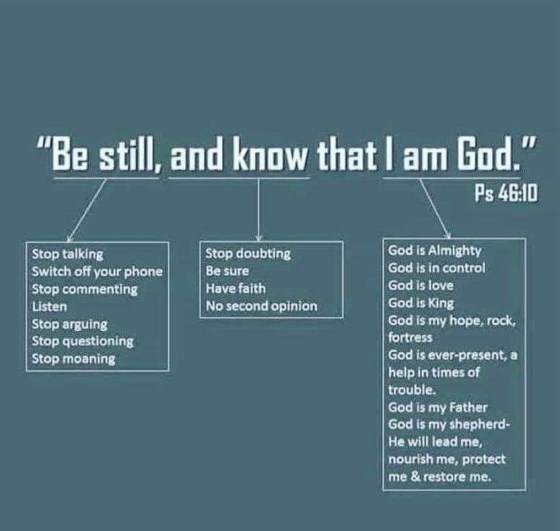
It is hard to be unhappy, or complaining, while we are actively honoring and praising our God!

Excellent depiction of the life of Jesus…


Written by Blake Rackley)
(Forgive typos…Today has been long. Well, this year has been long.) So much is weighing heavy on the hearts of others. This week I listened to those who grieve the loss of identity, the loss of love, the loss of faith, and the loss of purpose. So many questions that have so few answers or at least answers that satisfy and calm their fears. They feel aimless and stuck. Maybe you feel similar. Maybe it is your job, the future, a relationship. You simply feel stuck by not knowing what decision is the “right” decision so you make no decision at all. Maybe you are nursing scars no one see. Maybe you are bleeding from wounds that do not bleed crimson and bandages do not help. The running theme of many who are experiencing this level of pain is that they do not want to burden another person with their “stuff”. Sadly, they suffer in silence and feel totally alone. Think for a moment. Have you ever seen a lone goose? A solitary, Canadian, turd dropping, Christmas goose flying all by their lonesome? My guess is that you haven’t. If you do, that is one lost goose. They are most always in a flock. They take turns with the burden of leading. They encourage by those obnoxious honks. They rest often. They have a destination, but it is often arrived at in the company of others. They will fly despite the clouds and gloom around them. They will fly at times in the rain, but they seek shelter together. They do not feel the need to do anything singularly. Why then do we believe we have to do anything by ourselves? We are called to bear one another’s burdens. So, I’m calling my brothers and sisters in Christ to help those around them. Sit with them. Eat with them. Shelter with them. Listen to their story. Encourage them with hope. But more than anything, fly with them through their clouds of depression, anxiety, abuse, loss, hopelessness, and failure. We all are more likely to fly on, fly farther, and fly with purpose when we have others behind us despite the dark clouds hanging over us. Quit saying, “If you need me, I’m always here.” They will almost never call you. If we want the world to know we love Jesus, we must intentionally bear the burdens of others by vulnerability and loving one another.


by Bryan Lowe
Romans 2:1, NLT
One of the spiritual diseases endemic to the Christian believer is “fault finding”. For some reason, (and I’m still trying to figure out why), is we have a strong inclination to pass a judgement on people (those whom Christ died for!) We don’t throw stones (far be it from me)– however, we certainly do and will point fingers. And perhaps we feel that its our religious duty, or maybe even our ministry (!).
Almost always, there a sense of certain and attainable righteousness. or our generated holiness involved. This should not be dismissed or overlooked. Because I believe I am right, and have religious grounds, I put all of the “evil sinners” on trial, and then I pronounce my verdict. (And they certainly deserve whatever I decide.)
Much of the same type of thinking was used in Romans 2. Paul castigates those who were judging others. He goes on a scathing and sizzling rebuke directly at those who were destroying others by their overly-righteous attitude.
Romans 2:3-4
Without a doubt this whole subject is highly complex and nuanced. Hundreds of verses should be worked through. But this blog is not that place. However, I will advance this– I read this written by the Desert Fathers.
Macarius of Alexandria, 296-393 AD
So much going on right now all over the world. It would be easy to be tempted to lose our faith. But that’s not going to be an option, is it?
I found this message on a facebook site and I was having one of those moments, primarily because I’m trying to spread the love of God around a lot of places today, and my computer is acting up…even while trying to post this. So I’m going to put a Ha Ha to Satan, and keep going.

Great Message! Made me look at my life in a new way!
The truth is I don’t know if I’ve ever prompted anyone to step closer to the Lord by how I handled sorrow. Pain tends to compel the crabby in me – enough to blame someone else for my suffering.
I doubt I’m alone. When in pain, it seems only human to default to finger-pointing—including at God.
“Are you heartless, or are you just incapable of healing my chronic pain, God?”
“If the store had posted a warning sign, I wouldn’t have slipped on the wet floor.”
“We got into the accident because you ran the red light!”
Jesus modeled suffering in a radically different way. The Son determined to live and die by glorifying the Father, even while enduring crucifixion and its excruciating pain. Jesus carried Himself with such dignity, it forced a handful of witnesses to face their own day of reckoning.
As a Christian, I aspire to emulate Jesus in every way—including during life’s harrowing moments. Don’t you?
The good news is learning to suffer Jesus’ way is doable. If it wasn’t, the Bible wouldn’t have recorded the following five principles He demonstrated while crucified:
Do you know how hard it is to clamp your mouth when you’re being assailed? I do. As a therapist, I strive to not defend myself if something I say riles up my client. It doesn’t matter how innocent my intentions might have been. If there’s a part of the client who finds my words offensive, my job is to listen and process that experience with the client. Defending ourselves is improper for therapists to do because that’s hardly what any client needs. Ever.
Like Jesus, you and I don’t need to engage in self-defense even if someone decides to harass us in our pain. The Lord is still the most powerful Avenger there is (Psalm 94:1). The One who sees everything will make things right in due time (Ecclesiastes 3:11).
Passersby (Matthew 27:39-40),
Spiritual leaders (Matthew 27: 41-43, Luke 23:35),
Roman soldiers (Luke 23: 36-37),
And the two criminals condemned to death alongside him (Matthew 27: 38, Matthew 27: 44, Mark 15:32).
But even though their derision must have hurt, what might have stung even more was the roaring passivity of Jesus’ own loved ones. A tiny band of followers, including His mother, a few other women, and the apostle John, all witnessed Jesus’ abuse and humiliation—but none of them said a peep (John 19: 25-27).
If it were me bleeding on the cross? Hearing vicious sneers, coupled with my support system’s sustained silence, would’ve easily triggered a serious self-pitying episode.
Not Jesus. Never once did He pull a psalm-style lamentation of how long will you let these guys pummel me like this, Lord, when I did nothing to provoke them? Scour every book in the Bible, Old and New Testament combined, and you’ll find zero mention of Jesus crying on the cross. None.
Crucifixion is likely the most painful way to die ever invented, yet the Son of God shed no tears. Why?
Because Jesus refused to indulge in a pity party.
Self-pity sucks all of the attention to ourselves—This hurts so bad! Why hasn’t anyone checked up on me? Does anyone even care? Because the whining in self-pity repulses everyone else, pity partiers tend to cry all by themselves. Their act makes it impossible for others to respond with compassion.
Let’s resolve to ban any pity party even if our suffering feels unjust.
Even though breathing—let alone speaking—would’ve wrecked His body with more unimaginable pain, Jesus intentionally did the following. He spent the energy to instruct His disciple, John, to care for His mother, Mary, from that point on (John 19:26-27).
Such selfless love!
A friend demonstrated how striking it is when we mimic Jesus’ winsome attitude. This fellow believer suffers from pancreatitis. She spent three weeks at the hospital for a major surgery. She has steadily lost weight and has to eat through a feeding tube for six months—yet, despite all the mental and physical pain she has to endure, she cares enough to ask how I’m doing.
Anytime we attend to another person, regardless of the intensity of our pain, we’re gently leading that person closer to our Father. That’s because only God’s love can inspire us to exhibit the unselfish love of 1 Corinthians 10:24—including in the midst of our suffering.
In this me-first world, such outrageous benevolence creates an unforgettable impression. It may even compel the recipient to investigate, “why are you so kind?”
At which point we can smile and explain: Christ in us, the hope of glory (Colossians 1: 27).
How many are too proud to disclose our needs to each other?
My friend sought appropriate assistance because she needed it. In doing so she modeled after Jesus, who also appealed for help while on the cross.
On the surface, it seems as though Jesus’ words to the Father conveyed a son’s protest for his dad’s abandonment (Matthew 27:46). However, notice that Jesus directed His plea to God in a transparent and respectful manner. Contrast this attitude to many who, in their pain, give God the silent treatment or curse Him instead—like Job’s wife, for instance (Job 2:9).
The Lord will never forsake anyone who seeks Him (Psalm 9:10). So, if you want your suffering to count, never abandon the God who has loved you with an everlasting love (Jeremiah 31:3). Then, seek proper help—in the spiritual, physical, as well as emotional realm.
Emma Danzey| Contributing Writer202117 Aug

I once had a profound moment with a boy in fourth grade. I gave some words of encouragement to young boys about how the Lord has a purpose for every man of God. I told them that they were special and had a unique calling to be men one day. Afterward, one young man came up and said thank you because he had two sisters and his mom who were always watching female-empowering shows and movies. He wanted to be encouraged too. Today we are going to study some of the main characteristics of a man of God.
1 Timothy 4:8 says, “For physical training is of some value, but godliness has value for all things, holding promise for both the present life and the life to come.”
When I think about men around me who have dedicated their lives to Christ, I think of humility, courage, and leadership. They may not always be the quarterbacks or the CEO types, but they are faithful to the Lord no matter what their personalities and giftings include. When I was praying for my husband, I prayed specifically that he would be a man of God. What I meant by this, was a man pursuing the Lord, who surrendered His life to Christ. I think of men who acknowledge that they are sinners, but still, choose to live by the Spirit and not by their flesh (Galatians 5:16).
The phrase, “A man of God” is used in the Bible 35 times. Aaron Brown from Crosswalk says, “Being a man of God is not something to be condemned but rather encouraged. For any boy becoming a man, or men trying to commit themselves more thoroughly to God, there is an answer to the question.” A man seeking to know Jesus more and living like Him more is a man of God. He is not a perfect man, but he is a godly one. A man of God admits he is not able to represent the Lord without the help of the Holy Spirit (Ephesians 5:18). He will be strong through Christ and seek Him each day (Psalm 105:3-4).
There are some qualities of a Christian man that are the same in a Christian woman. Everyone who has Christ has the Holy Spirit and can live a godly life. So what are some specific characteristics in which men of God obtain?
Gentle
This might sound like an interesting trait to begin with, but it reminds me of the word gentleman. In the book “Gentle and Lowly” by Dane C. Ortlund, he describes that Jesus Himself describes his heart once in the Bible as “gentle and lowly” (Matthew 11:29). When someone thinks of a manly man by the world’s standards, he might imagine a physically tough guy who shows no weaknesses, gets angry, and has no fear. This is not an accurate depiction of biblical manhood. Gentleness is a character trait that does not come naturally but reveals the interworking of the Lord to enable men to be slow to anger and quick to listen. It leads to great patience and steadiness.
Courageous
One of the main qualities described when discussing a man of God is courage. Nelson Mandela once said, “Courage is not the absence of fear, but the triumph over it. The brave man is not he who does not feel afraid, but he who conquers that fear.” Men have fear, but God gives them the strength to walk in the midst of that fear and have victory through the Lord. Men many times are called upon to be brave. Bravery could look like anything from killing a spider to sharing about a struggle in a men’s group. It could be carrying a heavier load because of the gift of physical strength. Courage is even the great faith in the Lord it takes to lead a family and point them to Christ (Joshua 1:9).https://2132aa14c9f9630258fbcb5475bfd650.safeframe.googlesyndication.com/safeframe/1-0-38/html/container.html
Honest
Cole Douglas Claybourn from Crosswalk says, “Men have been trained and socialized to avoid and ignore knowing their insecurities, which is one of the reasons they are less verbal than women about their insecurities, Vierra said. ‘This results in less being known and understood about them.’” A man of God is not beyond sharing his thoughts and feelings. He pushes past the “macho man” mentality and can step into vulnerability (2 Corinthians 8:21).
A man who follows the Lord takes responsibility. He pursues Christ and follows Him with boldness. He does not sit back as Adam did in the garden when Eve was sinning. He stands up for what is right and takes action. He is reliable and loyal. You can trust that he is who he claims to be to others (Colossians 3:23).
Some specific men who were given this title of honor in Scripture include, Moses, David, Elijah, and Elisha.
Moses—Deuteronomy 33:1 “Now this is the blessing with which Moses the man of God blessed the sons of Israel before his death.”
David—Nehemiah 12:36 “and his kinsmen, Shemaiah, Azarel, Milalai, Gilalai, Maai, Nethanel, Judah and Hanani, with the musical instruments of David the man of God. And Ezra the scribe went before them.”
Elijah—1 Kings 17:18 So she said to Elijah, “What do I have to do with you, O man of God? You have come to me to bring my iniquity to remembrance and to put my son to death!”
Elisha—2 Kings 5:8 “It happened when Elisha the man of God heard that the king of Israel had torn his clothes, that he sent word to the king, saying, ‘Why have you torn your clothes? Now let him come to me, and he shall know that there is a prophet in Israel.’”
Bible Study Tools shares it beautifully, “While the world tends to tell men to hide their emotions and act tough, God’s Word is filled with men who passionately and whole-heartedly sought God with their heart, mind, and soul! God has a special calling for men to be strong, courageous leaders, and His Scripture can provide the inspiration you need to take daily steps towards your calling.”
Men of God in the 21st century represent Christ. No matter what a man’s denomination is or culture, he represents biblical manhood when he models loving God and loving others. He is not boxed in by a world definition of a man having power and prestige. He is confident in his personal identity in Jesus. He knows who he is and walks daily with God. He is willing to admit his wrongs and has the strength to try again when he fails. He is unashamed to share his heart with others and to step up to the plate to be brave. This is not in his own power, but the strength of the Holy Spirit within him.
A man cannot force anyone to be a man of God, but he can model it and show others how to live for Christ. The men in my life do this so well in their own ways. We can pray and speak words of encouragement to the young boys and young men in our homes and communities. We can give the same motivation to the men as the women. We are all created in the image of the Lord. He made us male and female. Our Great Creator has perfect plans for how he made us and loves us. If you are a man or know a man, remember that men have a wonderful calling and a purpose on this earth. Let us celebrate the men of God in this world.
There are many, many promises of God in Scripture. In each promise, God pledges that something will (or will not) be done or given or come to pass. These are not flippant, casual promises such as we often make; these promises of God are rock-solid, unequivocal commitments made by God Himself. Because God is faithful, the recipients of the divine promises can have full assurance that what God has pledged will indeed be realized (Numbers 23:19).
Here are just a few of the promises that God has made:
Promises of God in the Old Testament.
God promised to bless Abraham and, through his descendants, the whole world (Genesis 12:2–3). This promise, called the Abrahamic Covenant, pointed to the coming Messiah for whom Abraham looked (John 8:56).
God promised Israel to be their God and make them His people (Leviticus 26:12–13). Old Testament history is teeming with examples of God fulfilling this promise.
God promised that if we search for Him we will find Him (Deuteronomy 4:29). He is not playing hard-to-get. “Our God is near us whenever we pray to him” (Deuteronomy 4:7).
God promised protection for His children (Psalm 121). He was the vigilant watchman over all Israel.
God promised that His love will never fail (1 Chronicles 16:34). He is faithful in every way.
God promised Israel that their sin could be forgiven, their prosperity restored, and their nation healed (2 Chronicles 7:14). Repentance opened the road to fellowship and blessing.
God, under the terms of the Mosaic Covenant, promised prosperity to Israel for obedience and destruction for disobedience (Deuteronomy 30:15–18). Unfortunately, Israel eventually chose to disobey, and the nation was destroyed by Assyria and Babylon.
God promised blessing for all who will delight themselves in His Word (Psalm 1:1–3). Simple faith has its rewards.
Promises of God in the New Testament.
God promised salvation to all who believe in His Son (Romans 1:16–17). There is no greater blessing than the free gift of God’s salvation.
God promised that all things will work out for good for His children (Romans 8:28). This is the broader picture that keeps us from being dismayed by present circumstances.
God promised comfort in our trials (2 Corinthians 1:3–4). He has a plan, and one day we will be able to share the comfort we receive.
God promised new life in Christ (2 Corinthians 5:17). Salvation is the beginning of a brand-new existence.
God promised every spiritual blessing in Christ (Ephesians 1:3). Whereas, in the Old Testament, Israel had the promise of physical blessing, the church today has been promised spiritual blessings “in the heavenly realms.” Our inheritance is reserved for us (1 Peter 1:4).
God promised to finish the work He started in us (Philippians 1:6). God does nothing in half measures. He started the work in us, and He will be sure to complete it.
God promised peace when we pray (Philippians 4:6–7). His peace is protection. It will “guard your hearts and your minds in Christ.”
God promised to supply our needs (Matthew 6:33; Philippians 4:19). Not that we get everything we want, but our needs will be taken care of. We are more valuable than the birds, and our Heavenly Father feeds them (Matthew 6:26).
Jesus’ promises in the Gospels.
Jesus promised rest (Matthew 11:28–30). Burdens are lifted at Calvary.
Jesus promised abundant life to those who follow Him (John 10:10). Following Jesus brings us more spiritual fulfillment than we could have anticipated. We leave boring behind.
Jesus promised eternal life to those who trust Him (John 4:14). The Good Shepherd also promised to hold us securely: “No one will snatch them out of my hand” (John 10:28).
Jesus promised His disciples power from on high (Acts 1:8). In this power, they “turned the world upside down” (Acts 17:6, ESV).
Jesus promised that He will return for us (John 14:2–3). From then on, we will be with Him always.
There are many more promises of God that could be listed. All of them find their ultimate fulfillment in Jesus Christ, “the radiance of God’s glory” (Hebrews 1:3). “No matter how many promises God has made, they are ‘Yes’ in Christ” (2 Corinthians 1:20).


Posted byBryan LowePosted inbeliever, darkness, discipleship, encouragement, following Jesus, God, life lessons, Satan, theology, understandingTags:discipleship, God, Jesus, promises, testing, trials, understanding
God’s people have always had to wrestle with the things from the dark. As believers, the Bible tells us that we’re in a permanent state of war against Satan. There has never been an armistice or treaty signed to my knowledge. Each one of us is on the front lines. The devil has been practicing with a deadly form of “spiritual terrorism.” And he terrorizes many with his posturing and manipulation.
Life can get quite dark, and desperately bleak. No one needs to educate us about the dark nightmare that is now active. Over a couple of millennia, God’s covenant people have been harmed and harassed. Enemies are constantly manipulating and twisting God’s Word. As disciples, we’re under steady surveillance by the dragon.
But He certainly has not overlooked us. As we read our Bible, our faith becomes like Teflon. Nothing can stick to you; even though so much is thrown at us. When life is really dark or terribly bleak, we can protect ourselves and others. There are times when we can sense nothing.
We are not theologians, we are just simple disciples. He knows this. I believe He simplifies things in order to help us understand. God has little reason to complicate things for us.
I believe that we are “surrounded” by saints of all ages. They see in us a faith that justifies us. And I must admit, that helps me. I am part of a continuum. I now know that my simple faith must always pass the test of discouragement.
But now the torch is passed, and now you must run with it faithfully and honestly. And when all is so dark, and things seem far too quiet, I still intend to hold up that torch and carry it all the way to my Father’s house.
John Bunyan, “Pilgrims Progress”

I feel the most unsettled when I’m uncertain about the future.Many of you are also probably facing circumstances that have left you feeling caught off guard and unsure about what tomorrow holds. So many times I find myself bracing for impact when I check my daily news feed. If there’s one word that seems most certain to describe the times we are living in, it’s “uncertain.”There are thousands of scenarios that evoke these feelings of uncertainty, fear and exhaustion from life not being like you thought it would be.Whatever your situation, you probably feel like you can’t change it, but you still have to live through the realities of what’s happening right now. Sometimes you just have to walk in your “I don’t know.” The Lord makes it clear in His Word that things will not always go as we wish they would in this life. The crucial detail for us to have peace in the middle of everything we face is to stay close to the Lord. We think we want comfort in the “I don’t know” times of life. But comfort isn’t a solution to seek; rather, it’s a byproduct we’ll reap when we stay close to the Lord.I wish I could promise you that everything’s going to turn out like you’re hoping it will. I can’t, of course. But what I can promise you is this: God is close to us even in our “I don’t knows.” God has lessons for us that are crucially important for our future, and we’re learning them in the middle of our “I don’t knows.” God has a strength He must prepare us with, and the training ground is here in the “I don’t know.”This time isn’t a waste, and it’s definitely not pointless when we are walking with God. Let’s cry out to God, declaring that this hard time will be a holy time, a close-to-God time. And let’s choose to believe there is good happening, even in these places. We can rest in the knowledge that wherever God is, good is being worked.-What difficult “I don’t know” season are you walking through today?
PROVERBS 31 MINISTRIES

Promise #124:
I gently formed you in your mother’s womb.
Psalm 139:13 (WEB)
For you formed my inmost being.
You knit me together in my mother’s womb.
The New International Version Bible says Psalm 139:13 this way… For you created my inmost being; you knit me together in my mother’s womb. The New Living Translation says… You made all the delicate, inner parts of my body and knit me together in my mother’s womb. No matter what translation you prefer, this is a gentle picture of God’s loving creation process.
You were not blasted into creation, but gently formed in your mother’s womb by a loving God who took the time to delicately knit all your inward parts together. May the revelation of your creation bring a sense of well being to your soul. You were not a mistake. God planned you before the foundation of the world and He determined the exact time of your birth.
One of the greatest tragedies in this world today is the feeling that our lives were a mistake. Some people were even told that by their parents. The truth is that no life was ever a mistake. Each person ever created, was created with intention by the One who is love itself.
God gently formed you in your mother’s womb and He is the One who brought you forth on the day you were born. (Psalm 71:6) There is absolutely no doubt about it!
So grateful to have gotten our 2nd Covid-19 shot today! What a blessing that these shots are available! We got the Moderna shot. So far…so good!


Clarence L. Haynes Jr. is a speaker, Bible teacher, author and co-founder of The Bible Study Club
How do you approach God and people when your faith is small, when you can’t believe and when you wonder if God is even listening?
That’s why I want to encourage you today to pray broken prayers. Consider this passage in Luke:
“While Jesus was in one of the towns, a man came along who was covered with leprosy. When he saw Jesus, he fell with his face to the ground and begged him, ‘Lord, if you are willing, you can make me clean.’ Jesus reached out his hand and touched the man. ‘I am willing,’ he said. ‘Be clean!’ And immediately the leprosy left him” (Luke 5:12-13).
There was something about this man that I think you can relate to. He was broken by life because he was a leper. We are not sure how he caught leprosy, but nevertheless he had it and it was a terrible disease. To be a leper in those days was to be an outcast. I will spare you the details of the horror of this disease, but beyond the physical pain and suffering there was the mental pain and suffering because no one wanted to be around you. Lepers were shunned and people thought they were cursed by God and their leprosy was a result of their sin. Some scholars say a leper couldn’t come within six feet of any other Israelite and within 150 feet if there was an east wind blowing (I guess this was the original form of social distancing).
In our story, this leper comes to Jesus. He was sick, probably in pain, and shunned by the outside world. In one word he was broken. In his place of brokenness he cried out to Jesus for help and Jesus responded.
There are usually two ways we end up in positions of brokenness or helplessness. In one instance you are doing everything right. You are living right. You are giving right. You are serving. You are following God, obeying his word and doing everything you are supposed to do – and all of a sudden you get hit with life, leading you to a broken place.
On the flip side, maybe you are doing everything wrong. You’ve made a series of bad decisions and choices and your life feels like it’s falling apart. Everything is breaking down around you and you don’t know what to do. You too are in a broken place.
You see, it does not matter how you got there, you end up just like the leper. Whether it’s by your own fault or no fault of your own, you are in this place of desperation and brokenness. What do you do?
What I love about this story is the way the man came to Jesus. He came and threw himself at his feet. He came humble. He came honest and he came broken. He didn’t even pray what would be considered a faith-filled prayer. He said Lord, if you are willing. In essence he was saying I know you can, I just don’t know if you will.
His prayer was not coming from a place of expectation, it was coming from a place of desperation. In other words, he came to Jesus just as he was. Unclean, rejected, desperate, broken and out of this place he cried out to Jesus. He was offering what I would consider a broken prayer, yet this prayer had much power in it.
1. Come to Jesus Just the Way You Are
Too often we make the mistake of thinking we have to come to Jesus with everything right. The same mask we wear into church on Sunday morning we take into prayer and into the presence of God. If I could encourage you with one thing let it be this. Stop thinking you have to always have it all right. Don’t fall into the trap of thinking you have to have your faith right, your worship right, you have to pray the right words and when you do then God will hear you. That is not what God responds to.
You can come to Jesus just as you are, broken and all, with the mask off and pour your heart out to him. Broken prayers aren’t perfect prayers, but they come from a place of humility and honesty and that is exactly what God wants.
Psalm 51:17 – “The sacrifice you desire is a broken spirit. You will not reject a broken and repentant heart, O God.”
2. God Doesn’t Only Respond to Our Faith, He Also Responds to Our Brokenness
There is something amazing in this story of Luke that if you read too fast you will miss. Before Jesus healed him, he touched him. Remember this was a man who was shunned by society. Who knows how long it had been since someone had touched this man?
Before Jesus addressed his obvious physical need for healing, he addressed the less obvious emotional need to be touched. We already mentioned earlier that this man did not pray a prayer of great faith, yet Jesus responded. This tells me that God not only responds to your faith, he responds to your brokenness as well. Jesus could have healed the man first and then touched him, but he didn’t – he touched him first.
That is why it’s ok to come just as you are. Don’t worry about having everything all neat and buttoned up, God will respond to your broken condition.
3. When You Touch the Heart of God, It Will Move the Hand of God
Luke 5:13b – “’I am willing,’ he said. ‘Be clean!’ And immediately the leprosy left him.”
I believe the reason why Jesus moved in this man’s situation is because this man touched his heart. When you touch the heart of God, it will move the hand of God. You must also be mindful of something. When you pray broken prayers, sometimes God will change the situation instantly which is what happened here. However sometimes the situation may remain the same, but he will change you instantly. At the place of brokenness, you are laying it all down and asking God to move on your behalf as he sees fit. The beauty of the broken prayer is that you may come to God broken, but you will walk away whole.
If you are sick you may walk away healed, but even if God doesn’t heal you, walk away whole.
If you are discouraged you will walk away encouraged.
If you come with no faith you walk away believing God to do great things in your life.
If you come with no joy you walk away with joy unspeakable and full of glory.
If you come with no peace you walk away with peace that passes all understanding, even in the midst of brokenness.
The beauty of the broken prayer is that God takes it, strengthens you and gives you the confidence to know that God is going to bring you through.
I don’t know what feels hopeless, broken, or desperate in your life today. I do know that if you will pour it out humbly and honestly, God is waiting to touch you, heal you and restore you. You are reminded from Scripture to cast all your cares upon him because he cares for you. The situation you are in today matters, and Jesus is waiting with open arms to touch all the broken places in your life. However, it begins when you take the mask off and begin offering up those broken prayers.
| Matthew 22:37-39 |
| New International Version Jesus replied: “‘Love the Lord your God with all your heart and with all your soul and with all your mind.’ This is the first and greatest commandment. And the second is like it: ‘Love your neighbor as yourself.’ |
| Jeremiah 29:11-13 |
| New International Version For I know the plans I have for you,” declares the Lord, “plans to prosper you and not to harm you, plans to give you hope and a future. Then you will call on me and come and pray to me, and I will listen to you. You will seek me and find me when you seek me with all your heart. Read at Bible Gateway Read all of Jeremiah 29 |
VERSE OF THE DAY
1 John 4:18 (King James Version)
There is no fear in love; but perfect love casteth out fear: because fear hath torment. He that feareth is not made perfect in love.
| Verse of the Day Proverbs 17:9 |
| New International Version Whoever would foster love covers over an offense, but whoever repeats the matter separates close friends. Read at Bible Gateway Read all of Proverbs 17 |
New International Version
Romans 8:38-39
For I am convinced that neither death nor life, neither angels nor demons, neither the present nor the future, nor any powers, neither height nor depth, nor anything else in all creation, will be able to separate us from the love of God that is in Christ Jesus our Lord.
Read all of Romans 8
| 1 John 3:11 |
| New International Version For this is the message you heard from the beginning: We should love one another. Read at Bible Gateway Read all of 1 John 3 |
Praying for all
who embrace love in every aspect,
daily.
Praying that we all
come back to the basics
of seeking God first
and loving each other!

If there was ever a time when we are called to show an extraordinary display of love for God and each other, it is now. I’ve been questioning what we as Christians are doing to show love during these hectic times.
Reading the following scripture, I tried to put a filter in place to determine whether modern-day Christianity actually survives the test of Jesus’ definition of love. Let’s read this together and ask the Holy Spirit to help us answer that question.
Matthew 22 (English Standard Version)
34 But when the Pharisees heard that he had silenced the Sadducees, they gathered together.
35 And one of them, a lawyer, asked him a question to test him.
36 “Teacher, which is the great commandment in the Law?”
37 And he said to him, “You shall love the Lord your God with all your heart and with all your soul and with all your mind.
8 This is the great and first commandment.
39 And a second is like it: You shall love your neighbor as yourself.
40 On these two commandments depend all the Law and the Prophets.”
Along with these scriptures, we would be remiss not to read and understand God’s further definition of love.
20 If anyone says, “I love God,” and hates his brother, he is a liar; for he who does not love his brother whom he has seen cannot love God whom he has not seen.
So, let’s ask ourselves:
2. Are we prejudiced in any way?
3. Do we encourage hate of any person?
4. Do we support bullying?
5. Do we reach out and pick up the peaceful person that was just beaten down–by fists or guns–or words? Or do we join in?
6. Do we judge a person by whether they are poor, or not?
7. Do we act out, in any way, with disdain, judgmental thoughts or actions, or do we try to understand a person who is different from us? who may have a different religious affiliation? a different way in describing their belief system? Or do we think that we are the only people who have all the answers?
8. Do we agree that requiring servitude by anyone is ok? is loving? is the way Jesus would treat people?
I think this is a somber time in all of our lives when we should quietly sit and reflect on these questions. If we fall short of the definition of love as Jesus describes it, we have an imperative to go to Him and ask forgiveness, turn away from that wrongful attitude, and humble ourselves as we seek God’s guidance in remedying our actions. That way He will be glorified rather than being ashamed of us.
Are we really Christians?
If we don’t display the love and light from our Lord, then we should stop using His name–in vain!
Your sister in Christ,
Sharon



 sharin' His love & Prophecy Unfolding